
Moving an Assembled Stable Across a Property Without Disassembly
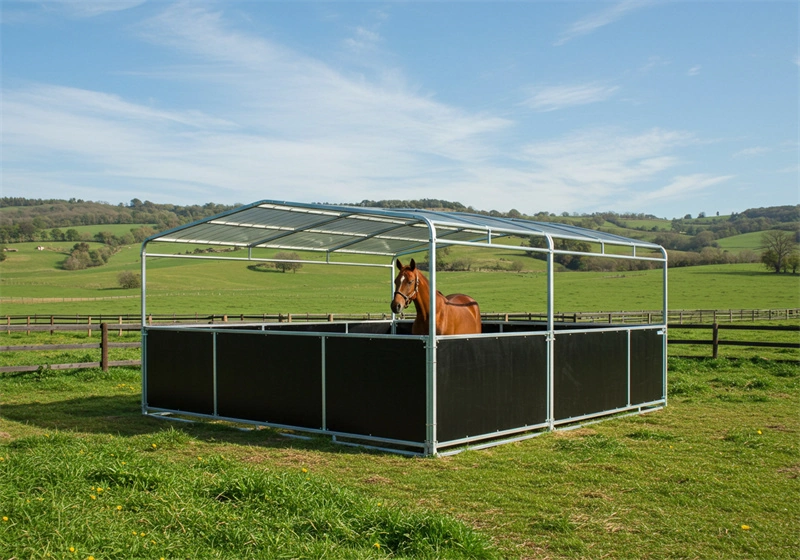
Relocating an assembled stable means weighing ~200kg panels against the 30-minute corner-pin knock-down. This guide covers when an intact move works — firm ground, 2.65m roof clearance, crew — and how to finish it level and anchored.
HDPE Panel Hygiene: Cleaning and Disinfection for Shared Facilities
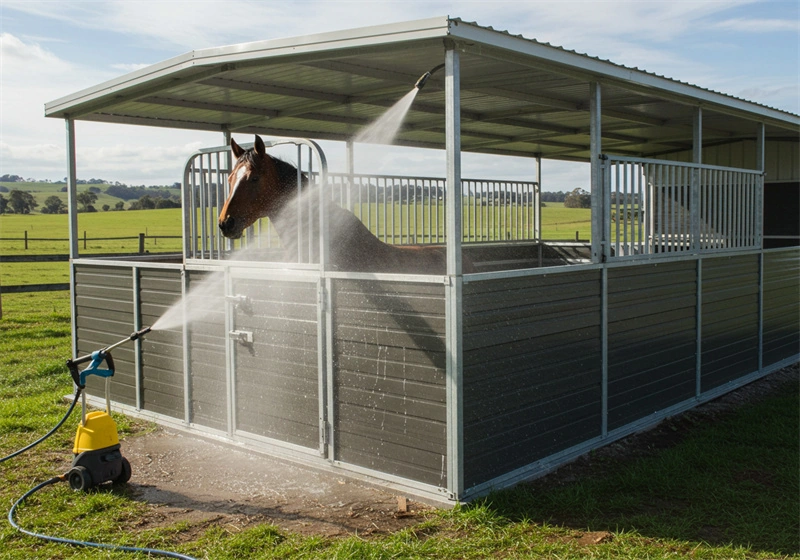
HDPE panel cleaning in shared facilities: the 10mm washable, antibacterial infill boards hose and scrub down between horses, while the 42-micron galvanised frame is brushed, never scraped. A turnover routine mapped to the factory spec.
Freight Cost Per Stall: Why Quadruple Configs Ship Cheaper
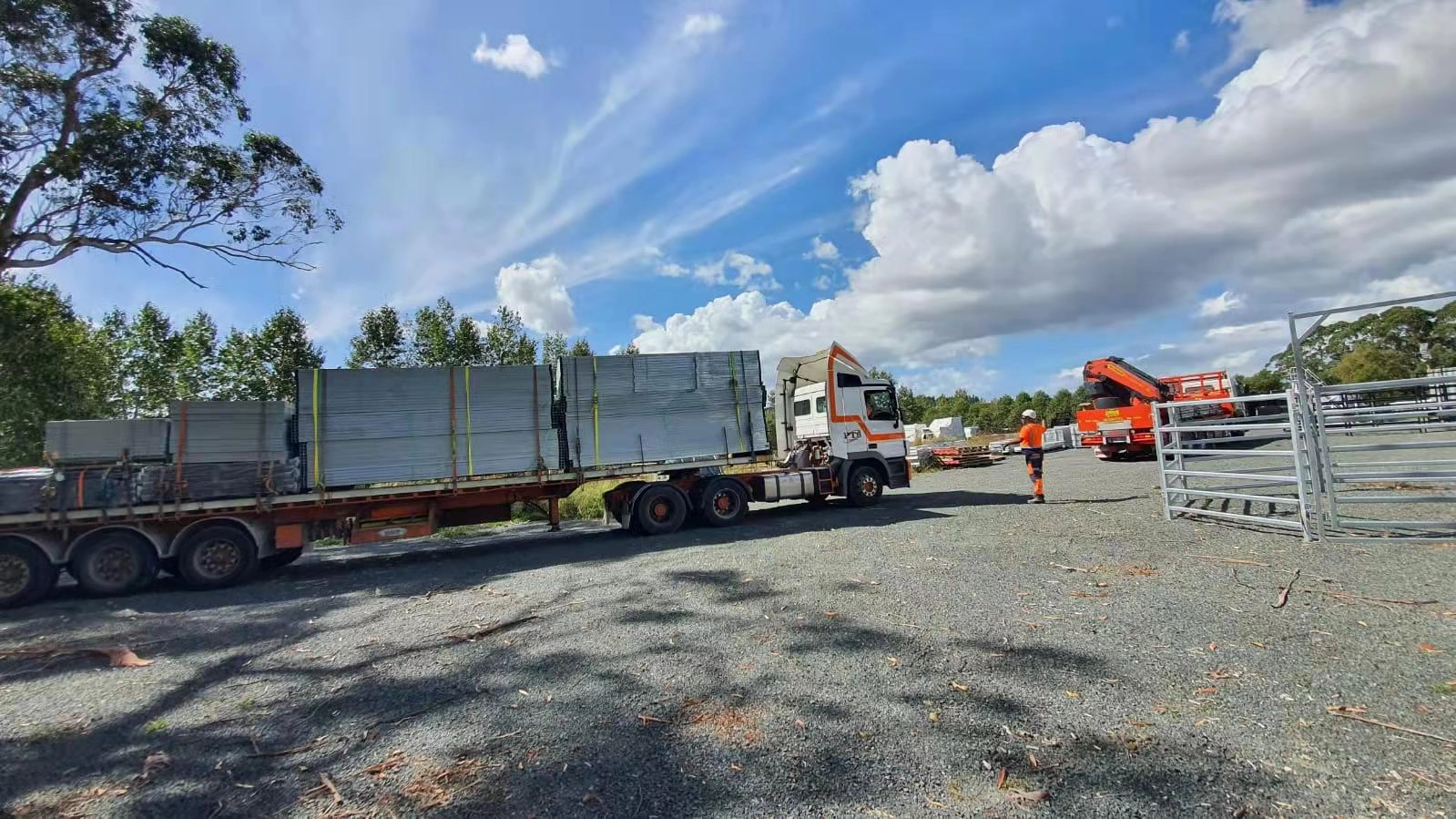
Freight cost per stall falls when joined rows share walls: a quadruple ships 9 side panels and 4 doors against 12 and 4 for four singles — about 600kg less panel weight for the same stalls.
Flat Pack Stables NZ: Choosing Between Local Stock and Direct Import

Flat pack horse stables in New Zealand: local stock buys speed and a locked configuration, direct import from the factory opens 3.0m-4.2m lengths, with 4.0m and 4.2m custom, at a 10-set minimum. A five-question framework compares both routes on landed cost, timeline and risk.
Mesh vs Pipe Stable Fronts: Airflow, Visibility and Safety Trade-Offs

Mesh vs pipe stable front is a single trade-off: the 50×50mm mesh aperture contains hooves and muzzles, while pipe fronts maximise airflow and sightlines in the same 2200mm Q235 frame. This guide compares both on safety, maintenance and repair.
Storm Preparation: Securing Portable Stables Before a Front Hits

Storm securing stables is a sequence, not a product: siting, anchoring every module, checking the 2.65m raised roof and corner pins, and striking the row when a severe front demands it. This guide maps each task to the factory specification.
Pony Club Portable Stables: Sizing for Ponies vs Full-Size Horses
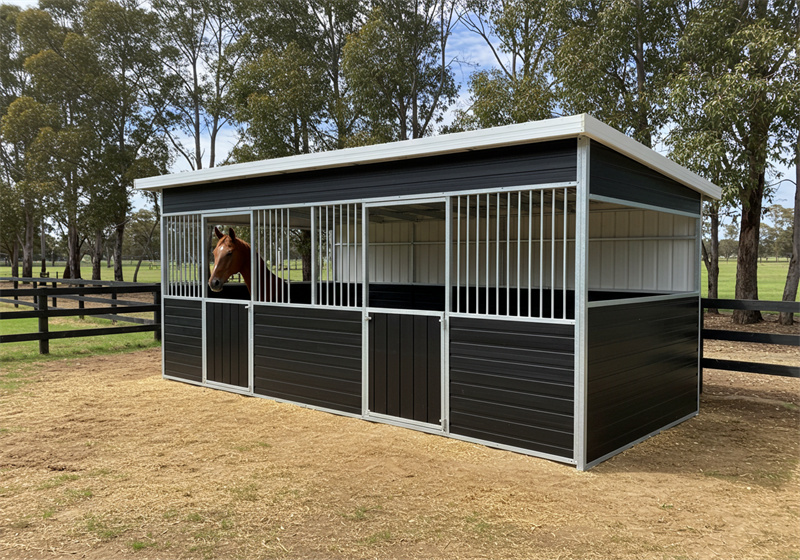
Sizing pony club portable stables is simpler than most committees expect: the standard 2200mm-high module in 3.0m or 3.6m houses both ponies and full-size horses. This guide covers door widths, chew-resistant HDPE, roofs and installation math.
What a Real Portable Horse Stable Production Line Looks Like: From Tube to Flat Pack
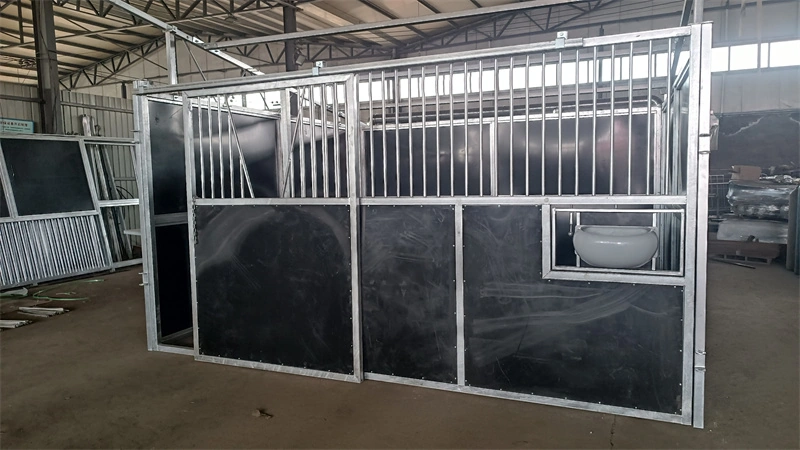
A stage-by-stage walkthrough of a real horse stable production line: Q235 tube cutting, full frame welding, hot-dip galvanising to at least 42 microns, 10mm HDPE fitting, third-party QC and flat pack loading for AU and NZ importers.
Weld Quality Inspection: Spotting Cold Welds on Stable Frames Before Shipping

Cold welds are the hidden defect in fully welded stable frames. This guide covers the visual signs AU/NZ buyers can check before shipping and how to build third-party inspection into the order.
GST Imported Stables: Australia vs New Zealand Treatment
How GST treats imported horse stables on both sides of the Tasman: 10% in Australia and 15% in New Zealand, each assessed at the border on a commercial consignment, with low-value parcels collected at the point of sale — and why input tax credits turn the gap into a cash-flow question for registered importers.