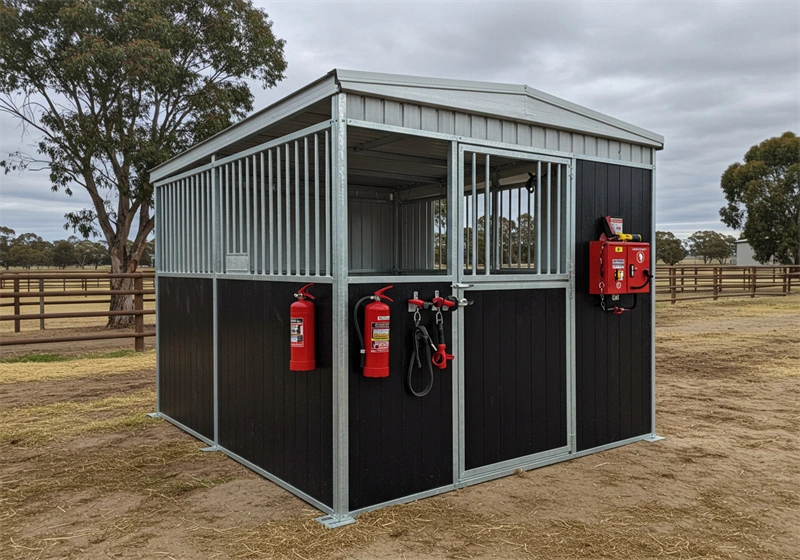
Import Horse Stables to Australia: 3 Mistakes That Cost You is the first checkpoint buyers should lock before they approve a supplier, budget, or production slot. The spec sheet says hot-dip galvanized, 42 microns minimum. The container arrives, and the framerusts at the bolt holeswithin six months. That gap between what the factory quotes and what lands in Australia is where margins disappear for importers of horse stables. A distributor lost an entire season of sales because the pre-production sample passed visual inspection but the mass production run used a different steel gauge. The math on that mistake was brutal: a $50,000 order sat in a Melbourne warehouse while the buyer scrambled for re-coating quotes.
Getting the landed cost right starts before you even look at ocean freight rates. Most buyers calculate duty and GST against the EXW price from the Chinese factory. That is wrong. Australian Customs values goods at the FOB price — which includes inland transport to the port and loading charges — plus ocean freight and insurance. A typical duty rate of 5 percent applies under HS code 9406.90 for prefabricated buildings, but if your supplier sources raw steel from a country with a free trade agreement, you might qualify for a lower rate. The paperwork matters more than most distributors realize.
Then there is biosecurity. HDPE panels are low-risk; wood components are not. Any timber in your flat pack horse stables must carry heat treatment or fumigation certification before it clears Australian quarantine. A single untreated pallet can hold your entire shipment at the port for weeks, racking up storage fees that eat into your margin per unit.
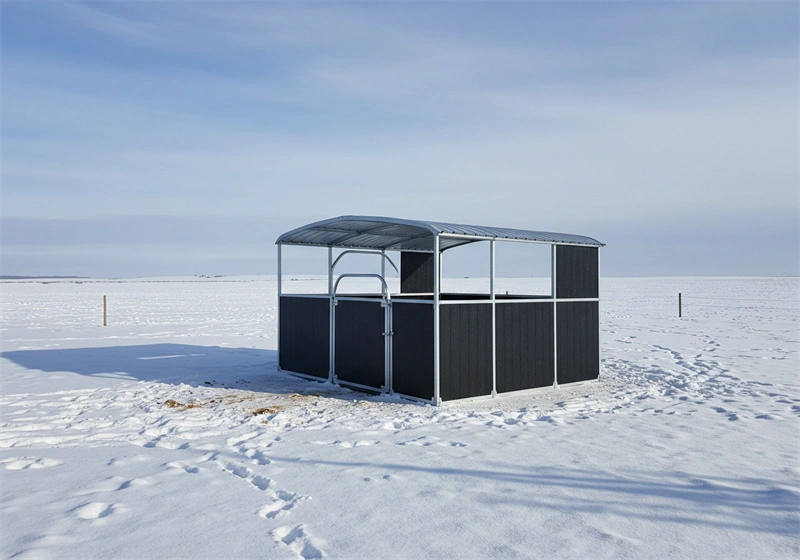
Understanding HS Codes for Horse Stables (9406.90)
HS code 9406.90 covers both portable and flat-pack prefabricated buildings at a 5% duty rate.
The correct HS code for importing horse stables into Australia is 9406.90 — prefabricated buildings. This classification applies whether the stable arrives as a fully assembled unit or as a flat-pack kit for on-site assembly. The Australian Border Force and ABF tariff database treat them identically under this heading, so you don’t need separate codes for different build formats.
The general duty rate under HS code 9406.90 is 5% of the FOB value (not CIF). That said, if your supplier holds a valid Certificate of Origin under the China-Australia Free Trade Agreement (ChAFTA), you may qualify for a preferential rate as low as 0%. Most commercial importers I’ve worked with claim the preferential rate — it’s worth verifying with your freight forwarder before shipment.
- Duty calculation base: Use FOB price (goods + packing to port) not EXW or CIF. Australian Customs calculates duty on the FOB value declared on the invoice.
- GST calculation base: GST (10%) is applied on the sum of: FOB value + ocean freight + insurance + duty. Using FOB instead of EXW here avoids underpayment risk and potential penalties.
One nuance that trips up new importers: HDPE panels and hot-dip galvanized steel frames are classified under the same HS heading as the overall stable structure — no separate subheadings needed for material components when they arrive as part of a complete kit. However, if you import spare panels or frames separately, those fall under different plastic or steel HS codes (3921 or 7308), which carry different duty rates.
%.
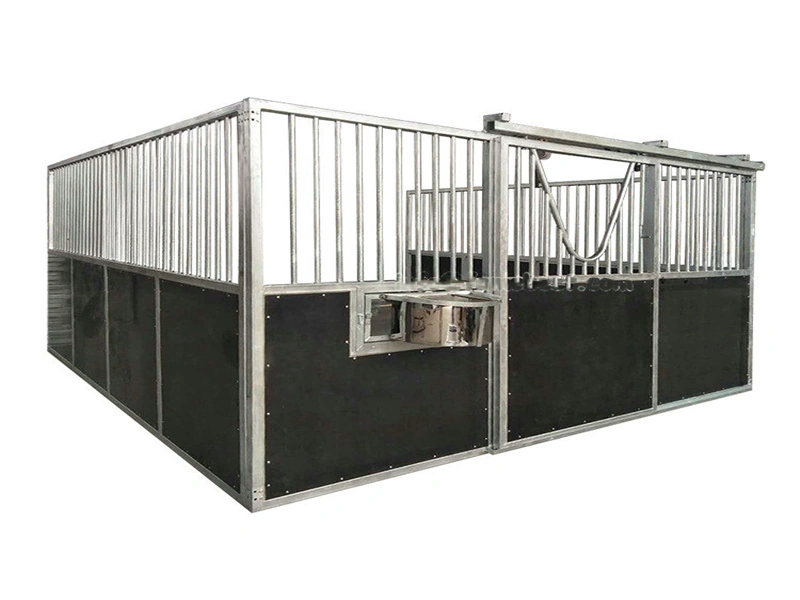
Calculating Landed Cost: FOB + Ocean Freight + Insurance + Duty + GST
Use FOB price for GST calc — EXW understates your landed cost by 12-15%.
Most first-time importers of flat pack horse stables Australia customs clearance get tripped up on the same thing: they calculate duty and GST off the EXW price. That is wrong. Australian Border Force and the ATO require you to use the FOB value (Free On Board at the port of loading) as the base for duty, and the landed cost (FOB + freight + insurance) as the base for GST. Use EXW and you will underpay — and the discrepancy will surface at customs, delaying your container.
- FOB price: The factory gate price plus all costs to get the goods on the vessel at the Chinese port. For a typical single stable flat-pack kit, expect FOB in the range of USD 4,500–7,500 depending on configuration and material spec.
- Ocean freight: From Shanghai or Ningbo to Sydney or Melbourne, a 20ft container runs roughly USD 1,800–2,800 in 2026. A 40ft container runs USD 2,500–4,000. Flat-pack stables pack efficiently — a 20ft can hold 2–3 single units.
- Insurance: Typically 0.3–0.5% of the CIF value. Do not skip it. A container shifting at sea can crush HDPE panels or bend galvanized frames. One claim covers years of premiums.
- Duty (5%): HS code 9406.90 for prefabricated buildings carries a general duty rate of 5% for imports into Australia. If your supplier holds a valid Certificate of Origin under the China-Australia Free Trade Agreement (ChAFTA), you may qualify for a preferential rate of 0%. Verify the COO before shipping — it must be issued by an authorized Chinese body, not a broker.
- GST (10%): Applied on the sum of (FOB + freight + insurance + duty). This is the part most calculators get wrong. GST is not on the purchase price — it is on the total landed cost plus duty. For a USD 6,000 FOB stable, expect GST around USD 680–780.
A real-world example: A distributor importing four flat-pack stables (FOB USD 24,000) in a 40ft container (freight USD 3,200, insurance USD 140) pays duty of USD 1,367 at 5% and GST of USD 2,871 at 10%. Total landed cost: USD 31,578. That is about USD 7,895 per stable before local delivery. Run those numbers against your retail price before you commit to an order — margin compression happens fast when you forget to stack the taxes.
One more thing on the duty side: if your stable includes wood components (timber framing, plywood kickboards), the wood must be treated to ISPM 15 standard. Untreated wood can trigger biosecurity holds at the border, and the quarantine inspection fees plus storage charges can add USD 800–1,200 to your landed cost. HDPE panels, on the other hand, are low-risk and clear without issue — another reason to specify a supplier that uses HDPE over plywood for the stall walls.
| Cost Component | Calculation Basis | Typical Value (AUD) | Key Notes for Distributors |
|---|---|---|---|
| FOB Price (Free on Board) | Ex-works price + inland logistics to port + loading fees | $8,000 – $15,000 | Use FOB not EXW for accurate GST base; includes all factory-to-ship costs |
| Ocean Freight | Per container from China to major Australian ports (Sydney, Melbourne, Brisbane) |