I walked through a $4 million equestrian facility last month where a boarded thoroughbred nearly lost a hoof because the facility manager ignored horse stall front safety when approving the vendor quote. The importer had spec’d 3-inch grill spacing on the lower section to cut welding costs, and a rear hoof wedged right through during a panic. The owner settled out of court for six figures and lost three high-net-worth boarding clients who refused to keep their horses in a facility they viewed as negligent. That facility looked premium from the parking lot. The liability was hidden in the welds.
I pulled the engineering data from the last three years of commercial barn installs across Australia and New Zealand to isolate exactly where cheap imports fail. You will walk away with the exact measurements—partition heights, lower grill spacing, doorway clearances—and the material science thresholds, like galvanization micron thickness, that separate a structurally sound stall from a lawsuit waiting to happen. If a supplier cannot guarantee these numbers, you send the quote back.

Key Stall Front Safety Takeaways
Horse stall front safety for commercial facilities comes down to three non-negotiable thresholds: an 8ft partition height, 2-inch maximum lower grill spacing, and a 42-inch minimum doorway width.
Minimum Partition Height
An 8ft minimum partition height is the structural baseline for commercial equestrian clubs. Anything shorter invites horses to reach over the dividing walls, leading to bite injuries or tangled legs during panic responses. While residential setups sometimes cut corners at 7.5ft, commercial operations dealing with thoroughbreds or high-value boarded horses cannot accept that risk. We engineer our galvanized frames to hit exactly 8ft to eliminate the “legs over the wall” scenario that directly triggers liability claims and compromises your premium brand image.
Maximum Lower Grill Spacing
General industry references often suggest 3-inch bar centers, but for commercial boarding environments, that specification is a liability. The absolute maximum lower grill spacing you should accept on a vendor quote is 2 inches. This specific gap prevents a horse from wedging a hoof through the vertical bars, a panic response that results in severe lacerations or fractured fetlocks.
For facilities housing aggressive kickers, we specify a tighter 1.5-inch lower spacing. Beyond the physical gap, the material finish dictates laceration risk. Competitors frequently use 14-gauge steel with poor galvanization that flakes zinc microscopically. We apply hot-dip galvanization exceeding 42 microns, eliminating the sharp, rust-prone edges that cause cuts when a horse inevitably contacts the grill.
Minimum Doorway Clearance
Doorway clearance dictates both animal flow and handler safety. The minimum doorway width must be 42 inches, paired with an 8ft minimum doorway height. A 42-inch width accommodates the shoulder width of large breeds without forcing them to rub against the frame, preserving the aesthetic condition of your stall fronts. The 8ft height ensures handlers do not duck when leading horses, a practical detail that prevents handler bruises and worker compensation claims.
The door track hardware requires equal scrutiny. Sliding door guides left in the traffic path are a leading cause of handler injuries in commercial barns. Our specifications require rounded, offset tracks to keep the guide mechanism entirely out of the handler’s walking line. For a club owner evaluating imports, these exact measurements are the baseline for separating a safe, premium facility from a structural liability.
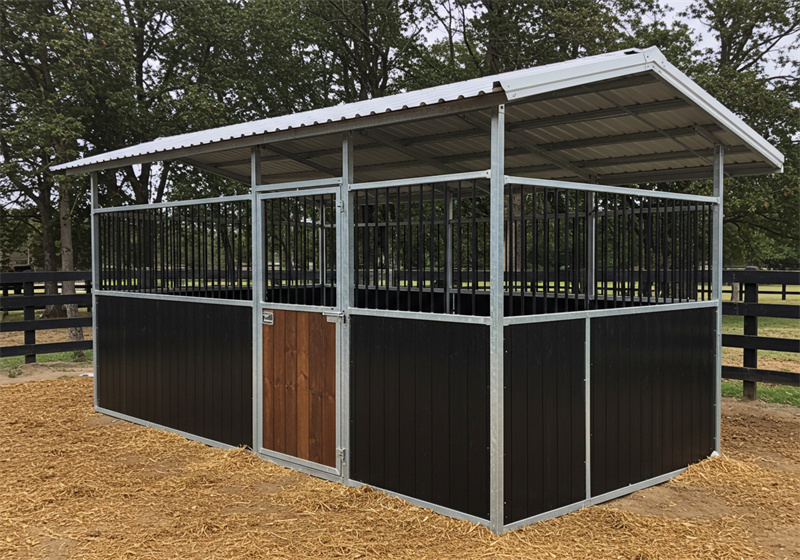
Horse Stall Door Dimensions
Doorway dimensions are the primary mechanical threshold separating routine horse movement from preventable structural injuries and facility liability.
Safe Doorway Width Thresholds
The baseline minimum horse stall door width is 42 inches. Anything below this dimension forces horses to compress their shoulder girdle when passing, increasing the probability of contact friction against the door frame. In commercial boarding facilities, that contact translates directly to hide abrasions and client complaints.
Width alone is insufficient without addressing the grill spacing on the lower door section. DB Stable specifies 1.5 to 2-inch spacing on the lower grill, deviating from the US standard recommendation of 3-inch bar centers. The reason is direct: aggressive kickers in commercial environments will wedge a hoof into a 3-inch gap. A 2-inch maximum spacing eliminates the trapping geometry without sacrificing ventilation.
Door track placement is the third variable in width-related liability. Sliding door guides left in the traffic path are a documented cause of handler bruises and tripping hazards. Rounded, offset tracks positioned outside the handler’s footfall zone are a non-negotiable specification for any commercial equestrian club evaluating vendor quotes.
Minimum Horse Stall Door Height
The minimum horse stall door height is 8 feet. This dimension must match the partition height to prevent a horse from rearing and catching its head or neck over the top of the door frame. While a 7ft kick height standard exists for general stall partitions, the doorway opening demands the full 8ft clearance because the horse’s vertical movement is most concentrated and least predictable at the entry and exit point.
The structural material at this height threshold matters as much as the measurement itself. Hot-dip galvanized steel frames over 42 microns thick prevent the zinc flaking and rust formation that cause microscopic lacerations when a horse rubs against the upper door frame. DB Stable applies a powder-coated finish over this galvanized base, providing the non-industrial appearance that commercial club owners require for client-facing facilities without reducing the 42-micron corrosion barrier.
When evaluating quotes, verify that the supplier lists 8ft doorway height as a standard, not an upgrade. If a vendor quotes 7ft 6in as standard and charges extra for full height, that is a liability cost being transferred to you, not a customization option.
| Dimensional Element | Standard Threshold | DB Stable Specification | Liability Mitigation Benefit |
|---|---|---|---|
| Minimum Doorway Height | 8 ft | 8 ft+ hot-dip galvanized frame | Prevents poll and ear trauma during entry/exit, eliminating a primary source of handler injury claims. |
| Minimum Doorway Width | 42 inches | 42-inch minimum clearance | Reduces handler crush risks and ensures safe, unhindered transit for high-value boarded thoroughbreds. |
| Lower Grill Spacing | 3 inches (US standard) | 1.5 to 2 inches | Prevents hoof wedging from aggressive kickers, mitigating severe leg lacerations and structural damage liability. |
| Door Track System | Standard floor guides | Rounded, offset tracks | Removes tripping hazards from traffic paths, directly preventing handler bruises and slip-and-fall lawsuits. |
| Partition / Kick Height | 7 ft | 8 ft minimum height | Physically prevents horses from getting legs over the wall, reducing fatal casting incidents and associated negligence claims. |

Grill Spacing and Laceration Risks
Grill spacing is the single highest-frequency injury vector in commercial boarding. Get the lower section wrong, and you are writing liability checks.
Lower Section Bar Spacing
US agricultural extension guidelines typically cite 3-inch bar centers as an acceptable baseline for horse stall grill spacing requirements. For a commercial equestrian club boarding thoroughbreds or warmbloods, that specification is a liability trap. Aggressive kickers routinely wedge a hind hoof into a 3-inch gap. When the horse panics and pulls back, the result is a lacerated coronary band or a fractured sesamoid—both career-ending, both lawsuit-triggering.
We engineer our lower grill sections to a 1.5-inch to 2-inch maximum spacing. This range eliminates hoof wedging entirely for most stock breeds and sport horses. The critical detail is that this tight spacing only applies from the floor up to the 7ft kick height standard. Above that plane, spacing can safely open up to improve ventilation and sightlines without introducing laceration risks.
The material finishing at these weld points matters just as much as the gap width. Competitors frequently specify 14-gauge steel but rely on electroplated galvanization. That process deposits a thin, brittle zinc layer that flakes at the weld joints under vibration. Those microscopic zinc shards become abrasive edges. We use hot-dip galvanized steel over 42 microns thick, which bonds at a molecular level and will not flake or create secondary laceration sites over a 10-year service life.
Anti-Cribbing Design Flaws
Anti-cribbing hardware is standard on commercial stall fronts, but the execution on most imported flat-pack kits is structurally negligent. The typical failure mode involves a steel anti-cribbing strap bolted directly to the face of the grill upright with exposed threaded fasteners. A horse working the strap creates lateral force that shears the bolt or, more commonly, leaves the exposed threads to gouge the muzzle and gums when the horse slips.
The second flaw is integrating anti-cribbing angles that reduce the effective grill opening below the safe threshold. A manufacturer might start with a 2-inch gap but weld a 0.5-inch angled deterrent inside the lower section, creating pinch points that catch a horse’s muzzle or fetlock during a panic event. We route our anti-cribbing profiles to the exterior face of the upright, preserving the internal gap geometry and eliminating pinch zones.
For distributors quoting commercial facilities in Australia and New Zealand, these two details—lower section spacing and anti-cribbing placement—are the fastest way to separate your catalog from generic imports. Club owners evaluating horse stall front safety are not looking at the roof pitch first. They are running their fingers along the weld joints and measuring the gaps at kick height.

Minimum Horse Stall Height
Partition height and kick height serve entirely different structural functions. Conflating the two is a direct liability exposure for commercial boarding facilities.
Kick Height: The Solid Barrier Zone
Kick height refers specifically to the vertical measurement of the solid lower portion of a stall partition—the area blocking direct hoof contact with the frame. For commercial facilities housing thoroughbreds or performance horses, the baseline standard is 7ft. This height prevents a horse from making contact with the horizontal structural members of the grill above during a rear-and-strike motion.
The material composition at this level matters as much as the height. We apply 10mm UV-resistant HDPE board across the full 7ft kick zone. Unlike timber or thin steel sheets, HDPE does not splinter or deform on repeated impact, eliminating the microscopic laceration risks that frequently trigger injury claims in boarding environments. The hot-dip galvanized steel frame behind the HDPE, finished at over 42 microns, ensures that even if the board is compromised, the exposed substrate will not produce zinc flaking that causes abrasions.
Partition Height: The Containment Threshold
Partition height is the total vertical measurement from the finished floor to the top of the stall front or dividing wall. The minimum threshold for commercial stabling is 8ft. This measurement exists to prevent a horse from hooking a front leg over the partition during casting or panic responses—an incident that results in severe limb fractures and immediate litigation for facility operators.
The 1ft differential between a 7ft kick height and an 8ft partition height is the grill zone. In this upper section, the grill spacing becomes the critical variable. While general guidelines suggest wider bar centers, commercial boarding operations managing aggressive kickers require 1.5-inch lower grill spacing to prevent hoof wedging. We build this tighter spacing standard into our stall fronts because the liability cost of a single trapped hoof far exceeds the marginal material expense.
Why the Distinction Drives Vendor Selection
When evaluating flat-pack imports for an Australian or New Zealand facility, the critical failure point is a supplier that quotes a high partition height but cuts the kick height to reduce HDPE material costs. A 10ft partition with only 5ft of solid kick board looks structurally adequate on a specification sheet but leaves 5ft of exposed grillwork. That configuration transforms the upper grill into a structural weak point under sustained kicking force and drastically increases the probability of leg entrapment.
For commercial club owners, both measurements must be verified independently on the vendor’s cut sheet. Accepting a single “stall height” figure without isolating the kick zone is how substandard imports pass initial approval and end up as documented evidence in injury liability cases.
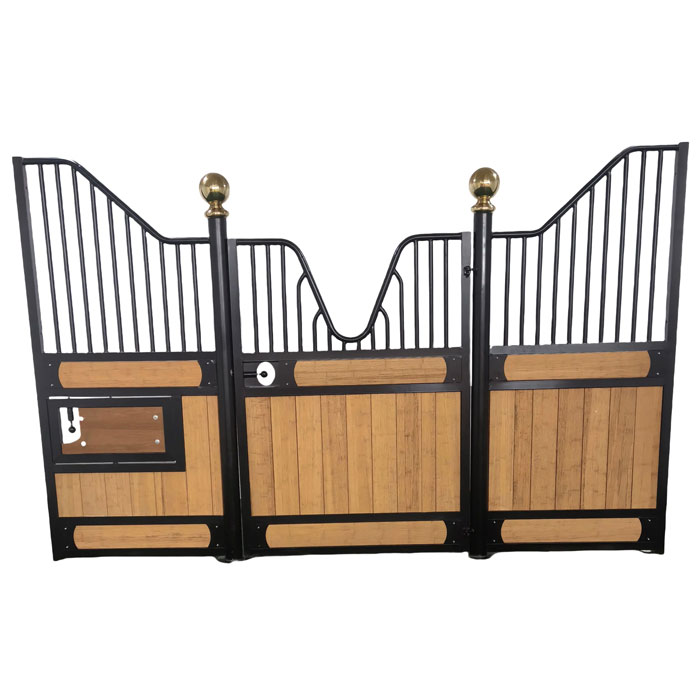
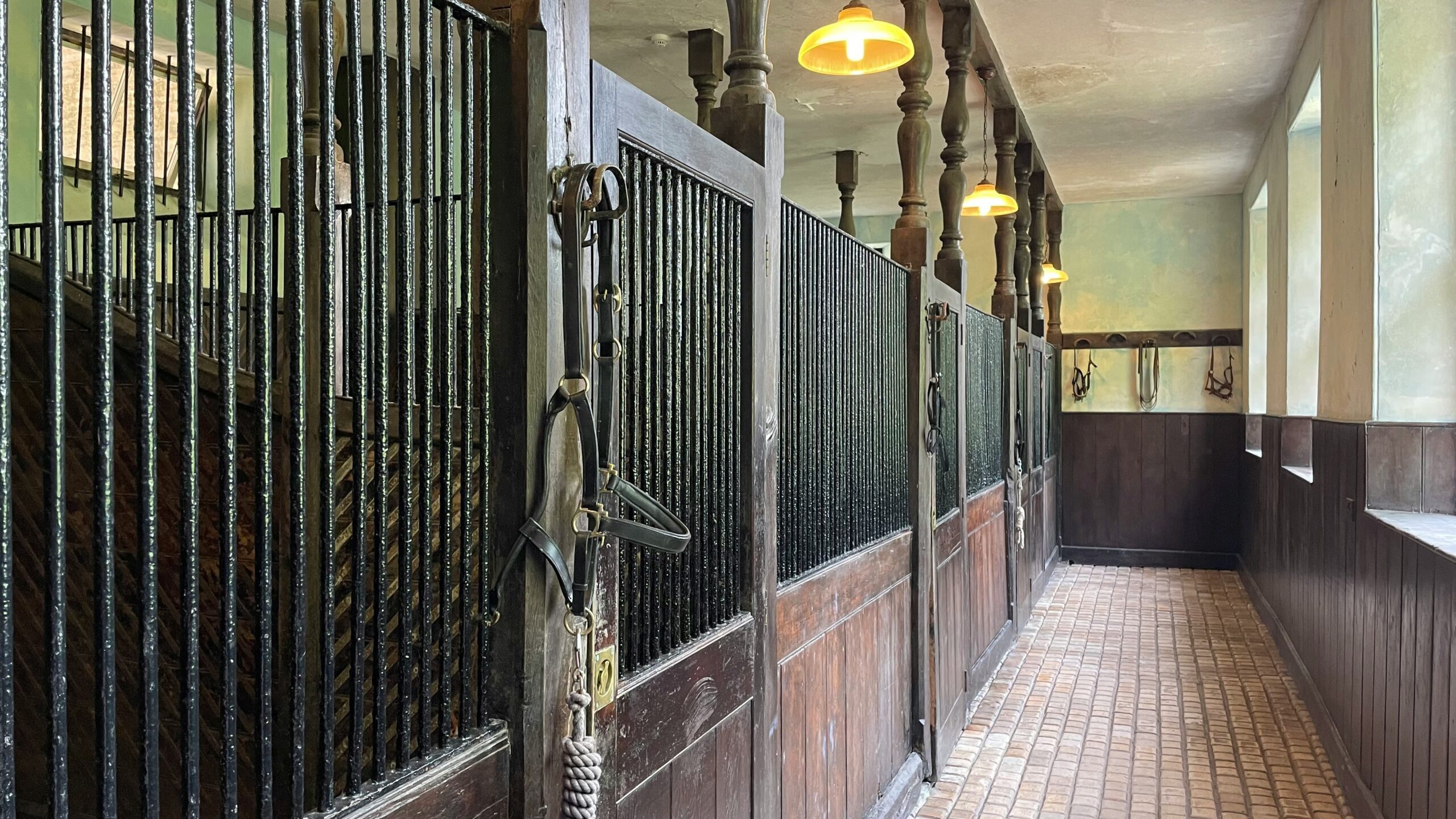
Hardware Hazards and Latch Placement
Sliding door tracks positioned in the handler’s traffic path are a primary source of workplace injury claims in commercial equestrian facilities.
Sliding Door Track Dangers
In a commercial boarding environment, handlers move rapidly between stalls during feeding and turnout. A sliding door track positioned directly in the doorway threshold becomes a predictable tripping and bruising hazard. The engineering solution is an offset track system. Instead of a floor-mounted guide that interrupts the handler’s stride, the track mechanism is recessed or suspended. When paired with a 42-inch minimum doorway width, an offset track allows staff to pass through the stall safely without altering their gait. For commercial facilities, rounded, offset tracks are a non-negotiable specification when evaluating vendor quotes.
When you review quotes for horse stall front safety, the hardware details separate a premium installation from a liability risk. You must require the following mechanical thresholds from your supplier:
- Offset Floor Guide: Tracks set back from the threshold eliminate the primary tripping hazard in high-traffic aisles.
- 42-Micron Hot-Dip Galvanization: Prevents zinc flaking that causes microscopic handler lacerations, a frequent failure point with standard 14-gauge steel.
- Minimum 8ft Door Height: Ensures adequate clearance so handlers are not forced into an awkward posture near the upper track mechanism.
- Rounded Track Edges: Removes sharp corners that cause impact bruises during rapid door operation.
Beyond the physical placement of the track, the material finish dictates secondary injury risks. Competitors frequently specify 14-gauge steel but ignore how zinc flaking from poor galvanization causes microscopic lacerations when handlers grip the door frames to slide them open. We strictly use hot-dip galvanized steel exceeding 42 microns in thickness. This prevents zinc flaking entirely, eliminating a hidden source of handler injury that often goes unreported until a formal liability claim is filed against the facility.
Specifying the correct hardware is a foundational element of commercial barn safety liability. The stall front is a mechanical system your staff interact with dozens of times daily. Approving a vendor quote that includes offset tracks and 42-micron galvanized frames is not an aesthetic preference. It is a structural liability mitigation strategy that protects your staff, preserves your premium brand image, and keeps your workplace injury record at zero.
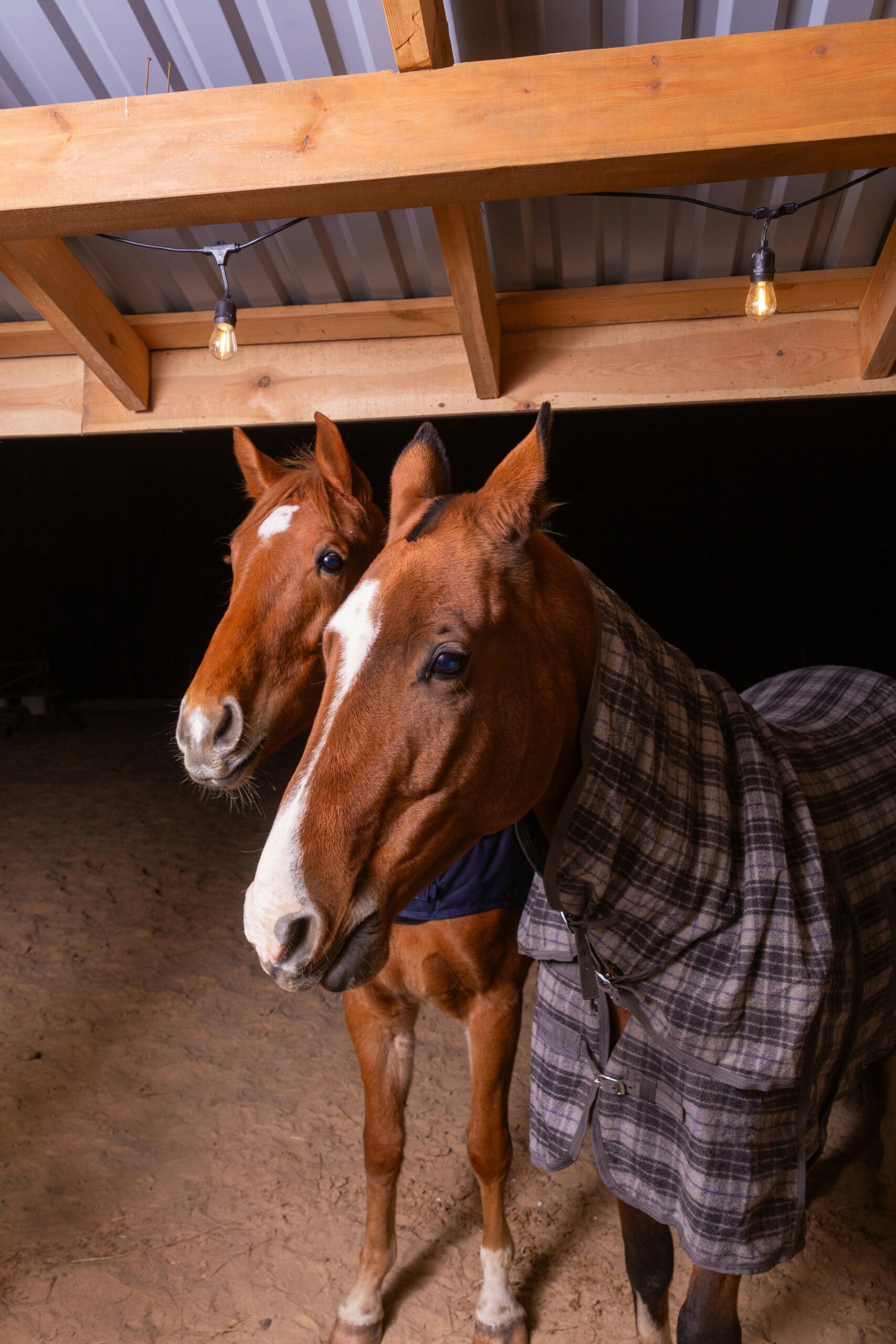
Horse Stall Size Chart
Stall square footage must scale with horse height. Undersizing increases casting risk and liability exposure in commercial boarding facilities.
The Height-to-Footage Baseline
In commercial boarding, the 12×12 ft (3.6m x 3.6m) stall is the accepted standard for horses standing 14.2 to 16 hands. This dimension directly reduces casting risk—the probability of a horse becoming trapped against a wall drops significantly when the animal has adequate room to reposition itself. For facilities boarding thoroughbreds or warmbloods exceeding 16 hands, 12×14 ft becomes the minimum defensible specification.
The correlation is mechanical. Taller horses carry more mass and generate higher force during panicked movements. Confine that mass in an undersized footprint, and the horse cannot extend its limbs to regain footing. The result is a cast horse, which in a commercial facility translates to a staff injury during extraction or a direct injury claim from the horse owner. Pair an undersized footprint with an 8ft minimum partition height, and the horse has vertical clearance but lacks the horizontal space to use it effectively.
Sizing by Horse Classification
- Ponies and small breeds (under 14 hands): 10×10 ft minimum. These animals generate less momentum during rolling, but tight quarters still increase the probability of hoof contact with partition walls.
- Standard riding horses (14.2 to 16 hands): 12×12 ft. This is the baseline for commercial facilities in Australia and New Zealand. Going below this in a boarding operation creates documented liability exposure.
- Large breeds and warmbloods (16 to 17.2 hands): 12×14 ft minimum. The additional two feet of depth provides the longitudinal clearance needed to prevent a horse from pinning itself during a panic event.
- Draft breeds (over 17.2 hands): 14×14 ft or 16×16 ft. These animals require both increased width and depth to accommodate their bulk and the wider stance they assume when recovering from a stumble.
Why Square Footage Is a Liability Metric
Approximately 30,000 farm-related building injuries occur annually, and a measurable portion involves handler-horse interactions during stall incidents. When a commercial club owner specifies undersized stalls to fit more boxes into a barn footprint, they are trading per-stall revenue for per-incident liability. A horse casting injury in a 10×10 stall that should have been 12×12 ft creates a documented negligence argument, particularly if veterinary records or witness testimony establish that inadequate space contributed to the incident.
For distributors quoting commercial projects, this sizing data is not optional context—it is a pre-sale qualification tool. Providing a height-to-footage chart to your club clients positions you as a technical partner rather than a commodity vendor. The margin saved on cramming extra stalls into a barn shell does not cover the legal and reputational cost of a single incident.
| Component | Safety Specification | Risk Prevented | DB Stable Implementation |
|---|---|---|---|
| Internal Footprint | 12×12 ft standard | Reduces casting risk | Modular single to quadruple flat-pack configurations |
| Partition Height | 8ft minimum | Prevents legs from going over the wall | 10mm UV-resistant HDPE boards with zero thermal expansion |
| Doorway Width | 42-inch minimum | Prevents handler bruises and ensures safe passage | Rounded, offset sliding door tracks out of traffic paths |
| Doorway Height | 8ft minimum | Prevents head and neck injuries during entry | Seamless structural alignment with partition height |
| Lower Grill Spacing | 1.5 to 2-inch maximum | Prevents hoof trapping and wedging by aggressive kickers | Precision-welded, flake-free galvanized steel bars |
| Kick Zone Height | 7ft standard | Mitigates structural failure and laceration risks from impacts | Over 42-micron hot-dip galvanized steel frame |
Horse Barn Safety Rules
Conduit-wired lighting and 10-foot aisle widths are the two infrastructure decisions that most directly reduce commercial barn safety liability.
Conduit-Wired Lighting
Exposed wiring in a commercial equine facility is an electrocution and fire hazard. Horses routinely kick stall walls, chew on accessible fixtures, and rub against vertical surfaces. When that contact breaches exposed electrical runs, the resulting injury or structural fire becomes a direct liability for the facility owner.
Conduit-wired lighting encloses all electrical conductors in rigid metal or PVC tubing, physically separating the wiring from animal contact. For commercial boarding operations in Australia and New Zealand, this is not an upgrade—it is a baseline specification. Insurance assessors and equine welfare inspectors consistently flag exposed runs as a negligent infrastructure choice.
When evaluating prefabricated stable kits, verify whether the lighting fixtures arrive pre-routed for conduit or require field modification. Field wiring in flat-pack installations introduces inconsistency, and inconsistent installations introduce laceration risks from exposed sharp conduit ends or poorly seated junction boxes.
10-Foot Aisle Widths
Residential barns occasionally use 8-foot aisles. Commercial equestrian clubs cannot. A 10-foot minimum aisle width is the standard that separates a functional boarding layout from a chronic injury site. The math is straightforward: a handler leading a 16-hand horse requires roughly 5 feet of clearance on the lead side alone. In an 8-foot aisle, that leaves 3 feet of buffer—insufficient when a second horse is being led in the opposite direction or when a stable hand is operating a mucking cart.
Crush injuries account for a significant portion of the approximately 30,000 farm-related building injuries reported annually. Narrow aisles force handlers into close quarters with animals that can weigh over 500kg. When a horse spooks, pivots, or kicks in a constrained corridor, the handler has no escape path. A 10-foot aisle provides the minimum reactionary space to avoid contact.
For distributors quoting back-to-back or quadruple stable configurations, aisle width directly determines the overall footprint and steel frame span required. DB Stable’s engineering team factors a 10-foot clearance into the structural calculations for multi-stable layouts, ensuring the hot-dip galvanized frame maintains load integrity across the wider span without requiring intermediate support columns that would further narrow the traffic path.
Facility owners evaluating vendor proposals should reject any layout that treats aisle width as a negotiable space-saver. In a commercial setting, every inch below 10 feet is a measurable increase in handler injury probability and a documented gap in your liability mitigation strategy.
Conclusion
If you run a premium boarding facility, spec 42-micron hot-dip galvanized steel with 1.5-inch lower grill spacing. Period. Cheaper 14-gauge imports flake zinc and cause microscopic lacerations that your wealthy clients will eventually sue you over.
Ask your vendor for a cross-section cut of their galvanized frame. If the zinc coating flakes off under a fingernail, walk away and find a supplier who uses the hot-dip process.
Frequently Asked Questions
Horse stall front safety standards?
Standards mandate minimum 8ft partition heights, less than 3-inch bottom door clearance, and 2-inch maximum lower grill spacing to prevent hoof trapping and casting.
Horse stall size chart?
The commercial baseline is 12×12 ft for average horses (14-16 hands). A 10×10 ft stall is the absolute minimum and should only be used for miniature breeds to prevent casting injuries.
Horse stall door height?
The minimum safe doorway height is 8 feet. While 7-foot doors are common, 8 feet prevents head-strike injuries when leading larger breeds and reduces the risk of a horse attempting to jump over a half-door.
Minimum horse stall height?
Partition walls must be at least 7.5 to 8 feet high. Most horses can kick as high as 7 feet, so anything shorter drastically increases the risk of a horse getting a leg over the wall.
Horse stall door dimensions?
The actual open passage should be slightly over 7 feet high by 42 to 45 inches wide. This specific clearance ensures safe passage for both the horse and the handler without shoulder rubbing.