I’ve seen a club in Victoria pour forty thousand dollars into concrete slabs, unload a container of flat-pack stables, and get a stop-work order from the shire the very next week. The supplier failed to provide the engineering documentation required for an Australian Class 10a shed. The site sat empty for four months. Your clients don’t care about your supply chain problems. They just want to know why their horse is standing in a muddy paddock instead of a secure barn.
Council approvals are not a guessing game. Planners want specific wind ratings, proof of hot-dip galvanization, and structural drawings that match local codes. I broke down exactly what your local council looks for when they inspect a prefab equine structure, and how to force your supplier to hand over the right paperwork before you pay a deposit.
Conclusion
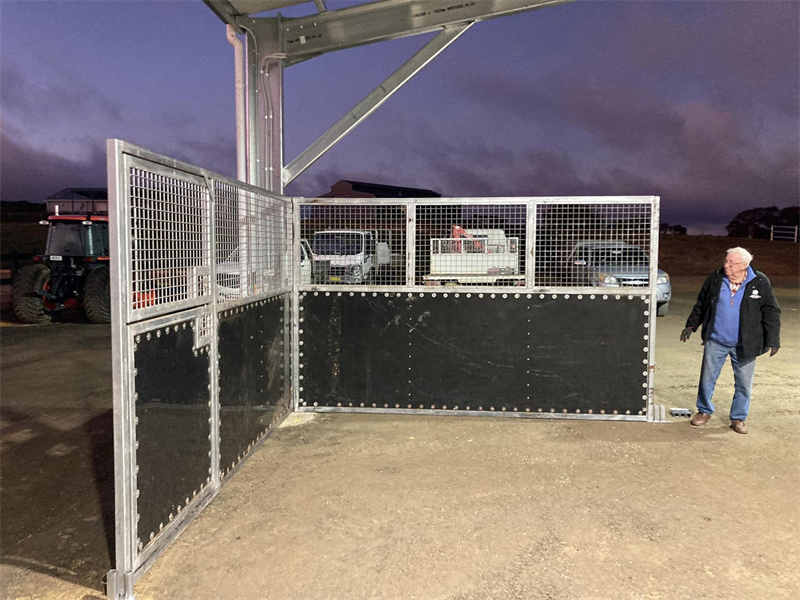
If you want to skip council building permits and protect your club’s reputation, spec a hot-dip galvanized portable stable that qualifies as an Australian Class 10a shed. Period. You avoid months of red tape and get a 10-year structural lifespan without HDPE boards warping in the summer heat.
Get your local private certifier to confirm that classification on paper before you order a single panel. Then, demand the galvanization test reports showing that 42-micron thickness claim—anything less, and you’re replacing rusted frames in five years.
Frequently Asked Questions
Are horse stables Class 10a?
Yes, in Australia, horse stables typically fall under the Class 10a building category of the National Construction Code (NCC) because they are non-habitable structures. This classification applies specifically to private garages, carports, sheds, and agricultural outbuildings. For B2B buyers and developers, understanding this classification is critical as it dictates the specific structural and engineering standards required for council compliance. It ensures the structure is legally recognized as an agricultural building rather than a habitable dwelling.
Do portable stables need approval?
Yes, even portable structures generally require council approval or a formal exemption certificate before installation in Australia. Local councils assess these applications based on site setbacks, boundary clearances, and overall footprint size rather than just the building’s mobility. However, because our prefabricated stables are engineered as relocatable structures, the approval process is often significantly faster than traditional constructions. Builders and farm owners should always consult their local council’s specific exempt development criteria before proceeding.
Does flat pack speed up approvals?
Flat pack designs do not automatically bypass council regulations, but they dramatically streamline the building certification process. Because our kits are manufactured with precise, pre-engineered hot-dip galvanized steel frames, they consistently meet strict Australian structural engineering requirements right out of the box. This removes the guesswork for professional builders and eliminates the need for on-site structural fabrication, which is a common point of council scrutiny. Ultimately, providing pre-engineered specifications to certifiers accelerates the development application approval timeline.
What wind rating do I need?
The required wind rating for a Class 10a shed depends entirely on the specific geographic location and terrain category of the Australian site. Most Australian councils mandate compliance with AS/NZS 1170.2, requiring structures to withstand regional wind speeds that can range from N1 to N4 or higher in cyclonic zones. Our stables are engineered with heavy-duty galvanized steel frames over 42 microns thick to easily pass these rigorous wind load tests. Distributors must always verify the end-user’s exact wind region before finalizing an order to ensure immediate council approval.
Are there tax benefits for 10a?
Absolutely, classifying a commercial horse stable as a Class 10a structure unlocks significant tax depreciation benefits for Australian farm owners and equestrian centers. Under Australian tax law, these non-habitable commercial buildings are recognized as depreciating assets, allowing owners to claim substantial capital works deductions over time. The portable nature of our prefabricated kits further enhances this financial advantage, as they can sometimes qualify for more aggressive depreciation schedules compared to permanent structures. This makes importing our high-quality kits a highly cost-effective capital investment for professional equine operations.