Every portable horse stable covers two surfaces: the walls the supplier ships, and the ground the horse stands on. The panels arrive as 10mm HDPE infill in galvanised steel frames, rated by the factory as UV-resistant, antibacterial and chew-resistant, with kick cushioning that protects legs and hooves. The floor is a buyer decision made before the first panel stands; it is the one surface the supplier cannot replace later without lifting the whole stable. A horse rubber mat stable floor and a managed bare-ground base are both legitimate answers, but they suit different yards.
This comparison works through the decision for DB Stable’s modular system — modules 3.0m and 3.6m long at a uniform 2200mm height, panels joining on tool-free corner pins so a crew of 2-3 people can assemble a stable in about 30 minutes. That movability is exactly what makes the flooring question sharp: the mats either travel with the yard or they do not, and the ground either drains or it does not.
Key Takeaways
- The stable system covers the walls; the floor is always a site decision. Plan it before assembly, because changing it later means lifting panels that weigh about 200kg each.
- Rubber matting suits stables that stay put for seasons: it gives the horse a consistent, cushioned standing surface and lets you hose down and disinfect between horses, matching the washable HDPE walls above it.
- Bare ground suits yards that move. A 2-3 person crew assembles a stable in about 30 minutes on corner pins; matting adds pallets of weight and labour to every move, so a rotating paddock yard often runs better on a drained, managed base.
- Drainage decides both options. Under mats, trapped urine and wash-down water rot the sub-floor within weeks; on bare ground, a stall set on poorly draining clay becomes a bog in winter. Fix the base and the fall before anything else.
- Mat thickness, density and size options are not part of the stable specification sheet, so confirm current options and freight implications with your supplier before budgeting. Ordering logic stands regardless: MOQ is 10 sets, capacity about 20 sets per week, quotes on drawings within 24 hours.
What the Stable System Covers — and What It Does Not
Be clear about the boundary line before comparing flooring options. The factory supplies the enclosure: HDPE infill panels at 10mm thickness in 2844×1194mm or 3494×1194mm sizes, framed in 50×50×2.0mm square tube, hot-dip galvanised to a factory specification of 42 microns or more with the process run to AS/NZS 4680. Standard modules run 3.0m and 3.6m long at a uniform 2200mm height, and a single stall takes 3 side panels plus 1 gate in the official configuration table, scaling to a 6-stall back-to-back block on 11 panels and 6 gates.
None of that touches the ground the horse stands on. The panels join on tool-free corner pins, about 30 minutes per stable for a small crew, which is why the floor decision sits with you. The stable is only as healthy as the surface beneath it.
The Case for Rubber Mats: Comfort and Hygiene Control
Matting earns its place where stables stand for a season or longer. A horse stabled for long hours stands on one surface almost continuously, and a consistent, slightly yielding mat reduces the fatigue and hoof wear that come from hours on bare concrete or compacted ground. The logic mirrors the walls: the HDPE infill is specified as antibacterial and washable so surfaces can be cleaned between horses, and matting extends that clean-down discipline to the floor: lift the edges, hose, disinfect, relay.
Hygiene is the stronger argument in shared and commercial yards. Bare ground absorbs whatever lands on it; a sealed mat surface, fitted with drainage in mind, can be washed down the same way the panels are. For agistment operators running horses through the same stalls, that turnover routine matters — the same logic is set out in our guide to cleaning and disinfecting HDPE panels in shared facilities, and the floor deserves a seat in that workflow.
One caution keeps this honest: mat specifications (thickness, density, sheet size, interlocking versus straight edge) are not part of the stable system’s specification sheet, and they vary by supplier. Do not accept “matting included” without a named product. Ask for the mat’s dimensions, weight per sheet and expected life in an outdoor yard, because matting is dense cargo that adds real volume and weight to a container.
The Case for Bare Ground: Portability and Cost
Bare ground is not a corner cut — for a moving yard it is the rational choice. The entire stable system is designed to relocate: panels join on tool-free corner pins, and the crew that assembles a stable in about 30 minutes can strike it and rebuild it on the next paddock. Matting works against that rhythm: every move means rolling, stacking and hauling dense rubber, labour and freight that a rotating yard pays repeatedly for a surface the next site may already provide.
Cost follows the same pattern. Matting is bought by the square metre for a footprint the modules define (3.0m and 3.6m standard lengths mean stall bays of known dimensions) and it adds a second product to source, inspect and ship alongside the stables. A drained, managed bare base costs ground works once and nothing per move. If the yard’s plan is rotational grazing, seasonal spelling or event-based setups, the base and the bedding do the comfort work, and the money not spent on matting goes into more stalls.
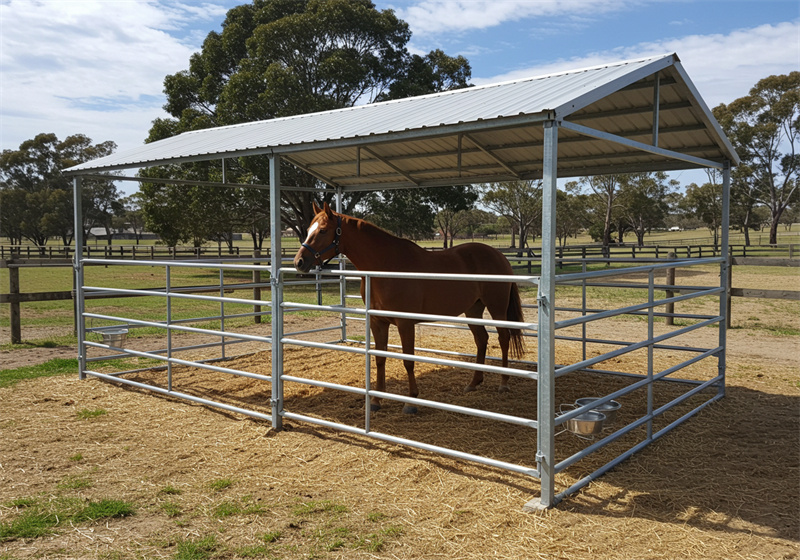
The middle path deserves a mention because most yards end up there: mat the stalls that house horses longest, spelling boxes, older horses, wash and tie areas, and run the short-stay and turnout stalls on managed bare ground with deep bedding. The modular system supports that mix, and mats can be phased in stall by stall.
Drainage Comes First Under Either Option
Whichever surface you choose, water decides whether it works. Under matting, urine or wash-down water that cannot escape sits against the sub-floor, and a sealed mat over a wet base turns a hygiene asset into a smell problem within weeks. The base under mats needs a designed fall and an escape path for liquid at the edges, checked on the worst day, a full wash-down, not the best one.
Bare ground makes the same demand in plainer form. Free-draining soils forgive; heavy clay holds water, and a stall set straight on clay in a wet winter becomes a bog that no amount of bedding fixes. If the site’s soil drains poorly, the ground works budget (cut-off drains, a gravel pad, a crowned base) comes before the flooring debate. Falls and drain types are decisions for your site contractor to local requirements.
Position the stable row with drainage in mind from the first sketch: keep the row clear of low ground, keep wash areas down-slope of stalls and feed storage, and leave the ground falling away from the panels. The panels tolerate exposure: the HDPE infill does not rot, and the galvanised frame carries a factory specification of 42 microns or more, so the walls will outlast a poorly drained base without complaint. The horse standing on it will not.
Rubber Mats vs Bare Ground at a Glance
The table condenses the trade-offs against one question: how often do these stables move?
| Criterion | Rubber mats | Managed bare ground |
|---|---|---|
| Standing comfort for long-stabled horses | Consistent cushioned surface; pairs with the kick-cushioning HDPE walls | Comfort depends on base quality and bedding depth |
| Hygiene between horses | Sealed surface can be hosed and disinfected like the HDPE panels | Absorbs waste; relies on stripping and re-bedding |
| Suiting a yard that relocates | Adds weight and labour to every move | Suits the corner-pin strike-and-rebuild rhythm |
| Drainage demand | Needs a fall and liquid escape path under the mat | Needs free-draining soil or built drainage |
| Sourcing and freight | Second product line; dense cargo adds container volume and weight — confirm specs and cost with supplier | No extra cargo; spend goes to ground works once |
| Best fit | Seasonal or permanent yards, spelling boxes, commercial turnover stalls | Rotating, seasonal and event yards that move the row |
A Decision Checklist Before You Order
- Answer the movement question first. If the row relocates within a season, bare ground with a managed base wins before comfort is even discussed.
- Test the soil before the surface. Ponding ground fails under both options; budget drains or a built pad before matting.
- Match mat procurement to stable geometry. Standard 3.0m and 3.6m module lengths define the bays — measure the mat order against them.
- Demand named mat specifications. Thickness, density, sheet size and weight per sheet come from the mat supplier; freight quotes depend on them.
- Plan the mixed yard on purpose. Mat the long-stay stalls and wash areas, run turnout stalls on ground and bedding — the modular system scales stall by stall.
Frequently Asked Questions
Do portable horse stables need rubber mats?
Not structurally — the system stands on corner pins over whatever base you prepare. Mats are a comfort and hygiene upgrade for stables that stay put for long periods, not a requirement.
Can you put a portable stable straight on the ground?
Yes, on free-draining, level ground. The galvanised frames and HDPE panels tolerate exposure — the panels do not rot and the coating is specified at 42 microns or more — but the horse’s welfare depends on drainage and base quality.
Do rubber mats cause drainage problems?
They can, if liquid cannot escape beneath them. The base under mats needs a designed fall and an escape path for urine and wash-down water at the edges; a sealed mat over a pooling base creates odour and hygiene issues quickly.
Conclusion
The flooring decision is really a movement decision. A yard that stays put earns rubber matting and its hygiene routine; a yard that travels earns a drained, managed base and the corner-pin strike-and-rebuild rhythm the system was built for. Drainage outranks both, because a base that ponds defeats mats and bare ground equally.
Sketch the row, the wet zones and the base fall on one plan, and settle the mats-versus-ground question stall by stall before you place the stable order. The system specification and configuration options are on the portable horse stable product page — start there, and let the site plan tell you where matting belongs.