Sea freight packaging decides whether a flat pack stable order arrives as a buildable kit or as a damage claim. Container loading gets the attention — how many stalls fit, how the volume stacks — but loading is only half the discipline. The other half is what physically stands between a galvanised frame and weeks of salt-laden air, condensation and handling in a steel box, and it is the half buyers most often leave unspecified until the goods are on the water.
This guide sets out the packaging side of a sea freight order for DB Stable’s flat pack stable kits — what the cargo is, what ocean transit does to it, and which standards and checks to write into the order before production starts. The system is engineered for export: panels pack flat to cut shipping volume, the hot-dip galvanising is specified at 42 microns or more with the process run to AS/NZS 4680, and orders run from an MOQ of 10 sets up to production capacity of about 20 sets per week.
Key Takeaways
- Flat pack design is a freight decision as much as a product one — the panels ship flat specifically to reduce sea freight volume, and packaging has to preserve that advantage without adding weight the volume saving just paid for.
- The cargo profile is dense and heavy: HDPE panels of 10mm thickness in frames of 50×50×2.0mm Q235 tube, roughly 200kg per panel — packaging is about restraint and separation, not cushioning.
- Galvanised steel survives salt air when the coating is intact; the transit risks are abrasion at contact points and condensation cycles inside the container, both addressed by packaging method and loading plan.
- Write the packing method into the order confirmation — bundle configuration, fittings packing and pallet or skid details are supplier-side facts to confirm, not assumptions to make.
- Third-party QC inspection is available on DB Stable orders; scope it to cover packing as well as product, so the goods are checked as they will actually travel.
- Photograph the loaded container. If damage appears at unloading, the claim process runs on documentation, and the record starts at the factory.
What Actually Travels in a Flat Pack Stable Shipment
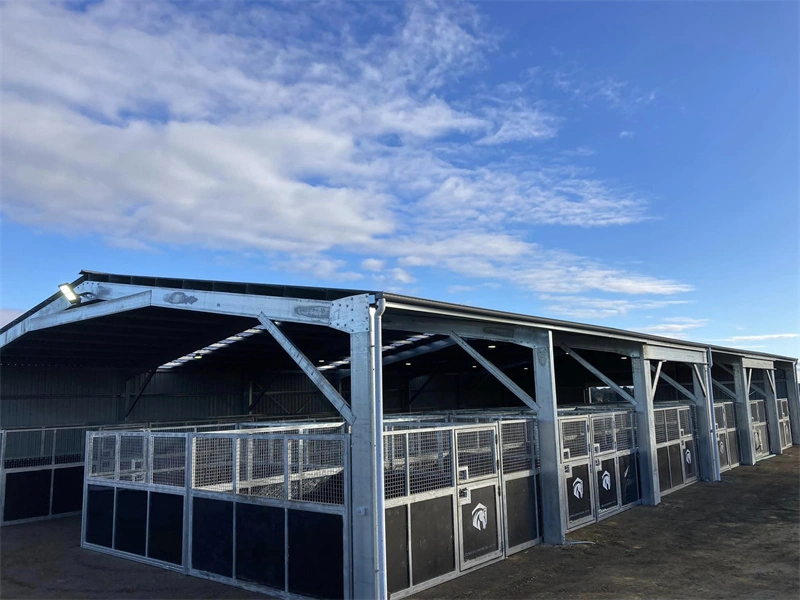
Know the cargo before you specify its protection. A stable order ships as heavy flat panels — HDPE infill at 10mm thickness in sizes of 2844×1194mm or 3494×1194mm, framed in 50×50×2.0mm square tube — plus gates and a fittings inventory that runs to items like swivel feeders, water bowls, hay racks and corner posts. The official configuration table makes the arithmetic concrete: one stall needs 3 side panels and 1 gate, while a 6-stall back-to-back block needs 11 panels and 6 gates. At roughly 200kg per panel, a multi-stall order is a shipment of dense, heavy rectangles with a carton or two of smaller hardware riding along.
That profile has a direct packaging implication: nothing about it needs soft cushioning. It needs restraint, separation and discipline. Panels must not shift inside their bundles in a rolling sea, steel must not scuff against steel or HDPE at load-bearing contact points, and the small fittings must arrive complete and attached to the right shipment, because a missing fittings carton strands a whole container of panels.
What Ocean Transit Does to Steel and HDPE
A container crossing the tropics is a corrosion laboratory. Salt-laden air, day-night temperature swings and the condensation they drive are the working threats, and they attack in a specific order: not the bulk of the steel, but its coating, and only where the coating is broken. That is why the specification matters before the packaging does — hot-dip galvanising to a factory specification of 42 microns or more, with the process run to AS/NZS 4680, puts a sacrificial zinc layer between the steel and the salt air, and zinc protects even minor scratches. The packaging job is to keep those scratches from becoming deep abrasions in the first place.
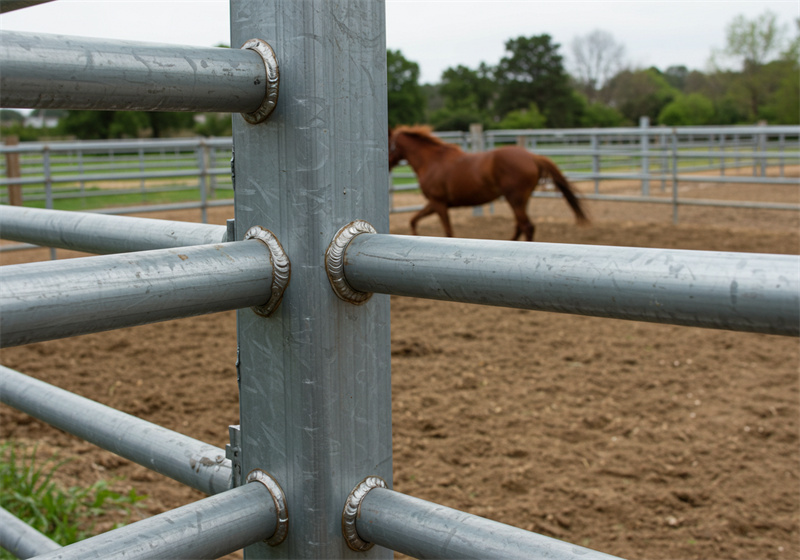
HDPE asks less of the transit but not nothing. The material is specified by the factory as UV-resistant, washable and rot-proof, so humidity and salt spray do not degrade it the way they attack timber. The realistic risks are mechanical: panels chafing against each other, sharp steel edges scoring plastic surfaces, and crushing loads stacked beyond what the bottom panels were packed for. Separation at contact points and honest stacking limits in the loading plan cover both.
Condensation deserves its own line because it surprises buyers more than salt does. Containers breathe with temperature, and cycles of warm days and cold nights can leave moisture on the cargo. Ventilation arrangements and moisture control inside the container are loading-day decisions to raise with your supplier and freight forwarder.
Packaging Standards Worth Specifying Before Production
Packaging detail belongs in the order confirmation, in writing, before production starts. Exactly how each shipment is configured — bundle sizes, strapping pattern, pallet or skid arrangement and fittings cartons — is supplier-side operational detail to confirm, and it can legitimately vary with the mix of panels and gates a container carries. What should not vary is your insistence on seeing it specified.
- Bundled panels, restrained. Panels should travel in strapped bundles sized to the order; the standard to insist on is that a bundle cannot rack or shift when tilted — the handling test it will actually face.
- Separation at steel-on-steel and steel-on-plastic contact points. No bare metal-to-metal or metal-to-HDPE bearing under load, so the galvanising and the panel faces arrive as they left the line.
- Identified fittings cartons. Bolts, pins, lugs and feeder hardware packed in marked cartons, with a packing list that ties each carton to the shipment.
- Protected surfaces on coated components. Where components carry the pre-galvanised and powder-coated finish option, the coating deserves the same scratch protection logic as the hot-dip zinc.
- Container moisture provisions. Ventilation and moisture control arranged at loading with the supplier and forwarder.
- A packing list that matches the configuration table. Whatever your stall count — 3 panels and 1 gate per stall in the standard table, up to 11 panels and 6 gates for a 6-stall back-to-back block — the loaded count should reconcile against the order line by line.
Pre-Shipment Inspection and the Loaded Container
DB Stable’s order process already carries the inspection hooks: third-party QC inspection is available with orders, inspection and testing documents can be provided, and drawings are quoted within 24 hours so the specification is settled early. Use the pre-shipment inspection for packaging as well as product — the inspector should see the goods as they will travel, verify the packing list against the order, and witness the loading.
Photograph everything at both ends. At origin: bundles strapped, cartons marked, container loaded and sealed. At unloading: the seal number, the doors opening, the load as first seen, any damage in situ before it is moved. That sequence is the evidence that connects a scratch or a crushed carton to the transit rather than to your yard. The claim process itself has its own mechanics — our guide to the shipping damage claims process walks through it.
Timing pulls the whole discipline together. Orders run from the MOQ of 10 sets against a production capacity of about 20 sets per week, so a large order occupies the production schedule for days or weeks — exactly the window to agree packaging, book the inspection and settle the loading plan. Urgent orders can move by air freight at additional cost; air freight shortens the transit exposure but raises the handling count, so the packaging standard does not drop because the voyage is shorter.
Order-Stage Checklist for Sea Freight Packaging
- Confirm the packing method in writing. Bundle configuration, strapping, separation materials, pallet or skid detail and fittings cartons, attached to the order confirmation before production starts.
- Reconcile the packing list to the configuration table. Panels and gates counted against the stall plan — 3 panels and 1 gate per standard stall — before the container is sealed.
- Book third-party QC with a packaging scope. Inspection covers product and packed condition, and witnesses loading where the schedule allows.
- Set the container environment at loading. Ventilation and moisture provisions agreed with supplier and forwarder, and noted in the loading record.
- Photograph the loaded and sealed container. Seal number visible; that photo is the anchor of any claim and the close-out of the origin side.
- Prepare the import documentation in parallel. Packaging and paperwork run on the same timeline — the documentation checklist for stable imports lists what must travel with the goods.
Frequently Asked Questions
Does sea salt air damage galvanised stable frames in transit?
Intact galvanising handles salt air — the specification is 42 microns or more of hot-dip zinc with the process run to AS/NZS 4680, and zinc even protects minor scratches. The transit risk is abrasion that cuts through the coating, which is what packaging separation is for.
How are flat pack stables packaged for shipping?
Panels are designed to pack flat, typically in strapped bundles, with gates and a marked fittings inventory packed alongside. The exact bundle configuration is supplier-side detail, so confirm it in the order confirmation for your specific container mix.
Can a pre-shipment inspection check the packaging?
Yes, and it should. Third-party QC inspection is available on DB Stable orders — scope it to cover the packed condition and the packing list, not only the product, so the goods are inspected as they will actually travel.
Why does condensation matter inside a shipping container?
Containers cycle with temperature, and warm humid air condensing on cooler cargo can wet the goods night after night across a voyage. Ventilation and moisture control arranged at loading cost little and remove the problem at origin.
What should be photographed at loading and unloading?
At origin, the strapped bundles, marked cartons and the sealed container with its seal number. At destination, the intact seal, the doors opening and any damage in place before unloading — that sequence is what connects damage to transit if a claim is needed.
Conclusion
Packaging standards are the quiet half of a sea freight order. The flat pack engineering, the 42-micron-plus galvanising and the QC process all arrive intact only if the restraint, separation and documentation travelled with them. Specify the packing method in the order, scope the inspection to cover it, and photograph the container at both ends.
If you are building an order, start with the manufacturer’s system specification and raise the packaging standard alongside it — quotes on drawings come back within 24 hours, and the packing detail belongs in that same exchange, not after the goods have sailed.