I pay attention when a buyer asks about hdpe horse stall panels after a bad container, because the story is usually the same. The boards looked fine on the quote, then arrived thinner than expected, the frame coating was anybody’s guess, and six months later the dealer was arguing over kick damage, warped fixings, and who pays for replacement freight into Brisbane or Auckland. That is expensive. One weak panel spec can wipe out the margin on a full shipment and turn a good dealer account into a warranty problem you carry for the next two seasons.
Here’s what you actually need to sort before you place a deposit: real board thickness by model, UV-stabilization claims that come with paperwork, galvanizing levels that make sense for Oceania conditions, and the install details that decide whether a panel lasts or rattles itself loose. I’m also going to get into the stuff too many suppliers dodge. You’ll see where landed cost usually leaks, which test references are useful and which are just brochure noise, what to ask for in the document pack, and how to judge spare-parts support before your customer needs a hinge, feeder, or replacement infill in a hurry.
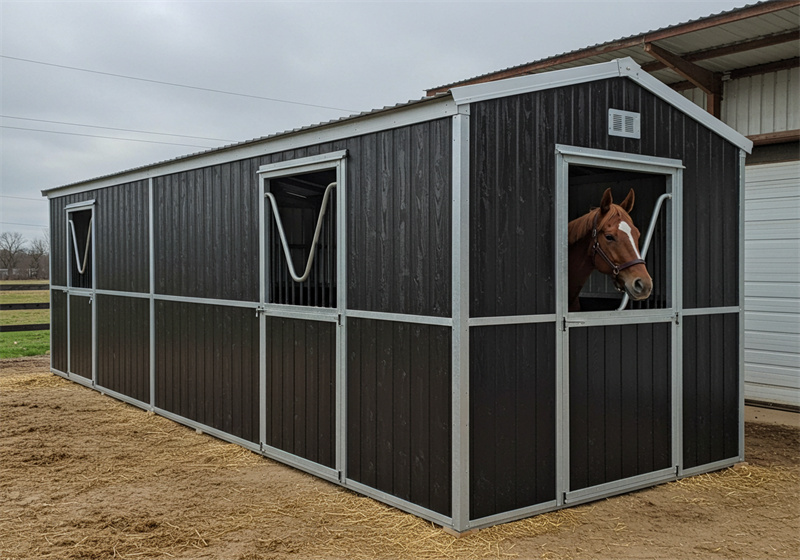
Panel specifications
For commercial horse stall panels, the real spec is the installed system. Brochure thickness alone does not tell you how the panel will perform in service.
If you are sourcing hdpe horse stall panels for Australia or New Zealand, write the specification around the full panel build, not just the infill board. In commercial buying, warranty risk usually comes from loose fit, poor galvanizing at wet zones, weak hardware, or bad installation tolerance control. We recommend treating thickness, frame, connector design, hardware grade, infill fit, and site installation allowance as one package before you commit container space or issue a deposit.
Required spec stack
A usable purchasing spec should state the HDPE thickness actually supplied, the finished panel height after installation, the steel frame material and finish, the hardware type, how the infill sits inside the frame, and the allowed installation tolerances. If one of those items is missing, you are not comparing like for like. That is where distributors lose margin later through claims, parts replacements, and install delays.
- HDPE thickness: State the actual board thickness in millimeters by model, and confirm whether that is nominal board thickness or installed effective thickness inside the frame channel.
- Panel height: Specify the installed overall panel height, not just the cut length of the steel or the board.
- Frame material: Specify hot-dip galvanized steel and request coating-thickness evidence where applicable. DB Stable positions more than 42μm coating thickness in its Oceania-facing materials.
- Hardware type: List the fastener material, hinge material, latch components, and feeder-mount fixings. If the hardware grade is not written, assume that corner was cut.
- Infill fit: State whether the HDPE is captured in channel, the support spacing, the slot allowance for movement, and whether edge gaps are built into the design.
- Installation tolerances: Define level tolerance, post alignment tolerance, hole clearance, and fastener torque guidance so the panel is not forced into a stressed position on site.
This matters because HDPE performance is not just a material question. It is a system question. A thick board installed with poor support spacing or no movement allowance can still rattle, bow, or wear at the edges. A thinner board in a properly engineered frame can outperform a thicker board sold on marketing language alone.
Thickness and sizes
In the market, 28mm to 32mm HDPE is commonly presented as the higher-duty commercial range for stable infill. That is a valid benchmark when buyers want a heavier, more rigid build for demanding equine facilities. At the same time, DB Stable’s company materials also state 10mm UV-resistant HDPE boards, so the right question is not “which number sounds bigger,” but “which model uses which board, with what frame support and what intended duty cycle.”
For procurement, verify installed dimensions rather than brochure claims. We recommend asking for the board thickness by model, the internal channel size, the visible exposed height, and the support layout across the panel span. If a supplier only gives a headline like “heavy-duty HDPE panel” without those details, you still do not know what you are buying.
- Commercial benchmark: 28mm to 32mm HDPE is widely used in higher-duty applications where impact load, wash-down frequency, and service life expectations are higher.
- DB Stable disclosed spec: 10mm UV-resistant HDPE boards are stated in DB Stable company context and should be matched to the exact panel model and support design before comparison.
- Weak point to avoid: Thin 15mm plastic liners are often marketed as a low-cost option but are regularly flagged in competitor content as a failure point in hot climates and hard commercial use.
The practical lesson is simple: do not compare raw millimeter numbers in isolation. Compare installed board support, fixing method, frame capture, and thermal movement allowance. A 10mm board in a well-supported system is not the same thing as a 10mm sheet dropped into an oversized frame with poor retention.
Frame and finish
For the frame, hot-dip galvanized steel remains the commercial baseline for portable horse stable systems aimed at Australia and New Zealand. DB Stable states a coating thickness of more than 42μm and uses that as part of its durability positioning, with a claimed 10-year lifespan benchmark in its sales materials. That is more useful than vague “rust-resistant” language because at least it gives the buyer a threshold to verify.
Connector design matters as much as coating. In market comparisons, 40x40mm square-tube connectors are generally preferred over loose round-pin styles because they reduce wobble and improve alignment in repeated assembly cycles. For a flat pack horse stable hdpe panel system, that stability matters to installation speed, fit consistency, and after-sales performance.
The corrosion-prone zones are predictable. Hinges, feeder mounts, latch points, weld transitions, and lower splash areas take the abuse first. Those areas see urine splash, wash-down water, feed residue, and frequent contact, so they should never be treated as minor details. If the supplier talks about galvanizing but avoids hardware and wet-zone protection, that is not a finished specification.
- Finish standard: Ask whether the galvanizing process aligns with ISO 1461 expectations for hot-dip galvanized fabricated articles.
- Connector style: Confirm whether the system uses square-tube connectors or a looser pin-based connection that can develop movement over time.
- Hardware exposure: Request the exact hardware specification for hinges, latches, feeder brackets, and ground-adjacent fasteners.
- Wet-zone review: Ask for close-up photos or inspection records for lower rails, hinge welds, and feeder-mount areas before shipment.
Installation tolerance reality
This is where a lot of “kick-proof” sales talk falls apart. HDPE needs room for movement, but not so much room that the panel chatters inside the frame. Support spacing, slotted holes, edge clearance, and fastener torque all affect impact response and long-term wear. If a supplier cannot explain those variables, they are selling a brochure, not a commercial system.
We recommend that buyers ask for an installation sheet covering base level tolerance, frame squareness checks, torque guidance, and infill movement allowance. That is especially important for distributors and builders who want repeatable installs across multiple sites. A clean document pack reduces installer error, protects warranty interpretation, and helps defend your margin when a customer claims a panel “failed.”
HDPE vs timber vs thin liner
For commercial procurement, the infill decision is not just about upfront material cost. It is about how the panel responds to impact, how easily it can be cleaned, how much maintenance it pulls into the operating budget, and how expensive replacement becomes after a few seasons. That is the comparison that matters for commercial portable horse stables for equestrian centers and for resellers protecting their local reputation.
- HDPE infill: Non-porous, easier to wash down, no splinter risk, and generally lower routine maintenance than timber. Real performance still depends on support spacing, channel fit, and movement allowance.
- Timber infill: Familiar and structurally acceptable in many builds, but it can absorb moisture, hold contamination, crack, or splinter over time. Ongoing sealing, replacement, and appearance management add labor cost.
- Thin plastic liner: Usually the cheapest-looking answer and often the one that creates the most callbacks. Lower impact confidence, more deformation risk in heat, and higher replacement exposure if the liner is not properly supported.
- Impact response: A properly supported HDPE system usually gives a more stable commercial result than thin liner products, while timber performance varies heavily with species, dryness, and maintenance history.
- Hygiene burden: HDPE is easier to sanitize and less likely to hold moisture or odor than timber, which matters in wash-down environments and quarantine-style applications.
- Replacement risk: Thin liners often look cheap at purchase and expensive after install because the first failure can trigger freight, labor, and customer confidence costs together.
For distributors comparing a portable horse stable hdpe panels supplier, the safe approach is to ask one hard question: what exact panel specification will arrive, how is it installed, and what proof comes with it. That is how you separate a serious prefabricated horse stable manufacturer Australia buyers can work with from a generic exporter pushing vague “premium” claims.
| Component | Specification | Benefit |
|---|---|---|
| HDPE Infill Board | 10mm UV-stabilized high-density polyethylene | Zero thermal expansion; chemical-resistant non-porous surface |
| Frame Coating | >42μm hot-dip galvanization per ISO 1461 | 10-year corrosion resistance in coastal Oceania environments |
| Structural Steel | Q345B high-tensile steel frame sections | 450kg load capacity with maintained weld integrity |
| Connection System | 40x40mm square tube connectors | Eliminates wobble associated with round pin designs |
| Fastener Hardware | 304 grade stainless steel bolts and washers | Rust-proof performance under daily high-pressure wash-downs |
| Mounting Interface | Slotted holes with calculated edge gaps | Accommodates thermal cycling without panel buckling |

Material performance
HDPE horse stall panels make sense for commercial stable systems when you want lower maintenance, cleaner surfaces, and better wash-down performance than timber, but real lifespan still depends on installation details.
Core strengths in stable use
For Australia and New Zealand buyers evaluating hdpe horse stall panels, the main advantage is not marketing language like “kick-proof.” It is predictable commercial performance. HDPE has useful impact flex, a non-porous surface, and better resistance to urine, manure contamination, and routine wash-down chemicals than timber.
In stable use, that translates into fewer splinters, less moisture uptake, and less repainting or patch repair. Timber still has a place in some builds, but it usually demands more upkeep and creates more hygiene problems over time, especially in high-turnover stalls, quarantine areas, and training facilities with frequent cleaning cycles.
- Impact flex: HDPE can absorb knocks and movement better than brittle plastic sheet materials, which helps in day-to-day horse contact.
- Non-porous hygiene: The surface does not absorb liquid like timber, so it is easier to clean and less likely to hold odor-causing residue.
- Chemical resistance: It handles stable waste exposure and normal wash-down agents better than painted or untreated wood.
- Lower maintenance: There is no sanding, sealing, or repainting cycle comparable to timber panels.
That said, buyers should separate brochure claims from installed system performance. DB Stable specifies 10mm UV-resistant HDPE boards in its current portable stable context, while some competitor pages push 28mm to 32mm HDPE profiles for commercial-duty infill. Those are not automatically equivalent applications, so importers should verify the installed thickness by model instead of assuming every HDPE panel serves the same duty level.
Performance depends on installation
This is where weak supplier content usually falls apart. HDPE performance limits are not set by resin alone. They are set by mounting method, support spacing, edge restraint, fastener torque, and whether the board is allowed to move as temperature changes.
If a supplier sells thin infill with wide unsupported spans, over-tightened fasteners, or poor channel fit, the panel can still bow, rattle, or stress at the edges. That is why experienced distributors ask harder questions: what is the support spacing, how is the panel fixed, and what spare-parts support exists if an installation crew gets it wrong?
- Mounting method: Rigid fixing without allowance for movement increases warping and edge-stress risk.
- UV package: Outdoor performance in Oceania depends heavily on the quality of UV stabilization in the board, not just the fact that “UV resistant” appears on a quote sheet.
- Support spacing: Wider spans increase deflection and can shorten service life, particularly in commercial stalls with heavy contact and frequent gate action.
For B2B buyers, this matters because warranty blowback usually starts at the install level. A panel that is adequate on paper can become a problem product if the fixing detail is sloppy or if the reseller never receives a clear installation document pack.
UV stability for Australia and New Zealand
UV stability is non-negotiable in Oceania. DB Stable’s position is clear: the board uses integrated UV stabilization during extrusion for Australia and New Zealand conditions, not a superficial afterthought. That matters because the real commercial risk is not just color change. It is fading, chalking, brittleness, and the warranty claims that follow once a panel starts looking old before its time.
Buyers should be skeptical of vague phrases like “weatherproof” or “sun-resistant” without any explanation of formulation or field intent. In this category, the right UV package helps preserve surface integrity and reduces the chance of premature cracking or cosmetic degradation in exposed yards, portable rows, and wash-down zones.
For distributors, good UV stability protects more than the product. It protects margin and reputation. Early fading may not stop a stall from functioning, but it creates customer complaints, discount pressure, and avoidable after-sales friction in markets where end users expect outdoor systems to handle tough sun exposure.
Thermal expansion must be designed in
HDPE moves with temperature. That is normal material behavior, not a defect. The mistake is pretending it does not happen. If you install hdpe stable panels without slotted holes, expansion gaps, or room at the edges, you increase the chance of warping, noise under movement, and stress concentration around the fasteners.
This is one reason we do not use the lazy phrase “zero maintenance” for hdpe horse stall panels. The material is lower maintenance than timber, but it still needs the correct fixing logic. Install crews should understand where movement is expected and where support must be firm.
- Slotted holes: Help the panel expand and contract without forcing stress into the fixing point.
- Expansion gaps: Reduce edge binding and lower the chance of buckling in hot conditions.
- Controlled fastener torque: Over-tightening can trap the board and create noise, distortion, or local cracking pressure.
For flat pack horse stable hdpe panel systems, this detail is especially important because the final result depends on local assembly quality. A supplier that understands thermal movement usually causes fewer site complaints than one that simply says the board is “stable” and leaves the installer to figure it out.
Chemical resistance and biosecurity value
Stable panels live in a harsh chemical environment. Urine, manure acids, disinfectants, and wash-down products are standard exposure, not edge cases. HDPE handles that environment well because it does not soak up contamination the way timber can. That makes cleaning faster and helps with odor control over time.
This becomes more valuable in high-turnover commercial sites, spelling barns, quarantine stalls, and any facility with tighter biosecurity routines. A non-porous infill surface is easier to wash and easier to return to service. That is an operations benefit, not just a materials talking point.
For procurement teams, the practical takeaway is simple. If you are comparing a hot dip galvanized frame hdpe stable panel system against timber-based alternatives, HDPE usually wins on hygiene consistency and labor reduction after installation. Just do not ignore the details that actually determine field performance: board thickness by model, UV stabilization quality, support spacing, and the fixing method used on site.
| Feature | Specification | Performance Impact | Buyer Note |
|---|---|---|---|
| HDPE Infill Material | UV-stabilized HDPE horse stall panels designed for portable and prefabricated stable systems | Helps reduce splintering, moisture absorption, and wash-down maintenance compared with timber infill | Well suited for commercial horse stable HDPE panel applications in Australia and New Zealand climates |
| HDPE Board Thickness | DB Stable materials reference 10mm UV-resistant HDPE boards; commercial market benchmarks often cite 28-32mm HDPE profiles | Installed durability depends on actual thickness, support spacing, panel framing, and impact zone design | Request model-specific installed thickness and section drawings before deposit |
| Thermal Behavior | HDPE boards are promoted as resistant to common timber issues; expansion control still depends on slotting, edge gaps, and fixing method | Correct mounting reduces panel stress, deformation risk, and premature fastener problems in hot climates | Ask for hdpe stable panel thermal expansion details for Australian summer conditions |
| Surface Hygiene | Non-porous HDPE surface supports frequent cleaning in high-use equestrian environments | Improves wash-down practicality and helps maintain a cleaner stall environment for training centers and studs | A strong resale point for distributors targeting quarantine stalls, breeding farms, and commercial facilities |
| Frame Material | Hot-dip galvanized steel frame with coating thickness stated at more than 42 microns in DB Stable messaging | Provides corrosion resistance and structural protection for portable horse stable HDPE panel systems | Request coating-thickness reports and confirm whether galvanizing coverage is consistent around weld-sensitive areas |
| Galvanization Reference | Buyer threshold is commonly set at or above 42μm, with ISO 1461 awareness relevant for hot-dip galvanized articles | Higher-quality coating control can reduce rust-related warranty issues during outdoor commercial use | Do not rely on generic rust claims alone; ask for standards references and inspection records |
| Impact Resistance | HDPE infill is commonly selected for kick zones because it is more forgiving than brittle or low-grade plastic liners | Can improve service life when paired with correct frame support and commercial-duty panel design | Avoid assuming any board is kick-proof; verify support spacing and hinge-side protection |
| Thin Panel Risk | Competitor content frequently flags 15mm plastic liners as a weaker option for hot or high-use commercial settings | Underspecified panels may increase deformation, breakage, and after-sales replacement risk | For distributor margin protection, compare brochure thickness against installed system performance, not marketing labels |
| Connector Stability | 40x40mm square tube connectors are often preferred over round-pin style connections in market comparisons | Can reduce wobble and improve perceived rigidity during installation and daily use | Important for flat pack horse stable kit easy installation and lower call-back risk |
| Hardware Quality | Commercial references in the market mention stainless hardware, such as 304 grade, for corrosion-prone connection points | Better hardware selection supports smoother operation and lower maintenance in outdoor environments | Confirm actual hardware grade by component, especially for feeders, hinges, latches, and exposed fasteners |
| Wash-Down Durability | HDPE and galvanized frame combinations are commonly used where frequent cleaning and water exposure are expected | Supports easier upkeep and more stable cosmetic performance than untreated timber systems | Ask how seals, edges, and fasteners are detailed to prevent hidden wear in wet-use areas |
| Real-World Lifespan | DB Stable cites a 10-year lifespan benchmark for the hot-dip galvanized frame in Oceania-facing materials | Provides a practical durability baseline for commercial portable horse stables for equestrian centers | Service life depends on coastal exposure, cleaning chemistry, installation quality, and maintenance discipline |

Mounting details
Good HDPE horse stall panels fail in the field more often from bad mounting than bad material. For distributors, that means warranty cost, rework, and damaged dealer trust.
Why mounting quality matters
If you are sourcing hdpe horse stall panels for Australia or New Zealand, do not judge the board by thickness alone. Installed performance depends on how the panel is fixed into the frame, how much movement the design allows, and whether the hardware matches the environment.
We see too many suppliers talk about UV-stabilized HDPE and then go vague on fixing details. That is where commercial problems start. A decent board in a poor mounting system can bow, stress around holes, crack at the edges, or start rattling loose after wash-down cycles and gate impact.
For a flat pack horse stable HDPE panel system, installation quality is a margin issue, not just a technical issue. One bad mounting spec can turn a container of resellable stock into call-backs, replacement claims, and site labor you did not price in.
Slotted holes, not tight holes
A proper slotted hole design gives the HDPE infill room to move within the frame during temperature cycling and daily service loads. Even when using 10mm UV-resistant HDPE boards, as stated in DB Stable company materials, the installed system still needs movement tolerance at the fixing points. If the board is pinned too tightly through round holes, stress concentrates at the fastener and the panel takes the punishment.
This is where buyers should stop accepting brochure language and ask for drawings. Request the mounting drawing, hole orientation, washer detail, and torque notes before deposit. If the supplier cannot show how the hole shape, fixing method, and frame channel work together, you are being asked to trust luck.
- Ask for hole detail: Confirm whether the fixing hole is slotted or round, and in which direction the slot runs.
- Ask for washer detail: Check washer size and bearing area so the fastener clamps securely without cutting into the board.
- Ask for torque notes: Over-tightening is a common field error and a quiet source of stress cracking.
- Ask for support spacing: A thick board can still perform badly if the support layout is lazy.
This matters even more in commercial portable horse stables for equestrian centers, where panels see repeated impact, hosing, and door movement. A supplier that gives you mounting drawings is usually more serious than one that only gives you panel photos.
Edge gaps reduce claims
Perimeter clearance and board-to-board spacing are basic, but they get missed all the time. If the board is packed hard against the frame or against the next board, the system has nowhere to absorb normal heat cycling and service movement. Then the pressure shows up at the corners, around the fasteners, or along the edge line.
For hdpe stable panel thermal expansion details, the practical buyer question is simple: what clearance does the supplier require around the perimeter, and what spacing is required between adjacent boards for the actual model supplied? Do not accept a hand-waving answer. Request the rule in writing on the installation drawing so your dealer network and site crews install the same way every time.
This is one of the easiest ways to reduce after-sales noise. Clear gap rules mean fewer edge failures, less on-site trimming, fewer arguments about whether the installer or the product caused the issue, and better consistency across repeat orders.
Fastener choice and corrosion risk
Fastener selection is not just a hardware question. It affects corrosion behavior, appearance over time, and service reliability around moving parts. In a galvanized horse stable frame HDPE board durability review, you need to look at the whole interface: hot-dip galvanized steel frame, fastener material, washers, hinges, feeders, and wash-down exposure.
DB Stable positions its frames at more than 42μm hot-dip galvanized coating thickness in Oceania-facing materials. That is a useful frame benchmark, but the fixing set still needs to be matched properly. Near hinges, feeder openings, and wet cleaning zones, mixed-metal combinations can create avoidable corrosion mismatch if the detail has not been thought through.
- Galvanized hardware: Usually the practical baseline when paired with galvanized steel frames, provided coating quality is consistent and the site is not especially aggressive.
- Stainless hardware: Often chosen for wet zones or premium builds, but buyers should confirm grade and interface detail rather than assuming “stainless” solves everything.
- Mixed-metal sets: Highest risk when used carelessly around hinges, aluminum feeders, and wash-down areas. Ask what metals are touching, what separates them, and what the supplier recommends for the actual use case.
The blunt version is this: if your supplier cannot explain why they selected galvanized, stainless, or a mixed set at each high-risk location, they have not finished the engineering. For modular horse stables for distributors and dealers, that becomes your problem once the container lands.
What to request before order
For a portable horse stable HDPE panels supplier, the minimum document pack should include mounting drawings, edge gap rules, fastener specification, and torque guidance by panel location. If the project includes feeder cutouts, hinge-heavy doors, or frequent wash-down use, ask for those details separately instead of assuming the standard drawing covers them.
That is how you protect gross margin per container. The buyer who checks mounting details early usually spends less on replacements, less on installer disputes, and less on reputation repair after resale into the Australia and New Zealand market.

Test and proof
For hdpe horse stall panels, documented proof is worth more than any brochure claim. If the supplier cannot show the test method, coating report, and import document pack, the claim is not proven.
Proof beats brochure language
This is the part many suppliers try to skip. Terms like “kick-proof,” “commercial duty,” or “zero maintenance” sound good, but they mean very little without test details, sample data, and inspection records. For Australia and New Zealand importers, vague claims turn into warranty costs, angry dealers, and margin leakage.
We recommend treating every big claim as unverified until the supplier shows the underlying evidence. That matters even more when competitors advertise 20-year rust resistance or faster installation but do not explain the method, sample build, or test conditions. A serious portable horse stables Australia supplier should be comfortable sharing proof before deposit, not after a dispute.
DB Stable’s Oceania-facing materials state hot-dip galvanized steel at more than 42μm coating thickness and 10mm UV-resistant HDPE boards. That is the starting point, not the finish line. Buyers should still verify the exact installed thickness by model and ask how the full panel system is supported, fixed, packed, and documented for resale into AU/NZ.
Impact test basics
If a supplier says an HDPE infill panel is “kick-proof,” ask them to slow down and get specific. A believable answer should explain how the panel was tested, what exact sample was used, and what counted as failure. Without that, the claim is just sales language.
- Test method: Ask what force or impact method was used, whether it was a drop-weight, pendulum, or other in-house impact setup, and whether the method was repeated consistently.
- Sample thickness: Confirm the exact HDPE thickness tested. Competitor content often pushes 28-32mm as the commercial range, while thin 15mm liners are commonly flagged as weak in harsh service.
- Support spacing: Ask the distance between frame supports. A thicker board can still underperform if the span is too wide or the channel support is poor.
- Failure mode: Was the result cracking, edge pull-out, permanent bowing, fastener tear-out, or only cosmetic marking? “No visible damage” and “no structural failure” are not the same thing.
- Recoverable deformation: Ask whether the panel returned to its original shape after impact or whether it stayed deformed. That is a practical after-sales issue, not a lab detail.
This is where experienced buyers separate brochure thickness from installed system performance. The board, frame channel, fixing detail, and span all work together. DB Stable states its 10mm UV-resistant HDPE boards do not suffer from thermal expansion in normal service, but buyers should still verify support spacing, fit tolerance, and fastener details because field performance always depends on the complete assembly, not a single headline spec.
Coating proof
For galvanized horse stable frame HDPE board durability, the right question is not “is it galvanized?” The real question is “what coating thickness was achieved, to what standard, and where are the weak spots?” That is especially important for flat pack horse stable HDPE panel systems heading into coastal or high-wash-down environments in Australia and New Zealand.
DB Stable’s stated benchmark is hot-dip galvanized steel with more than 42μm coating thickness. Ask for the coating-thickness report and whether the galvanizing was assessed against ISO 1461, which covers hot-dip galvanized coatings on fabricated iron and steel articles. If a supplier uses salt-spray language, ask whether they can show the test basis separately rather than mixing it up with galvanizing thickness claims.
- Thickness report: Request measured coating results in μm, not generic statements like “heavy zinc” or “anti-rust treated.”
- Standard reference: Check whether the report references ISO 1461 for the galvanized article, rather than unrelated or vague internal wording.
- Weld inspection: Inspect weld zones carefully. These areas often reveal whether fabrication and galvanizing quality are consistent or rushed.
- Cut areas: Look at cut ends, holes, and edges in photos or pre-shipment inspection records. These are common corrosion risk points if finishing is sloppy.
A polished product photo will not tell you any of this. A proper coating report, close-up weld photos, and a receiving inspection checklist will. That is the level of proof a commercial horse stable HDPE panel thickness review should include before you commit container space.
Compliance document pack
For distributors and project buyers, compliance is not paperwork for paperwork’s sake. It protects landed cost, customs timing, and after-sales control. If the supplier cannot issue a complete document pack for horse stall HDPE panels Australia import, you are taking avoidable risk.
- Coating report: Measured galvanization thickness report for the steel frame, with the referenced test or inspection basis.
- HDPE material declaration: Material confirmation for the HDPE infill, including UV-resistant or UV-stabilized wording where applicable to the model supplied.
- Parts list: Full component breakdown so dealers and installers can verify completeness on receipt and reorder spares accurately.
- Packing list: Clear package count, dimensions, and item references matched to the shipment.
- Installation guide: Step-by-step instructions for the flat pack horse stable kit easy installation process, including hardware sequence and panel orientation.
- Loading plan: Container loading layout for 40ft shipments so you can estimate landed margin, receiving labor, and damage risk more accurately.
- AU/NZ import paperwork: The basic commercial and shipping documents needed for customs and biosecurity handling, prepared clearly and consistently.
This is where many generic suppliers fall apart. They focus on selling the panel, not helping the buyer import, install, inspect, and support it. For modular horse stables for distributors and dealers, proof is not just about lab language. It is about whether the supplier can back the specification with documents that survive customs, site delivery, and dealer warranty claims.
Explore Flat-Pack Horse Stable Kits for Australia & New Zealand.
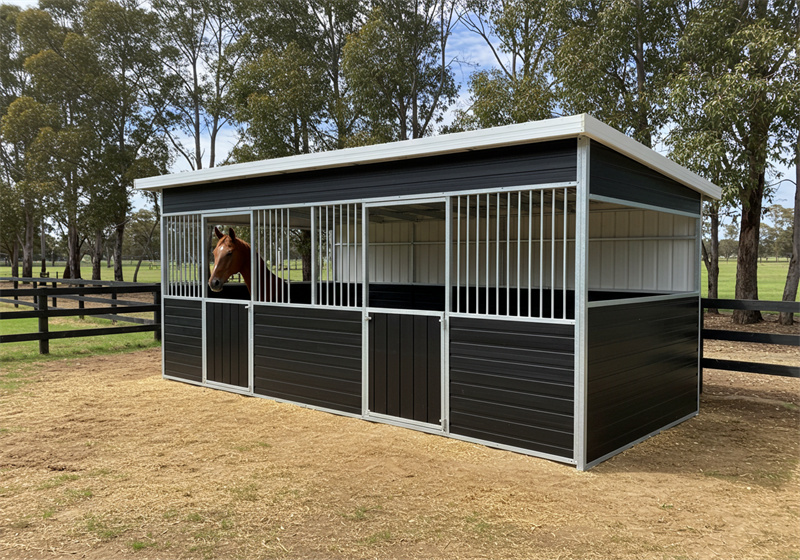

Freight and handling
Freight design is margin design. A flat-pack system with a real loading plan cuts container waste, unload delays, damage claims, and avoidable after-sales cost.
For Australia and New Zealand importers, freight and handling is not a back-office issue. It affects container efficiency, unloading speed, landed margin, and the warranty rate you inherit after delivery. If a supplier sells hdpe horse stall panels and galvanized frames without showing how the pack fits a 40ft container, how weight is distributed, and how the edges are protected, you are being asked to fund their guesswork.
Our view is simple: a flat pack horse stable hdpe panel system only works commercially when the shipping design is engineered as carefully as the stall itself. That means container-fit drawings, packing logic, clear labels, and a receiving checklist tied to the bill of materials. Anything less creates hidden installation costs and margin leakage.
Why freight design matters
A portable horse stables Australia supplier can quote an attractive unit price and still leave you with a poor landed result. The damage usually shows up later: wasted cubic space, slow devanning, mixed bundles, scratched coatings, chipped HDPE edges, and missing small parts that stall installation crews. That is where reseller margin disappears.
This matters even more for commercial portable horse stables for equestrian centers, where one delayed or incomplete delivery can disrupt a full project schedule. Buyers focused on hdpe horse stall panels Australia specs usually compare board thickness and galvanizing, but the commercial risk often sits in the pack plan, not the brochure spec. Good freight design protects both the product and the install sequence.
- Container efficiency: Better flat-pack geometry means more sellable stable capacity per container and less dead air.
- Unload speed: Bundles packed by install order reduce forklift moves, sorting time, and labor waste at the destination yard.
- Landed margin: Fewer damaged components and fewer replacement shipments protect gross margin per container.
- Damage risk: Proper edge protection and pallet logic reduce coating damage on galvanized frames and corner damage on HDPE panels.
Container fit and loading control
Flat-pack loading is not just about whether the goods physically fit inside the container. It is about whether they fit in a way that remains stable in transit, unloads safely, and matches the installation sequence at site. For modular horse stables for distributors and dealers, this is a repeatability issue. You want the same packing logic every shipment, not a different improvisation each time.
We recommend asking for a proper loading plan before deposit, especially when comparing a prefabricated horse stable manufacturer Australia import option against local fabrication. Oceania buyers regularly ask for EXW versus DDP comparisons, 40ft container loading plans, and document packs because freight mistakes hit margin faster than small ex-works price differences.
- Flat-pack loading layout: Confirm how frames, HDPE infill panels, doors, roof parts, and hardware packs are arranged inside the container.
- Container constraints: Check internal length, width, height, and door opening limits against the largest packed component, not just the nominal panel size.
- Loading plans: Request a bundle-by-bundle loading map that shows pack count, dimensions, and install sequence reference.
- Weight distribution sheets: Ask for documented bundle weights and container weight distribution so the load is balanced and forklift handling is predictable.
This is where serious suppliers separate themselves from brochure sellers. A shipment of hot dip galvanized frame HDPE stable panels should arrive as a controlled system, not as loose steel and plastic that your team has to decode in the yard. If the supplier cannot provide weight distribution sheets and a loading plan, expect more site confusion and a higher chance of freight damage.
Damage prevention in transit
Damage prevention is not glamorous, but it is one of the clearest predictors of after-sales trouble. A supplier can claim galvanized horse stable frame HDPE board durability all day long, but if hinge zones rub during transport or panel edges take impact at the container door, durability on paper does not help your customer on arrival.
For HDPE horse stall panels for distributors, the most common avoidable damage points are edge knocks, abrasion at contact surfaces, mixed hardware, and frame-to-frame rubbing at weld and hinge areas. We recommend buyers review packaging photos and packed-bundle labels before shipment release, not after a claim is raised.
- Edge protection: Use corner guards, separators, or protective strips where HDPE panel edges and coated steel corners can take impact.
- Palletization: Bundle components on stable pallets or skids sized for forklift access, with compression and movement controlled during sea transit.
- Labeling: Mark each bundle with model reference, pack number, gross weight, destination reference, and BOM linkage so receiving teams can identify contents fast.
- Packaging method: Separate hardware packs, protect hinge zones, isolate coated contact points, and avoid loose mixed components that create scratches and counting errors.
This is especially relevant when buyers are comparing commercial horse stable HDPE panel thickness. Thick boards help, but they do not cancel out poor packaging. Real-world performance still depends on support spacing, slotted holes, edge gaps, fastener torque, and how the panels were handled before installation. Freight damage often gets misdiagnosed as a material problem when it is really a packaging failure.
Receiving checklist on arrival
Do not sign off a container arrival based only on outer appearance. The first receiving check should happen before components are dispersed around the yard. Your goal is to catch transit damage, quantity shortages, and packaging errors while the trail is still clean and the claim window is still open.
- Inspect hinge zones: Check hinges, latch areas, and moving contact points for bending, rubbing, or transit deformation.
- Check coating chips: Review hot-dip galvanized surfaces for chips, abrasion, or exposed steel, especially at corners, weld-adjacent areas, and stack contact points. DB Stable’s Oceania-facing benchmark is more than 42μm coating thickness, so visible damage at critical points should be flagged immediately.
- Review panel edges: Inspect HDPE board corners and edges for crushing, gouging, or stress marks that can affect fit and appearance.
- Count against the BOM: Verify bundle count, hardware packs, panels, frames, feeders, and fittings against the bill of materials before unloading is treated as complete.
If you are importing horse stall HDPE panels Australia import volume for resale, build this checklist into your warehouse SOP. Photograph any issue before unpacking too far, isolate affected bundles, and match the defect to the pack number and BOM line. That is how you keep claims factual instead of emotional.
The bottom line is blunt: a supplier that understands freight and handling understands your business model. For Oceania distributors, the right question is not just whether the stable uses UV stabilized HDPE horse stall panels and galvanized steel. It is whether the shipment arrives complete, protected, documented, and ready to install without chewing through your margin.
Cleaning and care
Good care is procedural, not cosmetic. Regular wash-downs, scheduled inspections, and clean records are what reduce warranty friction and protect dealer margin.
For commercial portable horse stables, cleaning and care should be handled like an operating procedure, not a vague “low-maintenance” promise. That matters even more with hdpe horse stall panels and hot-dip galvanized frames, because real service life depends on how the system is washed, checked, and documented after installation. We design flat-pack stable systems for Australia and New Zealand buyers, and the same rule keeps showing up: good materials help, but poor care routines still create avoidable after-sales issues.
Practical maintenance routine
Set a cleaning schedule based on stocking density, manure contact, and wash-down frequency, not on marketing language. A high-turnover equestrian center will need more frequent rinsing and inspection than a lightly used private setup. If you are supplying modular horse stables for distributors and dealers, give end customers a written routine at handover so maintenance standards stay consistent across sites.
For galvanized horse stable frame and HDPE board durability, the main goal is simple: remove urine salts, manure residue, feed buildup, and trapped grit before they sit in joints or at lower edges. That is especially important around feeder mounts, gate corners, board channels, and any area where moisture and abrasion work together. “Washable” is not the same as “maintenance-free.”
Wash-down methods
Pressure washing is acceptable when it is controlled. Use a sensible stand-off distance and avoid concentrating the spray at one point on seals, hardware seats, board edges, or coating transitions near welds. The job is to remove contamination, not to blast the surface as if you are stripping paint from concrete.
- Water pressure: Use moderate pressure and keep the nozzle moving. Excessively close or aggressive washing can drive dirt into joints or damage edge details.
- Detergent choice: Use pH-neutral or mild detergents that are compatible with HDPE and galvanized steel. Rinse fully so no cleaner residue remains on the panel or frame.
- What to avoid on galvanized steel: Do not use strong acids, strong alkalis, chloride-heavy cleaners, or abrasive pads. These can attack the zinc surface and shorten the useful life of the coating.
- What to avoid on HDPE surfaces: Do not use solvent-based cleaners, scraping blades, or harsh abrasive brushes. HDPE is tough, but surface damage usually starts from bad cleaning tools, not from normal washing.
- Post-wash check: After rinsing, look for trapped moisture, residue lines, or movement at fixings. Cleaning time is also inspection time.
If your system uses 10mm UV-resistant HDPE boards, as specified in DB Stable’s core Oceania-facing range, be clear with buyers about application fit. In the wider market, some competitor content pushes 28mm to 32mm HDPE profiles for heavier commercial infill, while thin 15mm plastic liners are often the real failure point in hot climates. The right maintenance routine does not replace correct specification, but it does reduce avoidable warranty noise once the correct model is installed.
Annual inspection points
At least once per year, run a documented inspection across every bay, gate, and feeder position. For commercial portable horse stables for equestrian centers, I would not leave this to memory. Use a repeatable checklist and keep the photos by stall number or serial reference, especially if the site has multiple phases or imported batches.
- Loose hardware: Check bolts, nuts, hinges, latches, and connector points for movement or under-torque. Re-tighten to the supplier’s guidance rather than guessing.
- Coating damage: Inspect galvanized frame surfaces for scratches, impact marks, or localized coating loss, especially near weld-sensitive areas and high-contact zones.
- Panel creep: Look for HDPE board movement in channels, uneven gaps, bowing, or edge migration. This is where support spacing, slotted holes, and fastener torque matter in real life.
- Feeder mounts: Check rust-free aluminum swivel feeders and their mounts for looseness, misalignment, and repeated impact wear from horse contact.
- Lower-edge abrasion: Inspect the bottom edges of panels and frames where bedding grit, hoof contact, wash water, and manure slurry create the highest wear concentration.
This is also where glossy supplier claims usually fall apart. “Kick-proof” and “zero maintenance” mean very little if the board support, edge clearance, and mounting details were wrong from day one. In practice, installed system performance matters more than brochure language.
Warranty readiness
If you want replacement parts approved quickly, keep evidence before there is a problem. For an Oceania importer or reseller, warranty readiness is not paperwork for its own sake; it is how you cut argument time, protect your landed margin, and avoid blame shifting between installer, distributor, and factory.
- Photos: Keep dated photos from installation, routine service, and any defect event. Take close shots and wide shots so the part and the context are both visible.
- Serial references: Record panel IDs, batch references, container references, or project location codes so the exact shipment can be traced.
- Maintenance records: Log wash-down dates, detergent used, hardware checks, and any corrective action. This helps separate material issues from neglect or misuse.
- Request package: When asking for parts review, send the defect photos, reference numbers, installation date, and a short fault description in one file set. That gets faster answers than fragmented emails.
For buyers comparing a portable horse stables Australia supplier or a prefabricated horse stable manufacturer Australia option, this is one of the simplest credibility tests: ask how spare-parts requests are documented and processed. A supplier that understands after-sales risk will talk clearly about records, traceability, and response workflow, not just about how easy the stable is to hose down.
Buyer checklist
Buyer checklist
Before paying a deposit, treat this as a procurement control list: verify the specification, verify the landed cost, and verify the support commitment in writing.
If you are buying hdpe horse stall panels or a flat pack horse stable kit for Australia or New Zealand, the real risk is not the brochure. The risk is paying on assumptions. A supplier can talk about UV-stabilized HDPE, hot-dip galvanized steel, and fast installation all day, but if the proof pack is thin, the freight basis is vague, or the spare-parts plan is missing, your margin and reputation are exposed. Use the checks below before deposit release, especially if you are importing commercial portable horse stables for equestrian centers or building dealer stock.
Use this as a deposit gate
This section is meant to work as a procurement decision tool, not a marketing summary. If a supplier cannot provide technical proof, commercial assumptions, and after-sales commitments before deposit, do not expect those gaps to disappear after the container sails. For Oceania distributors, the cost of getting this wrong is not just one bad order. It is warranty claims, delayed installs, damaged dealer trust, and dead margin on local delivery corrections.
- 🏷️ Category: Procurement control
- 🎯 Core Outcome: Lower deposit risk and fewer post-arrival surprises
What to confirm before payment:
- Exact installed spec: Confirm the HDPE board thickness by model, not by generic brochure language. DB Stable states 10mm UV-resistant HDPE boards in its company materials, while competitor pages often promote 28-32mm commercial HDPE profiles. That difference matters, so ask what is installed in the quoted configuration.
- Frame and coating basis: DB Stable’s Oceania-facing materials position hot-dip galvanized steel at more than 42μm coating thickness with a 10-year lifespan benchmark. Ask how that is documented for your order, including welded areas if relevant.
- Mounting details: HDPE performance depends on support spacing, slotted holes, edge gaps, and fastener torque, not just board thickness. A “kick-proof” claim without install detail is sales talk.
- Container basis: Confirm the loading plan, palletization, protection materials, and receiving sequence before funds move. Flat-pack horse stable kit easy installation starts with organized packing, not just simple panels.
Supplier proof pack
For a prefabricated horse stable manufacturer Australia buyers can trust, the proof pack has to do more than look professional. It must tie the quote to the production spec and tie the production spec to what actually lands in the container. If the supplier sends only a quotation and a few photos, that is not a proof pack. That is a liability transfer exercise.
- 🏷️ Category: Documentation and supplier validation
- 🎯 Core Outcome: Better spec control, fewer disputes, faster receiving checks
Required documents:
- Material specification sheet: List steel grade where declared, tube sizes, HDPE type, installed HDPE thickness by model, UV resistance statement, hardware material, and feeder material if included. If a supplier claims 304 stainless hardware or Q345B frame, make them state it on the approved spec, not casually in chat.
- Coating proof: For galvanized horse stable frame HDPE board durability, ask for coating-thickness records and clarification on process scope. If the supplier references hot-dip galvanizing, ISO 1461 is the relevant standard to discuss for galvanized articles. If they mention salt-spray context, keep it separate from galvanizing thickness claims and ask what exactly was tested.
- Panel drawings: Get dimensioned drawings showing panel width, height, infill layout, hinge side, latch side, support spacing, connector style, and fixing points. This is where brochure thickness often falls apart against installed system performance.
- Packing list: Require a line-by-line packing list with panel counts, hardware packs, feeder counts, gross and net weights, and package marks. For horse stall HDPE panels Australia import jobs, this is what protects your warehouse receiving process.
- Warranty terms: Demand written warranty scope, exclusions, claim window, claim evidence required, and whether freight on replacement parts is covered or not. A vague “10-year lifespan” statement is not the same as a warranty commitment.
- Response SLA: Ask for written reply times for technical questions, shortage claims, and warranty claims. If the supplier cannot state a response SLA before deposit, expect slow motion when something breaks.
We recommend requesting this proof pack in one PDF bundle before payment approval. It keeps your buying file clean and gives your local team one source of truth when the container arrives.
Landed cost checks
For modular horse stables for distributors and dealers, landed cost discipline matters more than headline unit price. A cheap EXW quote can lose to a cleaner FOB or DDP offer once export handling, ocean freight swings, customs entry, GST, quarantine-related document issues, and final-mile delivery are added back in. Oceania buyers should insist that every supplier quote against the same destination, same container type, same Incoterm basis, and same local assumptions.
- 🏷️ Category: Import cost control
- 🎯 Core Outcome: Protect gross margin per container
What to compare across Incoterms:
- EXW: Check factory pickup, export clearance responsibility, loading charges, origin documents, and whether your forwarder is actually set up to handle the shipment at source. EXW often looks cheap because it leaves problem costs outside the quote.
- FOB: Confirm port of loading, terminal handling assumptions, export customs inclusion, and cargo cutoff risk. For many buyers, FOB is the cleanest comparison point because ocean freight can then be priced independently.
- CIF: Check exactly what marine insurance is included and what destination charges are excluded. CIF can hide destination surprises if your team assumes more is covered than it really is.
- DDP: Verify whether GST, customs duty, brokerage, inspection fees, and local delivery are genuinely included, and ask who carries the cost if customs reclassification or document correction is needed. DDP is only useful if the inclusion list is explicit.
Do not miss these local-cost items:
- GST and duty: Confirm tax treatment on the exact import entry basis for Australia or New Zealand. Do not assume the supplier’s tax language matches your broker’s classification.
- Customs and biosecurity paperwork: Buyers regularly ask for biosecurity-ready document packs for good reason. Missing or sloppy packing declarations can cause delay costs that wipe out any unit-price advantage.
- Local delivery: Include wharf transfer, unpack fee, regional haulage, crane or forklift requirement, and redelivery risk if site access was not checked properly.
- Shortage and damage buffer: Add a realistic allowance for replacement hardware, urgent courier shipments, or installer downtime. This is where portable horse stable hidden installation costs usually show up.
Our team designs flat-pack stable systems for container efficiency, but container efficiency only improves your result if the quote basis is clean. Ask for the 40ft container loading plan, package dimensions, and unloading sequence before confirming the order.
After-sales support
This is the part many suppliers underplay because it is where weak systems get exposed. For commercial portable horse stables for equestrian centers, your problem is rarely one dramatic failure. It is the pile-up of small failures: missing bolts, bent fittings, a damaged panel, wrong handing, or install questions no one answers fast enough. If you are buying for resale, that delay lands on your name, not the factory’s.
- 🏷️ Category: Post-arrival risk control
- 🎯 Core Outcome: Faster installation success and lower warranty friction
What to lock down before order confirmation:
- Spare parts availability: Ask which items are stocked for immediate dispatch after shipment, especially hinges, latches, connectors, feeder parts, bolts, and HDPE replacement pieces. A supplier that cannot define stocked spares is asking you to carry the support risk.
- Engineer response time: Get a written response commitment for installation and fault questions after container arrival. A real SLA should define first response timing and escalation timing, not just “we will support you.”
- Hardware support: Confirm whether each kit ships with extra hardware and whether labeled hardware packs match panel marks and drawings. This matters more than people admit on flat pack horse stable HDPE panel system installs.
- Claim process: Ask what photos, videos, package marks, and receiving notes are needed to open a shortage or damage claim. If the process is unclear, the claim will drag.
- Technical troubleshooting: Confirm who supports fit-up issues tied to thermal expansion details, slot alignment, or panel clearances. UV stabilized HDPE horse stall panels still need correct mounting practice.
The bottom line is simple. When comparing any horse stable supplier comparison Australia shortlist, ask which supplier is easiest to deal with on day 45, not just day 1. That is usually the supplier worth paying a deposit to.
Conclusion
I’d only buy hdpe horse stall panels for Australia if the supplier can prove the installed board thickness by model and show galvanizing records at or above the 42μm mark. Thin 15mm liners are where the trouble starts. For dealer stock, I’d spec the commercial 28-32mm range on impact zones every time, because one bad summer and a few kick cracks will wipe out your margin faster than any unit-price saving.
Ask for three things before you pay a deposit: a cut sample, a coating-thickness report, and a packed-container loading plan with spare-parts list. Then compare two landed quotes, one EXW and one DDP, and check the document pack for biosecurity and customs clearance. If a supplier gets vague on support spacing, slotted holes, edge gaps, or replacement lead times, walk away.
Frequently Asked Questions
What is HDPE?
HDPE (High-Density Polyethylene) is an industrial-grade thermoplastic polymer engineered for extreme impact resistance, chemical stability, and longevity in demanding agricultural environments. DB Stable utilizes 10mm UV-resistant HDPE boards specifically selected to replace traditional timber in portable equine facilities, offering a non-toxic, splinter-free surface that withstands the physical demands of thoroughbreds and commercial horse operations. This material combines high tensile strength with moderate flexibility, allowing it to absorb kick impact without cracking while maintaining structural rigidity across Australian climate conditions. For B2B clients, HDPE represents a cost-effective, hygienic solution that eliminates the rot, warping, and maintenance cycles inherent in wood-based stable construction.
Are HDPE panels kick proof?
While no equine barrier is entirely indestructible, DB Stable’s 10mm HDPE panels are specifically engineered to withstand high-impact forces from aggressive horses, including thoroughbreds known for destructive stable behavior. The high-density molecular structure provides exceptional energy absorption and impact distribution, significantly outperforming timber, PVC, or low-density plastics that fracture or splinter under stress. Our specifications target professional equestrian centers where horse safety and facility durability directly impact operational profitability and animal welfare standards. This robust construction minimizes injury risks to valuable livestock while reducing replacement frequency and liability concerns for commercial stable operators across Australia and New Zealand.
Do HDPE panels warp in heat?
DB Stable’s HDPE panels are manufactured with advanced UV stabilizers and thermal expansion inhibitors that prevent warping, bowing, or dimensional distortion even during extreme Australian heat waves exceeding 40 degrees Celsius. Unlike standard plastics that deform under thermal stress, these 10mm boards maintain precise geometric tolerances through significant temperature fluctuations common to Oceania’s diverse climate zones. This zero-thermal-expansion property ensures consistent gap clearances and secure hardware alignment throughout seasonal changes, eliminating the structural compromises that plague traditional materials. For professional stable builders and distributors, this thermal stability guarantees that flat-pack installations retain their safety specifications and professional appearance without costly seasonal adjustments or realignments.
How thick should HDPE panels be?
Commercial equine applications require HDPE panels manufactured at a minimum 10mm thickness, which DB Stable maintains as the non-negotiable standard for all portable stable configurations targeting Australian B2B markets. This specification delivers the optimal strength-to-weight ratio necessary to contain powerful horses while maintaining the logistical efficiency required for international flat-pack shipping and DIY installation. Thinner boards compromise impact resistance and structural longevity, while excessive thickness adds unnecessary freight costs and installation complexity without proportional performance benefits. Our 10mm specification has been validated through years of deployment in demanding thoroughbred operations, meeting the technical procurement standards of professional stable builders and equestrian center owners who prioritize both durability and portability.
Are HDPE horse stall panels easy to clean?
HDPE panels provide superior sanitization capabilities through their completely non-porous, hydrophobic surface that actively resists moisture absorption, bacterial colonization, and organic staining from equine waste or feed products. Unlike wooden components that harbor pathogens in grain structures or promote fungal growth, DB Stable’s high-density polyethylene allows for thorough disinfection using pressure washing or agricultural cleaning agents without material degradation or toxic residue retention. This hygienic efficiency supports Australian biosecurity protocols and reduces labor costs associated with daily stable management in commercial operations. The smooth 10mm surface prevents dangerous ammonia buildup and bedding accumulation, creating healthier respiratory environments for valuable thoroughbred stock while maintaining the professional appearance required by high-end equestrian facilities.