The moment of truth for a portable horse stables Australia buyer isn’t when the container arrives at the dock. It’s six months later, when your client calls to say the frame is rusting behind the kickboards and the HDPE panels have started bowing in the afternoon sun. That $50K order you signed off on based on a glossy sample photo suddenly becomes a warranty claim, a lost account, and a reputation hit that takes years to undo.
I’ve watched this play out across more supplier audits than I care to count — from mills in Jiaxing running single-dip galvanizing lines that deposit under 30 microns, to brokers who swap out hot-dip spec sheets after sample approval. The gap between what gets quoted and what lands in your yard is rarely visible in a catalog. It shows up in coating thickness reports, thermal expansion data, and customs invoices that suddenly eat 15% of your margin. For procurement managers running commercial investigations into flat pack horse stables New Zealand import duty or hot dip galvanized horse stalls australia price, the real work happens before you wire a deposit.
Common Mistakes
A photo can’t show a 30-micron galvanizing layer.
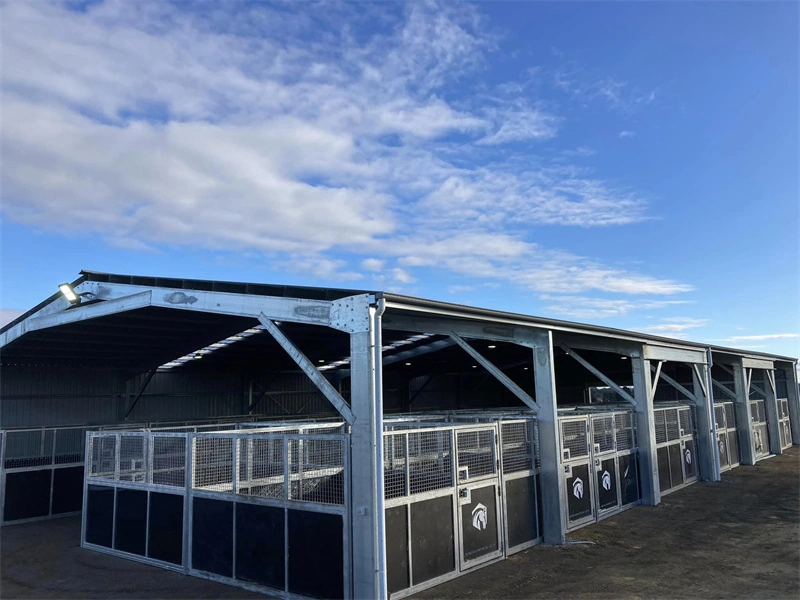
The product page shows a glossy stable front that looks identical to branded competitors. What the photo doesn’t reveal is whether the frame is hot-dip galvanized to 42 microns or just painted mild steel. In Australia’s ammonia-rich stable environments, painted steel starts flaking within 12 months. The rust appears under the paint, invisible until the frame buckles.
- Painted mild steel: Fails salt spray testing (ASTM B117) under 200 hours. Rust blooms at weld points and cut edges within 6 months in coastal Queensland or New Zealand’s high humidity.
- Hot-dip galvanized (≥42µm): Withstands 1,000+ hours salt spray. The zinc coating sacrificially protects cut edges. A 10-year lifespan is realistic when coating thickness is verified with a magnetic gauge.
- Port handling & unpacking: Terminal handling charges (THC) plus unpacking fees typically add AUD $350–$500 per container.
- Customs & quarantine: AQIS inspection for timber pallets and animal bedding residue costs AUD $150–$250. If the container is flagged for x-ray or fumigation, add another AUD $300–$500 in delays.
- Shear failure: Bolt holes elongate, panels loosen, and the stable develops gaps that allow pest ingress. Repair costs for a 12-stall barn run AUD $2,000–$4,000.
- Material solution: 10mm UV-stabilized HDPE with a thermal expansion coefficient below 5×10⁻⁵ mm/mm/°C, plus slotted mounting holes to allow movement. This is not found in cheap import catalogs.
The freight quote from Shanghai to Melbourne looks reasonable at AUD $2,800. What’s missing: terminal handling, AQIS quarantine documentation, and contingency release fees. Add another AUD $600–$950 before your container clears the port. Forget to budget this and your margin disappears.
Standard polyethylene panels sold as ‘maintenance-free walls’ have a coefficient of thermal expansion roughly 10x that of steel. When inland NSW temperatures hit 40°C, the panels expand and push against the frame bolts. Without proper design gaps, the bolts shear within 18 months. The fix requires replacing entire panels and drilling new mounting holes.
Solutions
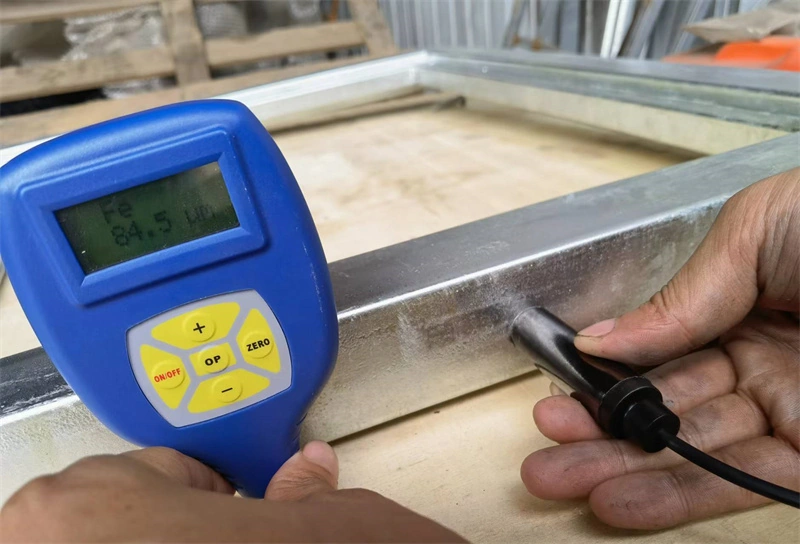
A coating thickness gauge costs $200.
The first thing every new supplier is asked for is their third-party coating thickness certificate— not a photo of a galvanizing bath, not a PDF of their ISO certificate, but a magnetic induction test report from an independent lab showing minimum 42 micrometers on all surfaces including internal flange faces. If they hesitate or send you a generic mill certificate, you are looking at electro-galvanized steel that will flake off within 18 months in the ammonia-rich environment of any Australian stable. Entire container loads have been rejected at port because the coating measured 28 microns on the bottom rail — that metal was already oxidizing before it left the factory.
- The Test Method: Request a report using ISO 2178 or ASTM B499 — magnetic induction method. The reading must be taken on vertical surfaces and inside stiffener flanges, not just on flat external panels where coating naturally pools thicker.
- The Failure Mode: Below 35 microns, hot-dip galvanizing loses its cathodic protection ability. In coastal Queensland or high-humidity New Zealand zones, red rust appears within two years. Your end customer calls the builder, the builder calls you, and your margin disappears into replacement labor.
- The Verification Step: Ask for photos of the gauge measurement during your pre-production inspection. Any factory running proper HDG lines will happily show you this — they know it separates them from the single-dip shops.
Conclusion
Skip the coating thickness check, and you are looking at frame rust within two years on a coastal property. Ignore the HDPE thermal expansion spec, and those panels will shear their mounting bolts after one extended heatwave in inland NSW. The gap between a AUD $3,500 FOB quote and a AUD $5,000 quote is not margin — it is the difference between a stable that lasts a decade and one that triggers warranty calls before the second winter.
You already know the market demands commercial-grade durability at a competitive landed cost. Review the hot-dip galvanized frame specs and HDPE panel certifications against your next tender requirements now, before you lock in a supplier for your bulk order. Browse matching products and sourcing solutions to see how the specifications discussed here translate into production-ready designs.
Frequently Asked Questions
What is the safe price range for a portable horse stable delivered to Australia?
The safe purchase price for a commercial-grade one-horse stable delivered to an Australian port is AUD $3,500 – $5,000 FOB. Prices below this almost always use low-grade electro-galvanized steel or thin HDPE that cracks in. Always verify material specs before comparing prices.
How thick should hot-dip galvanizing be on horse stables?
Industry standard requires hot-dip galvanizing over 42 microns thickness for durability in coastal ammonia environments. Many cheap factories deposit under 30 microns, which will rust within two years. Test with a coating thickness gauge before accepting shipment.
What hidden costs come with importing horse stables to Australia?
Total landed cost includes FOB plus 10% customs duty, GST, port handling, and quarantine inspection fees of AU$500–$1,000 per container. Failing to budget this destroys your profit margin overnight. Always calculate total landed cost before quoting your client.
How to verify HDPE panel quality for horse stables?
HDPE should be 10mm thick and UV-resistant to avoid thermal expansion and cracking. Cheaper panels warp in summer heat and shear mounting bolts. Request a material sample and test for UV stability.