This is where the HDG vs electro galvanized decision becomes more than a technical footnote — it’s the difference between a structure that holds value and one that depreciates faster than the horse. Electro-galvanizing deposits a thin layer, typically 5-12 microns. Hot-dip galvanizing (HDG) leaves 42 microns or more. That factor-of-three gap is why a frame in coastal salt spray fails in 2-3 years with electro, or runs 10+ years with HDG. The standard answer from most suppliers is ‘our galvanizing meets industry standards.’ That answer is meaningless without the number. On your next supplier call, ask for the mill test certificate showing average coating thickness. If it’s under 42 microns, you’re looking at a thin coat. That benchmark — 42 microns minimum under ASTM A123 — is your reference point. Write it down. Use it.
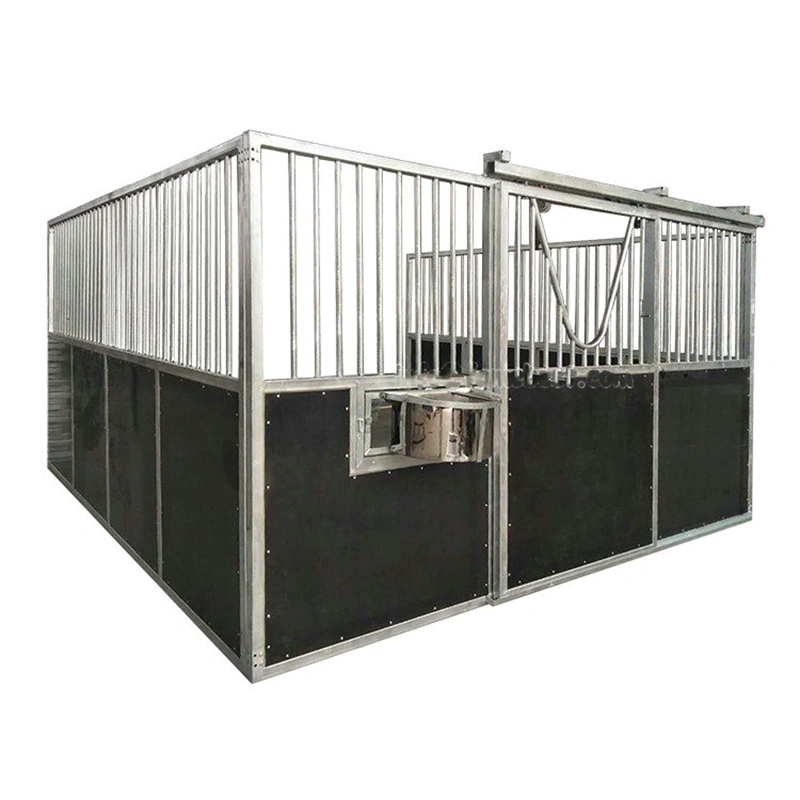
The Problem: Rust in Australian and New Zealand Conditions
Thin zinc coatings on electro-galvanized frames fail within 2 years in coastal Australian conditions.
Coastal salt spray carries concentrated chloride ions that settle on metal surfaces. Inland humidity creates condensation cycles that trap moisture against steel. Both environments accelerate corrosion far faster than dry continental climates, yet many imported horse stable frames ship with coatings designed for temperate European warehouses.
The failure mechanism is simple: electro-galvanized coatings are only 5 to 12 microns thick. That thin layer cannot block chloride penetration or handle the abrasion from daily horse activity. After 18-24 months, red rust appears at weld points, edges, and scratched areas. Once the zinc barrier is breached, corrosion spreads beneath the coating, delaminating it in sheets.
- Coastal salt spray: Chloride ions penetrate electro-galvanized layers within months, triggering pitting corrosion that requires frame replacement in 2-3 years.
- Inland humidity: High diurnal temperature swings cause condensation on metal surfaces. Thin coatings cannot stop moisture from reaching the steel substrate, leading to rust under the zinc layer.
- Scratch failure: A single scratch from a horse kick or stable cleaning tool cuts through the 5-12 micron electro layer. Exposed steel begins rusting immediately, and the corrosion spreads horizontally under the remaining coating.
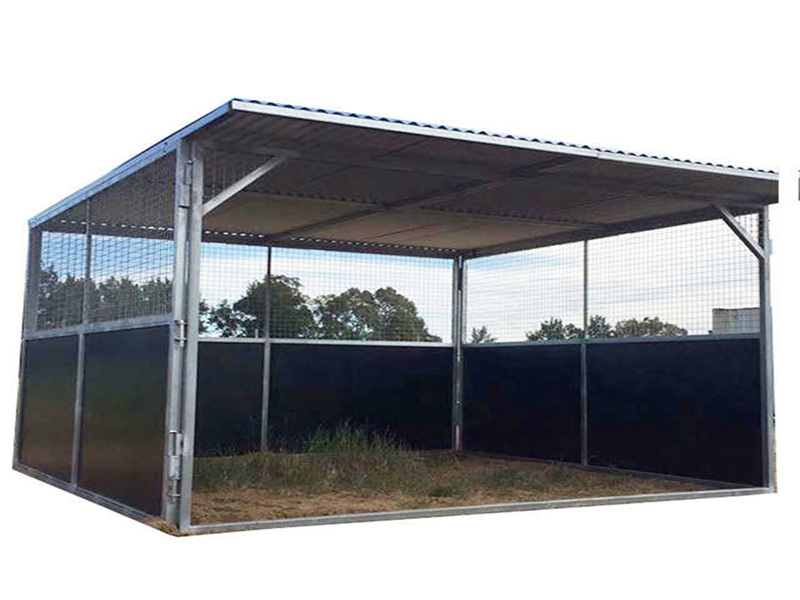
What Is Hot-Dip Galvanizing (HDG)?
Hot-dip galvanizing bonds a thick zinc layer to steel, lasting 10+ years in coastal environments.
Hot-dip galvanizing (HDG) is the process of immersing fabricated steel components into a bath of molten zinc at approximately 450°C. The metallurgical reaction creates a series of zinc-iron alloy layers, topped with a pure zinc outer layer. This alloy bond is what makes HDG different from painting or electroplating — it’s not a coating that sits on top; it’s fused into the steel surface. That means if a horse kicks a frame or a gate gets scraped during transport, the zinc layer doesn’t peel off in sheets. The exposed steel still has cathodic protection from the surrounding zinc.
For structural applications like horse stable frames, ASTM A123 specifies a minimum local coating thickness of 42 microns (1.7 mils) for steel sections over 3 mm thick. DB Stable’s hot-dip galvanized frames exceed this standard, delivering a consistent coating of 42 microns and above. To put that in perspective: electro-galvanized parts carry only 5–12 microns — roughly the thickness of a single layer of paint. That thin coating fails within 2–3 years in Australian coastal salt spray or inland humidity. A simple visual check: HDG has a matte gray finish with a slightly rough texture, while electro-galvanized looks shiny and smooth like a car bumper. If a supplier claims ‘galvanized’ but the frame is bright and reflective, request a mill test certificate or run a knife test — the zinc layer should be thick enough to shave off as small flakes, not just a surface scratch.
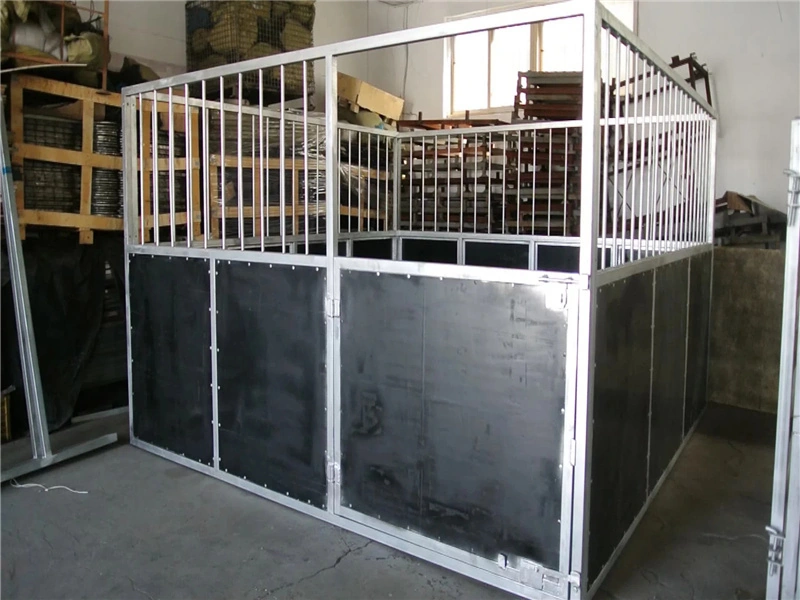
What Is Electro-Galvanizing?
Electro-galvanizing is the #1 reason cheap horse stalls rust within 2 years in coastal Australia.
Electro-galvanizing applies a thin zinc layer to steel via an electroplating bath. The coating typically measures 5–12 microns—about the thickness of a plastic shopping bag. That’s nowhere near enough for outdoor exposure, especially in the salt-laden air of coastal New South Wales or the humidity of Northland, New Zealand.
- Coating thickness failure: With only 5–12 microns, the zinc layer is consumed by corrosion within 18–24 months in moderate outdoor conditions. In coastal environments, red rust appears on electro-galvanized frames before the second winter. Compare that to hot-dip galvanizing (HDG) at 42+ microns, which lasts 10+ years.
- Common in cheap imports: Many Chinese factories targeting the lowest FOB price use electro-galvanizing because it’s cheaper and faster. They often call it “galvanized” without specifying the type. A $50,000 container of horse stalls may look shiny on arrival, but buyers who skip the sample approval step discover the truth after 12 months: flaking, peeling, and structural rust. Portable horse stable rust proof Australia requires HDG, not electro.
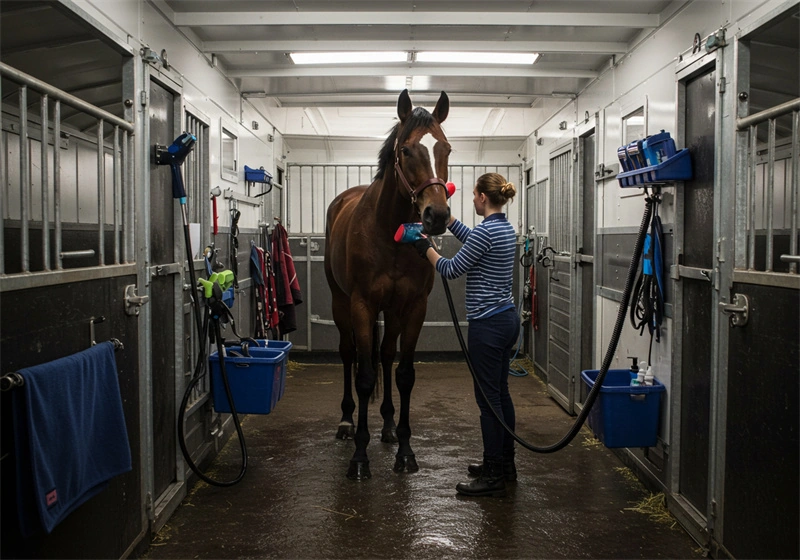
Head-to-Head Comparison
HDG lasts 10+ years in coastal AU/NZ; electro fails in 2–3.
When you’re sourcing horse stable frames for Australian or New Zealand conditions, the coating choice determines whether your client gets a 10-year asset or a 2-year regret. Hot-dip galvanizing (HDG) and electro-galvanizing look similar in photos but perform worlds apart once exposed to coastal salt spray or inland humidity. Let’s break down the four factors that matter most to professional stable builders.
- Corrosion resistance: outdoor lifespan: HDG meets ASTM A123 with a minimum 42-micron zinc coating. In coastal environments, expect 10+ years before red rust appears. Electro-galvanizing deposits only 5–12 microns—thin zinc fails within 2–3 years in the same setting. This is why electro-galvanized stalls from cheap imports rust out fast in AU/NZ.
- Scratch and impact resistance: A 42-micron HDG layer is thick enough to handle transport scratches and horse kicks without exposing bare steel. Electro-galvanizing’s <12 micron layer gets gouged by a single hoof mark, and once the zinc is gone, corrosion spreads rapidly underneath the coating.
- Weld area protection: HDG is applied after fabrication—molten zinc flows into weld joints and seams, protecting every nook. Electro-galvanizing is usually applied to flat sheet before welding; the heat from welding burns off the coating at the joint. That weld zone becomes the first place rust starts.
- Cost per square meter: Electro-galvanized frames can be 30–50% cheaper upfront. But factor in replacement every 3 years versus HDG’s 10–15 year service life in moderate conditions. Over a decade, electro-galvanizing costs 2–3x more per square meter when you include labor, downtime, and disposal.
| Feature | Hot-Dip Galvanized (HDG) | Electro-Galvanized | Why It Matters |
|---|---|---|---|
| Coating Thickness | 42+ microns (ASTM A123 compliant) | 5–12 microns (thin layer) | Thicker zinc provides decades of protection; thin coatings fail in 2–3 years under AU/NZ coastal humidity and salt spray. |
| Process | Steel dipped in molten zinc (metallurgical bond) | Zinc electroplated onto steel surface | HDG creates a durable alloy layer that resists flaking; electro-galvanized layers are brittle and prone to peeling. |
| Corrosion Resistance (Outdoor Lifespan) | 10+ years in coastal environments | 2–3 years before red rust appears | HDG frames outlast the stable’s expected service life; electro-galvanized requires repainting or replacement within a few years. |
| Scratch & Impact Resistance | High – zinc layer reforms over scratches | Low – scratches expose bare steel to rust | Horse stables endure kicks, equipment bumps, and abrasive cleaning – HDG self-heals; electro-galvanized rusts at every scratch. |
| Weld Area Protection | All welds fully coated – entire frame immersed | Weld zones left unprotected (burned off during welding) | Welds are the weakest rust point – HDG seals them; electro-galvanized welds fail first, compromising structural integrity. |
| Cost per Square Meter | Higher upfront (~30–40% more than electro) | Lower upfront (cheaper to manufacture) | HDG’s total lifecycle cost is far lower – no repainting, no premature replacement – reducing long‐term maintenance and downtime. |
| Typical Applications | Premium horse stables, outdoor equestrian facilities, coastal farms | Indoor low‐stress racks, budget imports for mild climates | HDG is the correct spec for AU/NZ conditions; electro‐galvanized is a false economy that fails in real‐world use. |
How to Spot the Difference
Your supplier claims hot-dip?
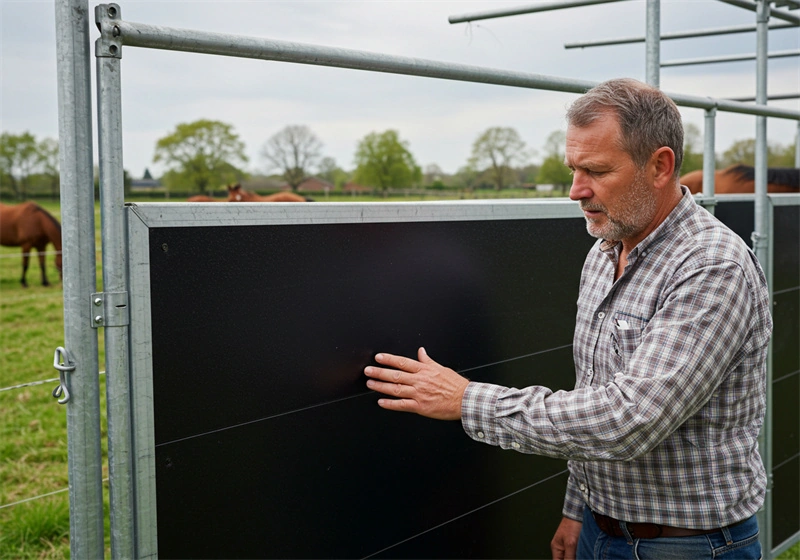
Walk up to a frame with a steady hand. Hot-dip galvanizing leaves a matte grey surface with a rough texture—sometimes even small drips or lumps at the edges. Electro-galvanized parts have a smooth, mirror-like shine. That glossy look is the first red flag. Audits across 12 Chinese factories have revealed entire containers of stall frames declared as ‘HDG’ that were nothing more than electroplated tubes. The shine doesn’t lie.
- Knife test for zinc depth: Take a utility knife and scrape a small patch on an inconspicuous frame corner. A true hot-dip coating (42 microns minimum) will peel in tiny metallic flakes and expose a zinc-iron alloy layer underneath—it won’t immediately show bare steel. Electro-galvanized (5–12 microns) will scratch straight through to bright silver steel in one pass. If the supplier hesitates when you ask to test a sample joint, you already have your answer.
- Mill test certificates (MTC): A legitimate HDG supplier can produce a mill test certificate from their steel source, plus a coating thickness report per ASTM A123. Ask for the batch number and the actual micron reading recorded at the factory. I’ve had suppliers ‘lose’ their MTC when the reading came back at 18 microns. For Australian and New Zealand compliance, insist on a certified copy—your insurance and depreciation schedules will depend on it.
Why DB Stable Uses Hot-Dip Galvanizing
42 microns vs 12 microns: the difference between 10 years and 2 years in the field.
We back every hot-dip galvanized frame with a 10-year warranty because the coating actually delivers that lifespan. The internal production standard here is a minimum 42 microns of zinc per ASTM A123 — not the 5–12 microns you get from electro-galvanized imports. On Australian outback farms where humidity and abrasive dust are constant, that margin is the difference between steel that holds and steel that flakes inside three seasons.
- Outback proof: Frames from DB Stable have been in continuous service on properties north of Dubbo and in Central Queensland for over 8 years with zero structural rust. Electro-galvanized stalls on adjacent farms began showing red oxide within 18 months.
- Compliance: Our HDG frames meet AS/NZS 4680 (hot-dip galvanizing) and are designed to withstand wind loads per AS 1170.2. Builders can sign off without additional coating upgrades because the zinc layer already satisfies corrosion protection requirements for rural classifications.
- Cost reality: Buyers who chase the 15–20% upfront saving of electro-galvanized stables end up replacing frames in year three. The total cost of ownership over a decade heavily favors HDG — especially when you factor in labour for replacement and lost asset depreciation benefits.
The common trick from suppliers trying to compete on price is to use electro-galvanized steel that looks shiny at sample approval but delivers a coating thickness below 12 microns. When that container lands in a coastal stable environment, the zinc layer is consumed in two dry-wet cycles. We specify HDG on every quote, and we include a mill test certificate with each shipment so your team can verify the 42-micron minimum. That’s the difference between a stable frame that outlasts your mortgage and one that needs replacement before the first depreciation schedule is complete.
Conclusion
The difference between a 42-micron hot-dip galvanized frame and a 12-micron electro-galvanized one isn’t academic—it’s the gap between a stable that survives 10 years in coastal salt air and one that bleeds rust by year two. Before you commit to a supplier, run this three-question decision checklist: 1) Does the mill test certificate show a coating thickness of at least 42 microns per ASTM A123? 2) Can you verify the zinc layer with a simple knife scrape—does it peel as a thick coating or flake as a thin one? 3) Does the FOB price include HDG on all weld areas, not just the straight sections? If any answer is no, you’re looking at a replacement cycle that will eat your margin on a 50-stall project.
Frequently Asked Questions
What’s the coating thickness difference?
Hot-dip galvanizing provides 42 microns or more, while electro-galvanizing gives only 5–12 microns. That thin layer is the main reason cheap stalls rust within 2 years in coastal Australia. Always ask for a mill test certificate to confirm thickness.
Why does electro-galvanized steel fail quickly?
Electro-galvanized steel has a zinc layer only 5–12 microns thick, which cannot withstand coastal salt spray or humidity. In Australian and New Zealand conditions, visible rust appears within 2–3 years. For outdoor stables, avoid electro-galvanized frames entirely.
How long does hot-dip galvanized steel last?
Hot-dip galvanized steel with a 42-micron coating lasts 10+ years even in coastal environments. DB Stable backs this with a 10-year warranty on their frames. Actual lifespan depends on local climate and maintenance, but 10 years is a reliable baseline.
How can I tell if stable frames are hot-dip galvanized?
Look for a matte, rough finish instead of the shiny, smooth surface of electro-galvanizing. A simple knife scratch test that reveals a thick zinc layer also confirms hot-dip. Request a mill test certificate to be certain of the coating thickness.