If you are pricing portable stables for an agistment property or equestrian centre, the instant asset write-off stables question sits near the top of your list: can the AU$20,000 threshold turn this year’s infrastructure spend into this year’s deduction? From 1 July 2026, businesses with aggregated annual turnover under AU$10 million may immediately deduct the taxable purpose proportion of eligible depreciating assets costing less than AU$20,000 per asset. How that rule lands on a container of flat-packed stables depends on three things generic tax explainers skip: how the assets are grouped, whether the stables are for your own use or for resale, and when a kit in a shed counts as “installed”.
DB Stable ships portable stables to Australian and New Zealand buyers, from single-bay units through to six-bay back-to-back configurations, with a minimum of 10 sets on export consignments. That order shape is where the tax questions start. A consignment is not automatically one “asset”, a stable you erect for fee-paying horses is not taxed like a stable you hold for resale, and a flat-packed kit sitting unopened in a shed may not satisfy the “installed ready for use” test. Confirm current thresholds and your eligibility with a registered tax agent or the ATO before ordering — nothing here is tax advice.
Key Takeaways
- The threshold is AU$20,000 per asset — the taxable purpose proportion of eligible depreciating assets under that cost may be deducted immediately.
- Eligibility generally requires aggregated annual turnover under AU$10 million.
- Made permanent by the Treasury Laws Amendment (Tax Reform No. 2) Bill 2026, passed by Parliament in August 2026, for assets first used or installed ready for use for a taxable purpose on or after 1 July 2026.
- A consignment of stables is not automatically one asset — grouping changes the maths and belongs with your accountant.
- Stables you use and stables you resell attract different treatment — trading stock is not a depreciating asset.
- The low-value pool five-year lock-out rule is suspended to 30 June 2027.
What Changed in 2026 — and Who Qualifies
For years the instant asset write-off lived on a legislative treadmill: announced, extended, raised, lapsed. The Treasury Laws Amendment (Tax Reform No. 2) Bill 2026, passed by Parliament in August 2026, ended that by making the AU$20,000 threshold permanent, applying to assets first used or installed ready for use for a taxable purpose on or after 1 July 2026.
The mechanics are simple to state. Aggregated annual turnover needs to be under AU$10 million — many agistment operations sit well under that bar, though the aggregated figure can pull in related entities, so confirm rather than assume. The asset must cost less than AU$20,000, and you deduct the taxable purpose proportion: a stable used 80% for fee-paying agistment and 20% privately may see the deduction reflect that split. Confirm current thresholds and your eligibility with a registered tax agent or the ATO before ordering.
Instant Asset Write-Off Stables: Grouping a Consignment Under the AU$20,000 Threshold
The threshold is AU$20,000 per asset — not per invoice, not per container, not per project. How a stable purchase divides into “assets” is a grouping question, and grouping is not intuitive.

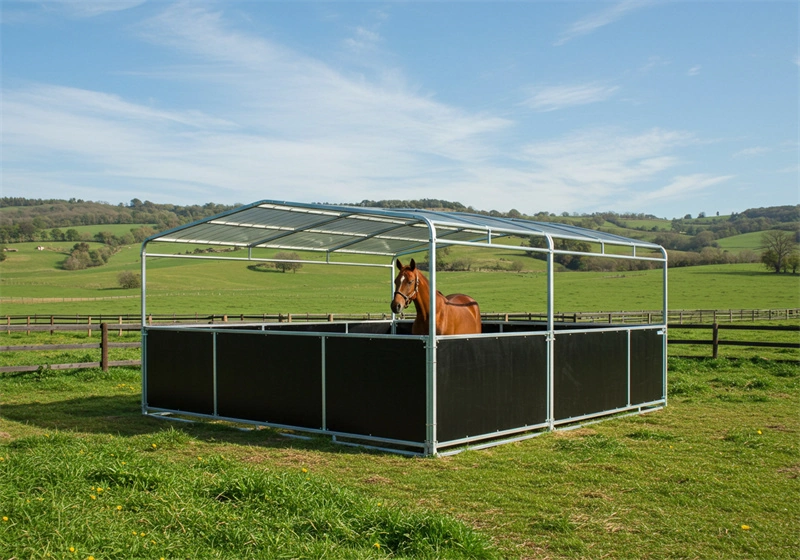
Look at the hardware. A single-bay DB Stable unit is 3 side panels and 1 door; a six-bay back-to-back configuration is 11 side panels and 6 doors; an export order carries a minimum of 10 sets. One buyer’s consignment might be ten discrete single-bay stables bound for ten separate paddock sites; another’s might be one adjoining six-bay block bolted to a common slab. Whether treatment follows the individual stable, the row, or the consignment depends on how the items function together and how your accountant groups them — items operating as an integrated unit may be treated differently to discrete standalone units. Put the grouping question to your tax agent in writing before the deposit clears.
The practical move is documentation: ask for per-unit pricing and configuration detail — bays, panels, doors per unit — on the invoice, so your accountant has something defensible to allocate rather than a lump-sum figure. Our portable horse stable manufacturing page sets out the standard layouts from one bay to six.
Buying to Use vs Buying to Resell: Two Treatments
This distinction decides everything, and it is where two readers of this site part ways. A business that buys stables to use — erecting them on an agistment property or training yard — holds depreciating assets, and the write-off may apply subject to the threshold, the turnover test and the taxable purpose proportion. A distributor that imports stables to resell holds trading stock. Trading stock is not a depreciating asset; it is deducted differently — typically through cost of goods sold when the stock is sold. An operator who uses some kits and on-sells others may hold both categories in one consignment, and the split matters.
| Scenario | Typical treatment | What to confirm |
|---|---|---|
| Agistment operator erects stables for fee-paying horses | Depreciating asset — write-off may apply per asset under AU$20,000 | Grouping of bays, taxable purpose proportion, turnover test |
| Equestrian centre adds stables to a training business | Depreciating asset used for a taxable purpose | Private-use proportion; installation date for the income year |
| Distributor imports flat-pack kits for resale | Trading stock — deducted through cost of goods sold, not the write-off | Stock valuation method with your tax agent |
| Operator uses some kits and on-sells others | Potential split — depreciating assets and trading stock | Unit-level records of which kit went where |
For operators in the first two rows, the tax question is one part of a broader business case. Our guide to portable horse stables for agistment businesses covers the operational side — layouts, expansion, and what horse owners actually pay for.
“Installed Ready for Use”: The Flat-Pack Timing Question
The 2026 rules apply to assets first used or installed ready for use for a taxable purpose on or after 1 July 2026. That phrase does the heavy lifting. Paying a deposit does not start the clock. Shipping does not start the clock. A container of flat-packed stables landed and left unopened may not satisfy the test either, because a kit sitting in a shed is arguably not yet ready for use in your business.
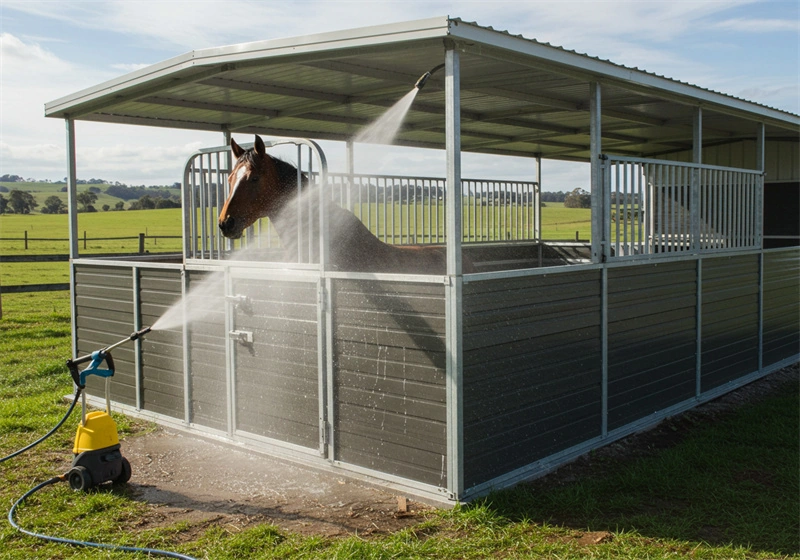
The saving grace of this product category is speed. DB Stable units use a tool-free corner-pin design; a single stable assembles with 2–3 people in roughly 30 minutes, so a ten-set consignment is a weekend of work with a small crew, not a construction project. The timing lever is in your hands: if you want the deduction to land in a particular income year, plan the erection date — slab access, crew, weather window — the way you plan the shipping date, and keep installation records in case the question comes up later.
The Low-Value Pool and the Suspended Lock-Out Rule
Not every asset fits under the AU$20,000 line, and not every business wants an immediate deduction — some prefer to spread deductions across income years to match revenue. Assets outside the instant write-off may be dealt with under the general depreciation rules or, where eligible, pooled; the low-value pool’s five-year lock-out rule is suspended to 30 June 2027. Pooling decisions are accountant territory, and transportable assets can raise their own classification questions depending on how permanently they are fixed to a site. Bring your accountant the fact pattern — configuration, grouping, unit cost, installation date — not the conclusion.
Your Pre-Order Checklist
Run through these five items before the deposit:
- Settle use vs resale first. This one decision shapes the whole tax conversation, and mixed consignments need unit-level records from day one.
- Ask the grouping question in writing. Send your accountant the configuration table — bays, panels, doors per unit — and ask how the assets should be grouped.
- Request per-unit invoicing. A lump-sum line gives your accountant nothing to allocate; per-unit pricing does.
- Plan the installation date. The installed-ready-for-use test drives which income year the deduction may land in. Book your crew before the container ships.
- Confirm thresholds and eligibility before ordering. A registered tax agent or the ATO can confirm current settings in one conversation.
None of this slows an order down. DB Stable returns a configuration and quote within 24 hours of receiving drawings or reference images.
Frequently Asked Questions
Can I claim the instant asset write-off on portable stables?
You may, if the stables are depreciating assets used for a taxable purpose, each grouped asset costs less than AU$20,000, and your aggregated turnover is under AU$10 million. Confirm your eligibility with a registered tax agent or the ATO before ordering.
Is a consignment of 10 stables one asset or ten?
It depends on grouping — discrete standalone stables may be treated differently to items that function together as an integrated unit. Ask your accountant in writing before you pay the deposit.
I import stables to resell — does the write-off apply to my stock?
Generally no. Stables held for resale are trading stock, and trading stock is not a depreciating asset — the cost is typically deducted through cost of goods sold when the stock is sold.
When does the clock start — order date, delivery date, or installation date?
The 2026 rules apply to assets first used or installed ready for use for a taxable purpose on or after 1 July 2026. A flat-packed kit sitting unopened in a shed may not satisfy that test, so plan the erection date and keep records.
Conclusion
The permanent AU$20,000 threshold gives small agistment and equestrian businesses a planning tool that previous years’ moving-target rules never did. The value for stable buyers sits in three distinctions: assets are grouped, not invoiced; use and resale attract different treatment; and the installed-ready-for-use test — not the payment date — drives the timing. Get those right and the deduction conversation with your accountant becomes a short one.
If a stable order is on your horizon for this income year, start with the configuration and quote — drawings in, pricing back within 24 hours — then take that paperwork to your tax agent before the deposit. Confirm current thresholds and your eligibility with a registered tax agent or the ATO before ordering, and sequence the installation date so the deduction lands in the year you want it.