Insurers price what they can measure, and a portable horse stable gives them plenty to measure: steel grade, coating thickness, panel material, and the standard the structure was built to. A stable insurance premium is not set by the brand on the front gate. It is set by how an underwriter scores the risk of structural failure, fire, and weather damage over the life of the policy. Builders who hand their insurer a documented, standards-based specification are having a different conversation from those who hand over an invoice and hope for the best.
This guide walks through what actually moves the needle: which construction details underwriters look at, what evidence to put in front of them, and where the honest limits are. One thing up front: no supplier can promise you a percentage discount, because pricing is the insurer’s call and it varies by policy. What you can control is the quality of the risk you present.
Key Takeaways
- Premiums are risk-scored, not brand-scored: underwriters assess structural failure, fire behaviour, and corrosion risk, not the name on the stable.
- Standards evidence helps the conversation: hot-dip galvanising to AS/NZS 4680 with a coating above 42 microns, and 10mm HDPE infill panels, are the kind of documented specs an underwriter can work with.
- Fire behaviour matters: HDPE infill is washable and rot-proof and behaves differently from timber linings, which many underwriters treat as a combustible loading.
- Documents move the file faster: spec sheets, coating standard references, and third-party QC reports answer questions before they are asked.
- No guaranteed discount: certification supports an application; it does not entitle you to a price cut. Confirm specifics with your insurer or broker.
What Underwriters Actually Assess on a Stable
An underwriter reviewing an equestrian facility is working through a short list of loss scenarios: a horse kicks through a wall, a storm lifts or deforms a structure, moisture corrodes the frame over a decade, a fire starts in bedding and spreads to the lining. Every one of those scenarios maps back to construction choices, which is why the specification sheet matters more than the brochure.
Consider the spec a factory-direct portable stable actually ships with. Frames are Q235 steel, fully welded from 50×50mm square tube, with 60×30mm oval and 32mm round tube used where the design calls for it. The structure stands 2200mm high. Panels are infilled with 10mm high-density polyethylene (HDPE) board rather than timber sheet. The steel is hot-dip galvanised to a coating thickness above 42 microns. Each of those numbers answers a question an underwriter was going to ask anyway: what holds the roof up, what happens when a full-grown horse leans on the wall, and how long before rust becomes a claim.
That last point deserves emphasis. Corrosion is one of the slowest-moving and most expensive loss categories in steel structures. A coating spec is the difference between a structure an assessor can pass in year ten and one that starts generating condition reports in year four. Hot-dip galvanising executed to AS/NZS 4680 — the joint Australian and New Zealand standard for hot-dip galvanised coatings on structural steel — is the recognised benchmark in this region, and a coating above 42 microns is a specification an underwriter can enter into the file without follow-up questions.
Where Standards Evidence Earns Its Keep
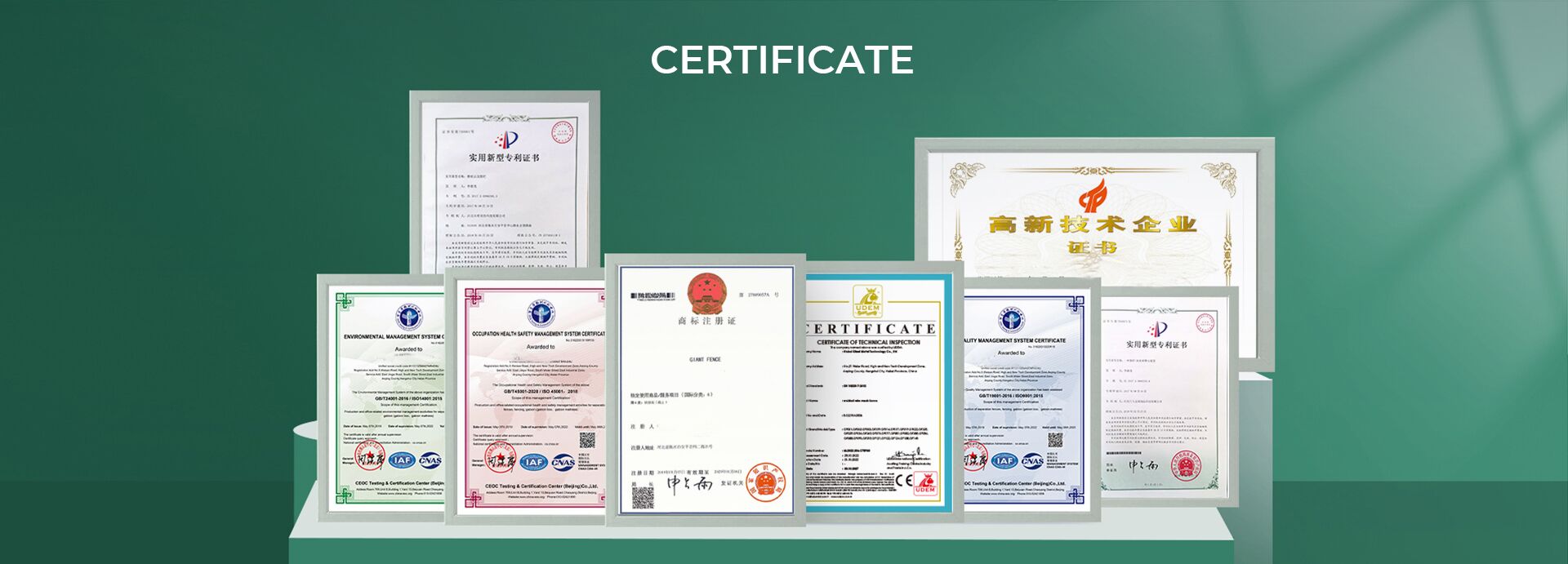
There is a difference between a supplier saying “high quality” and a supplier being able to point at a standard. The first is marketing; the second is assessable. When a manufacturer states that galvanising is executed to AS/NZS 4680, or that the operation maintains ISO and EN system compliance with third-party QC inspection available before shipment, the underwriter is no longer rating a claim — they are rating a documented process.
HDPE infill plays a similar role in the fire section of the assessment. Traditional timber-lined stables carry a combustible lining through the whole building; bedding and hay storage are already the dominant fuel load in any stable fire. An infill board that is non-rotting, washable, and kick-resistant does not turn a stable into a fireproof structure, but it changes how much of the building participates in a fire, and underwriters notice material choices that reduce spread potential. It also removes the slow failure mode of timber — rot and moisture damage — from the maintenance side of the risk profile.
Standards evidence does not buy a discount. It buys a cleaner risk file, and cleaner files are where better pricing conversations start.
Assembly method is the quieter contributor. A stable designed for tool-free corner-pin assembly by two or three people in roughly 30 minutes per unit is, by design, a structure with repeatable, low-skill erection — which reduces the chance of a bodged install creating a structural defect nobody notices until a storm finds it. Repeatable assembly is a control, and controls are what risk pricing rewards in principle.
The Documentation Pack to Hand Your Insurer
Most premium friction comes from missing information, not bad construction. Before you call, assemble the file. A workable pack looks like this:
- Structural specification: frame material and section sizes (Q235, 50×50×2.0mm tube), overall height (2200mm), and panel dimensions.
- Coating specification: hot-dip galvanised to AS/NZS 4680, coating thickness above 42 microns.
- Infill material data: 10mm HDPE board — UV-stable, washable, non-rotting, kick-resistant.
- Compliance statements: ISO and EN system compliance, third-party QC inspection arrangements, available test documentation.
- Assembly documentation: the erection sequence and crew requirements, showing a controlled, repeatable install.
Two practical notes. First, ask the supplier for this pack before you place the order, not after — a manufacturer that answers enquiries within 6 hours and turns a drawing into a quotation within 24 can produce documentation at that same tempo. Second, keep the pack with the policy schedule. If a claim ever lands, the assessor starts from your specification instead of reconstructing it, and disputed claims are where the real cost of poor documentation appears.
Portable and Permanent: Two Different Cover Conversations
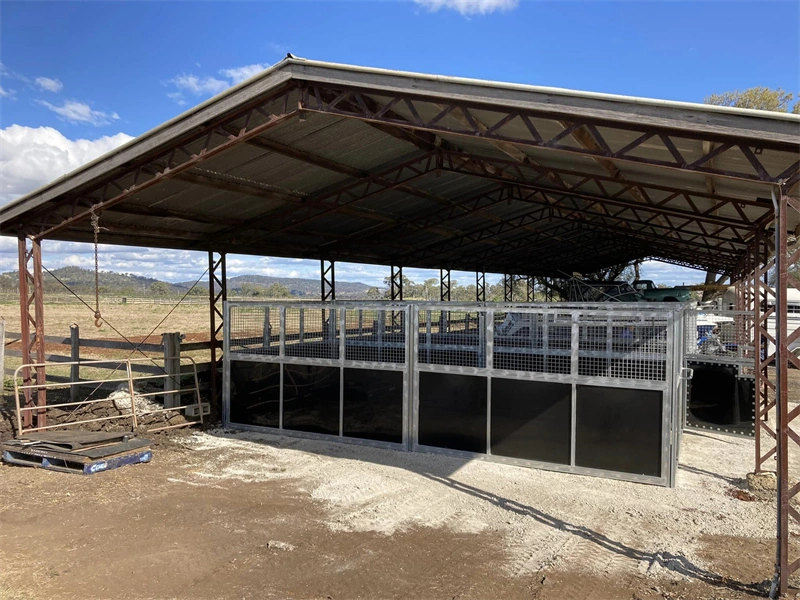
How your stable is classified on the policy affects what is covered and at what rate, and portable structures sit in their own category on many policies. A flat-pack stable that two or three people can assemble in about 30 minutes per unit, and that can be extended stall-by-stall or relocated, is a materially different proposition from a poured-slab permanent build — both to you and to the insurer.
The honest answer is that treatment varies: some policies cover relocatable structures under contents or specified portable plant; others require them to be added to the buildings schedule once anchored, and the classification depends on your policy wording and insurer. What is in your control is declaring the structure accurately, including how it is anchored, because an undeclared or misclassified stable is a far more expensive problem at claim time than any premium loading. Confirm the current treatment with your broker before renewal.
There is also a tax-adjacent angle worth flagging for commercial operators: portable assets can have different depreciation treatment from permanent structures, and buyers of qualifying equipment have used instant asset write-off thresholds to bring forward deductions. That is a conversation for your accountant, but it belongs in the same folder as the insurance file — both start from the same specification pack.
What Certification Cannot Do for You
This is where a candid article earns its keep. Certification and standards documentation improve the quality of the risk you present, and they may support a better premium outcome — but no supplier, including this one, can promise that effect, because underwriting criteria, policy wording, and market conditions differ case by case. Any manufacturer quoting you “X per cent off your insurance” is selling you something they do not control.
What a certified, well-documented structure does deliver is slower depreciation of the asset, fewer condition-report surprises at renewal, and a cleaner claims file if something goes wrong. Those effects compound over the entire service life of a properly galvanised, HDPE-lined stable, and they are worth having regardless of what the premium letter says.
One more flag: certificate numbers matter to some insurers, and not every manufacturer publishes them. Ask for the document, verify what is in it, and where a number is not available, say so plainly. A file with an honest gap beats a file with an invented number — the second one can void a claim.
Frequently Asked Questions
Does an AS/NZS 4680 galvanised coating reduce my premium?
It may support a better outcome, because it documents corrosion protection above 42 microns on structural steel — but the insurer sets the price. Treat it as evidence, not a coupon, and confirm the effect with your broker.
Are HDPE panels considered safer than timber for insurance?
HDPE infill is washable, non-rotting and kick-resistant, and it removes combustible timber lining from the wall build-up. Underwriters generally view that favourably, but fire assessment also depends on bedding, hay storage and site layout.
Do I insure a portable stable as a building or as equipment?
It depends on your policy wording — some treat relocatable stables as portable plant, others add them to the buildings schedule once anchored. Declare the structure accurately and confirm the classification with your insurer before renewal.
What documents should I request from a stable supplier for insurance purposes?
Ask for the structural specification, the coating standard reference (AS/NZS 4680, 42+ microns), infill material data, compliance statements, and third-party QC inspection arrangements. Keep the pack on file with your policy schedule.
Conclusion
Insurance pricing follows the risk file you can defend: a Q235 welded frame, hot-dip galvanising above 42 microns to AS/NZS 4680, 10mm HDPE infill, and documentation that says so on paper. Those details protect horses, slow corrosion, and keep a claims assessor from guessing — and that is the honest mechanism by which certified construction and premium outcomes connect. No supplier controls the premium letter itself, so confirm specifics with your insurer or broker.
If you are specifying now, request the full technical pack with your quotation — the manufacturer page covers the product line, and our wind region ratings guide explains how site exposure feeds structural choice. For structure options and configurations, see the portable horse stable range.