A first order of portable horse stables does not arrive as one invoice. A minimum of 10 sets is committed before the works start, the balance timing is something to pin down in writing, and the yard where they will stand may need water, power and crushed rock before a single board is unloaded. That spread of dates is why the horse business finance leasing stables question arrives late — usually after the deposit is discussed, not before.
The funding route is a cashflow decision wearing a tax label. Below: what the documented order sequence commits and when, what a lender asks you to produce, and what belongs in writing before you choose.
Key Takeaways
- The published floor is a 10-set minimum against roughly 20 sets a week of capacity, so a first order is a queue position as much as a purchase.
- Payment terms are not published for these units; the record shows production starts after a deposit, and every later milestone is a written-confirmation item.
- Leasing imported stables is normally arranged with a domestic equipment finance company, not with the overseas works — the lender funds, the supplier ships.
- A lender typically wants a priced proforma, drawings or a spec sheet, and a freight schedule before approving an asset purchase.
- Two specification lines drive the funding maths: 10 mm boards on a frame galvanised to a factory commitment of 42 microns and above set what a valuer reads as asset life, and flat-pack volume sets how much freight sits inside the request.
What a first order commits, and when
Read the order sequence as a set of dates rather than a price. The documented flow is: you send requirements, drawings or reference photos; a solution and quotation come back inside 24 hours; enquiries are answered inside 6 hours; production is arranged after a deposit, with shipping planned alongside it. Capacity sits at roughly 20 sets a week against a 10-set minimum.
Those three numbers already shape your cashflow. A 10-set floor means you cannot test the market with two bays; a 20-set-a-week ceiling means a larger block is scheduled, not simply bought; and a deposit before production means part of the money leaves before you can inspect anything. Third-party QC at the works is available, which is how you place an inspection between those two dates rather than after them.
Everything after the deposit — balance timing, freight payment, trade terms — is not published for these units. Ask for the milestone schedule in writing, dated, with what is owed at each point and what document releases each payment.
If your first block is aimed at agistment income, the specification questions sit in front of the finance ones; the buyer-side spec walk-through in portable horse stables for agistment businesses covers what to specify, and this article stays on the money timing.
Three ways horse enterprises fund a block
Most yards end up choosing between three structures, and each one handles the same order differently.
- Buying outright from trading cash: simplest paperwork, and the hardest on a yard that also pays feed, farrier and insurance monthly. The deposit and the balance both come out of operating cash.
- An equipment loan over the asset: the purchase is funded up front and repaid over time. Expect the lender to want the asset identified — description, quantity, expected life, insurer — before releasing funds.
- A lease or rental arrangement: payments follow a term instead of a single settlement. Because these kits are imported, ask in writing what the lessor treats as the asset: the boards and frames alone, or the delivered, site-ready block including freight and yard works.
One clarification is worth stating up front: that financing is usually arranged on this side of the water. A Chinese works quoting and manufacturing flat-pack stables is not the party that structures a lease for an AU or NZ buyer; a domestic finance company is. Our view, plainly: the structure matters less than whether your funding instrument recognises the delivered cost as one asset. Split freight, yard works and the units across three funding decisions and you lose sight of the number that counts — what one usable bay costs.
What a lender asks you to produce
Finance applications often stall on paperwork rather than trading history. The documents below are what a finance company usually needs before putting money against imported equipment, and all of them can be requested from the supplier before production starts.
| Stage | What you commit | Paper to hold |
|---|---|---|
| Quotation | Nothing yet | Priced proforma invoice with the configuration table |
| Deposit | Production released | Drawings or spec sheet, dated milestone schedule |
| Build and ship | Balance terms per agreement | QC report from attendance at the works, freight documents |
| On site | Yard works, then assembly | Insurer schedule, council or consent questions if the block is roofed |
Two rows are worth a call before you sign. A lender that has never funded imported horse equipment wants the asset described in terms it recognises — bays, materials, expected service life — and the published configuration table does that faster than marketing photos. Tax treatment is a separate question again, turning on your entity, your registration status and the rules in force; start with the site’s walk-through of the small business write-off position for portable stables and the GST treatment of imported stables, then take both to your accountant with the quote in hand.
Where funding touches the spec sheet
Finance people price risk in years, so the specification lines that survive contact with the lender are the durability ones. These units are documented with 10 mm HDPE fill boards in black, white or green, a welded Q235 frame in 50×50×2.0 mm square tube, and hot-dip galvanising run to AS/NZS 4680 against a factory commitment of 42 microns and above. Note the split: 42 microns is what the works commit to; AS/NZS 4680 is the process the coating is executed to. They are two different statements and a valuer will treat them as such.
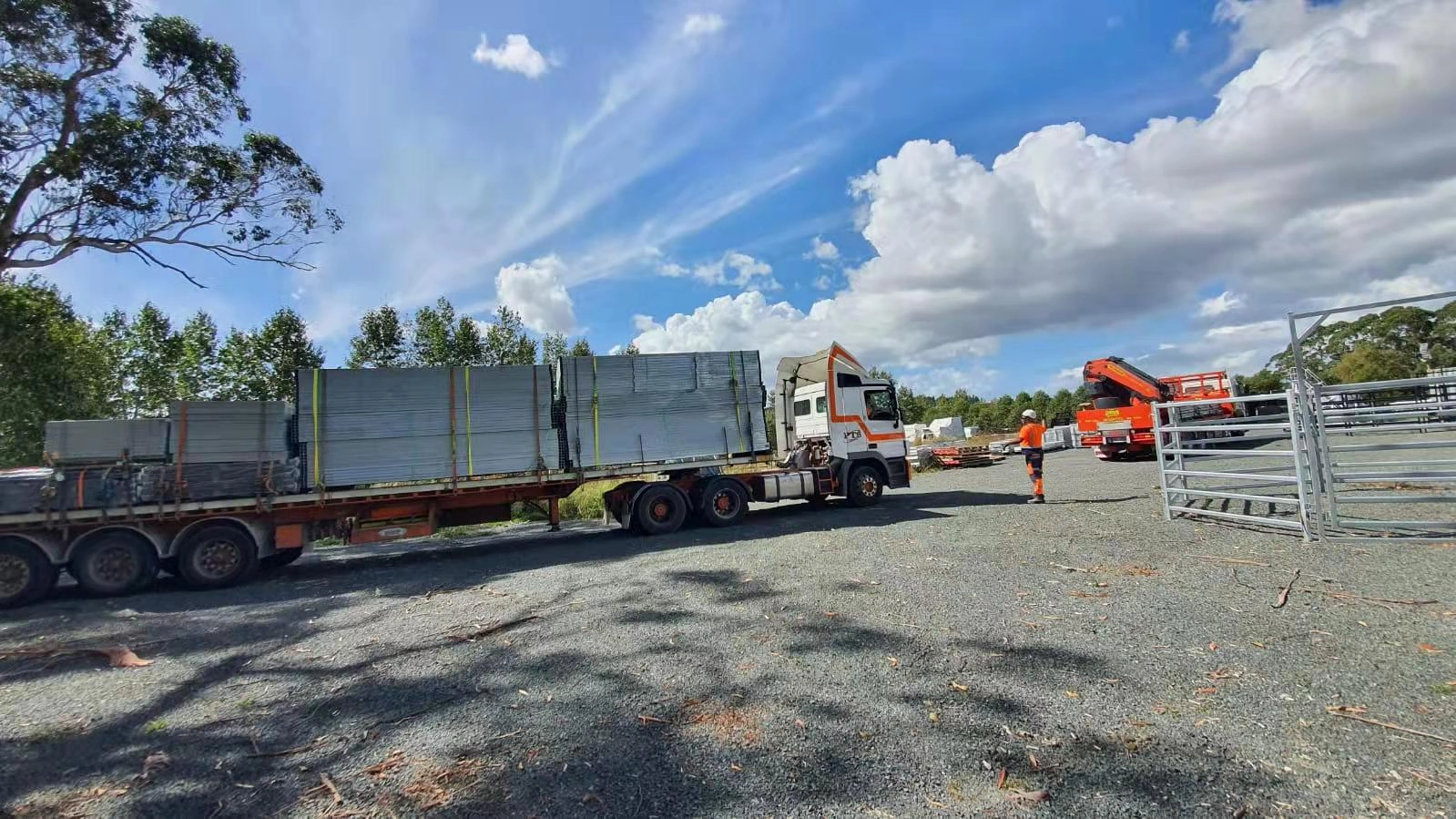
Freight belongs in the same conversation. Flat packing exists to cut shipped volume, and boards weigh about 200 kg each, which is why the delivered number and the ex-works number are not the same asset to a lender. Compare quotes on a like-for-like basis using the FOB, CIF and DDP comparison walk-through, then fund the number that includes getting the kit to your gate.
Labour is the last line most buyers forecast badly. The published figure is two to three people and about 30 minutes to assemble one stable using the tool-free corner pin design — an assembly figure only, not a teardown or relocation time. For a 10-set first block that is a day of work rather than a week of contractors, and if you are leasing, an asset that stands up and comes down inside one working day is easier to justify to a lender than one that needs a building crew.

Ten-year ownership arithmetic, including where a portable block and a fixed timber shed diverge, is covered separately in the ten-year cost comparison; what this section adds is only the funding angle — the same durability lines are what a valuer reads as residual value.
Frequently Asked Questions
Can a supplier lease me the stables directly?
Imported flat-pack equipment is normally financed by a domestic equipment company rather than by the overseas works. The supplier’s role is to give you a priced proforma, drawings and a dated milestone schedule that a local lender will accept.
Does leasing change what I should specify?
It raises the value of the durability lines, because a lessor or valuer reads them as asset life. Board thickness, the galvanising commitment and the frame section matter more in a leased block than the colour of the fill boards.
Is it better to lease or buy for an agistment yard?
It depends on how your cash cycle runs against the intake of horses, and on how the tax treatment falls for your entity — which varies and is not something a manufacturer can answer. Take both numbers to your accountant with the quote.
What slows a finance application on imported equipment?
Usually an asset description the lender cannot recognise. Ask for the configuration table in the paperwork — bays, side panels, doors, materials and coating — so the file reads as equipment rather than as an unexplained overseas invoice.
Conclusion
Leasing, borrowing and paying cash are three ways of handling the same three dates: the deposit before production, the balance at a milestone you fix in writing, and the yard works before a bay is usable. Whichever you pick, the plan is only as good as the written schedule behind it.
Ask for the milestone schedule, the configuration table and the coating note in writing before you choose a funding route, then take all three to your lender and your accountant together.