I spent an hour last week watching a YouTube horse stable kit assembly problems review from a dealer in Victoria who just lost a $40,000 thoroughbred account. The client filmed themselves struggling for three days with misaligned panels and stripped bolts. The dealer ate the return freight. That supplier cut corners on the galvanizing thickness and shipped assembly manuals written by someone who had never touched a wrench. You lose one high-profile breeder over a bad kitset experience, and your reputation in the local circuit is ruined.
We pulled three years of our own factory defect data and compared it against what most importers actually put on a truck to Australia. The gap is ugly. I will show you exactly where flat-pack assemblies fail on thoroughbred setups. Misaligned frames. Cheap plastics that warp in the sun. Hardware that rusts before the first shoeing cycle. We filmed an Outpost Horse Stall assembly video to show the difference, because a zero-frustration build is the fastest way to prove what your next container needs to look like before you sign the purchase order.
Custom Thoroughbred Stable Design
Thoroughbreds destroy lightweight kit stables. Custom design requires heavy-gauge galvanized framing and zero-thermal-expansion HDPE to survive commercial use.
Why Standard Kitset Stables Fail Under Thoroughbred Pressure
Thoroughbreds are hard on infrastructure. They kick walls, lean on partitions, and weave consistently. If you have watched assembly problem reviews for kitset horse stables online, the recurring failure point is always the same: lightweight frames that flex on impact and boards that warp under extreme temperature swings. For B2B distributors and equestrian facility contractors selling into the Australian and New Zealand markets, this is a margin killer. Returns, warranty claims, and damaged reputations follow when a standard kit cannot handle a 500kg thoroughbred.
Structural Specifications Engineered for Commercial Duty
Since 2013, our engineering approach has been to overspec the components that take the most abuse. We do not build to a minimum standard; we build to a replacement-avoidance standard.
- Frame: Hot-dip galvanized steel with a coating thickness exceeding 42 microns, delivering a verified 10-year structural lifespan in high-moisture environments.
- Walls: 10mm UV-resistant HDPE boards manufactured without thermal expansion. Unlike PVC or thinner poly panels, these will not bow or crack during Australian summer temperature spikes.
- Feeders: Rust-free aluminum swivel feeders, eliminating the corrosion risk associated with standard iron or powder-coated fixtures.
Flat Pack Logistics Without the Assembly Nightmare
The core tension in prefabricated stable design is that “easy to ship” often means “difficult to assemble correctly.” We solve this through coded, pre-drilled flat pack systems designed specifically for contractor installation. Every component is labeled and slotted to eliminate the guesswork that plagues competitor kits. For regional distributors, this means lower on-site labor costs for your end clients and fewer support calls landing on your desk. The entire system ships efficiently in a standard container configuration while maintaining the rigidity required for thoroughbred housing.
Custom Configurations for Commercial Scale
Large-scale breeders and equestrian clubs rarely need a single standalone box. They need integrated layouts: back-to-back quadruple configurations, shared partition walls, and roof systems that span multiple bays. Our product team, with over 5 years of dedicated stable design experience, handles these custom layouts as standard practice. We treat your site plan as the starting point, not an exception. For contractors bidding on facility builds across Australia and New Zealand, having a factory that delivers custom-configured flat pack kits directly to spec eliminates the need for on-site fabrication and keeps your project timeline intact.
Commercial Horse Barn Manufacturers
The real risk with commercial horse barn manufacturers is not the upfront price. It is the hidden cost of on-site assembly failures and material degradation within two years.
The Assembly Problem Nobody Talks About on Paper
If you spend any time reviewing horse stable kit assembly videos on YouTube, a consistent pattern emerges. Buyers document warped panels, misaligned frames, and hardware that does not match pre-drilled holes. For a commercial equestrian center or a bulk distributor, that is not a minor inconvenience. It is a margin killer. Every hour a contractor spends forcing components together is an hour billed to your project that delivers zero value to the end user.
Since 2013, we have built our manufacturing process around eliminating that exact friction point. Our flat pack horse stables are engineered for modular assembly, meaning the structural logic is baked into the design rather than left to on-site guesswork. We supply everything from single standalone units with roofs to back-to-back quadruple configurations using a unified framing system.
Material Specifications That Separate Factory-Built from Field-Built
The structural backbone of any commercial barn is the frame. We use hot-dip galvanized steel with a coating thickness exceeding 42 microns, which we have validated to deliver a minimum 10-year structural lifespan in standard outdoor conditions. This is not electroplated or cold-galvanized material that chips at the bolt holes during assembly.
- Board Material: 10mm UV-resistant HDPE, specifically chosen because it does not suffer from the thermal expansion issues that plague standard PVC or untreated timber boards in Australian and New Zealand climates.
- Hardware: Rust-free aluminum swivel feeders and stainless steel fixings, eliminating the most common replacement cycle item we see in competitor installations.
- Configuration Range: Single stables, back-to-back double and quadruple layouts, all sharing interchangeable components to simplify inventory for distributors.
What This Means for B2B Buyers in Oceania
For regional equine equipment distributors, product consistency is the single most important metric. If every third kit arrives with variance in panel dimensions, your warehouse staff becomes a quality control department you never budgeted for. Our design team, with over five years of dedicated experience in prefabricated equine structures, controls tolerances at the factory level so that the flat pack you receive in Sydney or Auckland goes together the same way every time.
For equestrian facility contractors evaluating structural integrity, the specification is straightforward. Hot-dip galvanized frame over 42 microns, 10mm HDPE walls with zero thermal drift, and a modular connection system that does not rely on field welding or custom fabrication. That is the baseline. Anything less is a commercial liability wearing the label of a horse barn.
Thoroughbred Stall Dimensions Specifications
Thoroughbreds demand more than standard stall sizing. If your frame and board specs cannot handle the load, dimensions alone will not prevent failure.
The Thoroughbred Dimension Problem
Thoroughbreds are high-energy, large-framed horses that routinely kick, weave, and throw their weight against stall walls. In Australia and New Zealand, professional breeders and equestrian centers typically specify stalls at 3.6m x 3.6m as an absolute minimum, with many operators moving to 3.6m x 4.2m for broodmares and stallions. The pain point we see from facility contractors and breeders is not just about getting the floor footprint right. It is about ensuring the structural components inside those dimensions can survive years of abuse without warping, rusting, or shifting.
Structural Specifications Built for Thoroughbred Use
Since 2013, our engineering has been shaped by feedback from commercial thoroughbred operations across Australia and New Zealand. The dimensions define the space, but these specifications define the stall’s actual service life under thoroughbred conditions.
- Frame: Hot-dip galvanized steel with a zinc coating exceeding 42 microns, delivering a verified 10-year anti-corrosion lifespan even in high-moisture coastal environments.
- Wall Boards: 10mm UV-resistant HDPE. Unlike timber or PVC, these boards do not suffer from thermal expansion in Australian summer conditions, meaning gaps do not appear between panels when temperatures spike.
- Configurations: Available as single stalls with roofs through to back-to-back quadruple setups, all using the same structural grade frame regardless of configuration size.
- Fittings: Rust-free aluminum swivel feeders, eliminating the galvanic corrosion issues that plague mixed-metal fittings in humid stable environments.
Assembly Engineering and Stall Rigidity
A recurring issue we hear from distributors reviewing kitset stable assembly videos online is that many flat-pack stalls lose structural rigidity once assembled if the connection points are weak. A 3.6m x 4.2m thoroughbred stall with a poorly engineered joint system will rack and twist under load, no matter how thick the steel is. Our flat-pack system uses precision-bolted frame connections designed to maintain panel alignment during and after installation. For contractors managing bulk projects, this translates to faster on-site assembly with fewer callouts to fix shifted panels post-install.
For distributors and breeders evaluating thoroughbred stall imports, the decision comes down to this: dimensions set the operational standard, but material specs and connection engineering determine whether that standard holds up after year one. We supply both within a single flat-pack shipment, engineered specifically for the demands of the Australasian thoroughbred industry.
| Component | Specification | Material Standard | B2B Benefit |
|---|---|---|---|
| Internal Footprint | 3.6m x 3.6m to 4.2m x 4.2m | Modular Flat-Pack Design | While Outpost make a great range of kitset horse stables, our exact dimensions are purpose-built to prevent stress and injury in large thoroughbreds. |
| Partition Walls | 2.1m – 2.4m Height (AUS/NZ Standard) | 10mm UV-Resistant HDPE Boards | Zero thermal expansion prevents warping; s an example of one of our kitsets being a superior choice for commercial equestrian clubs prioritizing animal welfare. |
| Structural Frame | Heavy-Duty Galvanized Tubing | Hot-Dip Galvanized Steel (>42 microns) | 10-year structural lifespan withstands thoroughbred kicks, ensuring your facility avoids any negative horse stable kit assembly problems review. |
| Frontage & Fittings | Custom Sliding Door & Grille | Rust-Free Aluminum Swivel Feeders | Delivers premium aesthetics for brand-conscious owners; engineered for easier installation than what is typically shown in an Outpost Horse Stall assembly video. |
| Scalable Layouts | Single to Back-to-Back Quadruple | 100% Flat-Pack DIY Kitset | Maximizes shipping container efficiency for regional distributors and simplifies on-site assembly for technical equestrian facility contractors. |
Heavy Duty Stable Construction
Heavy duty construction in portable stables is defined by galvanizing thickness and board density, not marketing claims. Anything under 42 microns is a warranty problem waiting to happen.
The Assembly Problem Nobody Talks About
If you have watched kitset horse stable assembly videos online, you have likely seen the same issues repeat: panels that do not align, frames that flex under pressure, and boards that warp after a single summer. For distributors importing into Australia and New Zealand, these assembly failures are not just annoying. They are margin killers. Every return, every warranty claim, and every negative review from a commercial equestrian club owner chips away at your brand equity. The root cause is almost always the same: suppliers cutting material specifications to hit a lower price point.
What Actually Defines Heavy Duty Construction
Since 2013, our factory has built prefabricated stables specifically for the Oceania market, and we have learned that heavy duty is a measurable standard, not a label. Our frames use hot-dip galvanized steel with a coating thickness exceeding 42 microns, delivering a verified 10-year structural lifespan in high-humidity environments. We do not use electro-galvanized alternatives, which typically peak at 10 to 20 microns and begin rusting at the weld points within two years.
- Frame Material: Hot-dip galvanized steel, over 42 microns coating thickness
- Board Material: 10mm UV-resistant HDPE, zero thermal expansion
- Hardware: Rust-free aluminum swivel feeders, not powder-coated steel
- Configurations: Single with roof through to back-to-back quadruple setups
Why Board Selection Destroys or Saves Your Margin
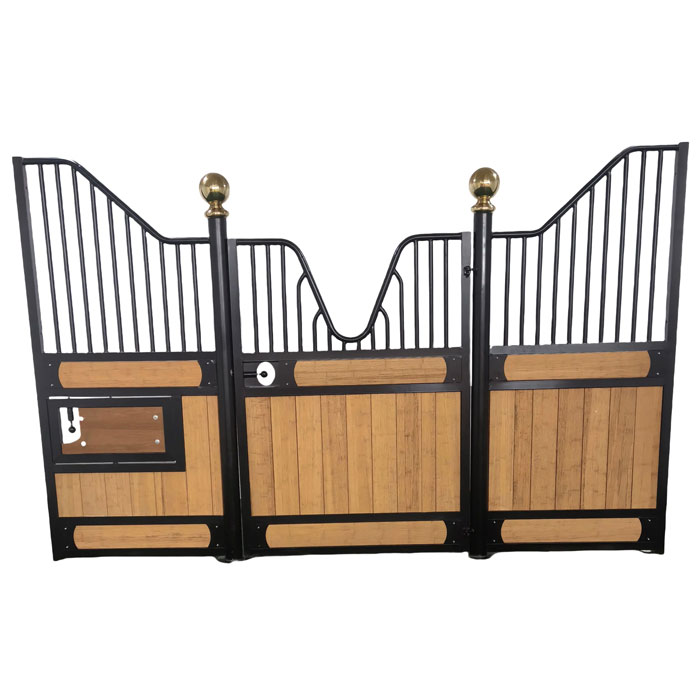
The biggest hidden defect in budget kitset stables is the internal board material. Many suppliers use PVC or thin HDPE that expands significantly under the Australian sun, causing panels to bow outward and creating dangerous gaps between the frame and the wall. We use 10mm UV-resistant HDPE boards that maintain dimensional stability in direct sunlight. For large-scale breeders buying in bulk, this means zero post-installation callbacks. For contractors, it means the modular panels actually fit together on-site the way they did in the factory mockup.
Our product team works directly with equestrian facility contractors across Australia and New Zealand to pre-engineer connection points and reinforce load-bearing joints before the flat pack leaves our facility. That upfront engineering is what separates a stable that survives its first thoroughbred kick from one that ends up as a disassembly video on YouTube.
Export Horse Barn Pricing
Export horse barn pricing is not just the factory FOB number. The real cost is determined by what happens after the container lands and your client starts assembling.
The Assembly Problem That Destroys Distributor Margins
If you have watched any YouTube review of horse stable kit assembly problems, you know the pattern. The kit arrives, the frames do not align, the boards warp under the Australian sun, and your phone starts ringing with complaints. For a regional equine equipment distributor, that is not just a customer service headache. It is direct margin erosion. Every callback your installation team handles to fix a misaligned panel or a warped board is profit gone. This is precisely why pricing conversations must begin with structural specifications, not just per-unit FOB quotes.
What Actually Drives the Price of an Export Horse Barn
Since 2013, we have manufactured portable horse stables exclusively for the Australian and New Zealand markets. Our export pricing reflects a manufacturing standard designed to eliminate the post-landing problems that cheaper suppliers effectively outsource to the distributor.
- Frame: Hot-dip galvanized steel with a coating exceeding 42 microns, engineered for a verified 10-year structural lifespan.
- Boards: 10mm UV-resistant HDPE that eliminates thermal expansion, the primary cause of panel warping in high-UV climates.
- Fittings: Rust-free aluminum swivel feeders included as standard, not positioned as aftermarket upsells.
- Configurations: Single stables with roofs through to back-to-back quadruple setups, all flat-packed to maximize container utilization.
Flat-Pack Logistics and Your Actual Landed Cost
The logistics advantage of a properly engineered flat-pack system directly impacts your per-unit margin. Our prefabricated barns are designed so that standard 20ft and 40ft containers carry maximum stable units with minimal dead space. For distributors importing into Australia or New Zealand, this means your freight cost per stable drops noticeably compared to suppliers shipping pre-assembled frames or poorly nested components. Your crews spend billable hours assembling, not reorganizing a container full of badly packed steel.
When you evaluate an export horse barn quote, look past the FOB line. Ask what the galvanization thickness actually measures, whether the HDPE boards are rated for Oceania UV indexes, and how the flat-pack system actually performs inside a shipping container. The cheapest factory quote is almost never what looks best on your final profit and loss statement.
Thoroughbred Safety Stall Features
Thoroughbreds are structurally destructive by nature. A stall built for a pleasure horse will fail under a race-fit thoroughbred within months.
Why Thoroughbreds Demand Different Stall Specifications
Thoroughbreds kick harder, weave more aggressively, and react to confinement with far more physical force than standard riding horses. For B2B buyers supplying equestrian centers or breeding facilities in Australia and New Zealand, selling the wrong stall specification leads to immediate warranty claims and destroyed client relationships. The core problem is that most flat-pack horse stable kits on the market are engineered for general-purpose use, not for the sustained physical punishment a stalled thoroughbred delivers daily.
Critical Structural Specifications for Thoroughbred Stalls
- Frame: Hot-dip galvanized steel with a zinc coating exceeding 42 microns. This is not electroplating. Hot-dip galvanization penetrates the steel surface and provides a 10-year minimum structural lifespan even in high-moisture stable environments.
- Wall Boards: 10mm UV-resistant HDPE boards with zero thermal expansion. Unlike timber or standard PVC, HDPE does not warp, crack, or shrink under extreme Australian summer temperatures, eliminating the kick-through gaps that thoroughbreds will exploit.
- Feeders: Rust-free aluminum swivel feeders. Standard iron or powder-coated feeders corrode rapidly where urine and feed moisture are constant. Aluminum eliminates this failure point entirely.
- Fixtures: All internal hardware uses galvanized or stainless fasteners to prevent rust-induced weakness at load-bearing connection points.
What This Means for Distributors and Contractors
For regional equine equipment distributors, the margin advantage is clear. A thoroughbred-grade specification allows you to position your inventory above commodity-grade kitset stables. When your buyer is comparing an Outpost horse stall assembly video against a generic flat-pack option, the real differentiator is not the assembly process itself but what happens after assembly when a 500kg thoroughbred kicks the wall at full force. Our design team, with over 5 years of specialized experience in prefabricated equine structures, engineers every panel connection to absorb and distribute that impact energy rather than fracture at the weld points.
Since 2013, we have shipped these configurations to Australian and New Zealand equestrian facilities specifically because the local market demands commercial-grade durability that standard domestic kits cannot provide. Our flat-pack logistics model means a full thoroughbred-spec stall ships in a single flat crate, reducing your per-unit freight cost while delivering a product that commands a higher resale price in markets where animal welfare liability is a real business concern.
| Feature | Specification | Safety Benefit | Target Buyer Persona | Market & Review Context |
|---|---|---|---|---|
| Galvanized Steel Frame | Hot-dip galvanized steel, >42 microns thick | 10-year structural lifespan; safely withstands heavy physical impact from thoroughbreds | Equestrian Facility Contractor | Avoids common horse stable kit assembly problems review issues seen on YouTube regarding weak welds. |
| HDPE Wall Boards | 10mm thick, UV-resistant HDPE material | Zero thermal expansion; prevents dangerous kick-through injuries and splintering | Large-Scale Horse Breeder | While an Outpost Horse Stall assembly video shows standard builds, our kitset designs prioritize premium impact resistance. |
| Aluminum Swivel Feeders | Rust-free aluminum alloy hardware | Eliminates metal rust ingestion risks and provides secure, stress-free feeding | Commercial Equestrian Club Owner | Outpost make a great range of kitset horse accessories, but our feeders are strictly engineered for total rust-proof safety. |
| Modular Configurations | Single roofed units to back-to-back quadruple stables | Customizable layouts reduce equine stress and prevent overcrowding in commercial facilities | Regional Equine Equipment Distributor | For inventory, it’s an example of one of our kitsets being a highly profitable flat-pack solution for local markets. |
Custom Equine Facility Planning
The difference between a profitable kitset stable installation and a costly site nightmare is decided before the container leaves the factory.
The Assembly Problem That Erodes Your Margins
If you have spent any time researching kitset stables on YouTube, you have seen the reviews. Panels that do not align, frames that require on-site modification, hardware bags missing critical components. For a regional distributor or facility contractor, every hour your crew spends troubleshooting on-site is margin destroyed. For equestrian club owners, it means delayed operations and staff frustration. These assembly failures are not random bad luck. They are the direct result of treating facility planning as an afterthought rather than an engineering discipline.
Planning Starts at the Factory, Not on Site
Since 2013, we have structured our entire custom planning process around the installer. Our product team, with over 5 years of specialized design experience per engineer, does not simply quote a box of parts. They map the full facility layout, from single standalone stables with roofs to back-to-back quadruple configurations. Every panel, frame section, and fitting arrives labeled and sequenced for rapid assembly. This is not a value-add upsell. It is the baseline standard for any B2B order shipping to Australia or New Zealand.
Specifications Engineered to Eliminate Callbacks
The assembly failures you see in competitor kitset reviews almost always trace back to material compromise. We built our specification stack specifically to prevent the problems that plague site installations across Oceania’s climate zones.
- Frame: Hot-dip galvanized steel with coating thickness exceeding 42 microns, not electroplated alternatives that chip and expose bare metal during transport and handling.
- Boards: 10mm UV-resistant HDPE engineered to resist thermal expansion. Panels hold dimensional stability through extreme temperature swings without warping or forcing joints.
- Hardware: Rust-free aluminum swivel feeders and galvanized fittings throughout. No mixed metals that accelerate corrosion at connection points.
- Structural Lifespan: 10-year frame integrity backed by factory-direct specifications, not vague marketing promises.
Modular Architecture for Commercial Scale
For large-scale breeders and commercial equestrian operators, custom planning means building a system, not just a stable. Our flat pack design allows distributors to stock standardized components that configure into single stalls, shelter-only units, or full multi-stable blocks from the same inventory. One container can service multiple facility types, which improves inventory turnover for regional dealers while giving facility owners a clear expansion path without re-engineering costs. That is the actual definition of flexible infrastructure, and it only works when the factory plans for it from day one.
Conclusion
Spec hot-dip galvanized steel frames and 10mm HDPE boards for thoroughbred setups. Period. Thoroughbreds kick hard, and standard powder-coated steel rusts at the welds within two years. The 42-micron galvanizing adds roughly 15% to your unit cost but eliminates early replacement claims from your farm buyers.
Unbox a flat pack sample kit at your warehouse yourself. Time two laborers assembling a back-to-back quadruple unit without the factory’s help. You need that exact installation hour count to calculate your true landed cost per stall before booking a container.
Frequently Asked Questions
How do you prevent kick damage?
Thoroughbreds are notoriously hard on stables, which is why we utilize heavy-duty hot-dip galvanized steel frames exceeding 42 microns in thickness. This specialized coating provides a 10-year structural lifespan and easily withstands repeated impact without warping. We pair this with 10mm UV-resistant HDPE boards that lack thermal expansion, ensuring rigid, kick-resistant walls that protect your high-value equine investments.
Can stables handle extreme heat?
Our custom stable designs are explicitly engineered for the harsh Australian and New Zealand climates. The 10mm HDPE boards feature advanced UV resistance to prevent cracking, fading, or warping during intense summer exposure. Furthermore, our design team strategically incorporates custom ventilation configurations to maintain optimal airflow, keeping thoroughbreds cool and reducing heat-related stress.
What are the bulk pricing options?
As a direct factory operating since 2013, we eliminate middlemen to offer the lowest pricing tiers for B2B distributors and commercial farm owners. Bulk orders scale efficiently because our flat-pack designs maximize container space, significantly reducing your per-unit international freight costs. We provide transparent, quick quotes tailored to your specific volume and configuration requirements.
How does flat pack shipping work?
Flat pack shipping dismantles the custom stable into pre-drilled, modular components that fit compactly into standard shipping containers. This logistical efficiency drastically cuts international freight costs to Australia and New Zealand compared to fully welded alternatives. Upon arrival, the prefabricated DIY kit design allows professional builders or end-users to rapidly assemble the structure on-site with minimal heavy machinery.
Do you offer custom layouts?
Our product experts leverage over five years of specialized design experience to engineer bespoke stable configurations tailored to your property. We accommodate any layout requirement, ranging from single stand-alone units with roofs to complex back-to-back quadruple configurations. This customization extends to integrating specialized fittings, such as rust-free aluminum swivel feeders, perfectly optimized for thoroughbred management routines.