galvanized horse stable rust weld is the first checkpoint buyers should lock before they approve a supplier, budget, or production slot. Galvanized Horse Stable Rust: Weld Prevention & Repair Guide is the first checkpoint buyers should lock before they approve a supplier, budget, or production slot. You’re standing in a stable aisle in rural Victoria, running your hand along a galvanized frame that’s been in service for three years, and you find a rust spot at the weld joint. That’s when galvanized horse stable rust prevention stops being a theoretical concern and becomes a real-time maintenance decision.
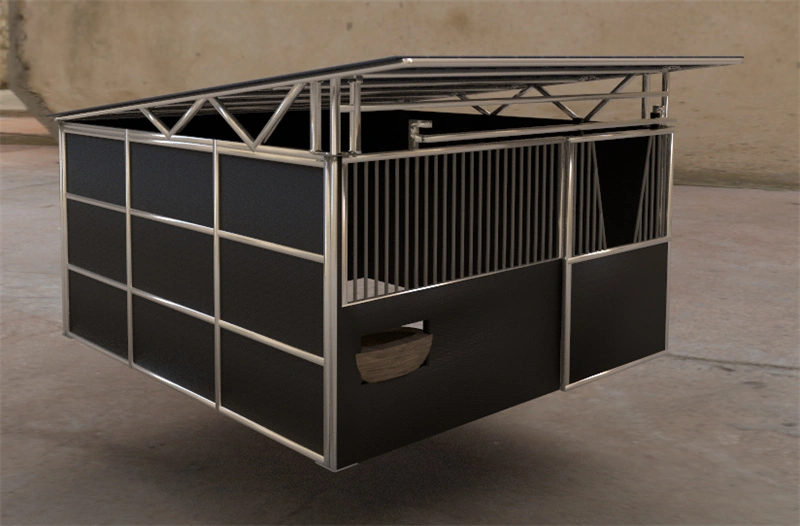
The ammonia factor is the part most suppliers don’t talk about. Horse urine releases ammonia gas that can concentrate above 25 ppm in enclosed stalls, accelerating zinc corrosion by three times. DB Stable’s galvanizing averages 60 microns—well above the 45-micron industry standard—but even that thicker coating won’t protect you if the weld points aren’t sealed.
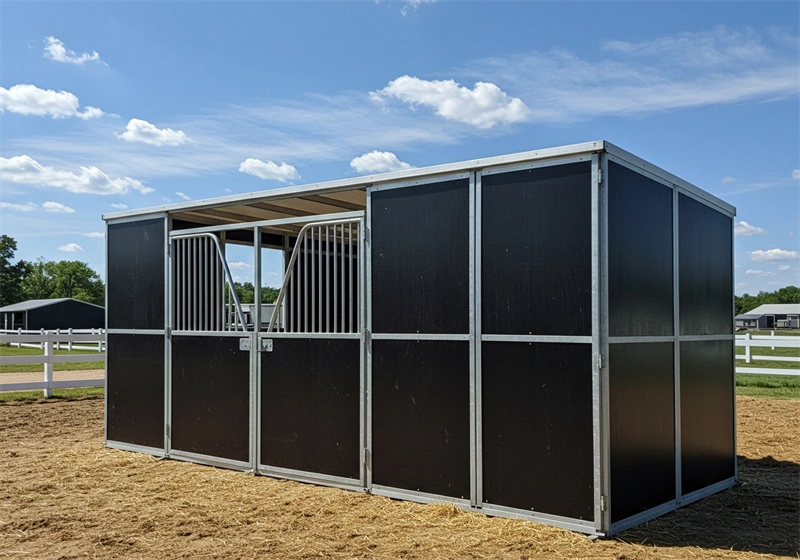
Common inspection findings across Australia and New Zealand show that the first sign of trouble is always at the weld. The hot-dip process leaves a thinner zinc layer at joints, and unless the factory applies a post-weld zinc-rich paint—which most Chinese exporters skip—that’s where the steel will eventually show through.

Why Galvanized Steel Rusts in Horse Stables – The Ammonia Factor
Ammonia in horse stables triples zinc corrosion — most suppliers ignore this.
Horse urine breaks down into ammonia gas. In a typical enclosed stable, concentrations regularly exceed 25 ppm. Ammonia attacks the protective zinc oxide layer on galvanized steel, converting it into soluble zinc ammonia complexes. That exposes the bare steel underneath. The corrosion rate at 25 ppm is roughly three times faster than in clean air. DB Stable’s galvanizing averages 60 microns — 33% thicker than the industry baseline of 45 microns — giving you more sacrificial metal before the steel is reached.
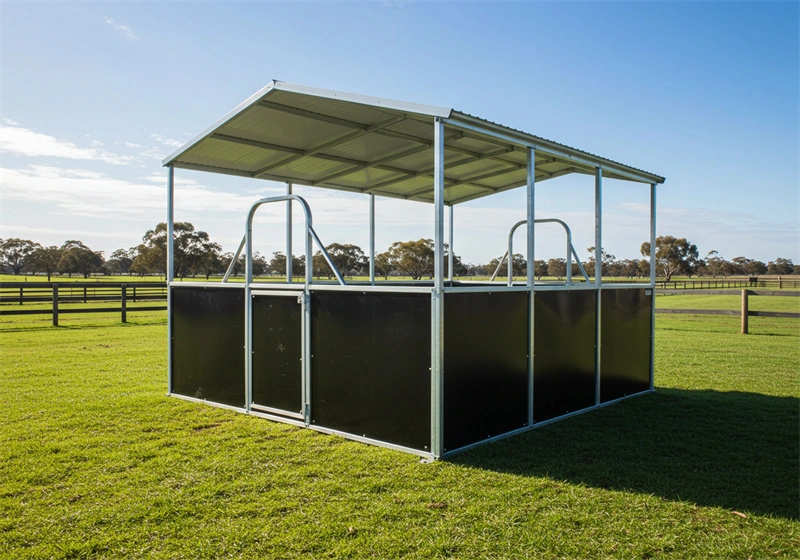
Mechanical damage is the second major cause. Kicks from horses, abrasive bedding removal, and pressure washers set above 2000 psi all physically strip the zinc. A pressure washer at 2000 psi can remove 5–10 microns per pass. At 1500 psi and 30 cm distance, you keep the coating intact. Weld points are the weak link: the hot-dip process leaves a zinc layer about 40% thinner at joints than on flat surfaces. That’s why most rust you’ll find on a stable frame starts at the welds, not the middle of a beam.
- Ammonia environment: Concentrations above 25 ppm accelerate zinc corrosion 3x. DB Stable’s 60-micron coating provides a thicker sacrificial barrier.
- Pressure washing: Keep below 1500 psi and maintain 30 cm distance. Over 2000 psi strips zinc visibly.
- Weld vulnerability: Welds have 40% thinner galvanizing than flat surfaces. DB Stable applies a two-part zinc-rich paint on every weld before shipping — a step most Chinese exporters skip.
- Fingernail test: Run your fingernail across a rust spot. If it catches, the scratch has penetrated the zinc and steel is exposed. If it’s smooth, the zinc layer is still intact and only surface oxidation is present.
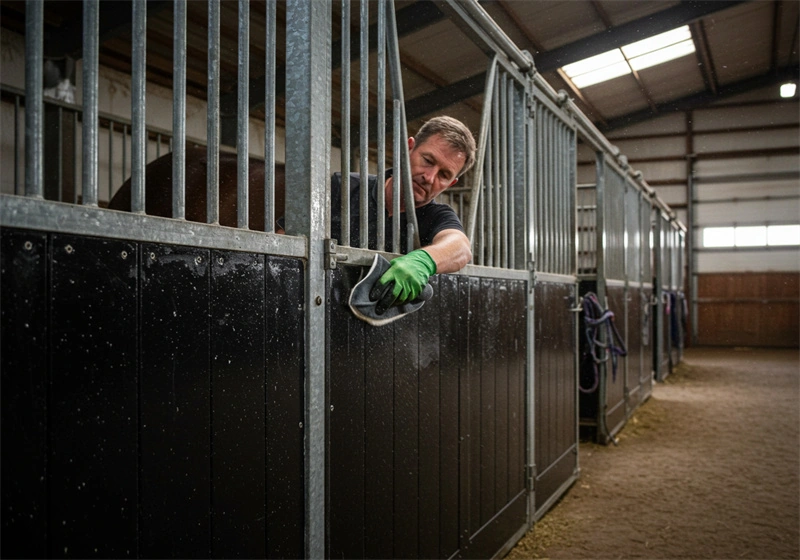
How to Inspect Your Stable Frame for Rust Spots
80% of rust starts at welds – check those first.
- Weld points first: Inspect gusset plates, beam connections, and any joint where the hot-dip layer is naturally thinner. Weld areas see 40% thinner zinc than flat surfaces — that’s where red dust shows up first.
- Bottom edges and bolt holes: Water pools along bottom rails and around bolt holes. Trapped moisture plus ammonia accelerates zinc loss. Run a finger along the edge — if it feels rough, corrosion has started.
- Fingernail test for damage depth: Run your fingernail across a rust spot. If your nail catches, the zinc is gone and steel is exposed — needs immediate repair. If the surface feels smooth, it’s only cosmetic scuffing.
- Magnet check for deep pitting: Surface rust (brown dust) is non-magnetic. If a magnet sticks to the rusted area, the corrosion has penetrated into the steel — the component must be replaced.
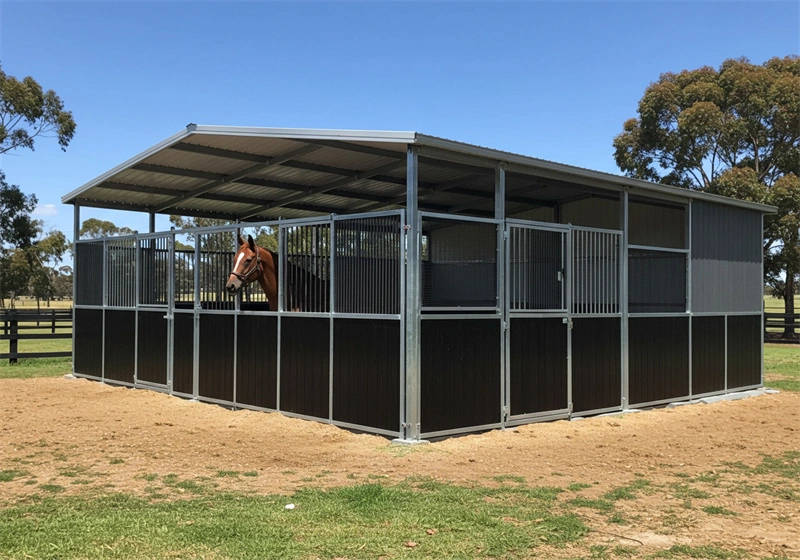
Inspection frequency depends on your environment. For coastal Australia or New Zealand (salt spray + humidity), inspect every 6 months. Inland or drier regions, annual inspection is adequate. During each check, pay extra attention to corners where HDPE panels meet steel — trapped bedding and debris create a microclimate that can triple corrosion rates. When pressure washing, stay under 1500 psi at 30 cm distance; anything above 2000 psi strips the galvanized layer.
Repairing Surface Rust on Galvanized Frames
If your fingernail catches, the steel is exposed.
Most surface rust on hot-dip galvanized frames starts at weld points — not the flat sheets. The hot-dip process leaves a thinner zinc layer at joints, sometimes 40% thinner than the parent metal. That’s the spot where ammonia corrosion in horse stables bites first. DB Stable addresses this at the factory by applying a two-part zinc-rich paint on every weld before shipping, but if you’re repairing an existing frame, you need to match that protection.
- Step 1: Clean the affected area: Use a wire brush to remove loose rust and flaking zinc. Do not use a steel wire wheel on a grinder — it will gouge the remaining galvanized layer. A brass wire brush is safer. For deep pits, use a needle descaler.
- Step 2: Apply a rust converter: Use a phosphoric acid-based converter (e.g., Jenolite or Fertan). This stabilises residual rust and creates a black conversion coating. Let it dry completely — typically 4-6 hours in dry weather.
- Step 3: Apply a cold galvanizing compound: Use a zinc-rich spray or paint with minimum 85% zinc content (e.g., Zinga or Rust-Oleum Cold Galvanizing Compound). Apply in thin coats — two coats with 30 minutes between each. For weld repairs on structural corners, use a two-part zinc-rich epoxy primer for better adhesion.
- Step 4: Test with the fingernail test: After curing, run your fingernail across the repaired area. If it catches on a ridge or pit, the steel is still exposed — apply another coat. If your nail glides smoothly, the zinc is continuous and the repair is sound.
When do you replace instead of repair? If the rust has created a through-hole — visible daylight through the steel — the section must be replaced. Also retire any member where a thickness gauge shows more than 20% metal loss. DB Stable stocks spare parts for all standard frame sections, so a swap takes an hour. Do not weld a patch over rusted galvanized — the heat destroys the zinc coating around the repair and accelerates corrosion faster than the original flaw.

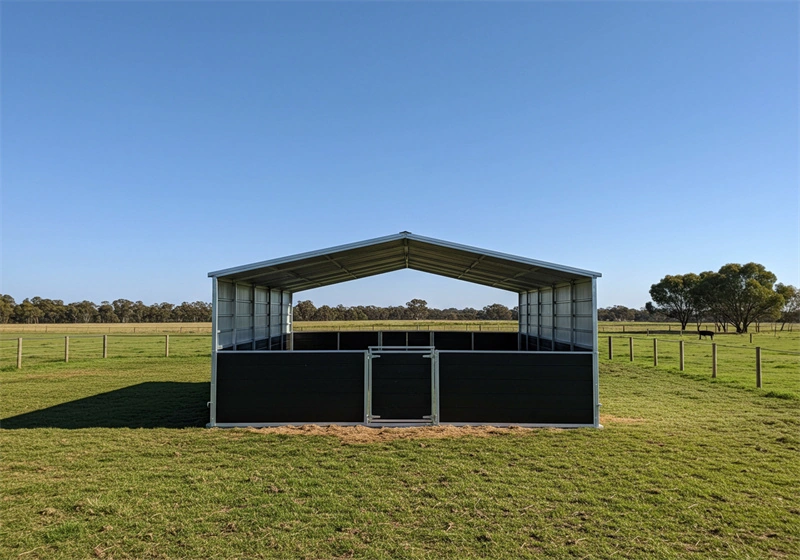
How DB Stable’s Factory Process Prevents Rust
DB Stable’s weld-point zinc coating stops rust before it starts.
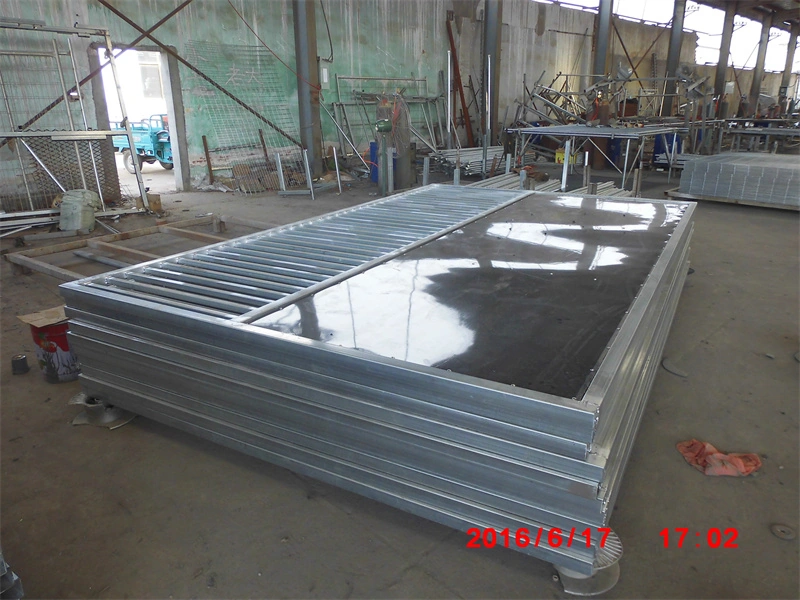
Every steel frame section goes through a triple-cleaning line — degreasing, acid pickling, and fluxing — before the hot-dip galvanizing bath at 450°C. This removes mill scale and oil completely, ensuring the zinc bonds as a uniform alloy layer rather than a loose coating. The galvanizing thickness averages 60 microns, measured across multiple points on each part.
- DB Stable average thickness: 60 microns — 33% thicker than the industry standard of 45 microns. Over 90% of parts land between 55 and 70 microns.
- Competitor average thickness: 40–50 microns with frequent thin spots at weld points, where the zinc layer is up to 40% thinner than on flat surfaces.
- Post-weld coating: After galvanizing, every weld is manually coated with a two-part zinc-rich paint. Most Chinese exporters skip this step entirely.
- Ammonia resistance: Horse urine releases ammonia gas that can exceed 25 ppm in enclosed stables, accelerating zinc corrosion by 3x. A thicker zinc layer and sealed welds delay this attack significantly.
The fingernail test is your quick on-site check: run your nail across a suspicious spot. If your nail catches, the zinc is breached and steel is exposed. That spot needs immediate treatment with a cold galvanizing spray or zinc-rich paint—not a household rust converter. For weld-point rust prevention, always specify post-weld zinc-rich coating in your supplier’s quality agreement.
Conclusion
Rust on a galvanized stable frame is not a death sentence. The difference between a 15-year frame and a 25-year one comes down to how you catch it and what you do about it. The final 10% that separates professionals from amateurs is weld-point protection: the factory step that most Chinese exporters skip, and the on-site step that catches the first signs of corrosion before it spreads.
If you already have stables on site, run the fingernail test on every weld joint this weekend. If you are sourcing new frames, ask for a galvanizing certificate and a sample coupon that shows the post-weld coating thickness. A sample coupon from DB Stable lets you verify the 60‑micron average and the two‑part zinc‑rich paint application before you commit to a full order. Request a sample coupon to compare against your current supplier.
Frequently Asked Questions
Can I paint over rusted galvanized steel?
Yes, but only after removing all loose rust and applying a zinc-rich primer designed for galvanized surfaces. If the rust has pitted into the steel, painting alone won’t stop corrosion—you need to. Always test adhesion with a small patch before full application.
Does pressure washing cause rust?
Yes, if you use pressure above 2000 psi or abrasive nozzles, you can strip the zinc coating and expose the steel. Even lower pressure can force moisture into bolt holes. Use a garden hose or low-pressure wash with a soft brush instead.
How long before I need to repaint the frame?
A quality hot-dip galvanized frame typically lasts 10–15 years before any repainting is needed, but weld points may need touch-up sooner. Annual inspection and spot repair at welds can extend. Repaint only when the zinc layer is breached or surface rust appears.
Can I use regular household rust paint on my stable?
No, household rust paint is not formulated for galvanized steel and will peel off quickly due to the zinc’s smooth surface. You must use a zinc-rich primer or a paint specifically labeled. Skipping the right primer voids the warranty on the coating.
How do I clean galvanized stables without damaging the coating?
Use a soft cloth or sponge with mild soap and water, and avoid abrasive scrubbers or pressure washers above 2000 psi. Never use acidic cleaners like vinegar or bleach, which attack the zinc layer. Rinse thoroughly and dry to prevent water spots.