A portable horse stable frame leaves the factory with a hot-dip galvanised coating at least 42 microns thick. It is then flat-packed, containerised and handled at every transfer point between Anping and your property. Transport scratches on galvanised steel are normal, not a quality failure. What separates a five-minute fix from a rust problem three years down the track is how you treat exposed steel — and that is where galvanizing touch-up paint, applied correctly, earns its keep.
This guide walks through the assessment and repair procedure for scratched galvanising on portable horse stables: how to sort cosmetic marks from bare-steel damage at unloading, what zinc-rich paint actually does, the step-by-step application, and the spec-sheet language that prevents most damage before a container is ever loaded. It is written for importers, distributors and stable builders across Australia and New Zealand.
Key takeaways
- Know your coating: DB Stable frames are hot-dip galvanised to a minimum of 42 microns, specified to AS/NZS 4680 — the AU/NZ standard for hot-dip galvanising of structural steel.
- Not every mark needs paint: scuffs and rub marks that leave the zinc layer intact require no repair at all.
- Bare steel is the priority: any scratch that shows bright steel should be treated with zinc-rich paint at the unloading inspection, not left for a quieter week.
- Prep decides the result: wire-brush the oxides, degrease, then apply two thin coats rather than one thick one.
- Silver paint is not zinc paint: aluminium-flake spray paint contains no zinc and gives no sacrificial protection.
- Prevent at source: third-party QC before dispatch and documented container loading shrink the touch-up list before shipping.
Why transport scratches are normal
A DB Stable panel is not a light item. Each stable panel weighs roughly 200kg, built on a fully welded Q235 steel frame — 50×50mm square tube, with 60×30mm oval and 32mm round tube on other members — with 10mm HDPE board as the fill. The flat-pack design that makes sea freight economical also means steel panels travel stacked, strapped and dunnaged against each other between the factory gate and your yard.
Hot-dip galvanising to AS/NZS 4680 at 42 microns or more is a metallurgically bonded layer, not a paint film that peels. It stands up to weather, stable moisture and horse contact for years. It is not armour against a 200kg panel sliding on its strapping, or a forklift tyne meeting a frame corner during devanning. The assembly system — tool-free corner pins, 2–3 people, around 30 minutes per stable — is built for handling, and handling leaves marks.
So expect scuffs on a fresh consignment, and budget an hour at unloading to inspect and treat them. The ones that matter are the ones that reach bare steel.
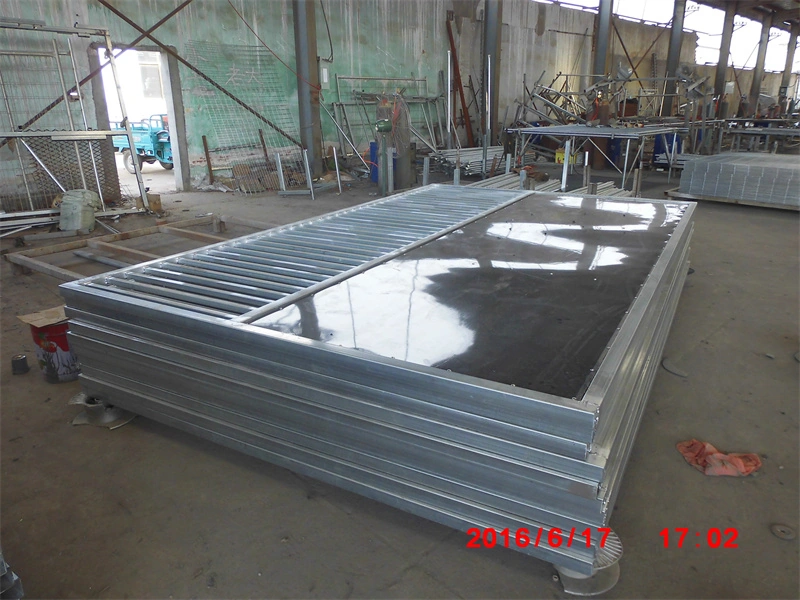
Assess the damage first: three categories
Walk the consignment with your delivery documents before you sign off, and sort every mark into one of three categories. Fresh hot-dip galvanising shines bright silver and weathers to a matte grey over the first months of exposure, so a scratch through the coating is usually easy to see — it shows bright metal against the older, duller surface.
| Condition | What you see | What to do |
|---|---|---|
| Intact coating | Dark rub marks, light scuffs, no bright metal | Wipe clean. No paint needed. |
| Exposed steel | Bright silver line through the grey coating | Zinc-rich touch-up paint at the unloading inspection |
| Deformed member | Bent tube, crushed mesh, damaged weld | Photograph and notify the supplier first; straighten or replace before painting |
The decision rule is simple: if you can see steel, paint it. If the steel has moved, stop and get the supplier’s input before you repaint over a bend — paint on a distorted frame hides the very evidence a claim or repair needs.
What zinc-rich paint actually does
Galvanising protects steel two ways at once. The zinc layer is a physical barrier, and it is also sacrificial: where steel and zinc are both exposed, the zinc corrodes in preference to the steel. That is why a pin-prick scratch in a galvanised coating barely rusts — the surrounding zinc keeps protecting the small exposed spot.
A transport scratch changes the maths. Once the exposed steel area outruns what the surrounding zinc can protect, corrosion gets a foothold at the coating edge and works underneath. Zinc-rich paint restores the sacrificed metal: it is a high-zinc-content coating that re-establishes both the barrier and the galvanic couple over the scratch.
This is not a folk remedy. ASTM A780, the recognised practice for repair of damaged hot-dip galvanised coatings, lists zinc-rich paint alongside thermal zinc spray and zinc alloy soldering as accepted repair methods. On a horse property, with a brush and a tin rather than a metallising gun, paint is the practical one of the three.
If a repair product does not state its zinc content on the tin, treat it as decoration. Silver colour is not a specification.

The repair procedure, step by step
Treat the touch-up as part of the unloading inspection, not a job for a quieter week. Bare steel left through a coastal Australian winter is a much bigger repair than the same scratch painted on day one. Work through the sequence below for each exposed-steel mark on the frame.
- Step 1 — Photograph everything first. Before any brush touches steel, photograph each mark with the delivery paperwork in frame. If a scratch turns out to be part of a bigger handling issue, your dated photos are the record the supplier needs.
- Step 2 — Clean to sound metal. Wire-brush the scratch and a few millimetres around it to remove loose rust, zinc oxides and flaking debris. You want a stable, sound surface — not polished metal.
- Step 3 — Degrease. Wipe the area with a solvent degreaser and let it fully evaporate. Fingerprints and diesel film from the truck break paint adhesion.
- Step 4 — First coat, thin. Brush the zinc-rich paint over the scratch, extending slightly onto the surrounding intact galvanising. Follow the manufacturer’s coverage and recoat instructions on the tin.
- Step 5 — Second coat. Apply the second coat at the stated recoat interval. Two thin coats wet out and adhere better than one thick one, and they will not sag or drip on tube frames.
- Step 6 — Log it. Keep the dated photos in your maintenance file, so next year’s condition check is a comparison rather than a memory test.

Four mistakes that undo the repair
Most failed touch-ups trace back to one of four errors, and none of them are the paint’s fault.
- Painting over rust or salt. A brown fringe or salt film under new paint keeps working after the tin is closed. Wire-brush until the contamination is gone.
- One thick coat. A single heavy pass traps solvent, cures slowly and lifts at the edges. Two thin coats take a few minutes longer and hold for years.
- The wrong product. Aluminium-flake “silver” paint looks similar on the shelf and does nothing galvanic on the frame. Buy paint that states it is zinc-rich and intended for hot-dip galvanised repair.
- Painting damp steel. A frame sweating through a humid morning carries moisture that breaks adhesion. Wait for a dry surface and dry weather in the forecast.
Spec-sheet language that prevents damage
The cheapest touch-up is the one you never have to do, and most of that is decided before the deposit. When you specify portable stables from a China portable horse stable manufacturer, put three lines in writing: hot-dip galvanising to AS/NZS 4680 with a coating of at least 42 microns, third-party QC inspection before dispatch, and photo documentation of the container loading with corner protection on stacked frames.
DB Stable’s standard specification already runs Q235 frames hot-dip galvanised to that 42-micron minimum, with third-party QC available as a service line. A pre-dispatch inspection catches weld and coating issues while the factory can still fix them; loading photos settle any argument about where a deep scratch actually happened. Our 12-point supplier vetting checklist covers the same ground for buyers comparing several factories.
One nuance worth knowing: not every portable horse stable in this market ships with hot-dip galvanised frames. Pre-galvanised tube with a powder-coated finish is a common alternative, and its touch-up workflow is different — colour-matched paint from the finishing supplier, not zinc-rich paint. Check which surface treatment your quote actually specifies before you stock repair consumables.
Frequently Asked Questions
Can I use ordinary silver spray paint on a galvanised stable frame?
No. Aluminium-flake silver paint contains no zinc, so it provides barrier cover only, with no sacrificial protection at the scratch line. Use a zinc-rich paint formulated for repairing hot-dip galvanised coatings.
Do black scuff marks on new panels need touch-up?
No. If the zinc coating underneath is unbroken, a rub mark is cosmetic. Wipe it clean and check the area again after a few weeks of weathering.
Does zinc-rich paint match the galvanised finish?
Not at first. Fresh touch-ups sit darker and flatter than the surrounding coating, then blend in as both weather to the same matte grey.
When is a scratch too big for paint?
Zinc-rich paint suits spot repairs on scratch lines. Large bare areas, bent tubes or damaged welds need the supplier involved before any painting — repair the structure first, then recoat.
Conclusion
Transport scratches on a hot-dip galvanised stable are routine; rust is not. Sort the marks at unloading, treat bare steel with galvanizing touch-up paint using the clean-degrease-two-thin-coats sequence, and keep a dated photo record so next year’s inspection has a baseline. The 42-micron AS/NZS 4680 coating does the heavy lifting for the service life of the frame — your touch-up only needs to defend the few spots where transport got through.
If you are specifying a new consignment, ask for the coating standard, third-party QC and loading photos in writing before the deposit. Those three lines cost nothing and remove most of this article’s workload before the container ships.