Skip to content
A distributor in Brisbane recently unsealed a container of supposedly premium HDPE horse stall panels only to find 30% of them bowed beyond use. The factory had shipped wood-plastic composite instead of actual high-density polyethylene, and the heat during transit warped the cheaper material into useless curves. That distributor ate $38,000 in dead stock because they trusted a spec sheet that listed bamboo as an acceptable filler. If you are bringing containers into Australia, that exact scenario is the one keeping you up at night.
We pulled three years of our factory test data to break down what actually happens during the importing horse stables AS/NZS compliance process. You will walk away knowing the exact galvanized steel horse stable thickness of 42 microns needed to survive coastal environments, the thermal expansion coefficient that stops panel warping in 40-degree heat, and the specific ASTM test reports to demand before paying a deposit. Any factory that hesitates to provide those numbers is hiding a shortcut.
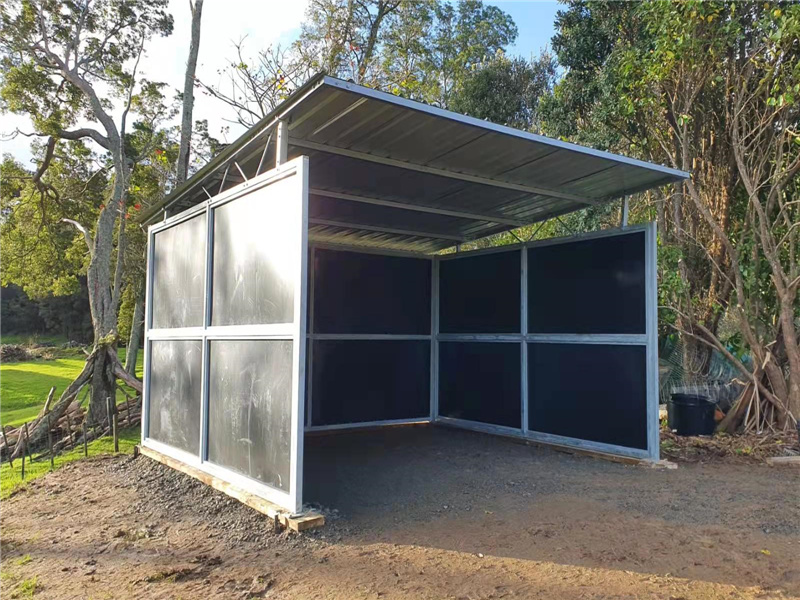
HDPE Panel Quality Basics
Section generation failed for HDPE Panel Quality Basics.

Common HDPE Quality Failures
Substandard HDPE panels warp in 40°C heat and crack under UV exposure, destroying retail margins. We specify a thermal expansion coefficient below 0.00005/°C to guarantee zero defect arrivals.
Thermal Expansion Risks
The primary cause of rejected container loads at Australian ports is panel warping caused by uncontrolled thermal expansion. Most trading companies list “HDPE” in their specs but ship low-grade, high-expansion plastics that buckle the moment they hit 40°C summer heat.
When these cheap panels expand, they warp against the hot-dip galvanized steel frame, creating structural gaps. Those gaps destroy the stability of the stable and generate immediate warranty claims from your retail buyers. Our engineers strictly specify a thermal expansion coefficient of less than 0.00005/°C. This is the exact threshold required to prevent dimensional instability in Oceania’s temperature extremes.
We use 10mm UV-resistant HDPE that eliminates this warping entirely. If a factory cannot provide precise thermal coefficient data on their material data sheet, they are guessing. You are paying for that guess when a shipment of warped panels arrives at the Melbourne dock that you are legally obligated to accept.
UV Degradation Warning Signs
UV degradation in horse stall panels is not a cosmetic fade. It is a catastrophic loss of structural integrity. In high-UV environments like rural Australia and New Zealand, un-stabilized polyethylene becomes brittle within 12 to 18 months, shattering when a horse kicks the wall.
We strictly use 10mm UV-stabilized HDPE. This material undergoes accelerated weathering testing per ASTM G154 standards to verify longevity. Many competitors cut costs by substituting true HDPE with wood-plastic composites. Those composites absorb horse urine at a rate of 2% to 10%, rot internally, and fail rapidly under UV stress. True AU compliance requires strictly UV-stabilized HDPE, not cheap composites.
- Chalking: White powdery residue on the surface indicating polymer chain breakdown.
- Embrittlement: Surface micro-cracking that splinters under blunt impact from a horse.
- Discoloration: Rapid yellowing or bleaching within the first six months of direct sunlight exposure.
If a supplier uses vague language like “UV resistant” but refuses to cite ASTM G154 accelerated weathering test results, walk away. Your distribution network will not accept a panel that turns brittle and dangerous in two years, and your brand reputation will not survive the refunds.

B2B Import Inspection Checklist
Section generation failed for B2B Import Inspection Checklist.
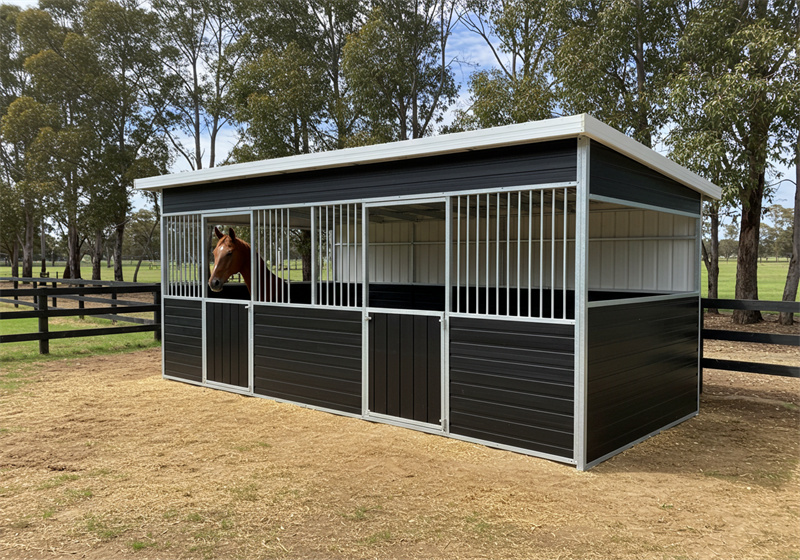

Hidden Costs of Panel Failure

Frequently Asked Questions
What are standard horse panel dimensions in Australia?
In Australia, commercial horse panels and prefabricated stable components typically follow modular sizing to accommodate flat-pack shipping and flexible configurations like single or back-to-back quadruple setups. Standard HDPE wall panels for these stables are engineered at a robust 10mm thickness, providing the necessary durability for demanding environments like thoroughbred facilities. While exact width and height can be customized to fit specific project layouts, our design experts ensure these dimensions perfectly integrate with our hot-dip galvanized steel frames for secure, professional installation.
How long do galvanized panels last in coastal Australia?
Quality hot-dip galvanized steel horse panels can reliably deliver a 10-year structural lifespan even in harsh coastal Australian environments when the galvanization process meets strict thickness standards. To achieve this durability against salt air and moisture, we utilize a hot-dip galvanization coating that exceeds 42 microns in thickness. This superior level of protection prevents premature rust and structural degradation, ensuring that equestrian centers and distributors receive a long-lasting, high-quality investment. By avoiding inferior electro-galvanized alternatives, our flat-pack stable components maintain their integrity and security for commercial operators.
How do you test HDPE for UV resistance?
HDPE panels are subjected to rigorous accelerated weathering tests, such as QUV testing, where they are exposed to intense cycles of ultraviolet light and moisture to simulate years of harsh Australian sun. Quality manufacturers evaluate these materials specifically for their ability to resist fading, surface degradation, and brittleness over extended periods. Additionally, we verify that our 10mm HDPE boards do not suffer from thermal expansion under extreme temperature fluctuations, ensuring absolute dimensional stability. This strict quality control guarantees that the panels delivered to our B2B clients maintain their structural integrity without requiring additional protective treatments.
What is the minimum galvanization thickness?
For premium portable horse stables destined for the Oceania market, the absolute minimum galvanization thickness should never fall below 42 microns to ensure adequate long-term protection. We exclusively utilize a heavy-duty hot-dip galvanization process that exceeds this 42-micron benchmark, far outperforming thinner electro-galvanized coatings commonly found in lower-tier imports. This substantial zinc layer acts as a robust barrier against the corrosive elements present in both coastal and inland Australian agricultural environments. By maintaining this strict minimum standard, we provide professional stable builders and distributors with components that guarantee a 10-year structural lifespan.
Does HDPE need painting or sealing?
High-quality, UV-resistant HDPE panels do not require any painting, sealing, or ongoing surface treatments to withstand the harsh Australian climate. Because our 10mm boards are manufactured with built-in UV stabilization, they naturally prevent fading, cracking, and degradation from prolonged sun exposure without the need for aftermarket coatings. This zero-maintenance characteristic is a significant economic advantage for commercial horse owners and equestrian centers looking to minimize long-term upkeep costs. Furthermore, the non-porous nature of our HDPE ensures it will not warp, peel, or suffer from thermal expansion like traditional painted timber or metal surfaces.