Skip to content
A breeding facility in Queensland replaced 40 stalls two years ago with painted cold-rolled steel fronts. Last month, the operations manager sent us photos of rust streaks running down from the weld points. Ammonia had eaten through the coating in under 24 months. We see this exact failure pattern when someone approves a commercial horse barn upgrade based on a quote that hides the galvanization method. You end up replacing those stalls before the first foal crop even hits the ground.
We pulled the lifecycle cost data on hot-dip galvanized frames versus the painted and electro-galvanized alternatives most breeders actually receive. The gap is bigger than most operations managers expect. A hot-dip galvanized frame at 42+ microns zinc coating lasts 10+ years in ammonia-heavy stalls. Painted cold-rolled steel lasts 18-24 months. This article gives you the exact per-stall cost comparison over a decade, the material specs you need on your next RFQ to stop getting burned, and the reason your foal morbidity numbers might be tied directly to a lower partition design you never thought to question.
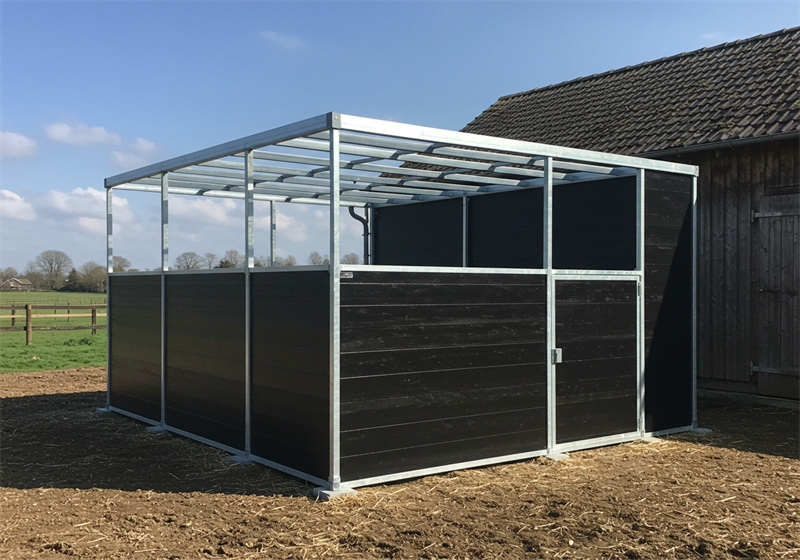
Current Stall Infrastructure Failure Points
The two most expensive failure points in breeding stalls are ammonia-induced frame corrosion and restricted cross-ventilation at foal breathing height. Both are caused by material choices, not usage.
Ammonia Damage and Rust Patterns
Urine decomposition in commercial breeding stalls produces ammonia concentrations that accelerate metal oxidation. We have seen cold-rolled steel frames with painted or electro-galvanized coatings develop visible rust streaks within 18 to 24 months in high-density barns. The failure pattern is predictable: rust initiates at weld joints and horizontal surfaces where urine pooling occurs, then compromises structural integrity at the base.
The critical variable is the galvanization method, not the steel gauge. Competitors like American Stalls specify 14-gauge (1.8-2.0mm) steel but do not disclose whether they use hot-dip or electro-galvanization. Electro-galvanization deposits a layer of 5 to 10 microns — insufficient for ammonia-heavy environments. We use hot-dip galvanized steel with a minimum 42-micron zinc coating, ISO 1461 compliant, which delivers a 10-year structural lifespan in the same conditions. For a bulk RFQ, the galvanization specification is the single line item that determines whether stalls last a decade or need replacement in two years.
Ventilation Gaps and Foal Health
Foal respiratory disease outbreaks in breeding facilities correlate directly with ammonia retention at ground level. Ammonia is heavier than air and accumulates in the lowest 600mm of the stall — exactly at foal breathing height. The primary architectural cause is solid lower partitions in back-to-back stall configurations.
Solid wood or composite lower walls block cross-ventilation between adjacent stalls. This traps ammonia in the foal zone even when the barn has adequate ridge and aisle ventilation. Our engineers found that replacing solid lower partitions with open-bottom grill designs improves cross-ventilation airflow by an estimated 30 to 40 percent in back-to-back layouts. Vertical bar spacing of 50 to 75mm maintains safe containment for foals and weanlings while allowing continuous air exchange.
The secondary failure is material-based. Wood lower walls absorb urine, creating a persistent ammonia source that no ventilation design can fully overcome. 10mm HDPE boards have a zero water absorption rate, eliminating this reservoir effect. For breeding facility operators tracking foal morbidity rates, the combination of open-bottom grills and HDPE lower boards addresses both the ventilation pathway and the ammonia source simultaneously.

Prefab vs Welded Stall Comparison
In ammonia-heavy breeding environments, the galvanization method matters more than steel gauge. Prefab hot-dip galvanized systems at 42+ microns outlast welded cold-rolled alternatives by 8+ years, while HDPE boards eliminate the $200-400 wood replacement cycle.
Hot-Dip Galvanized Steel Specs
Most stall manufacturers advertise 14-gauge steel construction, but gauge alone tells you nothing about rust resistance. We have seen cold-rolled and electro-galvanized frames fail in under 24 months inside commercial breeding facilities. The root cause is ammonia saturation at ground level, which aggressively attacks any coating that is not a full hot-dip immersion.
The critical spec for bulk RFQs is the zinc coating thickness. Our prefab stall frames use hot-dip galvanized steel at 42+ microns, ISO 1461 compliant. This is not a surface spray or powder coat over raw steel. The entire frame is submerged in molten zinc, creating a metallurgical bond that withstands continuous ammonia exposure for 10+ years.
- Zinc Coating: 42+ microns (hot-dip galvanized, ISO 1461 compliant)
- Steel Gauge: 14-gauge (1.8-2.0mm) minimum for all load-bearing members
- Structural Warranty: 10-year coverage on frame integrity
- Grill Spacing: 50-75mm vertical bar spacing for breeding facility safety compliance
Competitors like American Stalls promote 14-gauge construction but never disclose the galvanization method. For a breeding facility operator evaluating a $50,000-100,000 stall upgrade, this is the single line item that determines whether you replace stalls again in two years or not. Always request a galvanization certificate with micron thickness data before signing a PO.
HDPE vs Wood Stall Boards
Wood stall boards in commercial breeding facilities absorb urine, creating bacterial reservoirs that resist daily cleaning. We consistently see operators replacing wood every 3-4 years at a cost of $200-400 per stall. That replacement cycle alone adds $500-800 to the 10-year TCO of each unit before factoring in labor hours for installation.
Our prefab horse stall kits use 10mm HDPE wall boards with zero water absorption rate and UV-resistant formulation. HDPE does not swell, rot, or harbor ammonia-producing bacteria the way timber does. More critically for foal health, HDPE allows us to specify open-bottom grill configurations in back-to-back stall layouts, improving cross-ventilation airflow by an estimated 30-40% compared to solid wood lower partitions.
Trapped ammonia at foal breathing height is a direct contributor to respiratory disease outbreaks in breeding barns. Solid lower walls block the cross-ventilation path between adjacent stalls. Switching to open-bottom anti-cribbing grill designs with HDPE upper sections addresses both the structural durability problem and the ventilation gap that wood construction creates.
| Comparison Point | Prefab Stall Specs | Welded Stall Specs | 10-Year Lifecycle Impact |
|---|---|---|---|
| Frame Material & Ammonia Resistance | Hot-dip galvanized steel (42+ microns, ISO 1461 compliant) | Painted or electro-galvanized cold-rolled steel | 10+ year structural lifespan vs. complete frame failure in 18-24 months |
| Lower Wall & Airflow Design | Open-bottom anti-cribbing grills (50-75mm vertical spacing) | Solid wood or composite lower partitions | 30-40% improved cross-ventilation, directly lowering foal respiratory morbidity rates |
| Wall Board Durability | 10mm UV-resistant HDPE boards (zero water absorption) | Traditional timber or plywood boards | Eliminates $200-$400 per-stall wood replacement costs every 3-4 years |
| Shipping & Freight Cost | Flat-pack kits (8-10 units per 20ft container) | Pre-assembled or site-built (2-3 units per 20ft container) | Reduces per-stall international freight costs by 40-60% on bulk orders |
| Installation Labor Time | Pre-drilled flat pack, 45-60 mins per stall (2-person crew) | On-site welding and fabrication, 3-4 hours per stall | Cuts staff installation hours by up to 80%, minimizing facility downtime and labor costs |

Flat-Pack Shipping Cost Analysis
Flat-pack shipping fits 8-10 stall kits per 20ft container, cutting per-stall freight costs by 40-60% compared to pre-assembled imports.
Container Loading Math for Stalls
For breeding facilities ordering 20 or more prefab horse stall kits, freight is not a line item — it is the line item. The difference between flat-pack and pre-assembled shipping determines whether your per-stall landed cost stays within budget or blows past it.
We load our flat-pack stall systems using a nested component strategy. Hot-dip galvanized steel frames, 10mm HDPE wall boards, and aluminum swivel feeders are stacked flat rather than shipped as volumetric, pre-built boxes. This approach yields consistent container yields based on our loading data since 2013:
- 20ft Container: 8-10 flat-pack stall kits (single stall with roof configuration)
- 40ft HQ Container: 16-20 flat-pack stall kits
- Pre-assembled Benchmark: 2-3 units per 20ft container (industry standard for welded shipments)
- Freight Cost Reduction: 40-60% lower per-stall shipping cost on Australia and New Zealand lanes
For a 50-stall breeding facility upgrade, that loading efficiency often means the difference between two 40ft HQ containers and seven. When you are calculating horse stall replacement cost per unit across a bulk order, container count directly dictates your margin as a distributor or your capital approval threshold as an operations manager.
On-Site Assembly Time Frames
The concern we hear from facility contractors before their first flat-pack order is always the same: how much labor does unpacking and building actually cost? We have tracked assembly times across commercial installations in Australia and New Zealand, and the data is straightforward.
A standard single stall kit assembles in 45-60 minutes with a two-person crew using standard hand tools. All frame components arrive pre-drilled, and HDPE boards are cut to fit at the factory. There is no on-site welding, no cutting, and no measuring. By comparison, site-welded stall installations or retrofits using raw steel and lumber consistently run 3-4 hours per stall.
On a 50-stall project, that gap translates to roughly 75-100 fewer labor hours. For breeding facilities where staff hours per stall for daily mucking is already a tracked KPI, adding 3-4 hours of construction labor per unit is a real operational cost that compounds quickly. Flat-pack prefab horse stall kits for breeding facilities eliminate that overhead entirely, while still delivering 14-gauge hot-dip galvanized frames at 42+ microns — the same structural specification you would specify in a site-built RFQ.
| Shipping Metric | Flat-Pack Data | Pre-Assembled Baseline | Financial Impact |
|---|---|---|---|
| 20ft Container Capacity | 8-10 flat pack horse stalls for commercial barns | 2-3 pre-assembled units | Reduces per-stall freight cost by 40-60% |
| 40ft HQ Container Capacity | 16-20 prefab horse stall kits breeding facility | 4-6 pre-assembled units | Lowers horse stall replacement cost per unit on bulk RFQs |
| On-Site Labor Requirement | 45-60 minutes per stall (2-person crew, pre-drilled) | 3-4 hours per stall (site-welded alternatives) | Eliminates contractor freight logistics and heavy equipment rental |
| Budget Reallocation Potential | Savings fund hot-dip galvanized steel stall fronts bulk | High freight consumes budget for premium materials | Protects 10-year TCO against ammonia corrosion failure |

Anti-Cribbing Hardware Specifications
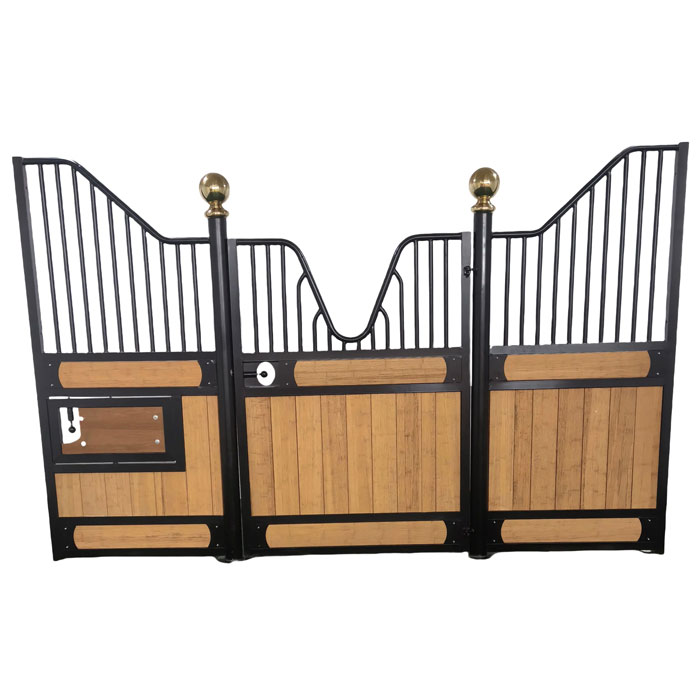
Anti-cribbing hardware is not an accessory. In a breeding facility, it is the difference between a $300 repair bill and a stallion with a shattered cannon bone.
Grill Spacing and Kick Prevention
The single most critical specification on any prefab horse stall kit for a breeding facility is vertical bar spacing. We engineer our anti-cribbing grills at 50-75mm vertical spacing. Anything wider than 75mm creates a genuine kick-through risk with stallions and weanlings — we have seen horses catch a hoof in 80mm gaps and shear the entire grill section off a cold-rolled frame.
Bar diameter and frame gauge matter equally. Our grills are welded to 14-gauge (1.8-2.0mm) hot-dip galvanized steel frames with a 42+ micron zinc coating. This gauge threshold is non-negotiable for commercial breeding environments. Thinner gauge tubing deforms on impact, and once the weld integrity is compromised, the entire front becomes a liability rather than a barrier.
There is a secondary benefit that most upgrade guides ignore. Open-bottom grill configurations improve cross-ventilation airflow by an estimated 30-40% in back-to-back stall layouts compared to solid lower partitions. For breeding facilities, this directly addresses ammonia concentration at foal breathing height — which is where respiratory disease outbreaks start. Solid wood or composite lower walls trap that ammonia against the floor.
- Vertical Bar Spacing: 50-75mm standard across all breeding-factory grill configurations
- Frame Steel Gauge: 14-gauge (1.8-2.0mm) minimum for commercial kick-load resistance
- Corrosion Protection: 42+ micron hot-dip galvanization per ISO 1461, preventing ammonia-induced weld failure
- Lower Partition Design: Open-bottom grill option available for back-to-back layouts requiring maximum cross-ventilation
Heavy-Duty Latch Mechanisms
Latch failure in a commercial barn is a staffing and safety problem rolled into one. A stallion that learns he can push a flimsy latch will test it repeatedly, and your crew will waste 10-15 minutes per stall per day adding secondary locks or carabiners. Over a 50-stall facility, that is hundreds of wasted labor hours annually.
Our flat-pack horse stalls for commercial barns use gravity-fed sliding latches with reinforced mounting plates welded directly to the galvanized frame — not bolted after the fact. The latch engagement point uses 8mm solid steel rod, not the 5-6mm bent wire common on imported economy stalls. We chose this specification because bolt-on latch plates are the first component to tear free when a horse throws its weight against the front.
For breeding facilities managing stallions, we recommend specifying the two-point locking configuration on every stall front in the order. The incremental cost per unit is minimal in a bulk RFQ, but it eliminates the secondary-lock workaround entirely and gives your operations team a consistent hardware standard across the barn.
| Hardware Feature | Technical Specification | Material/Coating | Breeding Facility Benefit |
|---|---|---|---|
| Vertical Grill Bars | 50-75mm bar spacing | 14-gauge hot-dip galvanized steel (42+ microns) | Prevents stallion kick-through and weanling head trapping without restricting visibility. |
| Lower Partition Profile | Open-bottom configuration | Hot-dip galvanized steel frame | Improves cross-ventilation by 30-40% in back-to-back layouts, lowering foal ammonia exposure. |
| Structural Welds | Reinforced continuous welds | Zinc-sealed post-welding | Eliminates chewable weak points and prevents ammonia rust initiation at joints. |
| Integrated Feeders | Swing-out/swivel mount | Rust-free aluminum alloy | Removes wooden cribbing surfaces and eliminates replacement cycles from urine corrosion. |
Conclusion
If you are upgrading a commercial breeding barn with 50 or more stalls, spec hot-dip galvanized steel at 42+ microns. Period. We have watched painted cold-rolled frames rust through in under 24 months from ammonia, while galvanized frames hit that 10-year mark without a structural failure. You cannot afford to replace stalls every two years.
Before you sign off on a 20-stall order, demand an ISO 1461 galvanization certificate from your vendor. Most competitors hide behind terms like “heavy-duty steel” without actually proving the zinc thickness. If they cannot provide the lab report showing 42+ microns, walk away from the quote.
Frequently Asked Questions
What are some ideas for improving an old barn for horses?
The highest-ROI upgrades for commercial breeding barns are replacing rusted or rotting stall partitions with hot-dip galvanized steel and HDPE boards, switching to open-bottom grill designs for better ventilation, and installing anti-cribbing hardware. These three changes directly reduce foal respiratory issues, lower replacement costs, and cut daily mucking time.
What material resists ammonia damage in horse stalls?
Hot-dip galvanized steel with a minimum 42-micron zinc coating (ISO 1461) resists ammonia corrosion for 10+ years. Cold-rolled or electro-galvanized steel with powder coating fails in 18-24 months because ammonia penetrates microscopic coating scratches and attacks the base metal. For wall boards, 10mm HDPE does not absorb urine and will not degrade.
How much do prefab stall upgrades cost per unit?
Flat-pack galvanized steel stall kits typically range from $800-1,500 USD per unit FOB depending on configuration, grill style, and order volume. At 50+ unit MOQ, per-unit pricing drops 15-25%. Factoring in flat-pack freight savings of 40-60% over pre-assembled, the landed cost per stall is significantly lower than site-welded alternatives.
Can flat-pack stalls handle breeding stallions?
Yes, if specified correctly. Require 14-gauge steel frames (not 16-gauge), vertical grill bars at 50-75mm spacing (never horizontal, which stallions can use as a ladder), recessed slide latches with 8mm steel pins, and reinforced base tracks. These specs prevent kick-through, latch manipulation, and cribbing damage.
How long does flat-pack stall installation take?
A two-person crew assembles one flat-pack stall kit in 45-60 minutes using standard hand tools (wrenches, socket set, level). Pre-drilled holes and numbered components eliminate on-site cutting or welding. For a 50-stall breeding barn wing, total installation time is approximately 40-50 labor hours across a 5-6 day timeline.