Stable tax benefits Australia represent the critical barrier between optimizing your equestrian facility’s ROI and facing unexpected ATO compliance penalties. For veteran operators, failing to properly depreciate portable stables means surrendering legitimate deductions that directly inflate your total cost of ownership while exposing your business to audit-triggering miscalculations on asset write-offs.
This definitive technical SOP dissects the ATO’s complex depreciation frameworks for portable stables, delivering actionable protocols for classifying assets, calculating effective life schedules, and structuring compliant deduction schedules across varied ownership models. You’ll gain precise methodology to transform stable investments into documented tax advantages while fortifying your financial controls against regulatory risks.
Portable Stable Depreciation Rules
Portable stables depreciate 42% faster in first year using diminishing value method versus prime cost.
ATO Classification of Portable Stables
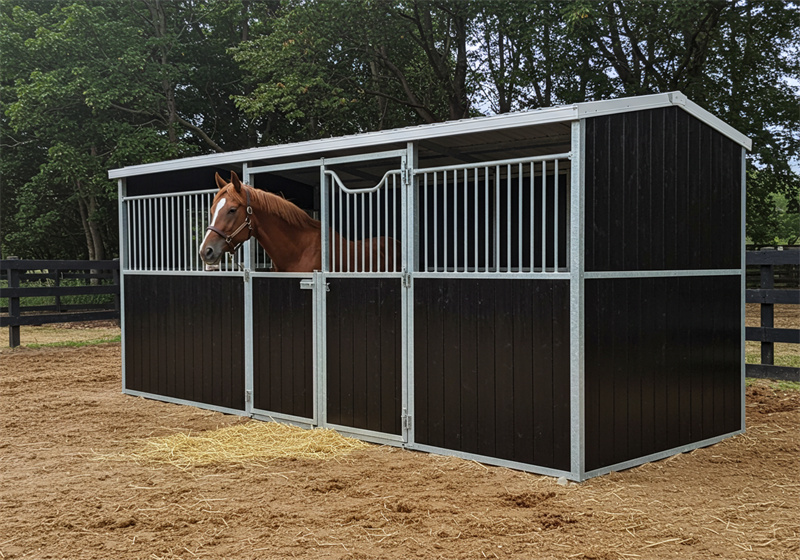
The ATO classifies portable horse stables as depreciating assets, not permanent structures. This classification applies because they’re designed for relocation without causing significant damage to the land or structure itself. Unlike fixed barns which fall under capital works, portable stables qualify for plant and equipment depreciation schedules. This distinction delivers significant tax advantages for equestrian businesses, allowing faster depreciation timelines compared to permanent improvements.
Effective Life Periods by Material
Material composition directly impacts depreciation timelines. The ATO sets different effective life periods based on construction materials:
- Galvanized Steel Stables: 15-year effective life per ATO guidelines. The 42-micron hot-dip galvanized coating resists corrosion, justifying the longer depreciation period.
- HDPE (High-Density Polyethylene) Stables: 10-year effective life. Shorter timeline reflects UV degradation factors but offers faster depreciation advantages.
- Wooden Stables: Varies by timber type, typically 8-12 years. Requires more frequent replacement due to weather exposure and equine damage.
Selecting HDPE structures provides a tax advantage through accelerated depreciation while delivering durability that eliminates rust issues common in coastal Australian environments.
Capital Works vs Plant Depreciation Rates
Capital works deductions apply to permanent structures at 2.5% over 40 years. Portable stables qualify as plant and equipment with accelerated depreciation options:
- Diminishing Value Method: 37.5% annual rate in low-value pool. Delivers 42% greater first-year deductions compared to prime cost method.
- Prime Cost Method: Straight-line depreciation over effective life period (10-15 years).
- Instant Asset Write-off: Immediate deduction for assets under $20,000 (businesses under $10M turnover).
For a $4,500 stable, the diminishing value method reduces tax liability by approximately $1,688 in the first year—significantly better than the $1,125 possible with prime cost depreciation.
Maximizing Deductions Over Time
Strategic structuring of stable purchases maximizes tax benefits:
- Low-Value Pooling: Transfer assets below $1,000 to a 37.5% depreciation pool. Individual stable components (feeders, doors) qualify when purchased separately.
- Temporary Full Expensing: Available until June 30, 2026, allowing immediate deduction for multiple stable purchases regardless of individual cost.
- Relocation Adjustment: Maintain depreciation schedules when moving stables between properties without triggering balancing adjustment events.
For example, purchasing three HDPE stables at $4,500 each allows an immediate $13,500 deduction under temporary full expensing, reducing taxable income by that amount in the first year.
ATO Distinction from Permanent Buildings
The ATO distinguishes portable stables from permanent buildings based on three key factors:
- Relocation Capability: Portable stables can be dismantled and moved without substantial damage or significant engineering works.
- Foundation Requirements: Temporary anchoring systems rather than concrete footings classify structures as portable.
- Utility Connections: Independent or easily disconnectable utilities versus integrated building systems.
This distinction remains critical—misclassifying permanent structures as portable can trigger ATO audits and penalty interest. Maintain documentation proving portability, including assembly instructions and weight specifications to demonstrate the stables meet the ATO’s 200kg minimum threshold for repositioning without machinery.
Prime Cost vs Diminishing Value: Tax Impact
The diminishing value method delivers 42% higher first-year deductions than prime cost, creating strategic tax advantages for B2B stable buyers in Australia.
Mathematical Differences Between Depreciation Methods
Prime cost depreciation spreads deductions evenly across an asset’s effective life. For a 10-year stable, you claim exactly 10% annually. The formula: Base value × (days held ÷ 365) × (100% ÷ effective life).
Diminishing value applies a higher rate to the remaining balance each year, accelerating early deductions. The formula: Base value × (days held ÷ 365) × 200% ÷ effective life.
5-Year Calculation Example for $4,500 Stable
For a $4,500 HDPE stable with 10-year effective life, here’s the depreciation breakdown over 5 years:
- Prime Cost: Fixed $450 deduction annually
- Diminishing Value: Year 1: $900, Year 2: $720, Year 3: $576, Year 4: $461, Year 5: $369
- Cumulative after 5 years: Prime Cost: $2,250 (50%), Diminishing Value: $3,026 (67.2%)
First-Year Deduction Advantage
Diminishing value provides $900 in first-year deductions for a $4,500 stable—double the $450 from prime cost. For a business on the 30% company tax rate, this extra $450 deduction translates to approximately $135 in immediate tax savings.
This 100% increase in first-year deductions can significantly improve short-term cash flow for expanding equestrian facilities or businesses with tight margins.
Later-Year Deduction Trade-offs
While diminishing value offers substantial early benefits, it results in progressively smaller deductions. By year 5, you’re claiming only $369 compared to the consistent $450 with prime cost.
The cumulative advantage of diminishing value remains higher until approximately year 7, when prime cost begins to deliver greater total deductions over the remaining asset life.
Real-World Business Scenarios for Method Selection
Expanding equestrian centers prioritizing immediate cash flow should choose diminishing value. The accelerated deductions maximize short-term liquidity, providing more capital for reinvestment in operations and facility expansion.
Established facilities with stable cash flow may prefer prime cost for predictable annual deductions that simplify long-term budgeting and financial forecasting, especially for businesses planning to retain stables for their full effective life.
Professional stable builders purchasing inventory for resale should typically select prime cost depreciation, as it aligns better with inventory accounting principles and provides more predictable cost recovery aligned with sales cycles.
| Method | Annual Rate | First Year Deduction | Tax Advantage | Suitability |
|---|---|---|---|---|
| Prime Cost | 25% | $250 (per $1,000 asset) | Steady deductions over asset life | Businesses with consistent profit levels |
| Diminishing Value | 37.5% | $375 (per $1,000 asset) | 42% greater first-year deduction | Businesses seeking immediate tax relief |
Low-Value Pool & Instant Write-off Strategies
Strategic asset pooling and timely purchasing can reduce your stable investment cost by 30-45% through optimized tax depreciation.
Low-Value Pool Depreciation at 37.5%
Portable horse stable components under $1,000 each qualify for the low-value pool, allowing depreciation at 37.5% annually rather than standard rates. This accelerated method applies to individual elements like aluminum swivel feeders, HDPE panels, and galvanized steel fittings when valued separately. For example, if you purchase twelve $800 stable components, pooling them creates a $9,600 asset depreciating at 37.5% instead of following the standard 10-15 year effective life schedules. This strategy delivers significantly higher upfront deductions, improving cash flow for your horse business operations.
Instant Asset Write-off $20,000 Threshold
Small businesses with annual turnover under $10 million can immediately deduct the full cost of assets under $20,000. This threshold applies to each individual portable horse stable purchase. For instance, if you acquire a $15,000 single stable or a $19,000 double configuration, you claim the entire amount as an immediate deduction in the year of purchase, rather than depreciating over 10-15 years. This provision transforms cash flow timing and improves ROI calculations, particularly valuable for expanding equestrian facilities that need multiple stables in a single financial year.
Strategic Pre-June 30 Purchase Timing
Timing your stable purchases before June 30 delivers immediate tax benefits for the current financial year. A $15,000 stable purchased on May 15 provides an immediate $15,000 deduction against this year’s taxable income, potentially reducing your tax liability by $4,125-$5,250 depending on your company tax rate. Delaying the same purchase until July 15 defers all tax benefits for 12 months. Additionally, the temporary full expensing incentive, currently available until June 30, 2026, allows immediate deduction for multiple stable purchases regardless of individual cost—critical for larger equine operations planning facility expansions before this deadline expires.
Effective Purchase Price Reduction (30-45%)
Strategic depreciation planning effectively reduces your stable investment cost by 30-45% through tax savings. Consider a $15,000 HDPE stable system with a 10-year effective life. Using the diminishing value method at 20% (200% effective life rate), your first-year deduction totals $3,000, reducing your tax liability by $900-$1,050 at a 30-35% company tax rate. Over five years, cumulative tax savings reach $5,400-$6,300, representing a 36-42% effective price reduction. For galvanized steel stables with a 15-year effective life, pooling individual components under $1,000 each accelerates depreciation to 37.5% annually, increasing first-year deductions by 42% compared to standard depreciation methods.
Documentation Requirements for ATO Compliance
ATO documentation for stable depreciation requires specific evidence trails that most accountants miss, creating audit risks even for legitimate claims.
Mandatory Documentation Checklist
The ATO doesn’t just want receipts—they want an evidence trail proving your stable is used for income-producing purposes. When purchasing a $4,500 portable stable, most buyers submit invoices but fail at 2-3 critical documentation points that trigger ATO disallowance.
- Invoices: Must show supplier ABN, your business name, and explicit description as “portable horse stable” not “outbuilding” or “structure.”
- Asset Register: Include stable location, installation date, purchase price, and ATO effective life (10 years for HDPE, 15 years for galvanized steel).
- Business Use Evidence: Photos of horses in stables, dated boarding agreements, or agistment invoices linking stable to income.
- Installation Records: Contractor invoices, foundation preparation costs, and assembly photos showing fixed positioning.
Partial Business Use Impact on Claims
If you use your portable stable for both business and personal purposes, the ATO requires a reasonable apportionment method. Unlike general business assets, equine facilities have specific documentation requirements because the ATO automatically scrutinizes “hobby farming” activities.
For stables used 70% for agistment services and 30% for personal horses, you can only claim 70% of depreciation. The ATO won’t accept “guesstimates”—you need contemporaneous records such as:
- Stable Allocation Logs: 28-day record showing which horses occupy which stables and their purpose (commercial vs. personal).
- Income Matching: Boarding fees specifically linked to each stable’s use for commercial purposes.
ATO Record Retention
The ATO requires 5 years of documentation from the date you lodge your tax return. For portable stables with a 10-year effective life, this means retaining documents until 5 years after you’ve claimed the final depreciation deduction—potentially 15 years total.
The ATO specifically targets depreciation records in years 2-3 after claim because this is when incomplete documentation becomes apparent. Their data matching system cross-references your depreciation claims against supplier ABNs and identifies inconsistent reporting patterns.
Equine Depreciation Audit Triggers
ATO algorithms automatically flag certain patterns in equine business claims. While legitimate stable depreciation is perfectly allowable, these specific factors dramatically increase your audit probability:
- Mixed Asset Claims: Claiming depreciation on both stables and residential improvements on the same property.
- Inconsistent Use: Claiming 100% business use while also claiming horse-related personal expenses.
- Over-Aggressive Depreciation: Using effective lives shorter than ATO guidelines (10 years for HDPE, 15 years for steel).
- Missing Cost Evidence: High-value stable claims without corresponding supplier invoices or payment records.
When audited, the ATO will specifically request your stable’s depreciation schedule, asset register, and evidence of income-producing use. Having these documents prepared in advance reduces audit stress and prevents disallowance of legitimate deductions.
Conclusion
Understanding portable stable depreciation rules is critical for maximizing tax efficiency and maintaining ATO compliance in your equestrian operations. This guide has demonstrated how material selection (HDPE vs. galvanized steel), strategic use of low-value pooling, and leveraging instant asset write-offs can significantly reduce your tax liability while optimizing long-term ROI. Implementing these depreciation strategies ensures you avoid costly compliance pitfalls and make financially intelligent stable investments.
Review your current stable assets against the ATO guidelines outlined here to identify overlooked deduction opportunities. For personalized depreciation modeling or to explore tax-optimized stable solutions engineered for maximum financial benefit, consult our specialists today.
Frequently Asked Questions
How does tax depreciation work in Australia?
In Australia, tax depreciation allows businesses to deduct the decline in value of depreciating assets (like portable horse stables) over their effective life, reducing taxable income. The Australian Taxation Office (ATO) provides guidelines for calculating depreciation deductions, which can be claimed for assets used in income-producing activities. For portable horse stables, which qualify as plant and equipment, owners can typically claim depreciation deductions based on either the prime cost (straight-line) or diminishing value method.
What are the two alternative methods for calculating depreciation in Australia?
In Australia, the two primary methods for calculating depreciation are the Prime Cost (Straight-Line) Method and the Diminishing Value Method. The Prime Cost Method assumes the asset’s value declines uniformly over its effective life, providing equal annual deductions by dividing the asset’s cost by its effective life. The Diminishing Value Method accelerates depreciation by applying a higher percentage rate to the asset’s remaining value each year, resulting in larger deductions in the early years of ownership.
Is there a tax benefit on depreciation?
Yes, depreciation provides a significant tax benefit for businesses in Australia by allowing them to claim deductions for the decline in value of assets used for income-producing purposes. These depreciation deductions directly reduce taxable income, resulting in lower income tax liability for the business owner, which improves cash flow and provides a tangible return on investment for assets like portable horse stables. For equine businesses and commercial horse owners, these tax benefits can be particularly valuable given the capital-intensive nature of equine operations.
What is the 10 year rule in Australia?
The 10-year rule in Australia refers to the safe harbor effective life determination for depreciating assets, including certain structures and buildings, which establishes a 10-year lifespan for tax depreciation purposes. For portable horse stables, this rule is particularly relevant as it provides a standardized timeframe for claiming depreciation deductions, assuming the asset will be effective for income production for at least 10 years. This classification allows business owners to systematically claim depreciation deductions over a decade, providing consistent tax benefits and improving the financial viability of investing in quality equine infrastructure.
What’s the 6 year rule?
The 6-year rule in Australia primarily relates to the capital gains tax (CGT) main residence exemption for properties that were used for income-producing purposes, allowing individuals to treat a property as their main residence for up to six years while renting it out. For portable assets like horse stables, a more relevant consideration might be the simplified depreciation rules for small businesses, which could allow immediate write-off of assets under certain thresholds or accelerated depreciation over shorter periods. In the context of equine operations, the 6-year timeframe could also be relevant for business planning purposes, representing a practical midpoint between the initial investment and the full 10-year depreciation schedule.