Six hours is the first number a portable stable inquiry meets on this site, and the least defined one in the thread. The commitments published here — inquiries answered inside six hours, a quotation against your drawings inside 24 — say when you hear back, and nothing about what comes back. The supplier response time stable inquiry buyers should be measuring is scope, not speed: whether the first response closes a decision or opens a thread you will chase for a fortnight.
Those commitments are specific enough to test, and each one has to deliver something checkable in writing. Below is what a reply should close, what a quotation should name, and which blanks should stay flagged rather than quietly filled in for you.
Key Takeaways
- Two clocks sit inside the promise: six hours on the inquiry, 24 hours on the priced solution against your drawings. An acknowledgement of receipt answers the first and skips the second.
- A usable first reply restates the configuration — six back-to-back bays is 11 side panels and 6 doors, not 12 and 6.
- Board size is a decision, not a detail: 2844×1194×10 mm and 3494×1194×10 mm are both published, so a quote that does not say which one applies has not quoted your job.
- Galvanising should read as two separate statements: a factory commitment of 42 microns and above, with the coating process run to AS/NZS 4680.
- Trade terms, payment milestones and bulk production time are not published for these units. A reply that invents them is a risk flag, not a strength.
Two clocks inside a reply promise
Mixing the two clocks up is how a buyer loses a week. The six-hour clock runs on the inquiry: somebody has read what you sent and either answered it or said exactly what is missing. The 24-hour clock runs on the output — a solution and quotation drawn from your drawings or reference photos. One is a confirmation. The other is an engineering answer with a price attached.
The documented sequence is short: you send requirements, a solution and quotation come back inside 24 hours, and production is arranged after a deposit, with shipping planned alongside it. Read against that sequence, a reply that only confirms receipt has not started your job. Know which document you are waiting for before you call a supplier slow.
Then test it. Send one inquiry built around a decision rather than a question — six bays, back-to-back, roofed, white boards, 1300 mm front walls. If the reply restates the wrong panel count or swaps the board length, the six-hour window has told you nothing about the thread that follows. Speed on a wrong brief only reaches a wrong quotation faster.
What a first reply has to name
A reply worth reading carries five lines, and none of them is a price.
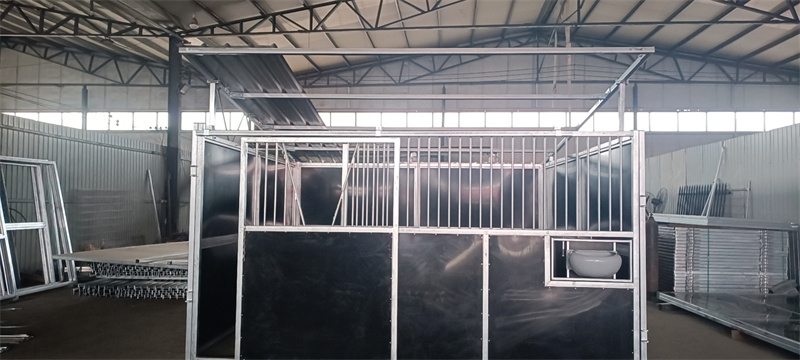
- The configuration, restated: stall count with the panels and doors that go with it. One bay is 3 panels and 1 door, four bays are 9 and 4, and six back-to-back are 11 panels and 6 doors.
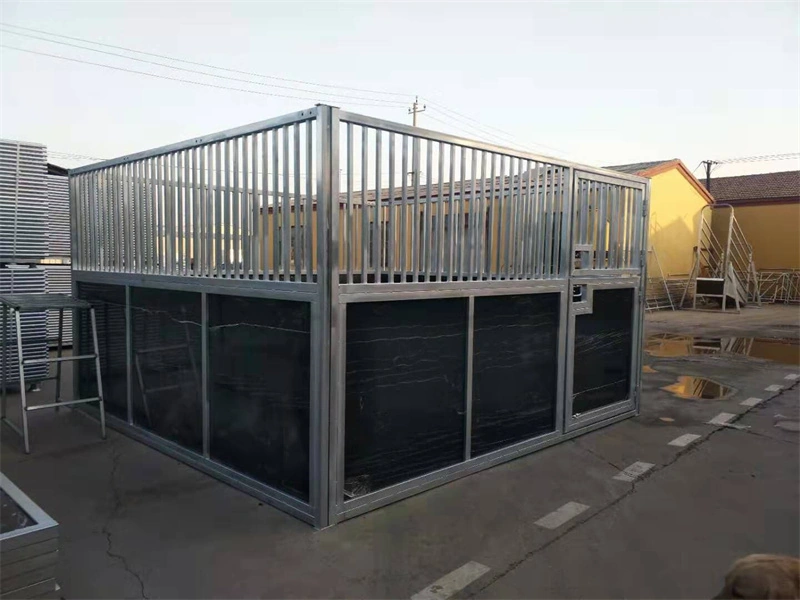
- The boards and frame being quoted: 10 mm HDPE fill boards in black, white or green on a welded Q235 frame in 50×50×2.0 mm square tube, with 4.0 mm wire and 50×50 mm mesh where the upper section is mesh.
- The handling reality: a board weighs about 200 kg, so ask who unloads it and what the yard needs before it arrives — confirm which of those the quotation includes.
- The coating, as two statements: a factory commitment of 42 microns and above, and hot-dip galvanising executed to AS/NZS 4680. The number belongs to the works; the standard belongs to the process.
- The open items, marked open: which roof, which door type — double, sliding or barn — and what still needs your confirmation.
Our view: a reply that leaves one line flagged as unconfirmed is more useful than one that closes everything on the first pass. Speed flatters the supplier’s inbox; the flags protect your order. It is why the galvanising figure is written as a factory commitment rather than folded into the standard — the two claims are checked by different documents, and a buyer who receives them merged cannot tell which one is missing.
Apply the same five lines to every works you are comparing and the exercise gets mechanical: count the sentences that commit to something checkable. Five lines carrying two commitments is a different supplier from thirty carrying none, whatever the clock said.
The quotation, and the lines that stay open
The 24-hour document is the one your lender, your builder and your cashflow will read, so be exact about what a complete quotation carries. Production time and terms — payment milestones included — are not published for these units. A supplier who gives you a number for them without paperwork has guessed; one who writes “to be confirmed, dated” has answered.
| Line | What a complete answer looks like | Where a fast reply stops |
|---|---|---|
| Configuration | Panel and door counts matched to your layout | Sizes listed, board length unstated |
| Price and validity | A dated quotation with an expiry you can plan around | No expiry, so the number can move with raw-material costs |
| Production slot | Queue position against roughly 20 sets a week, after a 10-set minimum | A calendar guess offered as a delivery date |
| Terms and milestones | Named terms, named amounts, the document releasing each payment | Deferred to a later call |
| Coating paperwork | Factory commitment of 42 microns and above, process run to AS/NZS 4680 | One merged sentence, as if the standard set the figure |
Ask for the expiry date in the same breath as the price. A quotation silent about validity leaves the re-pricing risk with you, which is why how resin cycles reach a panel price is worth reading before you lock a number. The written spec sheet covers the same problem one step earlier, before production starts.
After the deposit: QC, after-sales and escalation
Responsiveness is cheap to promise before money moves. Three lines carry the real cost, and none of them has a clock attached by default.
- Third-party QC at the works: ask who attends, what they inspect against — the configuration table you agreed — and which document comes out of the visit.
- The 24×7 after-sales line: ask what it covers. Guidance on a hinge is one promise; shipping a replacement board is another, and its freight is a third.
- Escalation: one named owner for your order, with a title, an address and a response window for a fault reported after arrival.
An inquiry window is worth less than a fault window. The first costs a day of waiting; the second leaves a yard half-used while a part is negotiated. Who ships replacement panels, and how quickly, is worked through in the spare parts and hardware article; this one stops at what should be written down before you sign.
Frequently Asked Questions
Is a six-hour reply promise binding?
As a rule, a published reply window is not a contract term unless it is written into something both sides accepted, so put the six-hour and 24-hour items in the dated quotation or order confirmation. What else binds depends on the contract and the jurisdiction; take your own advice.
Should the first reply come from sales or from the works?
From whoever can restate your configuration correctly. A reply that has to forward your drawings before it can quote panel counts is a queue rather than an answer, however fast the email arrived.
What does it mean if a supplier misses the window once?
One late reply in a long thread is noise. The useful signal is the pattern across the pre-deposit stage, and whether the supplier says it is late instead of going quiet past 24 hours on a quoted drawing.
Does 24×7 after-sales mean local support?
As published it means only that the supplier’s own line is reachable around the clock; what it covers is not stated, and it is not a local technician or a local returns address. Ask who ships a replacement part, who pays its freight, and what evidence a claim needs.
Conclusion
A responsiveness promise is only worth what you decide a reply must contain. Read the six-hour line as a test of whether someone understood your brief, the 24-hour line as the actual deliverable, and every silent line — terms, milestones, coating paperwork — as a confirmation still owed to you.
Before your next inquiry, paste the five lines from this article into it and see which come back filled in. If you want them in the quotation, send bay count, board colour, front wall width and site notes; the reply is due inside six hours and the priced solution inside 24.