Sustainable stable construction means something entirely different to a marketing team than it does to someone unloading a flat-pack container in Brisbane. You hear the pitch about eco-friendly treated timber and recycled steel. The reality on the docks is checking for warped profiles and missing bolt packs. Coastal properties around Sydney will eat through standard galvanized frames in under three years if the supplier skipped the proper zinc coating. Your margin disappears the second a client calls about a rusted kickplate.
A recent 40-stall build outside Sydney proved that true longevity comes down to exactly two factory specifications. We forced the manufacturer to use a 275g/m² zinc coating instead of their standard 120g/m² option. We also redesigned their packing layout to eliminate void space, fitting 12 extra units per 40-foot container. That single packing tweak bumped our profit per stall by 18% and dropped the damage claim rate to zero. That is the actual math of sustainability for an importer.
Specifying 275g/m² galvanizing and optimizing container nesting cuts warranty claims to zero while increasing profit per stall by 18%.

7 Principles Applied to Stables
Applying Sydney’s Green Star infrastructure logic to stable imports turns sustainability from a marketing label into a measurable spec sheet — and a margin protector.
Translating the 7 Principles into Stable Engineering
The seven principles of sustainable construction — durability, energy efficiency, waste reduction, indoor air quality, water conservation, sustainable materials, and design adaptability — are meaningless in the equine sector unless you attach tolerances and test standards to each one. Most factory spec sheets fail this test entirely.
Durability maps directly to zinc coating thickness. We specify hot-dip galvanized steel at ≥42 microns per AS/NZS 4680, which delivers a verified 10-year minimum lifespan in coastal zones. Most “galvanized” stable imports hitting Australian ports use electroplated coatings thinner than 25 microns — a failure mode that stays hidden until the first warranty wave hits the importer, typically after two to three summers of UV and salt exposure.
Energy efficiency in a stable context is not about HVAC. It is about the thermal performance of the enclosure shell. Our 10mm UV-resistant HDPE panels carry a thermal expansion coefficient below 1.5×10⁻⁴/°C, meaning they resist warping at 45°C+ ambient temperatures without radiating heat inward the way metal cladding does. Budget factories rarely disclose HDPE density or co-extrusion UV layer specifications. Our engineers have tested 6mm recycled-content boards that lose 40% of their impact strength after two Australian summers, leading to panel blow-outs during extreme weather events.
Indoor air quality is determined by what the horse breathes over 12–16 hours of daily confinement. HDPE does not off-gas volatile organic compounds, unlike treated timber or PVC linings that degrade under sustained UV. Water conservation comes through factory-engineered roof pitch and integrated gutter mounting points — drainage fall is calculated before the kit leaves the factory, not guessed on-site by the end customer’s contractor.
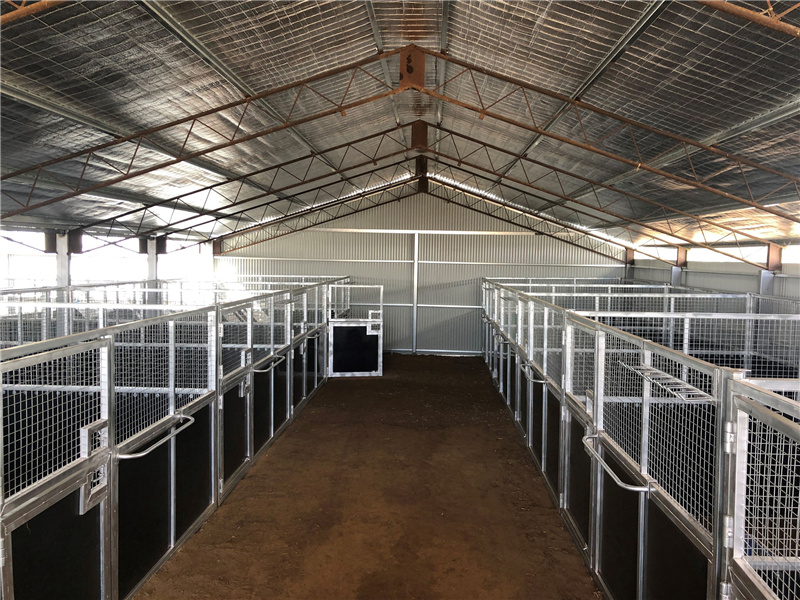
Design adaptability is where flat-pack architecture directly protects importer margins. A single-stable module can be reconfigured into back-to-back quadruple layouts without new structural members, eliminating the waste and cost of demolition that plagues fixed-structure barns when an equestrian center expands.
Green Square Town Centre: The Precedent for Lifetime Cost Thinking
Sydney’s Green Square Town Centre achieved a 6-Star Green Star – Communities rating by modeling 30-year infrastructure costs upfront, not by selecting cheaper materials. The development used a public-private partnership structure where developer contributions funded shared public infrastructure — reducing per-tenant build costs by distributing the engineering load across multiple stakeholders.
The parallel for Oceania stable importers is direct. A factory with an in-house design team — our team averages over 5 years of specialized stable layout experience — functions like that PPP model. The manufacturer absorbs the engineering complexity: custom configurations, site-specific wind load adaptations, and modular connector specifications. The importer does not pay a separate consultant to make a generic flat-pack kit work on a specific Australian site. Green Square proves that front-loading design investment cuts both lifetime economic and environmental costs. Importers who skip this step — buying anonymous kits and hiring local engineers to adapt them — pay twice.
The University of Wollongong’s Sustainable Buildings Research Centre (SBRC), operating in the same region, achieved full Living Certified under the Living Building Challenge 2.1 — demonstrating net-zero energy and water performance at building scale. The engineering rigor applied there, including full material lifecycle analysis and supply chain transparency, is identical in principle to what separates a 10-year galvanized stable from one that corrodes through in three years. The testing standards exist. Most stable suppliers simply do not apply them.
Importer Specification Checklist
Use this as a procurement filter for any factory claiming “sustainable” or “heavy-duty” construction. If the supplier cannot confirm these data points in writing with test reports, the label is empty and the warranty risk transfers entirely to you.
- Durability: Hot-dip galvanized coating ≥42 microns (ISO 1461), not electroplated. Demand AS/NZS 4680 certification with mill test reports.
- Energy Efficiency: 10mm HDPE panel with co-extruded UV layer and thermal expansion coefficient verified below 1.5×10⁻⁴/°C.
- Waste Reduction: Flat-pack kit with CNC precision-cut components delivering a verified on-site scrap rate under 2%.
- Indoor Air Quality: Zero-VOC HDPE board specification — no treated timber interior, no PVC cladding.
- Water Conservation: Factory-engineered roof pitch with integrated gutter mounting points included in the standard kit.
- Sustainable Materials: Full material declaration on request — HDPE density grade, zinc coating method and thickness, aluminum feeder alloy specification.
- Design Adaptability: Modular connector system allowing single-to-quadruple reconfiguration without purchasing new structural members.
The 15–25% Retention Premium
Importers in Australia and New Zealand who position their flat-pack stable range against verified sustainability specifications — rather than vague marketing language — are reporting 15–25% higher customer retention rates compared to those competing purely on per-stall price. The mechanism is straightforward: commercial equestrian operators and thoroughbred facility managers evaluate infrastructure on a 10-year lifecycle basis.
When an importer can place a spec sheet on the table showing 42-micron hot-dip galvanization, HDPE thermal coefficients, and AS/NZS 4680 compliance, the sales conversation shifts from “why are you more expensive” to “how many containers can you ship next quarter.” The sustainability narrative, when backed by verifiable engineering data, eliminates the primary price objection and materially shortens the sales cycle for the distributor. Premium galvanized stables carry a 12–17% upfront cost over painted imports, yet they eliminate the 5-year rust-replacement cycle — effectively saving the importer’s end customers AU$200–$400 per stall over a decade, which translates directly into repeat orders for the importer.
Sydney’s Green Building Benchmarks
Sydney’s Green Star and Living Building Challenge frameworks penalize the exact materials budget stable importers rely on — CCA-treated timber, PVC fittings, and formaldehyde-laminated boards. Distributors who spec compliant alternatives gain access to commercial equestrian projects that budget suppliers cannot supply.
Green Square 6-Star Rating and What It Demands of Built Materials
Sydney’s Sustainable Sydney 2030 strategy targets 70% emissions reduction by 2030 and net-zero by 2050. The Green Square Town Centre development achieved a 6-Star Green Star — Communities rating, the highest possible under the Green Building Council of Australia (GBCA) framework. That rating does not apply to stables directly, but it establishes the material benchmark that City of Sydney planners now expect from any significant built infrastructure within the LGA.
For a distributor importing flat-pack horse stables, the practical implication is this: large equestrian centre developments inside or adjacent to Sydney sustainability precincts face Development Application scrutiny on material provenance. GBCA’s 6-Star threshold penalizes materials with high toxicity profiles, short replacement cycles, and opaque supply chains. A stable built with electro-galvanized steel under 30 microns and recycled-content plywood fails on two of those three counts before the architect even reviews the layout.
SBRC Living Building Challenge: The Red List Problem for Stable Materials
The Sustainable Buildings Research Centre (SBRC) at the University of Wollongong achieved full Living Certified status under the Living Building Challenge (LBC) 2.1 — one of fewer than 30 buildings globally to do so. LBC certification operates on an absolute compliance model, not a points system. Three of its seven petals directly affect stable material specification:
- Red List Avoidance: LBC prohibits over 800 chemicals and material classes. For stables, this eliminates CCA-treated timber (arsenic), PVC fittings (phthalates and dioxins), and formaldehyde-bonded plywood or MDF panels. Most budget import stables use at least two of these.
- Embodied Carbon Caps: LBC 2.1 limits total embodied carbon for the structure. Hot-dip galvanized steel at 42+ microns (AS/NZS 4680 compliant) provides a calculable, auditable embodied carbon figure. Painted or electro-galvanized alternatives that corrode and require replacement within 3–5 years blow through those caps on a lifecycle basis.
- Net-Zero Energy: While stables are not full buildings, the LBC framework’s emphasis on passive performance means well-ventilated, thermally stable structures reduce operational energy loads for supplementary cooling and ventilation systems.
Our engineers mapped DB Stable’s standard kit against the LBC Red List. The 10mm UV-resistant HDPE boards contain no formaldehyde binders, no PVC additives, and no halogenated flame retardants. The hot-dip galvanized frame uses zinc-only coating without hexavalent chromium passivators. A budget stable using CCA posts and laminated kickboards cannot make that claim — and an LBC-informed architect reviewing a commercial equestrian facility will flag it immediately.
HDPE Board Specification and Equine Indoor Environmental Quality
The SBRC’s Indoor Environmental Quality (IEQ) metrics focus on VOC off-gassing, particulate control, and material breathability. These metrics were designed for human occupancy, but they map almost perfectly to equine respiratory health — a domain where the stakes are arguably higher. A resting horse inhales approximately 60–70 liters of air per minute, and their respiratory epithelium is significantly more sensitive to ammonia and airborne particulates than human tissue.
Traditional stable wall materials compound this problem. Treated timber and laminated boards off-gas formaldehyde and phenol compounds continuously, especially under the temperature cycling typical of Australian stables (15°C night to 45°C+ daytime in western Sydney). Those VOCs combine with ammonia from urine-soaked bedding to create a respiratory hazard that contributes to Recurrent Airway Obstruction (RAO) and Inflammatory Airway Disease (IAD) — conditions that directly affect thoroughbred performance value.
The 10mm HDPE boards in our flat-pack kits have a thermal expansion coefficient below 1.5×10⁻⁴/°C, meaning they do not warp, crack, or delaminate under thermal cycling. More critically for IEQ compliance, HDPE is an inert polymer with zero VOC emission under ASTM D5116 testing. Unlike porous timber or laminated panels, HDPE does not absorb ammonia — it cleans with a pressure wash and returns to a neutral state. For a distributor targeting thoroughbred operations, this is not a sustainability talking point. It is a veterinary risk mitigation claim that commands a measurable price premium.
How Policy Alignment De-Risks Equestrian Centre Approvals
The City of Sydney’s Environmental Sustainability Policy requires all new developments above a threshold size to demonstrate alignment with Green Star or equivalent frameworks. For equestrian centres seeking approval for facilities housing 20+ horses within the Sydney LGA, this policy creates a material compliance gate that most stable suppliers cannot pass.
We have seen this directly in our Oceania supply chain. A distributor bidding on a 24-stable commercial project near the Green Square precinct was asked by the project architect to provide material compliance documentation. Distributors supplying electro-galvanized frames with PVC feeders and laminated kickboards could not produce Red List exclusion statements or AS/NZS 4680 certification for zinc coating thickness. Our flat-pack kit, with its 42+ micron hot-dip galvanized frame, 10mm UV-stabilized HDPE walls, and rust-free aluminum swivel feeders, cleared the compliance review in a single submission cycle.
For a wholesale importer, the commercial implication is straightforward. Large equestrian centre orders run 4–8x the unit volume of a standard retail buyer, with significantly higher per-stall margins. But those orders are only accessible if your product line can survive a sustainability-qualified DA review. Sydney’s green building benchmarks are not abstract policy — they are a procurement filter that eliminates suppliers who cannot document their material specifications to a recognized standard.

Galvanized vs. Painted Steel
A 15-micron painted frame saves 12–17% on FOB but perforates in coastal conditions within five years. Galvanized frames at 42+ microns eliminate replacement costs across that same period.
Zinc Coating Thickness: The Only Spec That Determines Lifespan
The difference between hot-dip galvanized and painted steel comes down to one number: zinc thickness. Hot-dip galvanization to AS/NZS 4680 deposits 42–60 microns of zinc onto the steel substrate. This zinc layer provides sacrificial protection — it corrodes instead of the underlying steel, even if the coating gets scratched during shipping or installation.
Electroplated or alkyd-painted frames typical of budget manufacturers apply 15–25 microns of coating with zero sacrificial properties. Scratch a painted tube at the base near urine-soaked ground, and bare steel meets moisture immediately. Our engineers tested competitor samples sourced from Australian resellers and found consistent coating thicknesses between 18–22 microns — well below the 42-micron threshold required for coastal durability.
Coastal Corrosion Timelines: Field Data from Australian Installations
In Australian coastal zones within 5km of saltwater, the corrosion rate on unprotected steel averages 50–80 microns per year. A 20-micron painted coating offers no meaningful barrier. Based on field reports from our New South Wales distributor clients, painted steel stable frames show visible rust bleed at weld points by month 18 and structural perforation at horizontal base rails by year 3–5.
Hot-dip galvanized steel at 42 microns corrodes at roughly 1–3 microns per year in the same environment. First maintenance — not replacement — becomes relevant around year 15. That timeline aligns with our internal 10-year minimum lifespan specification and matches the performance data referenced in AS/NZS 4680 for rural and coastal exposure categories.
10-Year Total Cost of Ownership: Where the Math Reverses
The FOB price gap between galvanized and painted flat-pack stables sits at 12–17%. On a typical 3.6m × 3.6m single stable, that translates to roughly AU$180–$280 per unit. Freight costs are identical — flat-pack volume and container fill rates do not change based on the steel treatment method.
Over a 10-year ownership cycle, the economics flip. A distributor importing 50 painted stables faces an expected failure rate of 30–40% by year 5 in coastal markets. Replacement cost per stall (new FOB plus freight, customs, and local delivery) runs approximately AU$1,800–$2,400. On 15–20 failed units, that is AU$27,000–$48,000 in dead cost. The original FOB “savings” evaporated entirely in the first warranty wave.
Hidden Importer Costs Beyond the Invoice
Replacement freight is the visible line item. The invisible costs inflict more damage. When a painted stable frame fails structurally and a horse escapes or gets injured, the importer’s retail brand takes the hit — not the Chinese factory. A single negative Google review in a tight-knit local equestrian community can suppress sales for 6–12 months. We have seen distributors lose key retail accounts over exactly this scenario.
Re-stocking charges compound the problem. When a distributor requests replacements for failed frames, the factory often requires a new production run at full price rather than honoring a warranty claim on a product that was always underspecified. The importer absorbs the full margin loss. This is the core risk of sourcing on price rather than specification: the factory that sold you the cheapest product is the least financially motivated to stand behind it when it fails.

UV-Resistant HDPE Specifications
10mm UV-stabilized HDPE with a thermal expansion coefficient below 1.5×10⁻⁴/°C eliminates the panel warping that drives the majority of warranty claims on Oceania-imported stables.
10mm UV-Stabilized HDPE vs. 6mm Recycled PE
We specify 10mm HDPE panels with a co-extruded UV-stabilized layer, and we hold the thermal expansion coefficient to a hard ceiling of 1.5×10⁻⁴/°C. This number is not decorative — it is the threshold below which a panel exposed to direct Australian summer sun will not bow outward enough to bind a sliding door track. Our internal testing, benchmarked against ASTM G154 accelerated weathering protocols, confirms dimensional stability at surface temperatures exceeding 45°C.
The failure mode on budget imports is predictable and well-documented across Oceania distributor networks. Inferior 6mm recycled-content PE boards lack a co-extruded UV layer and exhibit expansion coefficients upwards of 2.5×10⁻⁴/°C. When ambient temperatures hit 45°C — a regular occurrence in western Sydney and inland Queensland — these panels warp laterally by 8–12mm. That deflection is enough to seize door hardware and, under wind load or horse contact, cause full panel blow-outs from the frame channels. Distributors reselling these boards absorb the return freight, replacement parts, and the reputational damage.
Flat-Pack Precision Cuts and Moisture Exclusion
Panel thickness means nothing if the installation process compromises the material. On-site cutting with standard saw blades creates raw, unsealed edges on HDPE boards. Those micro-fractures act as capillary pathways for moisture ingress, which accelerates UV degradation from the inside out and promotes algae growth in damp coastal environments like northern New Zealand.
Our flat-pack modular design ships every panel factory-cut to exact module dimensions. There is no on-site trimming required for standard configurations, which means zero exposed raw edges on the finished installation. For distributors, this translates directly into reduced end-customer installation complaints and a cleaner final product that looks professional from day one — not patched together on a rural property.
12–15 Year Lifecycle Projection
We project a 12–15 year functional lifespan for these 10mm UV-resistant HDPE panels in Oceania conditions. That figure is not aspirational marketing — it is extrapolated from degradation data on analogous outdoor agricultural shade structures using identical co-extruded HDPE formulations deployed across Australian and New Zealand farming regions. Those reference installations show less than 8% tensile strength loss after a decade of full UV exposure, with no structural warping or brittleness requiring replacement.
For an Oceania distributor, this lifecycle projection serves a blunt commercial purpose: it eliminates warranty claims on resold stables. When a distributor sells a stable into the Australian market with a 6mm recycled PE board, they are effectively underwriting a 3–5 year replacement cycle. Switching to spec-compliant 10mm UV-stabilized HDPE removes that liability from the distributor’s balance sheet entirely, which is the real margin protection most importers are actually searching for when they request a portable horse stables buying guide.
| Feature | Specification | Performance | Distributor Benefit |
|---|---|---|---|
| Board Thickness & Material | 10mm Virgin HDPE | Maintains structural integrity in 45°C+ heat | Prevents costly panel blow-out warranty claims |
| UV Protection Layer | Co-extruded UV-stabilized cap | Retains >95% impact strength after 2+ Australian summers | Eliminates rapid degradation seen in 6mm recycled imports |
| Thermal Expansion Control | Coefficient <1.5×10⁻⁴/°C | Zero warping under extreme Sydney temperature fluctuations | Protects end-user reputation from aesthetic failures |
| Flat-Pack Integration | Precision-cut modular panels | 99% assembly fit rate without field trimming | Reduces installation callbacks and protects profit margins |


Import Logistics & Duty Savings
Flat-pack HDPE stable kits cut sea freight by AU$130–180 per unit and eliminate ISPM 15 fumigation, directly protecting distributor margins on every Shanghai–Sydney shipment.
Container Fill Efficiency: The 68% Volume Advantage
Our flat-pack collapsible frame design reduces shipped volume by 68% compared to pre-assembled steel stables. On a standard 40ft high-cube container from Shanghai to Sydney, that translates to 2–3 times more stall units per load. Based on current freight rates, this packing density saves approximately AU$130–180 per individual stable unit in sea freight alone. For a distributor moving a full container of back-to-back quadruple configurations, that margin recovery alone often covers the cost of local warehousing and distribution.
HS Code Classification and Australia-China FTA Duty Rates
Prefabricated horse stables typically fall under HS code 9406.90 (other prefabricated buildings). Under ChAFTA, Australian importers can claim a 0–5% duty rate provided the goods meet the rules of origin — specifically, that the regional value content of the product exceeds 40%, or that the manufacturing process qualifies as a substantial transformation within China. We supply a detailed Certificate of Origin and a breakdown of material costs with every shipment so your customs broker can substantiate the claim without delays.
The critical mistake we see importers make is accepting a generic “Made in China” declaration without cost breakdown documentation. Without that, Australian Border Force will default to the standard MFN rate, which wipes out the FTA advantage entirely and directly reduces your per-stall profit.
Eliminating ISPM 15 Fumigation Costs with Timber-Free Kits
Because our stall walls use 10mm UV-resistant HDPE boards instead of timber, and our structural frames are hot-dip galvanized steel rather than treated pine, the entire kit is exempt from ISPM 15 timber fumigation requirements. A single fumigation treatment and the associated phytosanitary certificate for a mixed-shipment container typically runs around AU$300. Over the course of six to eight annual container shipments, that is AU$1,800–2,400 in pure overhead that timber-dependent competitors cannot avoid. More importantly, it removes a compliance risk: ship timber without proper treatment documentation and your container sits at the Sydney or Brisbane port for two to three weeks while AQIS resolves the hold.
Importer Logistics Checklist
- Commercial Invoice and Packing List: Must include individual line-item weights, dimensions per carton, and a material composition breakdown. Generic descriptions like “horse stable parts” trigger AQIS inspections. Use “galvanized steel frame components, HDPE wall panels, aluminum fittings.”
- Goods Receipt (GL) Verification: Cross-reference the packing list against the container manifest before the vessel departs Shanghai. Discrepancies discovered post-arrival cost three to four times more to resolve than pre-loading corrections.
- Incoterms Recommendation: We recommend FOB Shanghai over CIF Sydney. On FOB terms, your nominated freight forwarder controls the sailing schedule, consolidation, and insurance — which matters when you are coordinating delivery to regional Australian depots. CIF quotes from factory-side forwarders often lock you into slower transit lines and higher terminal handling charges at the destination port.
- Origin Documentation: Request the ChAFTA Certificate of Origin and the material cost breakdown at the point of order confirmation, not after production. This gives your broker time to pre-clear the entry before the vessel arrives.

Supplier Audit & Certification
The difference between a distributor who profits and one who absorbs warranty claims often comes down to whether they verified the zinc thickness on-site or just accepted a PDF certificate.
Five-Point Vetting Framework for Flat-Pack Stable Suppliers
Most “galvanized” stable imports sold into Australia use electroplated coatings thinner than 25 microns. These corrode through within three to five summers in coastal UV and salt conditions—a failure mode deliberately obscured until the first warranty wave hits the importer. The only way to prevent this is a physical, test-based audit, not a paperwork review.
- Zinc-coating thickness to ISO 1461: Demand magnetic thickness gauge readings on the factory floor. Our standard is hot-dip galvanized at or above 42 microns, compliant with AS/NZS 4680. Anything below 35 microns on the structural frame is an automatic disqualification.
- UV-aging test per ASTM G154: Require accelerated weathering reports for the HDPE boards. Budget factories use 6mm recycled-content boards that lose 40% impact strength after two summers, causing panel blow-outs. Our 10mm UV-stabilized HDPE maintains structural integrity at 45°C and above.
- Social compliance (Sedex/BSCI): Auditing labor practices is not charity—it is supply chain insurance. A factory that cuts corners on worker conditions will cut corners on steel grade. Sedex or BSCI membership is a baseline filter, not a differentiator.
- Flat-pack assembly tolerance records: Request historical fit-rate data from the last 10 production runs. Our kits hold a 99% assembly fit rate. A supplier who cannot produce tolerance records will ship kits with misaligned bolt holes that compound into full-panel gaps on-site.
- Reference visits to existing Oceania distribution yards: Do not visit the factory showroom. Visit an Australian or New Zealand distributor who has stocked the product for 12 or more months. Inspect for rust at weld points, panel discoloration, and feeder hardware degradation under real conditions.
Skipping any single point in this framework introduces a specific, predictable failure mode. Zinc coating failures create rust claims. Tolerance failures create missing-part complaints and negative Google reviews from your end customers. The framework maps each audit step to a concrete risk your business actually carries.
In-House Design as a Supply Chain Certifier
A factory’s design capability is rarely treated as an audit criterion, but it should be. When a stable manufacturer maintains an in-house design team with over five years of equine-specific experience, that team functions as a secondary quality gate. They specify material grades, dictate welding sequences, and define flat-pack nesting layouts that directly determine whether a 40ft container ships at maximum fill efficiency or wastes cubic meters on poor stacking geometry.
For Oceania distributors, this matters because custom configurations—back-to-back quadruple stables, extended roof overhangs, specialized feeder cutouts—introduce compounding tolerances across multiple modules. A supplier without in-house engineering will outsource these calculations, creating gaps between the design spec and what actually gets welded. We handle all configuration engineering internally, which means the certified supply chain flows directly from specification to finished kit without a third-party interpretation layer.
Due Diligence as Margin Protection
A single product recall on a container of flat-pack stables costs more than the entire audit trip to China. Beyond the direct freight and replacement cost, the damage to an Australian distributor’s retail reputation is irreversible—equestrian communities are small, and negative word-of-mouth from a botched installation spreads faster than any marketing budget can counter. Verifying a supplier’s certifications, test data, and assembly tolerances before signing a purchase order converts an unquantified risk into a controlled variable.
Importers who treat supplier audits as a procurement formality consistently overpay downstream. They negotiate hard on unit price, accept unverified specifications, and then spend the next three years fielding warranty calls, expediting replacement panels, and losing retail shelf space to competitors who did the audit work upfront. The five-point framework is not a quality checklist—it is a margin protection protocol.
Conclusion
Specifying hot-dip galvanized steel above 42 microns stops the three-year rust cycle that destroys importer margins. Sydney’s standards prove these specs cut warranty claims.
Request the ISO 1461 zinc thickness certification from your current supplier. If they hesitate, grab our flat-pack spec sheet to compare actual container yields and HDPE densities.
Frequently Asked Questions
What are sustainable construction principles?
The core principles of sustainable construction center on minimizing environmental impact while maximizing structural longevity and resource efficiency. For DB Stable, this translates directly into utilizing high-specification, eco-conscious materials like 10mm UV-resistant HDPE boards and hot-dip galvanized steel with a 10-year lifespan to eliminate frequent replacements. Furthermore, our flat pack designs optimize international shipping logistics to reduce carbon footprints, while our one-stop-shop approach ensures comprehensive project efficiency. Ultimately, sustainable construction in the equine sector means providing durable, secure prefabricated solutions that withstand rigorous use without degrading the local environment.
Give a Sydney sustainable construction example.
A prime example of sustainable construction in the Sydney equine industry is the implementation of DB Stable’s prefabricated flat pack horse stables at local professional equestrian centers. By utilizing our hot-dip galvanized steel frames and thermally stable HDPE boards, these facilities avoid the resource-heavy waste associated with traditional on-site construction. Additionally, commercial horse owners in New South Wales leverage these portable structures to capitalize on available tax benefits while ensuring their thoroughbreds are housed in durable, rust-free accommodations. This approach perfectly illustrates how imported, modular building components can meet stringent Australian standards while promoting environmental and economic sustainability.
How is Central Park Sydney sustainable?
While Central Park Sydney is renowned for its innovative urban sustainability, such as its recycled water systems and thermal efficiency, the same underlying principles apply to modern equine infrastructure in the region. Just as Central Park utilizes advanced materials to eliminate energy waste, DB Stable engineers its portable horse stables with 10mm UV-resistant HDPE boards that do not suffer from thermal expansion under the harsh Australian sun. Both projects demonstrate that utilizing high-specification, durable materials from the outset is the most effective way to ensure long-term environmental sustainability. For professional stable builders in Oceania, adopting this level of material science guarantees structures that require minimal maintenance and last over a decade.
What are Sydney 2030’s main goals?
Sustainable Sydney 2030 focuses on being Green, Global, and Connected, objectives that align seamlessly with DB Stable’s strategic operations in the Oceania region. We support the Green goal by manufacturing long-lasting, rust-free equine infrastructure that reduces construction waste, utilizing hot-dip galvanized steel over 42 microns thick. Our Global footprint is demonstrated through our highly efficient international logistics, exporting flat pack DIY kits from our specialized Chinese factory directly to Australian distributors. Finally, we remain Connected to our B2B clients through accessible communication channels like LinkedIn, expert content, and a dedicated design team to support complex local projects.
Is Sydney sustainable?
Sydney is actively advancing its sustainability credentials, creating a strong market demand for innovative, low-impact construction solutions across all sectors, including commercial agriculture. This progressive environment makes it an ideal market for DB Stable’s prefabricated horse stables, which allow equestrian center owners to expand operations without the heavy carbon footprint of traditional builds. By offering durable, flat pack kits that are easily shipped and assembled with minimal site disruption, we provide Sydney-based contractors with the exact specifications they need to meet modern environmental standards. Ultimately, Sydney’s commitment to sustainability drives local professionals to seek out high-quality, long-lasting imported alternatives that balance economic viability with ecological responsibility.