You might think stable container loading is just about maximizing volume, but in the equine import game, that mindset usually ends in a mess. Most distributors in Australia and New Zealand know the pain of opening a container to find crushed roofing sheets because the load shifted during a rough transit across the Tasman. It is a margin killer that happens before the unit even reaches the customer.
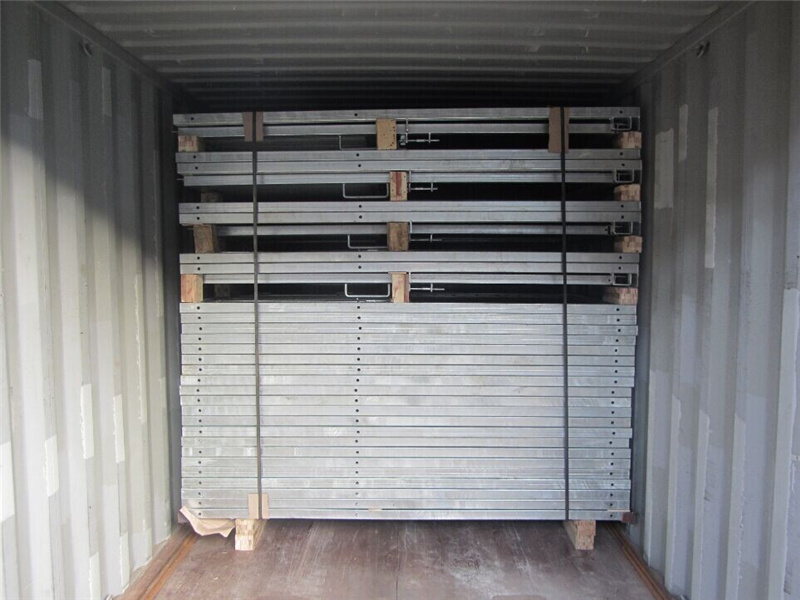
The real trick is using the heavy upright columns and beams to build a structural skeleton inside the container rather than treating them as loose cargo. We stopped trusting supplier loading plans when we realized they were simply stacking floor frames flat at the bottom—a guaranteed recipe for breakage. By standing the columns upright and strapping the beams in alternating layers, you create internal ribs that lock the load against the container walls.
Flat Pack Volume Efficiency
A 40ft High Cube holds 12-15 kits (76m³) versus 5-6 in a 20ft unit. Optimized flat-pack loading cuts freight costs per stable by roughly 15-20%.
Container Capacity Comparison: 20ft vs. 40ft HC
A standard 20ft container offers 33 cubic meters of usable space. This volume accommodates roughly 5 to 6 flat-pack horse stables depending on the specific roof configuration. A 40ft High Cube provides 76 cubic meters of capacity. We load approximately 12 to 15 kits in this single container. The difference in volume efficiency is drastic. Importers focusing on the 20ft option pay significantly more per cubic meter for freight. The 40ft HC configuration utilizes the full height advantage to stack components vertically without compromising the integrity of the hot-dip galvanized steel beams.
Landed Cost Benefits of 40ft HC
Ocean freight rates to Australia and New Zealand do not scale linearly. Shipping two 20ft containers costs significantly more than one 40ft High Cube. The savings come from reduced handling charges, terminal fees, and documentation costs. Distributors utilizing the 40ft HC model secure a lower landed cost per unit. This margin protection is critical for resale in competitive markets. We prioritize the 40ft HC loading plan because it directly impacts your bottom line. A 15% reduction in freight cost per unit often translates to a higher profit margin than negotiating a lower factory price.
Engineering for Volume and Safety
Generic factories ship random beam lengths requiring excessive wood bracing. We cut our steel beams to precise dimensions like 5.8 meters. These lengths span the container width to interlock naturally. This engineering reduces dunnage needs by roughly 30%. It eliminates the void space that causes transit damage. Your 10mm UV-resistant HDPE boards arrive intact because the steel frame itself acts as the brace. Minimizing dunnage also reduces the risk of quarantine holds upon arrival in Oceania.

Weight Distribution Safety
A shifted load ruins HDPE boards and triggers heavy axle fines. Distributors must secure 60% of the load weight forward to protect margins.
The 60/40 Weight Distribution Rule
Loading a 40ft High Cube container requires precise mass placement, not just volume filling. You must position 60% of the total cargo weight in the front half of the container and 40% in the rear half. This balance optimizes the truck’s kingpin weight and prevents “trailer swing” during transport. Since DB Stable frames utilize hot-dip galvanized steel with a coating thickness over 42 microns, the steel beams are significantly denser than timber or aluminum. These heavy components act as your ballast. We deliberately cut our beams to 5.8m lengths to span the container floor, forcing a natural weight distribution that prevents the container from becoming tail-heavy.
Risks of Improper Balance
Ignoring weight distribution creates immediate financial and physical damage. In Australia, road authorities frequently check axle weights at weigh stations. A tail-heavy container exceeds the legal limit for the rear axle, resulting in on-the-spot fines that can exceed AUD $500 per violation. More costly than the fine is the freight damage incurred when a load shifts. If the heavy steel frame is not adequately blocked and braced, it slides forward during braking. The momentum of a 2-tonne steel frame crashing into our 10mm UV-resistant HDPE boards will shatter them. You cannot sell a stable with cracked walls, so proper loading is effectively a revenue protection strategy.
Component Weight Stacking Guide
The internal stacking order must follow the laws of physics to ensure the structure arrives intact. Use the density difference between steel and plastic to your advantage.
- Bottom Layer (The Anchor): Place all hot-dip galvanized steel beams and columns on the floor first. This provides a stable center of gravity and prevents lighter materials from being crushed.
- Middle Layer (The Structure): Stack roof rafters and any heavy hardware directly on top of the steel base. Avoid placing loose items here; keep them banded.
- Top Layer (The Shell): The 10mm HDPE boards and lighter fittings, like aluminum swivel feeders, go on top. While HDPE is tough, it is still susceptible to indentation if pointed steel parts press against it for weeks at sea.
- The Interlock Method: Our 2.9m and 5.8m beam dimensions are calculated to interlock with the container’s internal corrugations. This geometric friction reduces the need for expensive timber dunnage, freeing up space for more units.

Floor Loading vs. Pallets
Pallets ship air, not steel. Switching to interlock floor loading increases container utilization by 10%, directly rescuing your wholesale margins.
The Hidden Margin Killer: Palletizing Flat-Packs
For a wholesale distributor, every cubic meter of container space represents potential profit. Palletizing flat-pack stable kits might seem like the safe choice for logistics, but it is a profit-eroding strategy for high-volume imports. A standard 40ft High Cube (40′ HC) container offers roughly 76 cubic meters (CBM) of capacity. When you place kits on pallets, you are not just paying for the weight of the timber; you are sacrificing roughly 6 to 8 CBM of valuable product space per container to dead air. This wasted space often translates to shipping 1-2 fewer stable kits per container, significantly inflating your landed cost per unit without adding any value to the end customer.
The Interlock Advantage: Engineering for Floor Loading
Floor loading is not about throwing loose components into a container; it requires precise engineering to prevent transit damage. Unlike generic competitors who rely on excessive dunnage to fill gaps, our manufacturing process pre-engineers the steel beams to specific lengths (e.g., 5.8m) that correspond geometrically to the internal dimensions of a shipping container. This allows us to stack the galvanized steel frames in a tight interlocking pattern that naturally braces against the container walls. This structural rigidity holds the load firm during rough ocean transit, eliminating the need for bulky pallets while ensuring the 10mm UV-resistant HDPE boards remain suspended and protected from heavy compression.
Volume Efficiency and ROI Impact
Optimizing container density is the most effective way to protect your margins in the current freight market. By stripping out the pallets and utilizing our interlocking floor loading method, we consistently achieve a volume efficiency increase of approximately 10%. This allows distributors to fit roughly 12-15 flat-pack 3x3m kits into a single 40′ HC container compared to lower counts with palletized methods. This improvement does not just lower your freight cost per unit; it effectively increases your ROI on the shipment by double digits, turning a standard import run into a highly profitable inventory restock.

Securing Steel & HDPE Kits
Our steel beams are cut to specific lengths (e.g., 5.8m) to geometrically interlock within the container, acting as natural bracing that drastically reduces the need for expensive dunnage.
Strapping and Bracing Methods for Transit
Standard logistics advice often fails to account for the specific mass of hot-dip galvanized steel. We do not rely on generic plastic bands that stretch and snap under the tension of a shifting load during heavy seas. Instead, our protocol utilizes high-tensile steel strapping secured by welded seals, combined with a 60/40 weight distribution rule—heavy frames positioned towards the container door to prevent rear-axle imbalance during trucking.
Crucially, we engineer our steel beams to utilize the container’s internal geometry. By cutting our longest beams to 5.8m, we ensure they fit diagonally or longitudinally to bridge the container walls. This “interlocking” method transforms the cargo itself into a structural block, preventing movement that normally requires excessive wooden dunnage.
Handling 10mm UV-Resistant HDPE Boards
Unlike timber or thin metal sheets, our 10mm UV-resistant HDPE boards present a specific packaging advantage: immunity to environmental shock during port delays. If a container sits on the tarmac in Fremantle or Auckland for three weeks, these boards will not warp, rot, or suffer from thermal expansion. This rigidity allows us to pack them vertically in reinforced crates rather than horizontally, which significantly reduces the footprint and minimizes the risk of forklift tines piercing the material during unloading.
For B2B clients targeting Australia, the biosecurity benefit is equally critical. Because HDPE is a non-organic material, it eliminates the risk of timber fumigation rejection at customs—a common hidden cost that destroys margins on wood-lined stable imports.
Benefits of Pre-Cut Kits: Less Bracing and Time
Pre-cut kits do more than just save on-site construction hours; they are the key to maximizing shipping density. Raw materials ordered in loose lengths create “dead air” pockets within a 40ft High Cube container. By supplying every component pre-drilled and sized, we can pack flat-pack stable kits with a volume utilization efficiency of up to 85%. For a distributor, this means a lower freight cost per unit and a higher ROI on every container landed.
- Dunnage Reduction: Interlocking flat profiles reduce the need for wood bracing by approximately 20%, saving on material weight and disposal fees.
- Unloading Speed: Pre-packed kits can be unloaded via forklift directly to the installation site, cutting receiving time by half compared to loose steel bundles.
- Damage Mitigation: Components are nested to prevent metal-on-metal abrasion, ensuring the galvanized layer (over 42 microns) remains intact upon arrival.
Conclusion
Optimizing container volume protects your profit margins. It is that simple. By engineering steel beams to interlock within a 40ft High Cube, we eliminate wasted space and stop freight damage before it happens. This turns logistics from a cost center into a competitive advantage.
Review your current shipping estimates against the 85% volume utilization benchmark. If your current supplier relies on loose dunnage instead of engineered interlocking, you are paying for air. Request a loading diagram for your next shipment to secure those savings.
Frequently Asked Questions
How are stable kits optimized for containers?
DB Stable maximizes shipping efficiency by engineering prefabricated horse stables in a ‘flat pack’ format, significantly reducing volume for international transport to Oceania. Our design team strategically disassembles components, like hot-dip galvanized frames and 10mm HDPE boards, to ensure zero wasted space within standard shipping containers. This optimized loading approach directly translates to lower freight costs for B2B distributors and builders, reinforcing our commitment to balancing high quality with the lowest possible price.
How are pallets loaded in containers?
We utilize sturdy pallets to organize flat-packed components, ensuring that hot-dip galvanized steel and HDPE boards remain secure and damage-free during transit to Australia and New Zealand. By stacking pallets according to precise weight and size specifications, we maximize the container’s cubic capacity while allowing for easy unloading with forklifts upon arrival. This method simplifies inventory management for our distributors and provides the logistical efficiency expected by professional stable builders.
Can I get a container calculation spreadsheet?
DB Stable provides detailed container calculation spreadsheets to B2B clients, enabling them to accurately estimate how many stable kits fit within a 20ft or 40ft container. These Excel documents break down the volume and weight of individual components, such as the rust-free aluminum swivel feeders and frame sections, allowing for precise budgeting and logistics planning. This transparency helps professional buyers visualize their shipment and optimize their procurement strategy without requiring complex manual calculations.
Do you use free packaging software?
Rather than relying on generic free packaging software, DB Stable leverages our internal design team’s five years of expertise to create custom loading plans for high-specification stable kits. Our experts ensure that unique components, such as back-to-back quadruple configurations, are packed with maximum density and safety to withstand transit to Oceania. We provide these professional loading plans to our clients to guarantee optimized freight efficiency and material protection that standard free tools cannot match.
Can I verify loading online?
To facilitate trust and transparency for our international clients, we offer online verification capabilities where buyers can review the loading status of their container shipment remotely. This process allows distributors and farm owners to confirm that their order of durable portable stables has been packed correctly before it leaves our factory. By integrating digital oversight with our responsive LinkedIn communication, we ensure B2B clients maintain control over their logistics from manufacturing to delivery.