Calculating a precise stable barn upgrade cost involves more than just multiplying the per-stall price by forty. For distributors across Oceania, the real profit killer often isn’t the factory invoice; it is the hidden landed cost that erodes margins before the kit even clears customs. You have seen it before. A container arrives with missing brackets or warped timber, and suddenly your cheap per-unit price looks expensive when you are paying air freight for replacement parts.
Most suppliers push DIY kits to keep the headline price down, but they ignore the installation reality on Australian soil. If your contractor is fighting against ill-fitting components on a hot concrete slab, you aren’t saving money; you are buying a future warranty claim. The foundation choice—specifically road base versus concrete—dictates the actual project ROI far more than the initial quote suggests, and that is where you protect your margin.

Material Cost: Steel vs. Timber
Imported steel kits protect your margin by locking in fixed FOB rates, shielding you from volatile Australian timber prices that can spike unexpectedly during project lead times.
Raw Material Volatility vs. Fixed FOB Pricing
Sourcing local timber for a 40-stable project exposes your bottom line to significant market risk. In Australia and New Zealand, timber prices are currently subject to extreme volatility due to supply chain bottlenecks and regional logging restrictions. A quote valid today might be invalid by the time you break ground, eroding your projected profit margins. By contrast, importing prefabricated horse stable kits allows you to lock in a fixed FOB (Free on Board) price at the time of order. This converts a variable material cost into a predictable line item, ensuring your landed cost per container remains stable regardless of fluctuations in the local construction market.
The raw material expenditure favors steel structures on a per-square-foot basis. While local stick-built construction using premium timber typically costs between $50 and $120 per sq ft, our imported galvanized steel kits average $25-$35 per sq ft. This differential is not about using cheaper materials; it is about the efficiency of mass manufacturing in a controlled factory environment versus the labor-intensive, material-wasteful nature of on-site timber framing.
Eliminating the Pre-Treatment Overhead
The most overlooked cost in timber stable construction is the mandatory pre-treatment required to withstand Australian and New Zealand weather conditions. Timber frames must be chemically sealed, painted, or treated to prevent rot, termite damage, and fungal growth. This process is not free; it requires purchasing expensive specialized coatings and paying skilled laborers to apply multiple coats before the structure is even fully erected. For a standard 40-stable complex, this pre-installation labor and chemical consumption adds an immediate $3,000 to $5,000 to your project cost.
Galvanized steel eliminates this overhead entirely. Our frames utilize hot-dip galvanization exceeding 42 microns in thickness, arriving on-site with a 10-year rust-free warranty already baked in. There is no sanding, priming, or painting required before assembly. This translates to direct savings on your balance sheet and drastically reduces your installation timeline, allowing your team to move to the next project faster.
- Galvanization Standard: Frames are hot-dip galvanized with a coating thickness >42 microns, ensuring 10 years of rust-free performance without additional touch-ups.
- Direct Cost Avoidance: Removing the need for chemical sealing and painting saves between $3,000 and $5,000 in labor and materials per 40-stable block.
- Thermal Stability: Unlike timber that swells and warps with humidity changes, requiring ongoing maintenance, our steel frames and 10mm UV-resistant HDPE boards maintain structural integrity without thermal expansion costs.
| Material Component | DB Stable Steel Specs | Traditional Timber Specs | Comparative Cost Analysis | Distributor ROI Advantage |
|---|---|---|---|---|
| Frame Structure | Hot-dip galvanized steel (>42 microns) | Pine or hardwood (susceptible to rot/termites) | $25-$35/sq ft (Import Kit) vs $50-$120/sq ft (Local Build) | 40-50% lower upfront cost increases resale margin |
| Durability & Lifespan | 10-year rust-free warranty, weather-proof | High maintenance, prone to warping in humidity | Steel = $0 replacement cost for 10+ years | Eliminates warranty claims and returns due to rot |
| Walling Material | 10mm UV-resistant HDPE boards (no thermal expansion) | Standard wood planks (requires painting/staining) | HDPE = 0 maintenance cost vs Annual painting costs | Saves end-users labor costs, enhancing brand satisfaction |
| Logistics & Shipping | Flat-pack: ~10-12 stalls per 40HQ container | Bulky raw materials or inefficient packaging | ~$600 per stall shipping (Bulk discount applied) | Lower landed cost per unit maximizes container yield |
| Installation Labor | Pre-drilled DIY kit (50% faster assembly) | Stick-built construction (high skilled labor) | Reduced man-hours and lower skill requirement | Faster project turnover reduces inventory holding time |

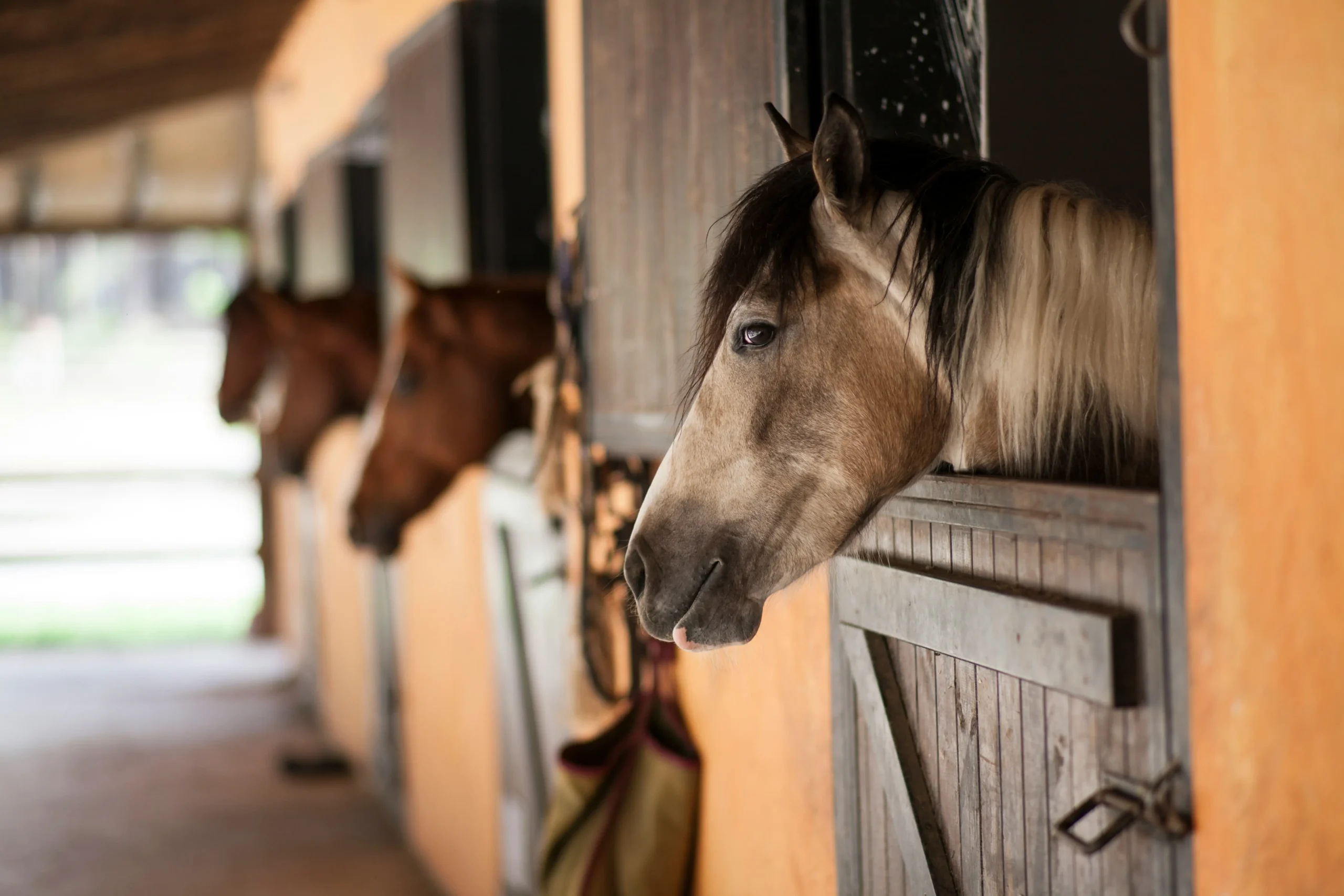
Labor Savings via Flat-Pack Kits
Pre-drilled flat-pack kits cut onsite labor by 50%, enabling a weather-tight structure in 3-4 weeks instead of the traditional 3-4 month carpentry cycle.
Elimination of On-Site Fabrication
The primary cost driver in traditional stick-built stables is not just the material, but the man-hours spent fabricating components on site. Our B2B flat-pack solution arrives with all hot-dip galvanized steel frames pre-cut and pre-drilled to exact tolerances. This precision eliminates the “measure twice, cut once” bottleneck that plagues timber builds. Since the fabrication work is completed at the factory level, your installation crew transitions immediately to assembly. For distributors, this means significantly lower labor costs per stall and fewer disputes over incorrect cuts or material wastage during installation.
Bolt-Together Velocity vs. Traditional Framing
Timber framing is inherently slow due to warping, requiring skilled carpenters to force alignment before nailing. In contrast, our modular system utilizes a bolt-together methodology where structural steel and HDPE boards align mechanically without fighting material inconsistencies. We have logged data showing a 50% reduction in assembly time compared to traditional wood framing. The components are designed for swift integration, allowing a smaller team to erect a single stable unit in a fraction of the time it takes to frame a timber equivalent.
Timeline Compression
In the Australian and New Zealand markets, weather unpredictability can extend a traditional 3-4 month construction timeline indefinitely. Flat-pack kits circumvent this risk by compressing the schedule to 3-4 weeks to achieve a weather-tight envelope. This rapid deployment is critical for commercial horse owners who need to protect their assets quickly and minimize downtime. Faster project completion means your clients can generate revenue from their facilities sooner, enhancing the ROI proposition of your product offering.
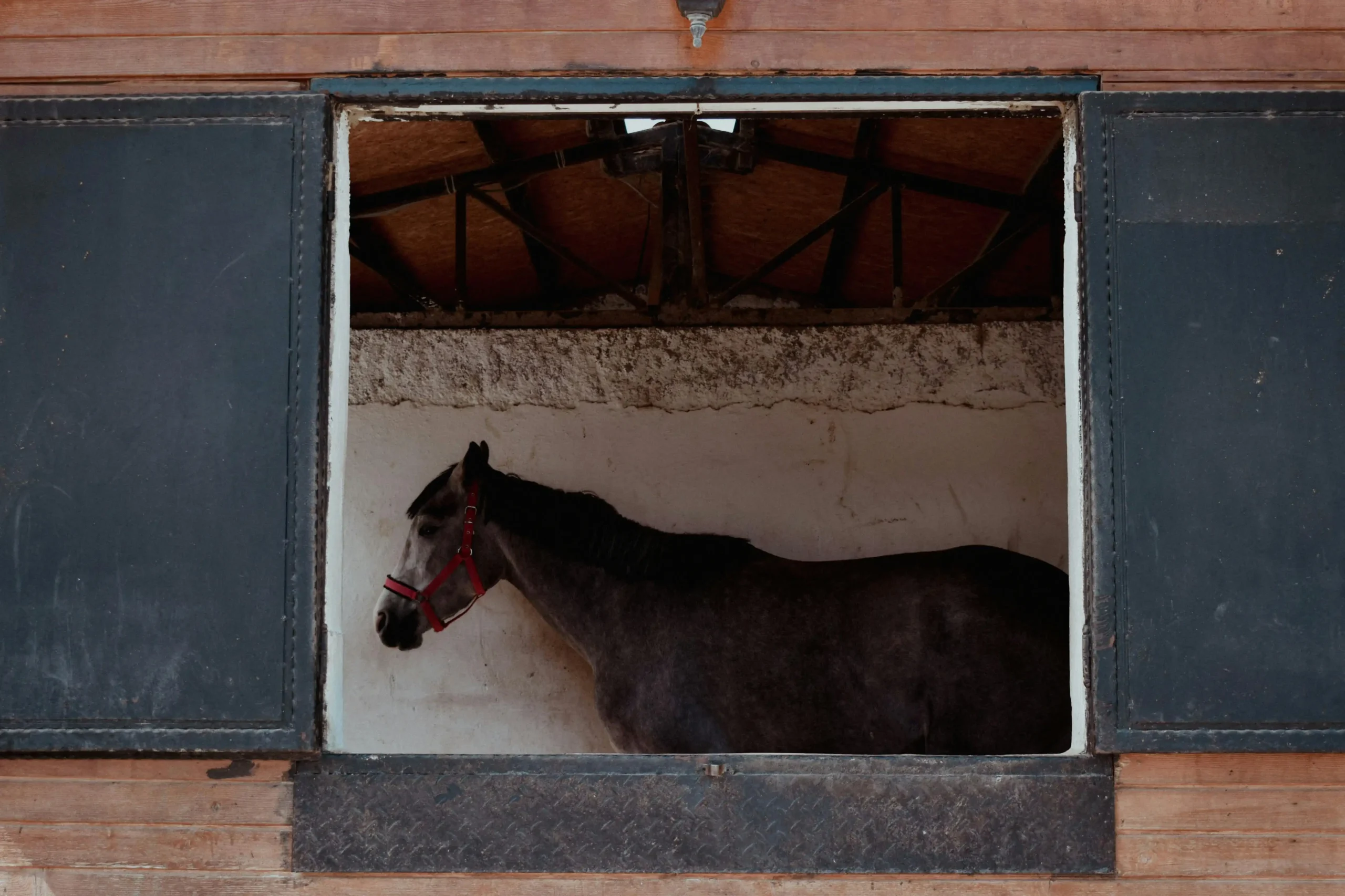
Shipping Logistics to Oceania
Importing 40 stalls is a volume game. Optimizing load plans to fit 12 units per 40HQ container saves approximately $4,000 in freight costs compared to standard industry packing.
Logistics Breakdown: The 40HQ Reality
Moving a 40-stable barn project requires planning for 3 to 4 x 40HQ containers. This volume allows us to negotiate bulk shipping rates, but it also demands precise scheduling to avoid port demurrage. A standard flat-pack configuration maximizes space, ensuring you are not paying to ship empty air.
Maximizing Cubic Meters for Profit
Your profit margin is directly tied to cubic meter efficiency. We engineer our kits—specifically the hot-dip galvanized frames and 10mm HDPE boards—to nest tightly. This optimization allows us to fit up to 12 stalls in a single 40HQ container where others might only fit 10. This density reduction lowers your per-unit landed cost instantly.
Hidden Costs: Wharf Fees and Inland Transport
The price on the invoice is rarely the final landed cost. Distributors in Australia and New Zealand must account for specific local charges that erode margins if ignored.
- Wharf Demurrage & Storage: Containers sitting idle at the port rack up daily fees, so customs clearance speed is critical.
- GST/VAT Implications: Import duties and tax applications apply upon entry, impacting cash flow.
- Rural Transport: Moving containers from the port to a regional farm costs significantly more than metro delivery.
Long-Term Maintenance & ROI
The lowest bid price is a trap. Timber structures typically incur maintenance costs equal to 50% of the initial purchase price over a decade, whereas hot-dip galvanized steel requires near-zero capital expenditure.
10-Year Total Cost of Ownership: Steel vs. Timber
Distributors often face resistance when pitching metal stables against traditional timber because clients focus solely on the initial invoice price. This is a flawed analysis that ignores the aggressive depreciation of wood in Oceania’s climate. In the high-humidity zones of coastal Australia or the variable temperatures of New Zealand, timber is not a static asset; it is a liability that degrades from day one. A wooden stable requires a strict regimen of painting, sealing, and replacing kick-damaged planks just to remain functional.
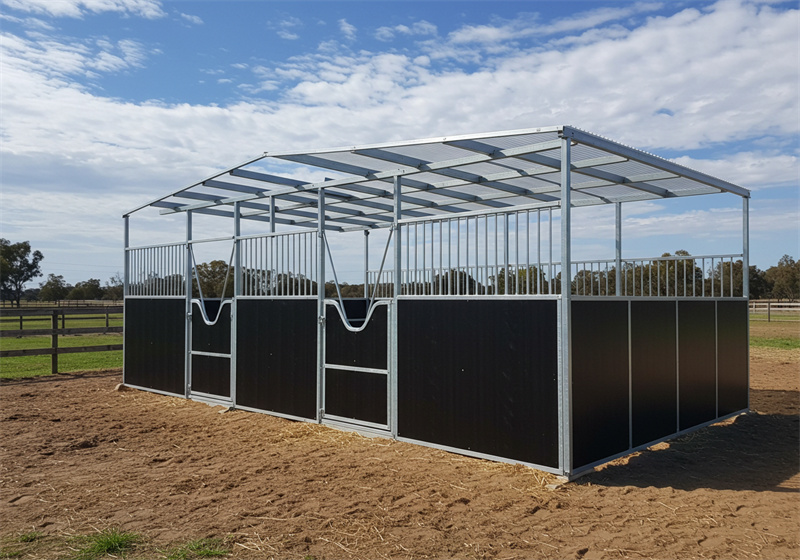
Conversely, our manufacturing standard utilizes hot-dip galvanized steel frames with a coating thickness exceeding 42 microns. This specification is critical because it creates a metallurgical bond that prevents rust for over a decade, even in salty or corrosive air. Unlike timber, which loses value and structural integrity as it ages, our steel frames maintain 100% load-bearing capacity from Year 1 to Year 10 without the need for sandblasting or repainting. For a commercial operation, this shifts the stable from a recurring expense item to a long-term capital asset.
Maintenance Cost Data: The Capex Reality Check
When analyzing long-term ROI, the hidden labor costs of wood maintenance are the primary profit killer for end-users. We must educate buyers that the “cheap” timber option actually demands a dedicated maintenance budget. Industry data suggests that over a 10-year cycle, maintaining a timber stable often consumes 50% of the initial build price in labor and materials alone.
- Timber Painting Cycles: Timber requires professional repainting every 2–3 years to prevent rot, costing thousands in labor and materials per cycle.
- Rot and Replacement: Kickboards and lower planks in timber stables are prone to rot and physical damage from horses, necessitating partial replacements every 5 years.
- Steel Zero-Capex: Our >42 micron hot-dip galvanization ensures the frame requires zero painting or rust treatment for a minimum of 10 years.
- HDPE Durability: The 10mm UV-resistant HDPE boards do not crack or fade under the harsh Australian sun, eliminating the replacement costs associated with generic plastics or timber.
For a B2B distributor, this reliability is your brand insurance. By stocking a product that does not generate warranty claims due to rust or rot, you protect your margins and build a reputation for supplying industrial-grade infrastructure rather than temporary shelter solutions.
Conclusion
Local stick-built pricing often pushes project costs past $100 per square foot, eroding your margin before construction even starts. Importing a flat-pack galvanized kit keeps material spend in the $25-$35 range while delivering superior durability through 42-micron coating thickness. You avoid the “UV Tax” of inferior plastics that crack in two years, ensuring your warranty claims stay at zero.
Request a container-loading breakdown to see exactly how a 40-stable order fits into a 40HQ container without wasting space. We will also provide the specific tariff codes you need to lower your effective duty rate below local sales tax.
Frequently Asked Questions
How much does a stable cost?
The cost to build a stable varies significantly based on specifications, but DB Stable balances high quality with the lowest market price by operating as a direct specialized factory. Our prefabricated kits utilize hot-dip galvanized steel and UV-resistant HDPE boards to minimize long-term maintenance and upfront construction expenses for B2B clients. By shipping flat-packed designs specifically tailored for the Australian and New Zealand markets, we significantly reduce logistical and on-site labor costs.
How much value does a barn add?
A high-quality barn can substantially enhance property value by providing durable, professional-grade infrastructure essential for equestrian operations. For commercial horse owners, investing in DB Stable’s portable structures may also offer specific tax benefits associated with capital improvements and depreciable assets. Our use of materials with a 10-year lifespan ensures that the addition remains a high-value, low-maintenance asset for the long term.
What is the cost of a 40x80x16 barn?
The cost for a structure of this size is optimized through DB Stable’s factory-direct model, which eliminates middleman markups often found in traditional construction. We specialize in large-scale prefabricated configurations that reduce on-site labor costs and material waste compared to standard pole barns. Our ‘one-stop shop’ solution allows distributors and contractors to source high-specification components efficiently, ensuring the project stays within budget without compromising structural integrity.
What is the cost of a 40×60 barn?
Constructing a 40×60 barn is more cost-effective when utilizing DB Stable’s flat pack solutions, which streamline the supply chain for clients in Australia and New Zealand. Our design experts provide customized layouts that maximize the utility of the space while keeping material costs lower than local sourcing options. By choosing our portable kits, professional builders and farm owners secure a premium product with technical specifications like hot-dip galvanized frames at a highly competitive price point.
Is a 40×50 space sufficient?
Determining if a 40×50 space is sufficient depends on your operational layout, which is why DB Stable provides expert design services to ensure every inch is optimized for efficiency. We offer flexible configurations, such as back-to-back setups, that allow equestrian centers to maximize capacity within a compact footprint. Our team acts as a sturdy backbone for your project, ensuring the final design meets the rigorous demands of professional stable management regardless of the dimensions.