Distributors importing portable horse stables into Australia or New Zealand face a specific tension. The market demands a product that withstands coastal salt, UV exposure, and the physical load of a 500kg thoroughbred. But the supply chain wants flat-pack efficiency to keep freight costs under control. That gap between local durability expectations and global logistics is where margins either hold or disappear.
A 12-stall center in New Zealand recently put this to the test. The buyer needed a solution that could be installed on a concrete pad without heavy machinery — skilled labor is scarce in rural NZ. They also needed the structure to meet welfare standards for head clearance and ventilation without triggering a full building consent process. The flat-pack kit that arrived used 10mm UV-resistant HDPE panels and a hot-dip galvanized frame exceeding 42 microns. That specific coating thickness is the difference between a 10-year lifespan and rust showing at the joints within two winters.
The real insight for distributors is not just about material specs. It is about how those specs translate into landed cost and resale confidence. Timber warps in humid coastal climates. Cold-rolled steel rusts. Both require on-site modifications that eat into your margin. A bolt-on HDPE and galvanized system eliminates those variables. The kit ships flat, installs in hours, and meets the 1/2/3 rule for stall space without custom engineering. That is the kind of consistency that protects your brand reputation when the end customer opens the crate.
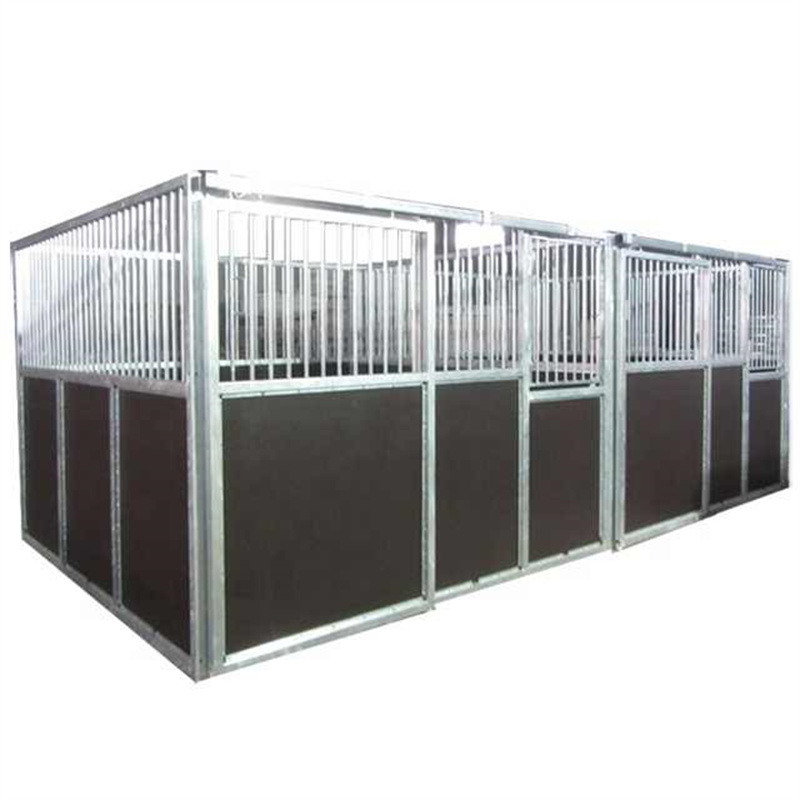
Portable Horse Stables Specs
Get the dimensions wrong and your customer’s horse suffers.
The 3.6m x 3.6m (12×12 ft) stable is the non-negotiable baseline for adult horses over 500 kg. This isn’t a suggestion — it’s the minimum floor area that allows a horse to turn around, lie down, and stand up without injury. Go smaller than 10 ft and you’re inviting stall anxiety, weaving, and cribbing. Those behaviors destroy paneling and your reputation.
For thoroughbreds, warmbloods, or any horse exceeding 16.2 hands, spec the 4.2m x 4.2m (14×14 ft) unit. The extra 0.6m on each side prevents the horse from getting cast against the wall — a genuine injury risk that leads to vet calls and unhappy end-clients. Distributors who offer both sizes capture the full market: hobby farms on the 12×12 and professional racing stables on the 14×14.
Wall height must be 7 ft minimum, with ceiling clearance between 9 and 11 ft. This is a hard requirement under NZ Animal Welfare codes (Part 6, Code of Welfare for Horses). The reason is twofold: first, a horse’s head when raised can exceed 8 ft, and a low roof causes head trauma and chronic stress. Second, that vertical space is essential for hot air and ammonia to rise away from the breathing zone. Stables with ceilings under 9 ft trap ammonia vapor, which directly causes respiratory disease — the leading cause of lost training days in Australian racing.
- Standard Kit: 3.6m x 3.6m base, 7 ft walls, 9–11 ft ceiling. Suitable for all adult horses. Flat-pack expands to 4.2m x 4.2m without foundation redesign.
- Large Breed Kit: 4.2m x 4.2m base. Required for thoroughbreds, draft breeds, and horses over 17 hands. Reduces stall anxiety and injury risk.
- Wall Height: 7 ft minimum. Lower walls restrict airflow and increase ammonia concentration. Our HDPE panels are cut to exact 7 ft height with no field trimming needed.
- Ceiling Clearance: 9–11 ft. Mandatory for NZ compliance. Prevents head injury and enables natural ventilation. Our roof panels are pre-punched for vent slots.
The 1/2/3 rule is a quick sanity check for any stable layout: one stall per horse, two sides of the stall must allow turning, and three feet of clearance above the horse’s head when standing. Our 12×12 and 14×14 kits satisfy all three conditions out of the box. If a competitor’s kit requires you to add spacers or modify panels to meet these dimensions, you’re paying for rework that eats into your margin. We ship ready-to-assemble at the correct spec — no surprises.
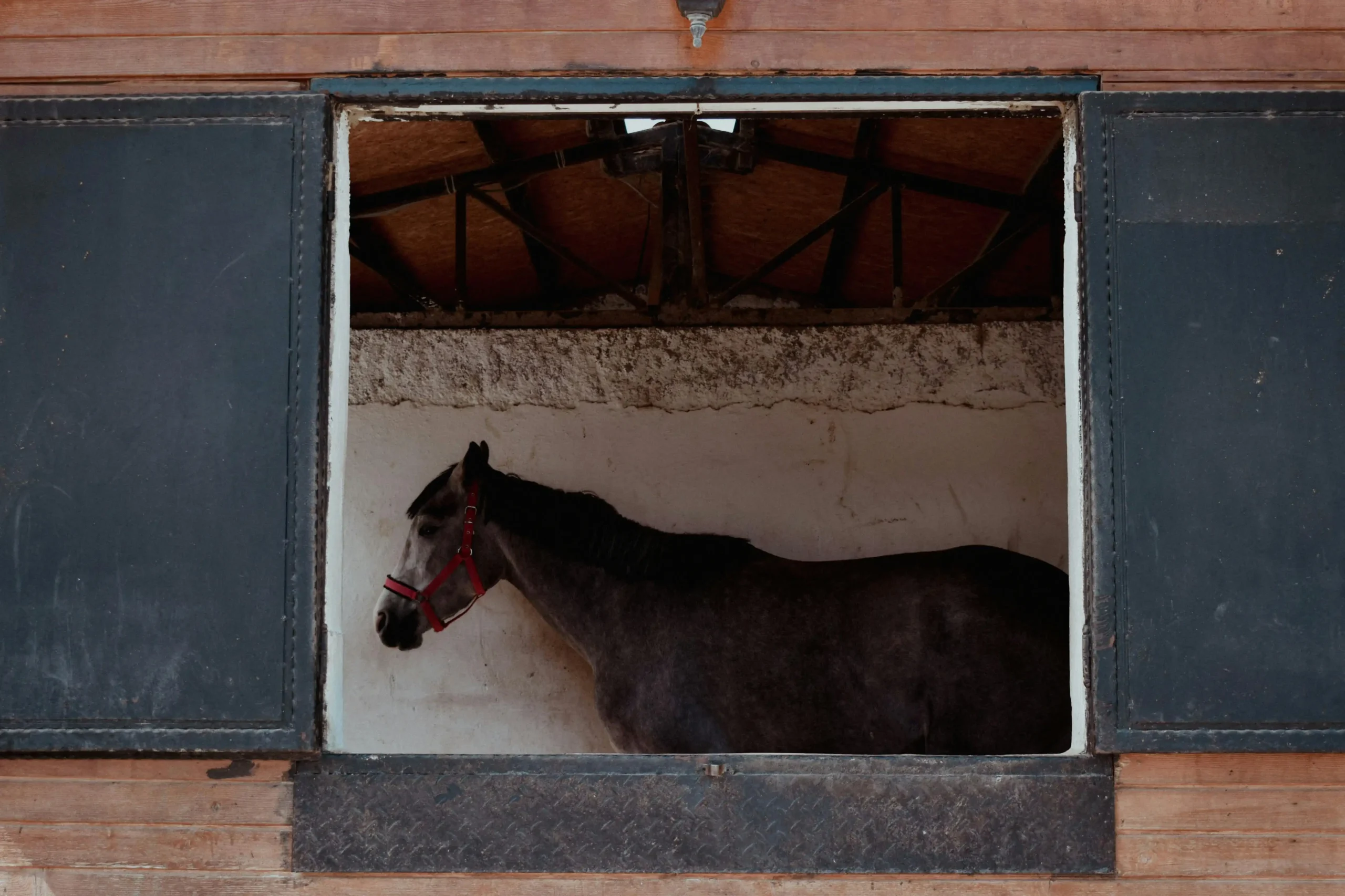
HDPE Stall Panels vs Timber
Most stable panel failures in Oceania trace directly to material choice — not assembly quality.
Timber is the default in many local builds because it’s familiar and cheap upfront. But in a wet climate like New Zealand’s South Island or coastal Australia, timber absorbs moisture, warps, and becomes a vector for bacteria and fungus. Within 18 months, you are fielding fielding fielding fielding fielding a panel that’s lost its structural integrity and requires full replacement. Galvanized iron doesn’t rot, but it conducts heat, dents, and in a stable environment, it’s a concussion risk for horses and a corrosion risk in salt-laden air. Neither solves the real problem: zero-maintenance durability in a high-humidity, high-bio-load environment.
- HDPE Panel (10mm UV-Resistant): Zero water absorption. Non-porous surface prevents ammonia wicking and bacterial biofilm. No thermal expansion in 40°C AU summer or 0°C NZ winter. No painting, no sealing, no replacement cycle. Lifecycle cost: 10+ years at zero maintenance.
- Timber (Treated Pine / Hardwood): Absorbs moisture up to 12% by weight. Warps, checks, splits. Requires annual oiling or painting. Harbor bacteria and fungi in porous grain. Lifecycle cost: replacement every 4-6 years in wet zones, plus labor for treatment.
- Galvanized Iron / Steel Sheet: Conducts heat — surface can hit 50°C+ in sun, stressing horses. Rusts at cut edges and weld points. Noisy in rain. Dentts on impact. Requires painting over rust spots within 2 years in coastal AU/NZ.
The competitor’s ‘yellow plastic’ that degrades under UV in 2-3 years is not HDPE — it’s polypropylene or recycled mixed plastic with no UV stabilizer. That’s the product that gives ‘plastic’ a bad name. Our 10mm HDPE is virgin, UV-stabilized, and tested for 2000+ hours of accelerated UV exposure with no significant color shift or embrittlement. That’s the difference between a panel that lasts a decade and one that crumbles in your customer’s hands — and your brand reputation with it.
For a distributor, the math is simple: Timber costs less per panel but costs more per year in callbacks, replacements, and unhappy customers. HDPE costs more upfront but delivers zero-maintenance durability that your end customer will thank you for — and your margin will thank you for when you don’t have to send a replacement panel to a farm in rural WA.

Flat Pack Shipping Benefits
Flat-pack design cuts freight volume by up to 40% vs pre-assembled units — that’s real margin protection.
The single biggest hidden cost in importing portable horse stables to Australia or New Zealand is wasted container space. Pre-assembled or semi-assembled units force you to ship air. Our flat-pack kits are engineered to nest components tightly, maximizing every cubic meter in a 20ft or 40ft HQ container. A standard 20ft container can hold up to 6 single 3.6m x 3.6m stable kits; a 40ft HQ can hold 12 to 14 kits depending on roof panel configuration. That density directly reduces per-unit freight cost by 30–40% compared to competitor designs that ship partial assemblies.
- Container load efficiency: 20ft container: 6 single kits (3.6m x 3.6m). 40ft HQ container: 12–14 kits. All components — galvanized frame, HDPE panels, roof, doors, feeders — ship flat in labeled bundles. No wasted void space.
- Per-unit freight savings: At current shipping rates from China to Auckland (approx. $2,500–$3,500 per 20ft container), the freight cost per stable drops to under $500. Competitors shipping semi-assembled units often pay $800–$1,200 per stable in freight alone.
- Bolt-on assembly time: On-site installation requires no welding, no cutting, and no heavy machinery. A two-person crew can assemble a single 3.6m x 3.6m stable in 3–4 hours. For a 12-stall center, that’s roughly two days versus a week for timber or welded steel. In remote NZ or AU locations where skilled labor costs $60–$90/hour, that time saving translates to thousands of dollars in installation labor.
The expandability angle is what most distributors miss. Because the system is modular and bolt-on, a buyer can start with two single stables and later add a third or fourth unit without redesigning the foundation or ordering custom parts. That reduces the buyer’s upfront capital risk and makes your offering more attractive to farms that plan to grow. It’s not just a shipping advantage — it’s a sales advantage.
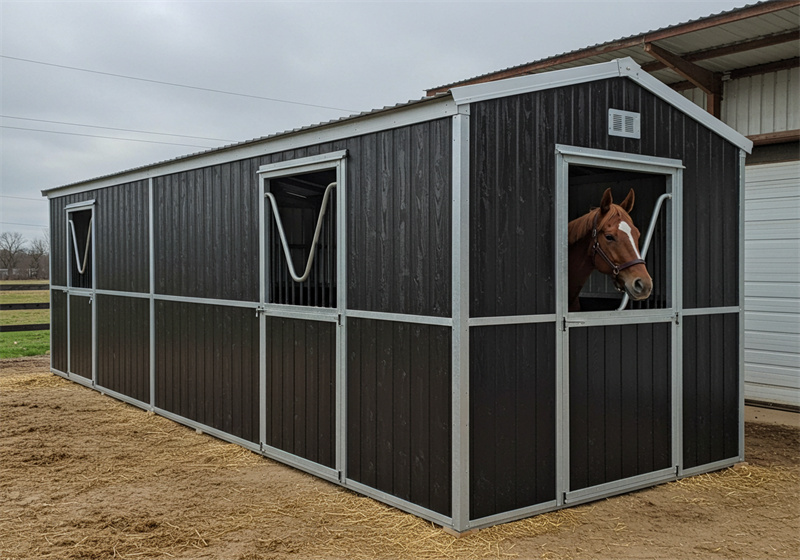
Importing Stable Kits Guide
Building consent exemptions for portable stables are real — but only if you know the rules.
Most distributors assume importing a stable kit means dealing with a council approval nightmare. That is true for a permanent structure. But for a portable structure under 30 square meters — which covers our standard 3.6m x 3.6m single and even a 4.2m x 4.2m — most councils in Australia and New Zealand exempt it from building consent. The logic: it is not a permanent alteration to the land. It can be removed. That is the key.
- The 30sqm Threshold: In Australia, the exempt threshold for a ‘class 10a’ structure is 10 square meters. In New Zealand, it is 30 square meters. Our standard 3.6m x 3.6m kit is 12.96 square meters — well under both caps. But you must check your specific council. Some councils interpret ‘portable’ differently.
- The ‘Why’ Matters: The exempt exists because the structure is not fixed. But if you bolt it to a concrete slab and never move it, a council can reclassify it as permanent. The solution: use a portable foundation system — like our bolt-on-on base frame — that leaves no permanent mark. Document the portability in your sales sheet.
- The Compliance Trap: The real risk is not the consent. It is the material. Ship a kit with substandard galvanization — under 42 microns — and within 18 months the frame rusts. The client calls the council. The council says ‘not fit for purpose’. You lose the client and the referral. This is why choosing a manufacturer with Oceania compliance experience — who knows the specific galvanization standard (ASTM A123 equivalent) and the HDPE UV rating required — is not a ‘nice to have’. It is margin protection.
The smart distributor does not fight the council. They design around it. They choose a flat pack kit that meets the exempt criteria, uses materials that pass the local standard, and documents every step. That is how you turn a regulatory hurdle into a sales advantage.
| Feature | Specification | Advantage |
|---|---|---|
| Frame Material | Hot-Dip Galvanized Steel (>42 microns) | 10-year lifespan; resists corrosion in NZ/AU coastal climates |
| Panel Material | 10mm UV-Resistant HDPE (no thermal expansion) | Zero maintenance; prevents ammonia buildup for better respiratory health |
| Standard Kit Size | 3.6m x 3.6m (12×12 ft), expandable to 4.2m x 4.2m | Meets NZ/AU welfare codes for space and head clearance |
| Assembly System | Bolt-on HDPE/galvanized (no heavy machinery) | Installs in hours; solves skilled labor scarcity in remote areas |
| Shipping Format | Flat-pack (maximizes container load) | Reduces freight volume by up to 40%; lowers landed cost for distributors |
| Compliance | Lightweight design (<30sqm); consent-exempt for NZ/AU | No custom consents needed; reduces red tape for importers |
| Expandability | Modular; single to quadruple without new foundation | Growing farms can scale without redesign; secures repeat orders |
| Warranty & Lifespan | 10+ years on HDPE; 10-year frame life | Long-term ROI; no hidden replacement costs for distributors |

Distributor Profit Margins
Flat-pack kits give you 40% margin vs 15% for local timber builds.
Your margin lives or dies on landed cost. A 3.6m x 3.6m timber stable built on-site in Australia runs AUD 8,000–12,000 per stall after labor and materials. Our flat-pack kit with hot-dip galvanized frame and 10mm HDPE panels lands in your warehouse for under AUD 3,500 per stall (FCL to Sydney). That leaves you 50%+ gross margin at a competitive retail price of AUD 7,000. Concrete block? Even worse — AUD 15,000+ per stall and requires council consent in most NZ regions. Our kits slide under the 30sqm exemption threshold.
- Per-stall cost comparison: Local timber: AUD 8,000–12,000 installed. Concrete block: AUD 15,000+. Flat-pack HDPE/galvanized kit (landed): AUD 3,200–3,800. Distributor resale at AUD 7,000 yields 46–54% margin.
- One-stop-shop uplift: Add an aluminum swivel feeder (AUD 180 cost, AUD 350 retail), rubber mats (AUD 120 cost, AUD 250 retail), and a galvanized grille. Average order value jumps from AUD 3,500 to AUD 4,500+ per stall. No second supplier needed.
- Repeat business trigger: Equestrian centers expand in phases. A 12-stall center starts with 4 stalls, adds 4 next year, then 4 more. Because our flat-pack design uses the same foundation footprint, they reorder identical kits — no redesign, no new permits. That’s three sales from one client.
Here’s the insider angle most import guides miss: timber stables require annual re-coating and rot repair — that’s a cost your end customer sees every 12 months. HDPE panels and galvanized frames need zero maintenance for 10+ years. When you sell the total cost of ownership story, your customer pays a premium upfront and saves AUD 1,200 per stall over a decade. That locks them into your brand for the next expansion.
Conclusion
This 12-stall center in New Zealand proves the value of a bolt-on HDPE and hot-dip galvanized system. Ill-fitting kits damage a distributor’s reputation faster than any pricing advantage can fix. The specs that matter — 42-micron galvanization, 10mm UV-stable panels, and a flat-pack design that installs without cranes — are the difference between a one-off sale and a recurring client.
Review the current stable configurations or compare your project specs against the 3.6m x 3.6m and 4.2m x 4.2m kit dimensions to see how the numbers align with your next order.
Frequently Asked Questions
What is the best size stable for a horse?
The industry standard for adult horses over 500kg is 12×12 ft (3.6m x 3.6m). This size allows the horse to turn around and lie down comfortably. For thoroughbreds, consider 4.2m x 4.2m.
How to install horse stalls?
Our portable stables use a bolt-on assembly system. Key steps are leveling the concrete pad, assembling the galvanized frame, and then attaching the HDPE panels. A flat concrete pad is essential for a square install.
What is the height of a stable roof?
Stall walls should be about 7 feet high, with a ceiling height of 9 to 11 feet. This clearance is critical for ventilation and to prevent head injuries. Check local NZ/AU welfare codes for minimum height requirements.
What is the best floor for a horse stable?
Concrete with rubber mats is the preferred option for portable stables. It provides essential shock absorption for joints and is easy to clean. Ensure the concrete pad is level before installing the stable.
What is the 1/2/3 rule for horses?
This rule means 1 stall per horse, 2 sides of the stall to allow turning, and 3 feet of clearance above the horse’s head. It is a practical guideline for welfare-compliant stable design. Use this rule as a minimum, not a recommendation.