portable stables tax deductions is the first checkpoint buyers should lock before they approve a supplier, budget, or production slot. The 2026-25 instant asset write-off threshold sits at $30,000 per asset for small businesses with turnover under $10 million. A properly specified portable stable — one that passes the ATO’s substance-versus-form test — qualifies as plant and equipment, not capital works. That means you claim the full cost in the year of purchase, not piecemeal across four decades. The gap between a $30,000 deduction now and a $750 deduction each year for 40 years is not small. It’s the difference between a stable that pays for itself and one that sits as a drag on your balance sheet.
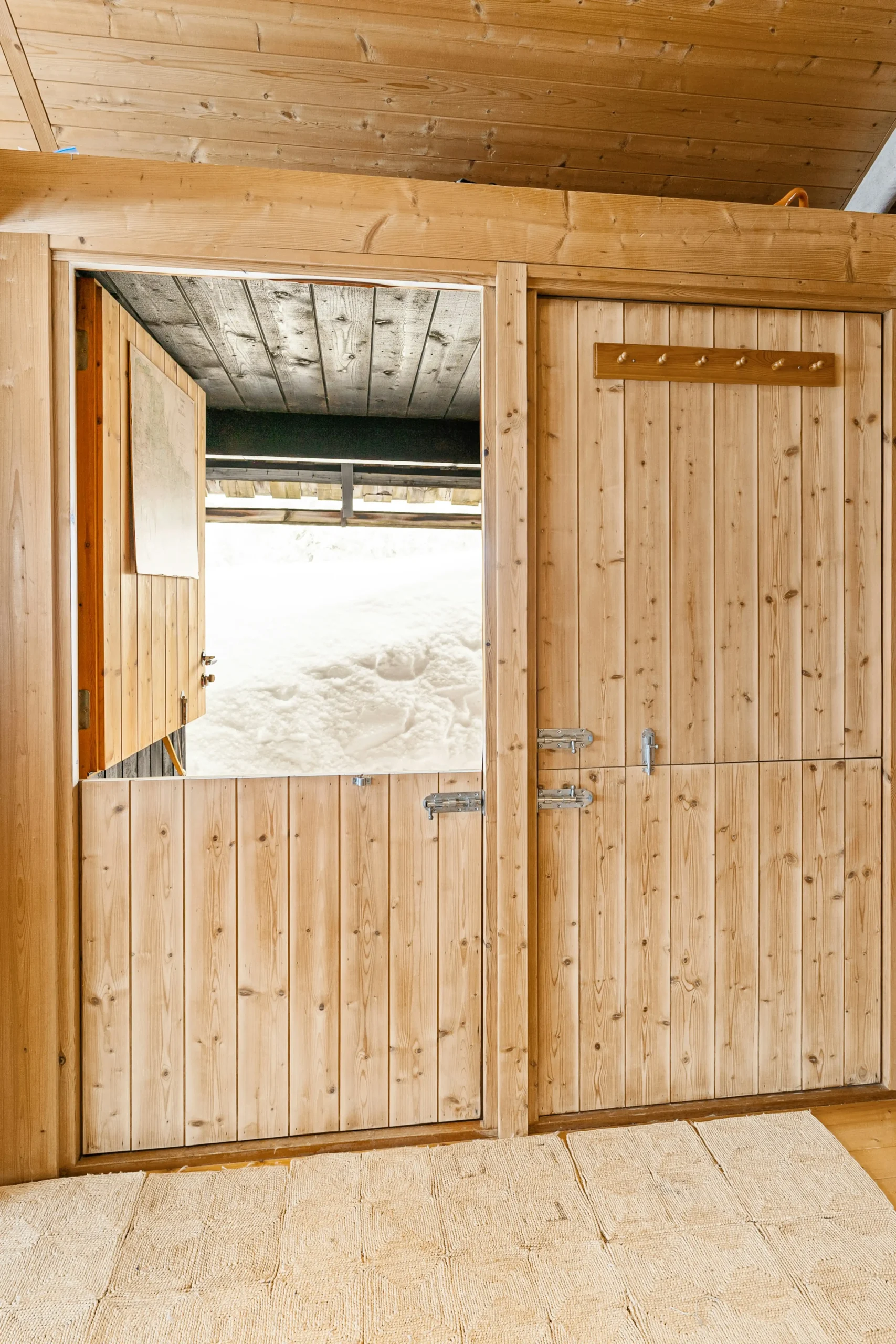
ATO Instant Asset Write-Off Rules
The $30,000 instant asset write-off for new portable stables is the single biggest tax lever for equestrian businesses in 2026-25.
For the 2026-25 financial year, the ATO’s instant asset write-off scheme allows small business entities with aggregated turnover under $10 million to claim an immediate deduction for assets costing less than $30,000 each. This means a new portable horse stable — purchased as a flat-pack kit from a manufacturer like DB Stable — can be fully written off in the year of purchase, provided the stable is first used or installed ready for use by June 30.
The key eligibility criteria are straightforward: the asset must be new or substantially new, its cost must be under the $30,000 threshold, and it must be used for a business-producing enterprise on your farm. For a flat-pack stable, the ‘ready for use’ test is met the moment the stable is assembled and placed on its site — not when the kit arrives at the port.
- New Asset Requirement: The ATO demands a clear invoice from a single manufacturer. A used timber stable from a private sale rarely provides a auditable depreciation baseline — the ATO will demand a breakdown of purchase price into asset value versus embedded labor and salvage value, often blocking the claim.
- Substance vs. Form Test: A stable that looks like a garden shed with a pitched roof and windows may be reclassified as a capital works building (2.5% deduction over 40 years). DB Stable’s open-front, flat-pack design with no permanent floor clearly passes the ‘portable plant’ test every time.
- Multiple Units: Each stable unit qualifies individually. Three units at $8,000 each are three separate $8,000 claims, not one $24,000 claim. This is often missed by buyers.
If the stable costs over $30,000, it does not qualify for the instant write-off. Instead, it must be added to the small business pool and depreciated over its effective life (15-20 years for hot-dip galvanized steel). This is still a valuable deduction but spread over multiple years.
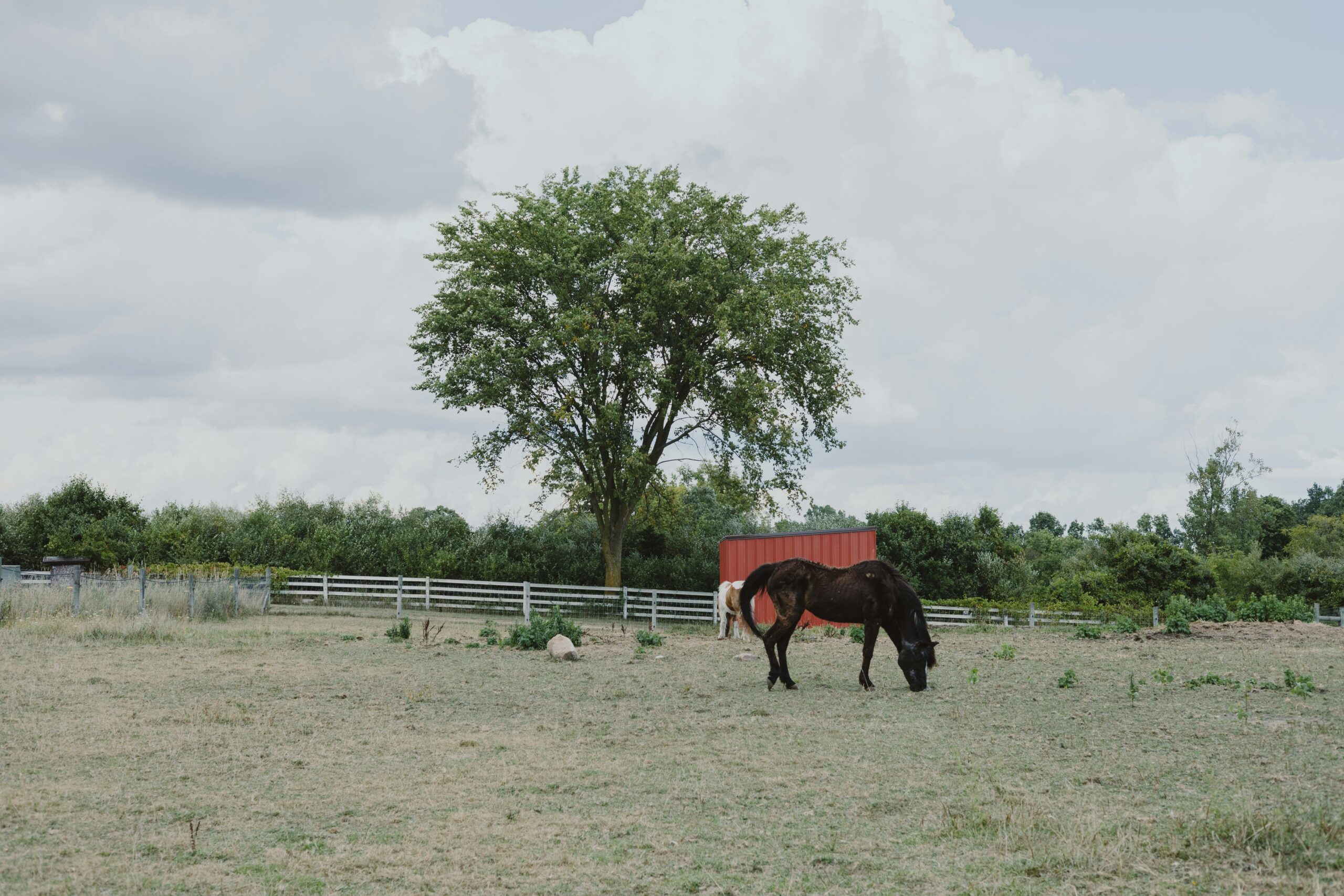
Capital Works vs. Plant & Equipment Classification
The single biggest tax mistake on horse stables is misclassifying a portable structure as a permanent building.
Under ATO Tax Determination TD 97/24, a structure that can be moved—even with effort—is classified as ‘plant and equipment,’ not ‘capital works.’ This distinction determines whether you claim a 20% diminishing value deduction per year or a 2.5% capital works deduction spread over 40 years.
The ATO applies a ‘substance over form’ test. A stable bolted to a concrete slab with permanent mains power connection will be reclassified as a building. A stable sitting on ground pins or skids with no permanent foundation passes the portability test every time.
- Portable (Plant & Equipment): Stable on skids or ground pins. No concrete slab. No permanent power connection. Depreciation rate: 15–20% diminishing value per year. Qualifies for instant asset write-off if under $30,000.
- Fixed (Capital Works): Stable on a concrete foundation. Wired to mains power. Permanent plumbing. Depreciation rate: 2.5% per year over 40 years. Does NOT qualify for instant asset write-off.
- Flat-Pack Advantage: A bolt-together flat-pack kit is inherently portable. The ATO views assembly from a kit as reinforcing the asset’s non-permanent nature. DB Stable’s modular design with 6mm galvanized hardware and no concrete requirement passes this test.
- Audit Risk: Timber Stables: Used timber stables often have embedded labor and salvage value that the ATO demands be separated from the asset cost. This ambiguity triggers audit scrutiny. A new factory-invoiced stable with a single line item cost eliminates this risk.
The practical takeaway: if your accountant sees a concrete slab in the photos, you lose the instant write-off. DB Stable’s ground anchor system and flat-pack design ensure your invoice supports the classification you need.
Depreciation Methods: Prime Cost vs. Diminishing Value
Diminishing Value gives you roughly double the first-year deduction vs Prime Cost on the same stable.
The ATO gives you two paths to depreciate a portable horse stable: Diminishing Value (DV) and Prime Cost (PC). DV front-loads the deduction — you claim 20% of the asset’s remaining value each year. PC spreads it evenly at 10% of the original cost every year. For a $20,000 stable, DV delivers a $4,000 deduction in year one; PC gives you $2,000.
The effective life of your stable determines the base rate. The ATO’s effective life schedule assigns 15–20 years for a hot-dip galvanized steel frame and roughly 10 years for HDPE panels. DB Stable’s units combine a 42-micron galvanized frame with 10mm UV-stabilized HDPE — that composite structure justifies a 20-year effective life for the frame and 10 years for the panels. Your accountant can apply separate rates to each component, which is a nuance most generic tax blogs miss.
- Year 1 deduction ($20k stable): DV at 20%: $4,000. PC at 10%: $2,000. DV wins by $2,000 in year one.
- Year 2 deduction: DV: $3,200 (20% of remaining $16,000). PC: $2,000. DV still ahead by $1,200.
- Year 3 deduction: DV: $2,560. PC: $2,000. Cumulative DV advantage: $3,760.
- Year 4 deduction: DV: $2,048. PC: $2,000. Cumulative DV advantage: $3,808.
- Year 5 deduction: DV: $1,638. PC: $2,000. By year 5, PC catches up slightly. Total DV claimed over 5 years: $13,446 vs PC’s $10,000.
The real-world impact: if you run a commercial equestrian operation with multiple stables, the DV method can shift thousands of dollars of taxable income out of the first year. That’s cash you can reinvest into site prep, fencing, or additional units. Most accountants default to Prime Cost because it’s simpler. Push them to model DV if your stable will be in service for less than 10 years — which is common for portable structures that get moved or upgraded.
One hard truth: DV only works if the stable is classified as plant and equipment, not capital works. A stable bolted to a concrete slab with wired electricity is capital works — 2.5% per year over 40 years. A DB Stable unit sitting on ground pins with no permanent foundation passes the ATO’s portable plant test every time. That classification is what unlocks the 20% DV rate. If your supplier’s design looks like a garden shed with a pitched roof and windows, expect a reclassification. DB Stable’s open-front, flat-pack design with no permanent floor avoids that trap.
| Feature | Prime Cost (PC) | Diminishing Value (DV) | Key Difference | Best For |
|---|---|---|---|---|
| Calculation Basis | Cost of asset × (days held/365) × (100%/effective life) | Base value × (days held/365) × (200%/effective life) | DV uses declining base value; PC uses constant cost | DV: Maximizing early deductions; PC: Stable annual claims |
| Year 1 Deduction ($20,000 asset, 20-year life) | $1,000 (5% of cost) | $2,000 (10% of cost) | DV yields 2x the Year 1 deduction of PC | DV: Buyers needing immediate cash flow relief |
| Year 2 Deduction ($20,000 asset) | $1,000 (same as Year 1) | $1,800 (9% of remaining base) | PC stays flat; DV declines annually | PC: Accountants preferring predictable expenses |
| Effective Life Impact | Full cost spread evenly over life | Larger deduction early, smaller later | DV front-loads tax benefits; PC back-loads them | DV: Assets with shorter effective life (e.g., HDPE panels at 10 years) |
| ATO Compliance Note | Must elect PC at time of first use | Default method if no election made | DV is ATO default; PC requires active choice | DV: Simpler compliance; PC: Specific planning needs |
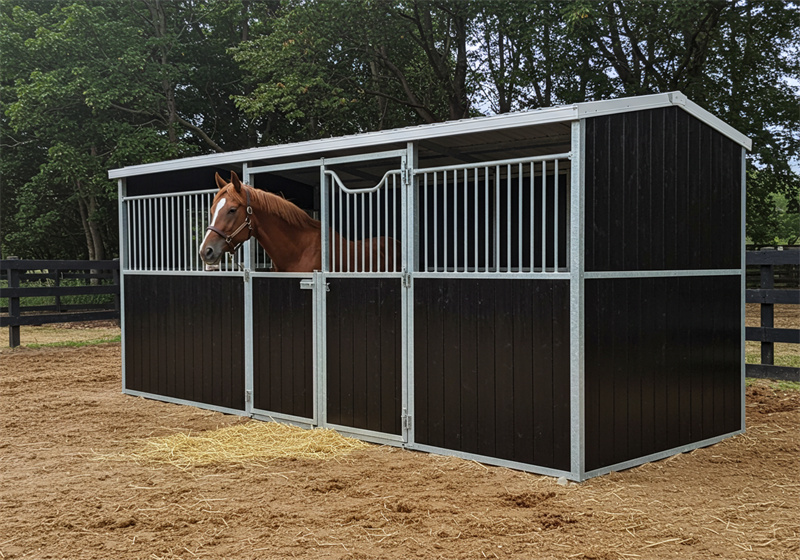
Qualifying Asset Features & Material Specs
The ATO’s ‘substance vs.
The ATO doesn’t just check what you call your stable. It applies the ‘substance over form‘ test. A structure that looks like a garden shed with a pitched roof, windows, and a concrete slab will be reclassified as a capital works building — even if you call it ‘portable’. That means a 2.5% deduction over 40 years instead of a full write-off in year one.
To pass the test, your stable must prove it is a piece of plant and equipment, not a building. The design must make relocation possible without demolition. Here are the three features that make the classification undeniable.
- No concrete slab foundation: The stable sits on a gravel base or uses ground stakes. No footings, no slab, no permanent connection to the earth. The ATO treats gravel as a site preparation cost — 100% deductible in year one. Concrete triggers capital works classification.
- No mains water or sewer connection: A portable stable uses a standalone trough or a hose connection that can be disconnected in minutes. No plumbing runs buried in concrete. No sewer line. If you can’t move the stable without a plumber, it’s a building.
- Integral roof structure: The roof is part of the stable frame, not a separate structure attached to a building. The entire unit lifts as one assembly. This is why DB Stable’s hot-dip galvanized steel frame uses modular bolts — the roof, walls, and frame come apart and reassemble without cutting or welding.
Now look at the material specs that back up the claim. DB Stable uses a hot-dip galvanized steel frame with a coating thickness of 42+ microns (ISO 1461 standard). That’s not paint. That’s a zinc-iron alloy layer that bonds to the steel at 450°C. It resists corrosion for 20+ years in Australian coastal and inland environments. The walls are 10mm UV-resistant HDPE panels. HDPE does not absorb moisture, does not rot, and does not expand with temperature changes — unlike plywood or timber. The entire structure bolts together with 6mm galvanized hardware. No welding, no permanent fasteners.
The flat-pack design is the final piece of evidence. A stable that ships in a container and assembles with a socket set cannot be a permanent building. The ATO’s own guidance on portable plant (Tax Determination TD 97/24) states that a structure that can be moved — even with effort — is plant, not capital works. DB Stable’s flat-pack system means the stable can be disassembled, relocated, and reassembled in under 8 hours with two people. That is the definition of portability.
| Feature | Specification | Benefit for ATO Classification |
|---|---|---|
| Frame Material | Hot-Dip Galvanized Steel (42+ microns, ISO 1461) | Proves industrial-grade durability; supports 20-year effective life for depreciation. |
| Wall Panels | 10mm UV-Resistant HDPE (No thermal expansion) | Non-structural, modular panels reinforce ‘portable plant’ status vs. permanent building. |
| Foundation Requirement | None. Uses ground anchor system / gravel base. | No concrete slab = fails ‘permanent fixture’ test. Qualifies for instant asset write-off. |
| Design & Assembly | Flat-pack, modular bolt-together (6mm galvanized hardware) | Proves unit is ‘ready for use’ as a movable asset, not capital works. |
| Configuration Options | Single, Double, Triple, Quadruple (Back-to-Back) | Each unit is a separate asset; multiple stables each qualify for individual $30K write-off. |


The $2,500 Immediate Deduction Rule
Each portable stable unit under $30,000 is fully deductible in the year of purchase.
For the 2026-25 financial year, the ATO instant asset write-off allows small businesses (aggregated turnover under $10 million) to immediately deduct eligible assets costing less than $30,000 each. Portable horse stables used for a business-producing enterprise on your farm qualify, provided they are new and first used or installed ready for use by June 30.
A common oversight is thinking that buying multiple stables from the same supplier aggregates the cost into a single asset. The ATO treats each unit as a separate asset if each costs under $30,000. For example, three stables at $8,000 each would each qualify for an immediate deduction, giving you a combined $24,000 write-off in the first year — not a single $24,000 asset subject to depreciation.
Conclusion
The ATO instant asset write-off turns a $30,000 portable stable into a net cost of zero in the year of purchase — provided the stable passes the portability test. A flat-pack, hot-dip galvanized unit on ground pins does. A timber shed bolted to a concrete slab does not. That distinction is worth tens of thousands of dollars over a 40-year depreciation schedule.
Review the product specs on DB Stable’s gallery page. Compare the hot-dip galvanized frame thickness and the ground-anchor system against what your accountant would call a permanent fixture. The right design makes the claim automatic.
Frequently Asked Questions
What is the most overlooked tax deduction for horse owners?
The instant asset write-off for portable stables is often overlooked. Many owners classify stables as capital works (2.5% over 40 years) instead of plant and equipment, missing the full deduction. Ensure your stable is portable and not fixed to concrete to qualify.
How to write off horses on taxes?
Horses must be part of a business enterprise to be deductible—breeding or racing stock qualify, personal horses do not. You can claim costs like feed and vet, but the horse itself is typically treated as. Consult your accountant to confirm business purpose.
What expenses are 100% write-off?
Portable stables under the $30,000 instant asset write-off threshold are 100% deductible in the purchase year for a business. Other farm assets like feeders and hot-dip galvanized frames may also qualify if they. Check the ATO threshold each year as it changes.
What is the 20% rule with horses?
The 20% rule typically refers to the ATO non-commercial loss test—if your horse activity shows a profit less than 20% of your other income over a period, deductions may be restricted. This. Have your accountant assess your profit pattern against this test.
What throws red flags to the ATO for stable deductions?
Bolting a portable stable to a concrete slab is a major red flag—it reclassifies the stable as capital works, reducing deductions to 2.5% per year. Claiming a used stable over $30k. Keep the stable moveable and maintain a clear business use log.