Understanding eco stables tax benefits usually starts the moment you realize a standard Colorbond shed doesn’t qualify for the same ATO depreciation schedules as a commercial agribusiness facility. Most equestrian owners treat their stable build as a simple capital expense. That’s a mistake. The tax office looks at horse properties with intense scrutiny, often defaulting to a hobby classification unless your infrastructure clearly demonstrates commercial intent. Installing solar-powered water pumps or compliant waste management systems changes the depreciation math entirely.
You can’t claim a cent if the local council rejects your build plans. The biggest hurdle you will face isn’t an ATO auditor. It is your local shire planning department. If your development application classifies the building as a standard shed instead of an agricultural facility with environmental mitigation—like rainwater harvesting for your wash bays—you lose both the permit and the deduction. I’ve watched owners waste tens of thousands on engineering redraws because they ignored horse stable council permit requirements. Get that classification right on the first submission, and your accountant can actually map out those Division 43 capital works deductions.
Conclusion
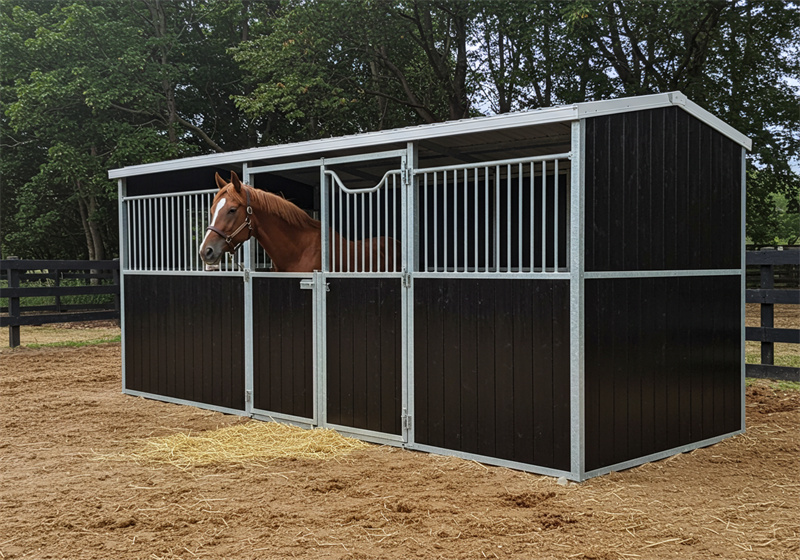
Classifying a portable stable as a depreciating asset instead of a permanent structure accelerates your tax write-offs. Hot-dip galvanized steel and HDPE boards guarantee the unit outlasts that depreciation schedule. No mid-contract replacements.
Map your exact ROI timeline using the full cost breakdown in our sustainable stable design guide.
Frequently Asked Questions
How do portable stables qualify?
Under Australian tax law, portable horse stables are classified as plant and equipment rather than structural improvements. Because they are not permanently affixed to the land, commercial equestrian operators can claim depreciation deductions. This distinction is crucial for farm owners looking to optimize their tax position.
Can I claim an instant write-off?
Yes, if your aggregated turnover is below the ATO threshold, you may be eligible to deduct the full cost of the stable in the same income year. For larger equestrian centers, the stable falls under the temporary full expensing or general small business pool. Purchasing through a B2B supplier ensures you receive the correct tax invoices required for these claims.
Why are they tax-deductible assets?
The Australian Taxation Office recognizes flat-pack and modular stables as removable assets because they do not require permanent foundations. Features like hot-dip galvanized steel frames and modular HDPE boards allow the structure to be relocated without substantial dismantling. This mobility shifts the asset from a capital works deduction to a more advantageous depreciating asset category.
Do flat-pack imports affect tax claims?
Importing flat-pack stables directly from a manufacturer does not negate your eligibility for Australian tax benefits. As long as the imported goods are used for taxable business purposes, the total landed cost remains claimable. Furthermore, the GST paid on the import can usually be claimed back as input tax credits.
How does stable depreciation work?
Portable stables typically have an effective life determined by the ATO, allowing owners to claim a percentage of the cost annually. Using the diminishing value method yields higher deductions in the early years of the stable’s life, which aligns well with the expected 10-year lifespan of galvanized steel frames. Consulting a tax professional familiar with agricultural assets ensures you maximize these specific depreciation schedules.