When you’re sourcing 28mm HDPE horse stall panels for Australia, the expansion behavior in direct sun is not a theoretical concern—it’s the single most common cause of warranty claims after the first summer. You’ve probably seen it: a container of panels that looked fine on paper, but within six months of installation in Queensland or coastal NSW, the boards start bowing outward, rattling in the frame, or popping out of the channels entirely. The brochure said “heavy-duty HDPE” but didn’t mention that without a controlled edge gap, the plastic expands against the steel on a 40°C day and has nowhere to go.
The margin killer here is not the board thickness alone—it’s the missing expansion management. Competitors selling “28mm panels” often neglect to specify the edge gap inside the frame channel. Without a 3-5mm gap allowance, the HDPE expands against the steel and bows outward. That bowing forces the panel out of the frame channel, causing the ‘rattling panel’ complaint that generates 90% of warranty claims. Commercial systems build this gap into the channel design and mark it on the installation sheet. If you’re vetting a new supplier, that gap spec is the first thing to verify before you issue a deposit.
What Defines Commercial HDPE Horse Stall Panels?
A commercial HDPE panel is a system, not a board. The five spec components that determine if your container survives two seasons in Oceania.
You already know that a brochure listing “28mm HDPE panels” tells you almost nothing. The cheap container you’re trying to forget probably had that exact spec on paper, but the installed effective thickness was different. Here is the actual definition of a commercial-grade system, broken into the five components you must specify in your RFQ.
1. Actual Board Thickness (Not Nominal)
You specify “28mm HDPE.” The supplier ships boards that measure 26.5mm at the edges and 27.2mm in the center. This is standard practice in low-cost factories. The spec must state “minimum 28mm actual thickness per ASTM D3763 measurement.” You verify this with a micrometer at the factory before shipment, not after. We reject any panel below 28mm at the center point.
2. Frame Material and Coating Standard
The frame must be minimum Q235B structural steel with a minimum 2.0mm wall thickness. The coating is where the margin killer hides. Standard pre-galvanized tube burns at the weld, leaving bare steel exposed. You require ISO 1461 hot-dip galvanizing, verified by a magnetic coating thickness gauge reading >42μm on random frame sections, including the weld zones and interior tube walls. This is the only coating that survives coastal Queensland salt spray and urine splash.
3. Connector Design Type
The most common failure mode on cheap panels is not the board—it is the connector. Round-pin connectors create micro-movement at every joint, accumulating 3-6 degrees of play per joint. Over a 6-panel run, doors misalign, gaps open between infill panels, and fasteners shear. Commercial systems use 40x40mm square-tube connectors with pin-lock retention. The square profile limits rotation, spreading load evenly across the joint. You test this by fitting a sample connector to three frame sections: lateral play must be below 1.5mm per joint.
4. Hardware Grade
All bolts, lock pins, and fasteners must be grade 8.8 or higher, zinc-plated per ISO 4042. Cheap systems use grade 4.8 hardware that shears under shear load from horse impact. You verify by checking the head marking on a sample bolt before the container is loaded.
5. Installation Tolerance Allowance
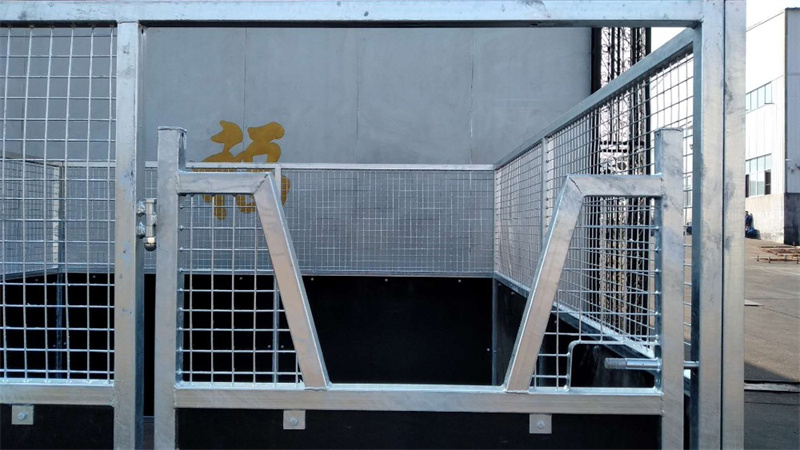
The margin killer for distributors is not the board thickness alone—it is the missing expansion management. Without a 3-5mm gap allowance between the HDPE board and the frame channel, the board expands against the steel on a 40°C day and bows outward. This bowing forces the panel out of the channel, causing the “rattling panel” complaint that generates 90% of warranty claims. You specify that the HDPE infill must be captured a minimum of 15mm in the frame channel with a documented 3-5mm thermal expansion gap on all four edges. This gap must be marked on the installation sheet.
When you specify all five components in your RFQ, you are not buying a board. You are buying a system engineered to survive the Australian environment. Any supplier who cannot provide written verification for each of these five points is selling you the same failed container you are trying to forget.
28mm vs 32mm HDPE Infill: Which Thickness for Your Clients?
A commercial HDPE panel is a system, not a board. Five specs define it: actual thickness, frame coating, connector geometry, hardware grade, and thermal gap allowance. Miss one, and you own the failure.
The Five Spec Components That Define Commercial Grade
You are not buying a plastic board. You are buying a structural infill system that must resist a 500kg kick, 40°C surface temperature, and coastal salt spray simultaneously. The five critical spec components are board thickness (actual, not nominal), frame material and coating standard, connector design type, hardware grade, and installation tolerance allowance. Brochures list thickness. They hide the other four.
Here is the trap: a supplier quotes “28mm HDPE panels.” You assume that means a 28mm board captured in a 30mm frame channel with a 3-5mm expansion gap. What you receive is a 28mm board dropped into an oversized 35mm channel with zero edge retention. The board rattles on day one. The difference between “nominal thickness” and “installed effective thickness” is where margin disappears. You must specify the frame channel capture depth—minimum 15mm per side—and the thermal expansion gap in writing on the RFQ.
28mm vs 32mm HDPE Infill: Matching Thickness to Use Case
28mm boards are the commercial standard for training facilities and private barns where impact frequency is moderate to high but not extreme. Support spacing must not exceed 450mm centers. 32mm boards are the premium spec for high-traffic rental stables, breeding centers, or facilities housing aggressive stallions. The thicker board can span up to 600mm between supports, reducing frame steel cost by roughly 12% on a 12-panel run.
Do not let a supplier sell you 10mm or 15mm boards as “heavy-duty.” Those thicknesses are suitable only for temporary show stalls or wall protection liners. A 10mm board will bow at 40°C and risk shattering under a kick. You can verify this on arrival with a micrometer—measure 10 random boards and reject any below 28mm actual thickness per ASTM D3763.
ISO 1461 Galvanizing: The Only Coating That Survives Coastal Salt
“Hot-dip galvanized” is not a single process. The critical distinction is whether the galvanizing happens before or after fabrication. Pre-galvanized tube (often branded “Duragal” or “ZINCALUME”) is steel sheet coated before it is formed into tube. When you weld that tube, the heat burns off the zinc coating at exactly the structural stress points—the weld joints. Within 18 months in an Australian coastal or humid inland environment, those welds bleed rust.
ISO 1461 hot-dip galvanizing after fabrication immerses the entire welded frame in molten zinc. This coats every surface evenly, including the weld zone, cut edges, and interior tube walls. The target coating thickness is >42μm, verified with a magnetic coating thickness gauge before shipment. ISO 1461 frames add approximately 18-22% to frame cost but carry a 10-year rust-through warranty. Pre-galvanized frames typically offer 1-2 years before rust appears at welds. You can test this yourself: request a coating thickness reading on three random frame sections from the supplier’s inspection report.
UV8 Stabilizers vs Standard UV: Why Australian Sun Destroys Cheap Plastics
Standard UV stabilizers (UV1-UV4) degrade under the UV index 11+ common across Australia. The failure mode is “chalking”—the surface turns to powder as the polymer chains break. UV8 rating means stabilizers are compounded into the entire 28-32mm resin matrix, not sprayed on as a surface coating. At 40°C surface temperature, untreated HDPE loses 40% of its impact resistance within 12 months. UV8-stabilized material retains >90% of its mechanical properties after 2000 hours of accelerated UV testing per ASTM G154.
This is not optional for Oceania. Demand the UV8 stabilizer manufacturer data sheet from the resin supplier—not the panel supplier’s brochure, the actual certificate from the resin compounder. You can perform a field test: wipe a dark-colored board with a white cloth. If you see white powder (chalk), the UV stabilization is inadequate.
Connector Design: Why Square-Tube Joints Prevent System Failure
The most common failure mode on cheap HDPE panels is not the board but the connector design. Round-pin connectors create micro-movement at every joint. Over a 6-panel run, that movement accumulates to 3-6 degrees of play per joint, causing doors to misalign, gaps to open between infill panels, and fastener shear. This is never discussed in brochures because it is a liability to admit.
Commercial systems use 40x40mm square-tube connectors with lock-pin retention. The square profile limits rotation, spreading load evenly across the joint. The spec: lateral play must be <1.5mm per joint. You can test this on arrival by fitting a sample connector to three frame sections and checking for movement. Square-tube connectors increase component cost by 15% but reduce installation time by 35% and eliminate re-tightening visits within the first year.
The Hidden Margin Killer: Thermal Expansion Management
Competitors selling “28mm panels” often neglect to specify the edge gap inside the frame channel. Without a 3-5mm gap allowance, the HDPE expands against the steel on a 40°C day and bows outward. This bowing forces the panel out of the frame channel, causing the “rattling panel” complaint that generates 90% of warranty claims. Commercial systems build this gap into the channel design and mark it on the installation sheet. Your RFQ must state: “HDPE infill fit: captured minimum 15mm in frame channel with 3-5mm thermal expansion gap.”
ISO 1461 Galvanizing: The Frame Coating That Survives Coastal Salt
You are not buying a board. You are buying a system that either protects your margin or destroys it. Here is the spec that stops the madness.
What Defines Commercial HDPE Horse Stall Panels?
A commercial HDPE panel is a system, not a plastic sheet. Five components define it: actual board thickness (not nominal), frame material and coating standard, connector design type, hardware grade, and installation tolerance allowance. A 28mm board captured in a 30mm channel with proper edge gaps performs differently than the same board dropped into an oversized frame without retention. You must specify “installed effective thickness” in your RFQ, not raw board thickness. The difference is the difference between a 10-year installation and a warranty claim at month 8.
28mm vs 32mm HDPE Infill: Which Thickness for Your Clients?
28mm boards are the cost-efficient commercial standard. They work for training facilities and private barns where impact frequency is moderate. 32mm boards are the premium spec for high-traffic rental stables, breeding centers, or facilities housing aggressive stallions. The support spacing requirement is the deciding factor: 28mm boards need support at max 450mm centers; 32mm boards can span up to 600mm. That spacing difference reduces frame steel cost by roughly 12% on a 12-stall layout.
10mm boards—common from low-cost suppliers—are suitable only for temporary show holding. Sell them as “heavy-duty” and you will own the replacement cost within 18 months. We reject panels below 28mm. The math is simple: a 10mm board bows at 40°C and shatters under a 500kg horse kick. Your end-user does not care about the FOB price. They care that the panel holds.
ISO 1461 Galvanizing: The Frame Coating That Survives Coastal Salt
“Hot-dip galvanized after fabrication” (ISO 1461) is the only coating that protects weld zones and cut edges. The immersion process coats the entire article, including internal tube surfaces. Standard pre-galvanized tube—often branded “Duragal” or “ZINCALUME”—burns at the weld. Heat from welding vaporizes the zinc coating at exactly the structural stress points, leaving bare steel exposed. Within 18 months in an Australian coastal or humid inland environment, those welds bleed rust.
Target coating thickness: minimum 42μm per commercial benchmark. Verify this with a magnetic coating thickness gauge on random frame sections during factory inspection. Do not accept a certificate alone. ISO 1461 frames add approximately 18-22% to frame cost but eliminate replacement within 10 years. Pre-galvanized frames carry a 1-2 year rust-through warranty for a reason.
UV8 Stabilizers vs Standard UV: Why Australian Sun Destroys Cheap Plastics
Standard UV stabilizers (UV1-UV4) degrade under the high UV index common across Australia. The molecular breakdown manifests as “chalking”—the surface turns to powder. UV8 rating means stabilizers are compounded into the entire 28-32mm resin matrix, not sprayed on as a surface coating. At 40°C surface temperature, untreated HDPE loses 40% of its impact resistance within 12 months. UV8-stabilized material retains >90% of its mechanical properties after 2000 hours of accelerated UV testing per ASTM G154.
This is not optional. It is a mandatory purchase criterion for Oceania. Demand the UV8 stabilizer manufacturer data sheet from the resin supplier. If they cannot produce it, the board will fail.
Connector Design: How Square-Tube Joints Prevent Panel System Failure
The most common failure mode on cheap HDPE panels is not the board—it is the connector design. Round-pin connectors create micro-movement at every joint. This causes the frame to fatigue at weld points and infill boards to rattle loose within 6-12 months. Commercial systems use 40x40mm square-tube connectors with lock-pin retention because the square profile limits rotation, spreading load evenly across the joint.
The cost equation: square-tube connectors increase connector component cost by 15% but reduce installation time by 35% and eliminate re-tightening visits within the first year. Lateral play should be less than 1.5mm per joint. Test this by fitting a sample connector to three frame sections. If play exceeds 2mm, reject the batch. The connector system is the hidden margin killer. A wobbling frame generates 90% of warranty claims.

UV8 Stabilizers vs Standard UV: Why Australian Sun Destroys Cheap Plastics
You are not buying panels. You are buying a documented spec pack to hand your end customer and your finance partner.
What Defines Commercial HDPE Horse Stall Panels?
A commercial HDPE panel is a system, not a board. Five critical spec components determine whether your container survives two seasons or ten. You must specify installed effective thickness, not raw board thickness. A 28mm board captured in a 30mm channel with proper edge gaps performs completely differently than the same board dropped into an oversized frame without retention.
Demand these five specs in your RFQ:
- Board thickness: Minimum 28mm actual thickness per ASTM D3763 measurement. We reject panels below 28mm.
- Frame coating: ISO 1461 hot-dip galvanizing after fabrication, minimum 42μm coating thickness verified by magnetic gauge on random frame sections.
- Connector design: 40x40mm square steel tube with pin-lock retention. Lateral play must be under 1.5mm per joint.
- Hardware grade: Q235B structural steel, minimum 2.0mm wall thickness.
- Installation tolerance: HDPE infill captured minimum 15mm in frame channel with 3-5mm thermal expansion gap.
The margin killer is not board thickness alone—it is missing expansion management. Without a 3-5mm gap allowance, HDPE expands against steel on a 40°C day and bows outward. That bowing forces panels out of the frame channel, generating the rattling complaint that drives 90% of warranty claims. Commercial systems build this gap into the channel design and mark it on the installation sheet.
28mm vs 32mm HDPE Infill: Which Thickness for Your Clients?
28mm boards are the cost-efficient commercial standard for training facilities and private barns where impact frequency is moderate. Support spacing must be at maximum 450mm centers. 32mm boards are the premium spec for high-traffic rental stables, breeding centers, or facilities housing aggressive stallions. They can span up to 600mm between supports.
10mm boards from low-cost suppliers are suitable only for temporary show holding. Selling them as heavy-duty will destroy your reputation within one season. A 10mm board bows at 40°C and risks shattering under a 500kg horse kick. Do not let a supplier convince you otherwise.
ISO 1461 Galvanizing: The Frame Coating That Survives Coastal Salt
Hot-dip galvanizing after fabrication per ISO 1461 is the only coating that protects weld zones and cut edges. The immersion process coats the entire article, including internal tube surfaces. Pre-galvanized tube—often branded Duragal or ZINCALUME—burns off at weld points, leaving bare steel exposed to rust from urine splash and salt spray.
Within 18 months in an Australian coastal or humid inland environment, those welds bleed rust. ISO 1461 galvanizing carries a 10-year rust-through warranty. Pre-galvanized typically offers only 1-2 years. The cost difference is 18-22% on the frame. The replacement cost difference is 100% of your margin.
Verify coating thickness with a magnetic gauge at the factory. Target 42μm minimum. Reject anything below 35μm.
UV8 Stabilizers vs Standard UV: Why Australian Sun Destroys Cheap Plastics
Standard UV stabilizers (UV1-UV4) degrade under Australia’s UV index of 11+. The surface turns to powder—chalking—within 12 months. UV8 rating means stabilizers are compounded into the entire resin matrix, not sprayed on as a surface coating.
At 40°C surface temperature, untreated HDPE loses 40% of its impact resistance within 12 months. UV8-stabilized material retains over 90% of mechanical properties after 2000 hours of accelerated UV testing per ASTM G154. This is mandatory for Oceania, not optional.
Test upon container arrival: wipe a dark-colored board with a white cloth. Chalk residue indicates inadequate UV stabilization. Reject the container.
Connector Design: How Square-Tube Joints Prevent Panel System Failure
The most common failure mode on cheap HDPE panels is not the board but the connector. Round-pin connectors create micro-movement at every joint, causing frames to fatigue at weld points and infill boards to rattle loose within 6-12 months. Commercial systems use 40x40mm square-tube connectors because the square profile limits rotation, spreading load evenly across the joint.
Loose round-pin connectors allow 3-6 degrees of movement per joint. Over a 6-panel run, that movement accumulates, causing doors to misalign, gaps to open between infill panels, and fastener shear. Square-tube connectors increase component cost by 15% but reduce installation time by 35% and eliminate re-tightening visits within the first year.
Test at the factory: fit a sample connector to three frame sections. Check for lateral play. Exceeding 2mm per joint indicates poor manufacturing tolerance. Reject the batch.

Connector Design: How Square-Tube Joints Prevent Panel System Failure
The margin killer for distributors is not the board thickness alone—it’s the missing expansion management. Without a 3-5mm gap, HDPE bows at 40°C and generates 90% of warranty claims.
What Defines Commercial HDPE Horse Stall Panels?
A commercial HDPE panel is a system, not just a board. You are buying five interdependent spec components: actual board thickness (not nominal), frame material and coating standard, connector design type, hardware grade, and installation tolerance allowance. The brochure will list “28mm HDPE” but the installed effective thickness depends on how that board is captured in the frame channel. A 28mm board dropped into a 32mm channel without retention clips performs like a 15mm board within six months of thermal cycling.
Purchasing agents must specify “installed effective thickness” in the RFQ. This means the board must be captured a minimum of 15mm into the frame channel on all four sides, with a 3-5mm thermal expansion gap engineered into the channel depth. Without that gap, the HDPE expands against the steel on a 40°C day and bows outward. That bowing forces the panel out of the frame channel, causing the “rattling panel” complaint that generates 90% of warranty claims. Commercial systems build this gap into the channel design and mark it on the installation sheet.
28mm vs 32mm HDPE Infill: Which Thickness for Your Clients?
28mm boards are the cost-efficient commercial standard. Suitable for training facilities and private barns where impact frequency is moderate to high but not extreme. Support spacing requirement: maximum 450mm centers. 32mm boards are the premium spec for high-traffic rental stables, breeding centers, or facilities housing aggressive stallions. These can span up to 600mm between supports, reducing frame steel cost by approximately 12% per linear meter.
10mm boards are not commercial-grade. They are suitable only for temporary show holding and will fail reputationally if sold as “heavy-duty.” A 10mm board will bow at 40°C and risk shattering under a 500kg horse kick. You can verify this at container arrival: use a micrometer on 10 random boards. Reject any shipment where average thickness measures below 28mm. This is your first line of defense against spec slippage.
ISO 1461 Galvanizing: The Frame Coating That Survives Coastal Salt
“Hot-dip galvanized after fabrication” per ISO 1461 is the only coating that protects weld zones and cut edges. The immersion process coats the entire article, including internal tube surfaces. Contrast this with pre-galvanized tube—often branded “Duragal” or “ZINCALUME”—which burns off at weld points. Heat from welding vaporizes the zinc coating at exactly the structural stress points, leaving bare steel exposed. Within 18 months in an Australian coastal or humid inland environment, those welds bleed rust.
The target coating thickness is >42μm, verified with a magnetic coating thickness gauge on random frame sections before shipment. ISO 1461 frames add approximately 18-22% to frame cost but eliminate replacement within 10 years. Pre-galvanized typically carries only a 1-2 year warranty against rust-through. You can test this yourself: request a 100mm sample of the frame tube from your supplier. Weld a scrap piece to it, then cut the weld cross-section. If the zinc layer is missing at the weld zone, you have pre-galvanized material. Reject the container.
UV8 Stabilizers vs Standard UV: Why Australian Sun Destroys Cheap Plastics
Standard UV stabilizers (UV1-UV4) degrade under the high UV index of 11+ common across Australia. This causes molecular breakdown—”chalking” where the surface turns to powder. UV8 rating means stabilizers are compounded into the entire 28-32mm resin matrix, not sprayed on as a surface coating. At 40°C surface temperature, untreated HDPE loses 40% of its impact resistance within 12 months. UV8-stabilized material retains >90% of its mechanical properties after 2000 hours of accelerated UV testing per ASTM G154.
This is not optional. It is a mandatory purchase criterion for Oceania. You can verify UV stabilization at container arrival: wipe a dark-colored board with a white cloth. If chalk transfers to the cloth, the board lacks adequate UV stabilization. Reject the shipment. The resin supplier’s data sheet for UV8 additive must be included with the packing documents.
Connector Design: How Square-Tube Joints Prevent Panel System Failure
The most common failure mode on “cheap HDPE panels” is not the board but the connector design. Round-pin connectors create micro-movement at every joint, allowing 3-6 degrees of play per joint. Over a 6-panel run, that movement accumulates, causing doors to misalign, gaps to open between infill panels, and fastener shear. This is never discussed in brochures because it is a liability to admit.
Commercial systems use 40x40mm square-tube connectors with lock-pin retention. The square profile limits rotation, spreading load evenly across the joint. Square-tube connectors increase component cost by 15% but reduce installation time by 35% and eliminate re-tightening visits within the first year. You can verify connector quality at the factory: fit a sample connector to three frame sections and check for lateral play. Exceeding 1.5mm per joint indicates poor manufacturing tolerance. Reject the batch.
Conclusion
You now have the spec sheet to stop the cycle of failed containers. Insist on 28mm minimum UV8-stabilized HDPE, ISO 1461 hot-dip galvanized frames verified by magnetic gauge, and 40x40mm square-tube connectors that eliminate joint wobble. These three specs—board thickness, coating standard, and connector geometry—are the difference between a 10-year asset and an 18-month liability that erodes your margin and reputation.
Take this checklist to your next supplier meeting or factory inspection. Demand the coating thickness report before you issue a deposit. When you are ready to validate a system against these commercial-grade benchmarks, review our DB-3H model specs or request a factory inspection checklist with your purchase order.
Frequently Asked Questions
Can 10mm HDPE boards be used for commercial horse stables?
No, 10mm HDPE boards are not suitable for commercial horse stables in Oceania. Commercial-grade systems require a minimum 28mm board thickness to withstand the physical impact of horses and the thermal stress of the Australian sun without warping or cracking. Using 10mm boards will lead to rapid failure, warranty claims, and brand damage for distributors. Specify 28mm or 32mm boards for any commercial stable project.
What is the warranty period for commercial HDPE stable panels?
A standard commercial warranty for a complete HDPE panel system typically covers the hot-dip galvanized steel frame for 10 years and the HDPE infill for 5-7 years against manufacturing defects. However, the exact period depends on the specific supplier and whether the system uses ISO 1461 galvanizing and UV-stabilized resin. Always get the warranty terms in writing and confirm they cover thermal expansion issues specific to the AU climate. Verify the warranty explicitly covers UV degradation and thermal expansion.
How much do HDPE horse panel systems cost for Oceania distributors?
Pricing for a complete commercial-grade HDPE panel system varies significantly based on thickness, frame coating, and connector design, but expect a 30-40% premium over cheap entry-level systems. A 28mm board system with full ISO 1461 galvanized frames typically lands in the range of AUD $180-$280 per linear meter for a standard 3m x 3m stall, depending on volume and customization. The lower upfront cost of thin panels is quickly erased by warranty claims and brand damage within 18-24 months. Request a landed cost quote for your specific port and volume.
What certifications should I verify before placing a bulk order?
Before placing a bulk order, verify that the HDPE boards have a UV8 stabilizer rating and the steel frame has an ISO 1461 hot-dip galvanized coating certificate (>42 microns). You should also request a material test report (MTR) for the HDPE resin to confirm it’s virgin material, not regrind, which is prone to brittleness. These certifications are your only protection against a container of panels that fails after one summer. Ask for the UV8 and ISO 1461 certificates before signing the PO.
How do I test infill panel quality upon container arrival?
Upon container arrival, immediately perform a simple heat deflection test by placing a sample board in direct sun for 2 hours and measuring any bowing or warping against a straight edge. Also, check the board’s edge for a consistent, non-porous surface and weigh a sample to verify it matches the specified density of virgin HDPE. If the board feels light or shows surface pitting, it is likely regrind material that will fail prematurely. Reject any boards that warp more than 3mm after the heat test.