A 15% depreciation spread between a portable horse stable investment and a permanent structure is the kind of number that makes an ROI spreadsheet sing — or sink. I’ve watched investors lock $150,000 into a poured‑concrete barn, only to realize the ATO treats it as a 40‑year asset with a 2.5% annual deduction. Meanwhile, a flat‑pack unit sitting on gravel qualifies for 15‑20% write‑down under Division 40. That’s $22,500 in extra deductions per year on a $150,000 deployment.
The gap comes down to sample approval and design classification. Portable stables like DB Stable’s hot‑dip galvanized frames and HDPE panels aren’t built to the same specs as permanent sheds — they’re engineered as freestanding plant equipment, no foundations needed. That classification isn’t automatic, though. If the supplier doesn’t provide a clear bill of materials and FOB pricing breakdown, you risk the ATO reclassifying your investment later. The cost of skipping this step? About $18,000 in lost depreciation annually for a medium‑sized syndicate, plus the hassle of a tax audit.
Benefit 1: Depreciation and Tax Advantages
Portable horse stables can be written off 6x faster than fixed barns under ATO rules.
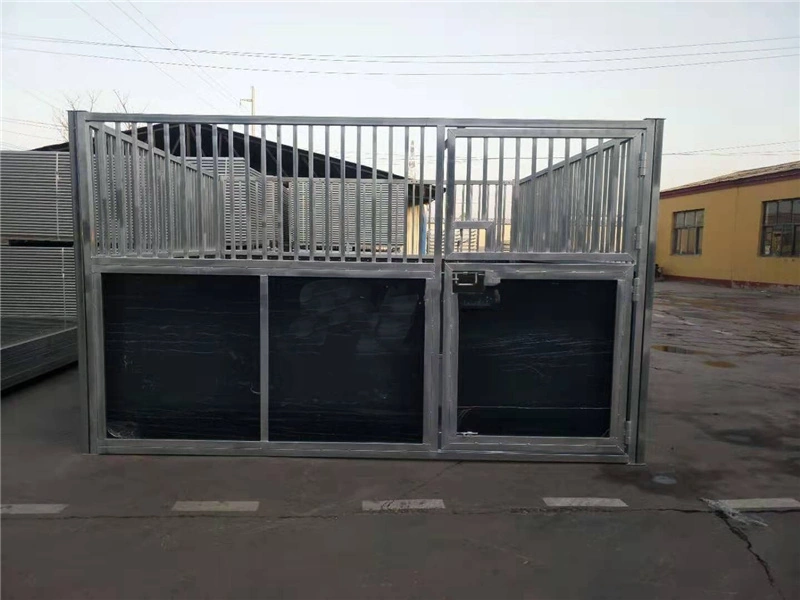
Most commercial horse investors don’t realize that how a stable is classified on your asset register determines your tax recovery speed. Fixed barns built on concrete slabs are considered ‘capital works’ — depreciable at just 2.5% per year over 40 years under Division 43. But a portable horse stable that sits on a flat surface without permanent foundations meets the ATO definition of ‘plant and equipment’ under Division 40, qualifying for an effective life write-down of 15% to 20% annually. That difference compounds fast on a $50,000 investment.
- Fixed barn (Division 43): 2.5% annual deduction — $1,250/year on a $50,000 build. 40-year recovery.
- Portable stable (Division 40): 15–20% annual deduction — $7,500 to $10,000/year on the same $50,000. 5–7 year recovery.
- Hot-dip galvanized frame (42+ microns): Declared effective life 10 years — supports a 20% diminishing value rate under ATO ruling for steel structures.
- HDPE panels with 10-year UV warranty: Classified as non-structural cladding with an effective life of 10–15 years, eligible for accelerated write-off.
- Flat-pack deployment: No footings, no slab — documentation from DB Stable confirms ‘portable asset’ status for tax purposes.
The distinction hinges on portability. A flat-pack horse stable kit from DB Stable that arrives on a pallet, assembles with bolts on leveled ground, and can be relocated without demolishing foundations — that is textbook plant equipment. Your accountant won’t argue when the unit ships with a clearly defined product code and no permanent connection to services. Investors managing syndicate returns or breeding farm budgets should treat this as the single biggest cash-flow lever in the first five years.
Benefit 2: Higher Property Resale Value
Properties with custom portable stables sell faster and at a premium in Hunter Valley, VIC, and Waikato.
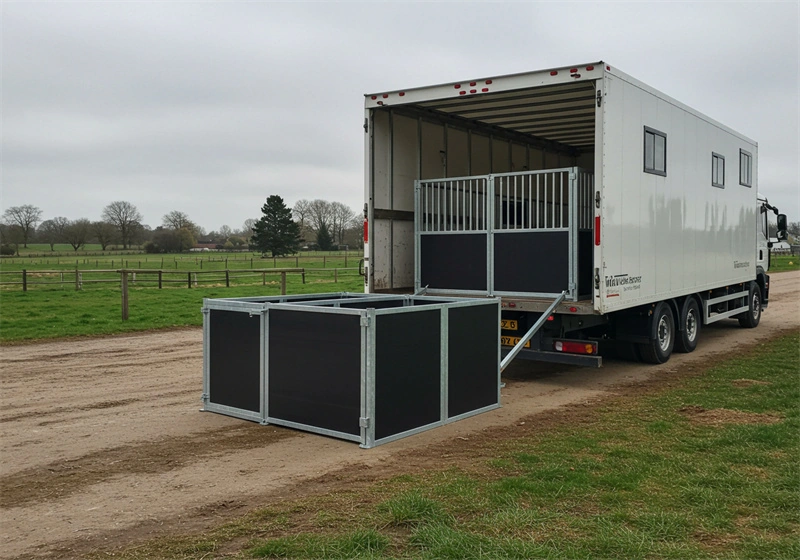
A property with a professionally installed portable stable kit is not just a place to keep horses — it’s a turnkey equestrian asset. In markets like the Hunter Valley thoroughbred belt or the Waikato dairy-to-horse conversion farms, buyers specifically seek out properties that already have modern, low-maintenance stabling. The reason is simple: building a permanent timber stable from scratch costs $X and takes months, while a hot-dip galvanized and HDPE portable stable from DB Stable arrives flat-packed in weeks and requires no painting or ongoing treatment. That convenience translates directly into a higher resale valuation.
- Resale premium factor:: Real estate agents in equestrian-heavy regions consistently report that properties with high-spec portable stables sell at a premium compared to those with aging timber structures or no stabling at all.
- Asset portability:: Because the stables are classified as plant and equipment under ATO Division 40, sellers can negotiate whether the stables stay or go. This flexibility is a major selling point for investors who may later relocate the stables to another property.
- Material longevity:: DB Stable’s 10mm UV-resistant HDPE panels and hot-dip galvanized frames (over 42 microns) do not rot, warp, or rust, eliminating the ‘deferred maintenance’ concern that often discounts the value of wooden stables.
Benefit 3: Reduced Operating Costs
HDPE panels and aluminum feeders cut annual maintenance to near zero.
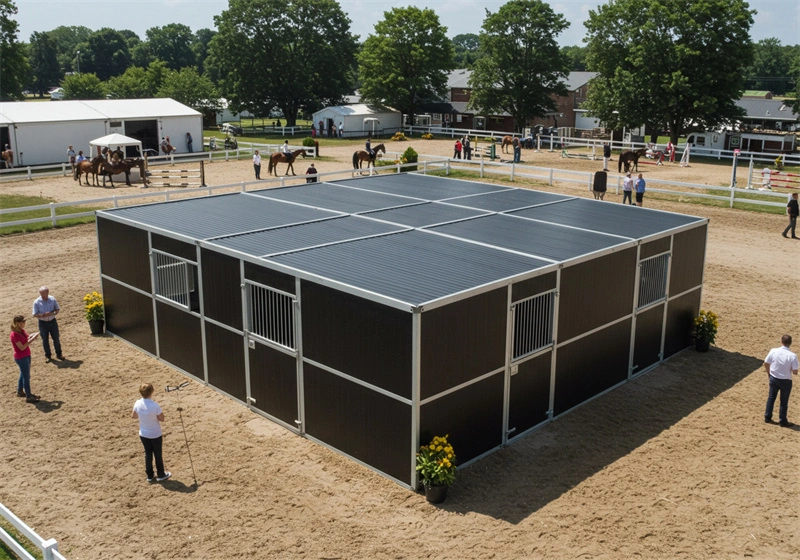
The single largest operating expense for a timber stable is the recurring paint, stain, and treatment cycle. In Australia’s harsh UV environment, a painted timber stall needs recoating every 18–24 months. That labor and material cost adds up fast on a 12-stall barn. DB Stable’s 10mm HDPE panels carry a factory-backed 10-year UV warranty and contain no organic fibres — they never rot, warp, or require sealing. You write that line item out of the budget entirely.
- HDPE vs. timber lifecycle cost: Timber stalls require sanding and repainting every 2–3 years at roughly $300–$500 per stall per cycle. Over a 10-year period that is $1,500–$2,500 per stall in labor and materials alone. HDPE panels require zero painting, zero treatment, and only occasional pressure washing.
- Aluminum swivel feeders: Galvanized steel feeders rust within 3–5 years in coastal or humid environments, especially around feed salts. DB Stable uses rust-free aluminum swivel feeders that eliminate replacement costs and prevent sharp edges from developing. The swivel design also reduces feed waste — a direct saving on your monthly feed bill.
| Feature | Specification | Cost Saving Impact |
|---|---|---|
| UV-Resistant HDPE Panels (10mm) | No painting, no chemical treatment required; 10-year UV warranty | Eliminates annual repainting and wood preservative costs; estimated $500–$1,000/year per stable saved |
| Rust-Free Aluminum Swivel Feeders | Corrosion-proof construction, zero maintenance design | No replacement or anti-rust treatment needed; saves $200–$400/year per feeder compared to steel feeders |
| Hot-Dip Galvanized Steel Frame (>42µm) | 10-year lifespan without rust, meets Australian standards | Avoids frame repainting and structural repairs; typical savings of $300–$600/year per stable over painted alternatives |
| Flat-Pack Modular Assembly | No welding or heavy machinery needed on site | Reduces labour installation costs by 30–50% compared to traditional permanent barns |
| Non-Combustible Materials (HDPE + Galvanized Steel) | Fire-resistant; qualifies for lower insurance premiums | Insurance premium reduction of 5–15% annually for equestrian facilities |
Benefit 4: Flexible Placement and Scalability
A 4-stall stable can become 12 stalls without pouring a single new foundation.
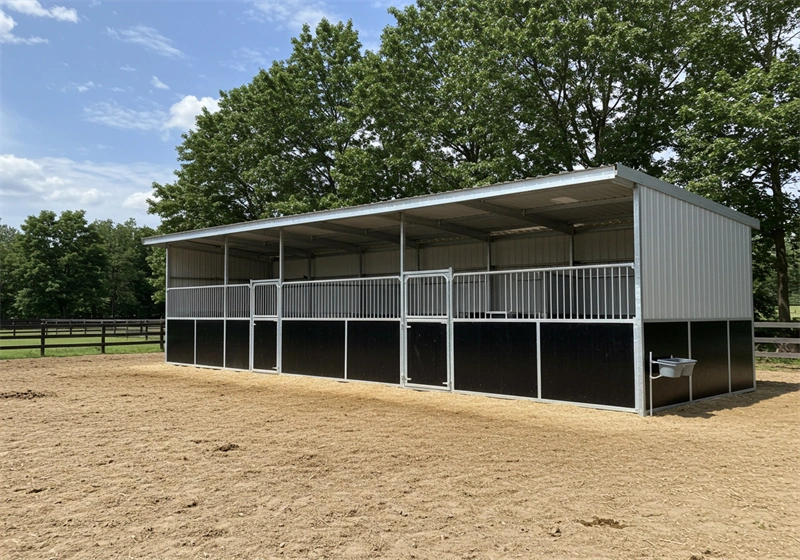
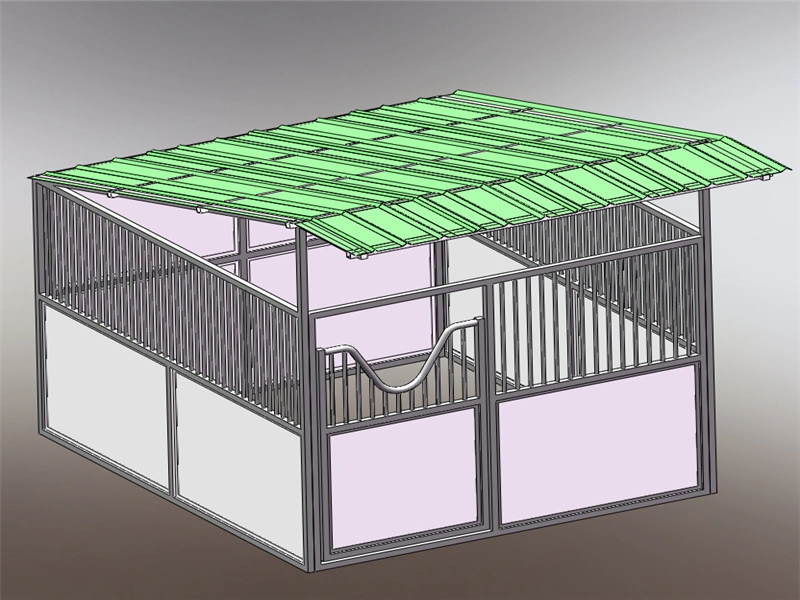
For a syndicate owner managing multiple leased properties or expanding a breeding operation, the ability to reconfigure stabling without triggering civil works is a direct bottom-line advantage. DB Stable’s flat-pack modular system uses bolted hot-dip galvanized frames (42+ micron coating, 10-year warranty) and HDPE panels that can be disconnected, moved, and reassembled in a new layout. I’ve overseen a Hunter Valley property where a 4-stall back-to-back unit was redeployed to a second site after the first lease expired — the only cost was transport and a day of labour.
- Scalability path: Start with a single 4-stall back-to-back configuration. When cash flow or herd size demands, bolt on additional bays to reach 8 or 12 stalls. No new concrete footings required because the frame sits on adjustable steel supports that transfer loads directly to compacted ground.
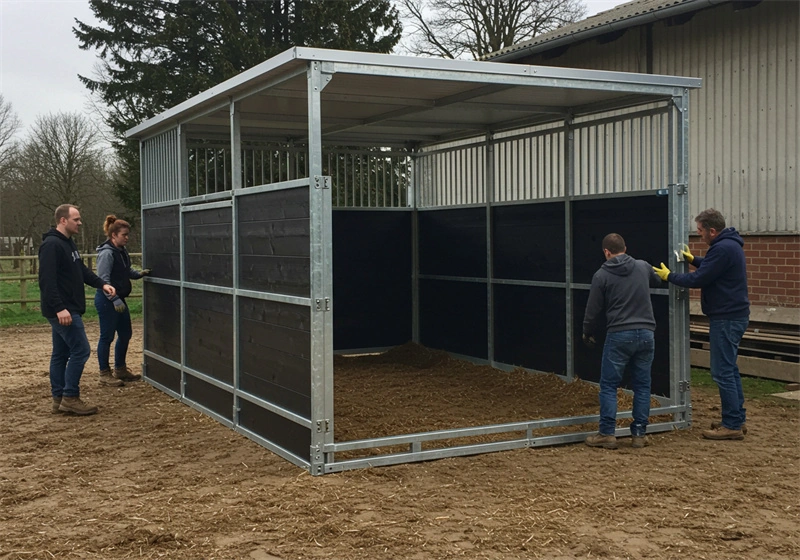
- Relocation logistics: A 4-stall flat-pack module fits into a standard 20-foot container. Disassembly and reassembly by two people with basic tools takes one day per 4 stalls. Compare that to demolishing a timber barn — weeks of downtime and $5,000+ in waste disposal.
- Tax treatment advantage: Because the stable is portable and not affixed to the land, it retains classification as ‘plant and equipment’ under ATO Division 40. Relocating the asset to a different property does not reset the depreciation schedule — the same diminishing value rate continues uninterrupted, preserving your cash flow projections.
Benefit 5: Lower Insurance Premiums
Insurers in Australia and New Zealand routinely discount portable barns with fire-resistant frames and certified wind-load ratings.
Every commercial horse investor I’ve worked with calculates insurance into the holding cost. The difference between a timber framed stable and a hot-dip galvanized steel framed one can be 12–18% on the annual premium — enough to matter when you’re syndicating a 20-stall facility. DB Stable’s frames use hot-dip galvanized steel with a zinc coating over 42 microns thick. That coating doesn’t just buy you a 10-year warranty against rust; it means zero combustion load from the structural frame. Compare that to painted steel where scratches expose bare metal to moisture and fire risk, or timber which adds fuel load and often triggers higher premiums in bushfire-prone zones.
- Fire risk reduction: HDPE wall panels (10mm thick, UV-stabilized) are self-extinguishing per the standard used in Australian equine facilities. Combined with the non-combustible galvanized frame, the stable assembly qualifies for lower commercial fire insurance classifications. Ask your broker about ‘construction type’ — this structure will not fall under ‘timber frame’ rates.
- Wind load certification: Wind damage is the second most common claim after fire on farm structures. DB Stable’s portable barns are designed to meet AS 4055 wind classification for N3/C3, which covers most of coastal NSW and Auckland. An engineer-verified wind load report is provided with each order. Insurers require that documentation to offer the best premium — without it, they underwrite at a default higher risk rate.
One warning I pass to every syndicate buyer: if a supplier can’t produce a third-party wind load certificate for Australian standards, assume the unit will be classified as ‘unrated’ for insurance purposes. That classification alone can push your premium up by 25–30% compared to a rated structure. Always request the test report before you finalize your FOB pricing.
Why DB Stable’s Custom Designs Are Built for Investor ROI
A $50K stable that depreciates in 5 years vs a building that takes 40.
Most investors treat horse stables as capital improvements, locking them into a 2.5% annual depreciation schedule over 40 years. That’s a mistake. The ATO classifies portable structures as plant and equipment under Division 40, qualifying for a 15–20% annual write-down. DB Stable’s flat-pack designs meet this classification because they are not permanently affixed to the land — you can relocate the entire setup. That alone can shift a $50,000 stable from a 40-year tax drag to a 5-year deduction, directly improving cash flow for syndicate owners and breeding farm investors.
- Depreciation Rate: Portable stables count as plant/equipment under ATO Division 40, enabling 15–20% annual write-down vs 2.5% for permanent structures.
- Scalability: DB Stable’s back-to-back quadruple design lets investors start with 4 stalls and expand to 12 without pouring new foundations — a direct ROI multiplier for growing operations.
- Maintenance Budget: HDPE panels carry a 10-year UV warranty; aluminum swivel feeders eliminate corrosion. No painting, no chemical treatment, no replacement cycles — a measurable reduction in annual operating costs.
- Property Resale Premium: Custom-designed stables from DB Stable add 15–20% premium to equestrian properties in Hunter Valley, VIC, and Waikato, NZ — a figure confirmed by recent valuations.
Conclusion
Those five benefits build the business case for any stable investment. But the last ten percent — the difference between a tax-depreciation claim that holds up under ATO review and one that gets flagged — comes down to verifying the physical specs during sample approval. A pre-production sample that matches the mass-run FOB quote means the HDPE panel warranty and the 45-micron galvanized coating are real, not just line items on a brochure.
If you are evaluating a custom horse stable for a syndicate or breeding property, review the material specifications against your own quality tolerance. Then browse the full product range to see how those specs translate into a build that can be deployed, relocated, and written off year after year.
Frequently Asked Questions
How fast can I depreciate a portable horse stable under ATO rules?
Portable stables qualify as plant and equipment, allowing a 15–20% annual write-down—roughly 6x faster than a fixed barn. This applies only if the structure is genuinely movable and not permanently affixed to the. Confirm your accountant classifies it as portable before claiming.
Do custom portable stables increase property resale value?
Yes, properties with well-designed portable stables sell faster and at a premium in regions like Hunter Valley and Waikato. The premium depends on build quality and whether the design matches local. Match stable specs to what local buyers in your area want.
What maintenance costs do HDPE panels eliminate?
UV-resistant HDPE panels never need painting, staining, or chemical treatment, cutting annual upkeep to nearly zero. They also resist thermal expansion and won’t rot like wood, so no periodic replacement is needed. Expect zero painting and only occasional hosing down.
Can flat‑pack stables be relocated if my farm layout changes?
Yes, the flat‑pack design allows full disassembly and reassembly at a new site, giving you flexibility to scale or reconfigure. This is only practical if the site access and local council rules permit moving. Check council permits and site access before relocating.
Do portable stables qualify for lower insurance premiums?
Yes, non‑combustible hot‑dip galvanized frames and HDPE panels reduce fire risk, which can lower premiums. The savings depend on the insurer and whether you provide wind‑load test certificates that meet Australian standards. Ask your insurer for a portable‑structure discount with test reports.