Galvanized horse stable rust prevention comes down to one thing that most buyers overlook: the weld joints. A professional stable builder in Queensland caught rust on a 12-stall frame last month, three years after installation. The welds were the first to go. The owner assumed hot-dip galvanizing made the frame bulletproof. It didn’t.
In a typical enclosed stable, ammonia levels from horse urine can exceed 25 ppm. That accelerates zinc corrosion by three times. On a weld, where the galvanized layer is already 40% thinner than the flat sheet, the failure happens fast. The builder told me the rust appeared as a faint orange bloom around the gusset plates. Within six months, it was flaking. The buyer had to order replacement sections from a factory that still had the original tooling. That delay cost him two weeks of stall occupancy.
The repair protocol is straightforward once you know what to look for. The fingernail test tells you whether a scratch is cosmetic or exposing steel. If your nail catches, the zinc is gone and the steel needs protection. The step that separates a professional builder from an amateur isn’t the initial galvanizing spec. It’s the post-weld coating that most factories skip. The factory that applies a two-part zinc-rich paint on every weld before shipping is the one that delivers a 25-year frame. That’s the detail that matters.
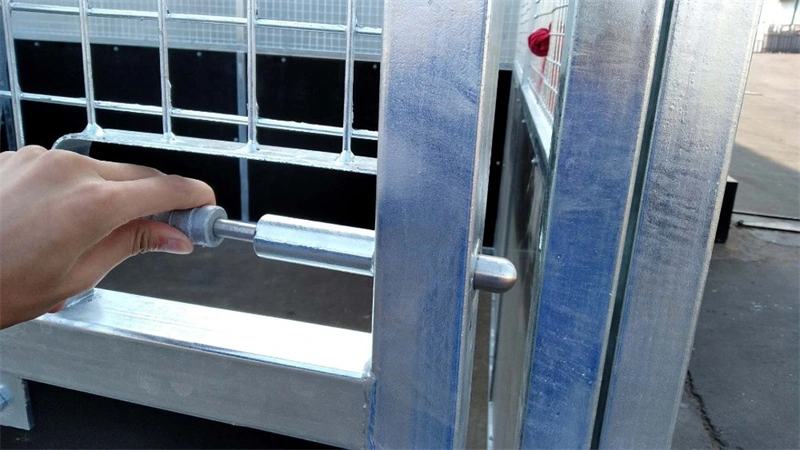
Why Galvanized Steel Rusts in Horse Stables – The Ammonia Factor
Ammonia at 25 ppm triples corrosion rate.
Horse urine releases ammonia gas. Inside an enclosed stable, concentrations routinely exceed 25 ppm. Ammonia attacks the zinc oxide layer on galvanized steel, turning it water‑soluble and exposing the base steel. The corrosion rate triples compared to a normal outdoor environment. DB Stable’s galvanizing averages 60 microns — one‑third thicker than the industry standard of 45 microns — giving you a bigger sacrificial buffer before the steel is reached.
- Pressure washers over 2 000 psi: Blast away the zinc layer in seconds. Safe cleaning limit is 1 500 psi at 30 cm distance. Higher pressure exposes bare steel, especially at edges and welds.
- Mechanical kicks and scrapes: Horses kick walls. A 40‑micron‑deep scratch can penetrate a standard 45‑micron coating. The fingernail test: if your nail catches in a scratch, the steel is exposed and needs repair.
- Weld points — the weakest link: Hot‑dip galvanizing leaves welds 40 % thinner than flat surfaces. That’s where rust always starts. DB Stable applies a two‑part zinc‑rich paint on every weld before shipping — a step most Chinese exporters skip.
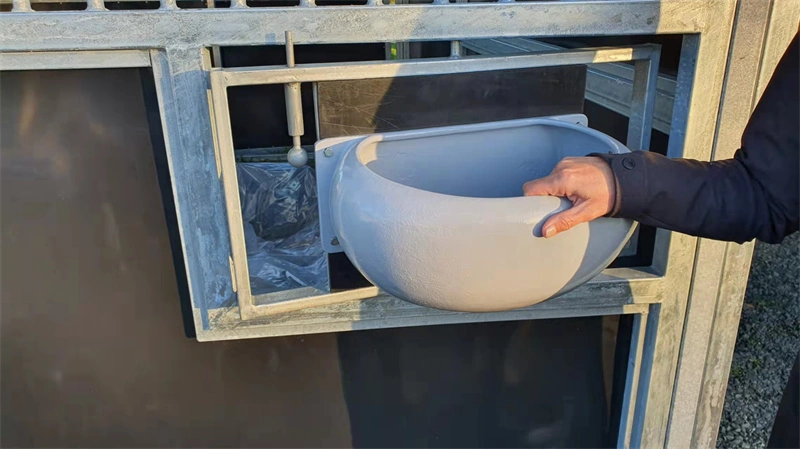
How to Inspect Your Stable Frame for Rust Spots
The fingernail test catches 90% of early rust before it spreads.
Most rust on horse stables starts at welds, not flat sheets. The hot-dip galvanizing process leaves a thinner zinc layer at joints — weld areas see about 40% less coating than flat surfaces. That’s why the gusset plates and beam connections are the first to show signs of corrosion. The fingernail test is a simple on-site method: run your nail across a discolored spot. If your nail catches, the zinc is breached and the steel is exposed. That spot needs immediate repair. DB Stable applies an additional two-part zinc-rich paint on every weld before shipping, a step most Chinese exporters skip.
- Weld points: Check gusset plates and beam connections. These are the primary rust initiation points due to thinner galvanizing. Use the fingernail test to distinguish surface scuffs from deep gouges.
- Bottom edges: Water pools at the base of frames and where HDPE panels meet steel. Trapped debris accelerates corrosion. Use a magnet: surface rust (brown) is non-magnetic; deep pitting (red) indicates steel corrosion that is magnetic.
- Bolt holes: Moisture collects in bolt holes and around fasteners. Inspect for red rust or any sign of bleeding. If present, remove the bolt, clean, and apply zinc-rich cold galvanizing spray before reinserting.
- Pressure washer damage: Pressure washers above 2000 psi strip zinc. If you see a clean, shiny metallic area next to a dull zinc coating, that’s mechanical damage. Stick to 1500 psi at 30cm distance minimum.
Inspection frequency depends on environment. For stables in coastal Australia or New Zealand, where salt spray and humidity are constant, inspect every 6 months. Inland or dry areas can get away with annual checks. But the biggest wildcard is ammonia. Horse urine releases ammonia gas that can exceed 25 ppm in enclosed stables, accelerating zinc corrosion by three times. If your stables are heavily stocked with poor ventilation, consider quarterly inspections. Annual spot repair can extend frame life to 25 years, but you need to catch the rust before it pits.
Repairing Surface Rust on Galvanized Frames
Weld points rust first.
Surface rust on hot-dip galvanized frames is almost always cosmetic — unless it’s at a weld. Weld areas receive roughly 40% less zinc during the dipping process because the molten metal drains differently at joints. That makes them the initiation point for every corrosion problem seen across dozens of stable inspections in Australia and New Zealand.
- Step 1: Assess with the fingernail test: Run your fingernail across the rust spot. If your nail doesn’t catch, the zinc layer is still intact — clean and leave it. If your nail catches, the steel is exposed and needs immediate repair.
- Step 2: Remove loose material: Use a stainless steel wire brush or 80-grit sandpaper to remove loose rust and flaking zinc. Do not use a power grinder — it removes too much of the surrounding galvanizing and creates a larger weak zone.
- Step 3: Apply a phosphoric acid rust converter: Products like Jenolite or Fertan convert remaining iron oxide into a stable black layer. Brush it on, let it dry completely (typically 2–4 hours depending on humidity). This step is non-negotiable if you want the repair to hold beyond one season.
- Step 4: Coat with cold galvanizing spray (85%+ zinc): Use a zinc-rich compound like Zinga or CRC Cold Galvanize. Minimum zinc content must be 85% by weight in the dry film — check the label. Apply two thin coats, allowing 30 minutes between coats. For pitted areas, sand lightly between coats for adhesion.
- Step 5: Seal with matching topcoat (optional): If colour match matters, apply an epoxy-based topcoat designed for galvanized substrates within 24 hours of the zinc coat. Standard alkyd paints will peel within months — don’t use them.

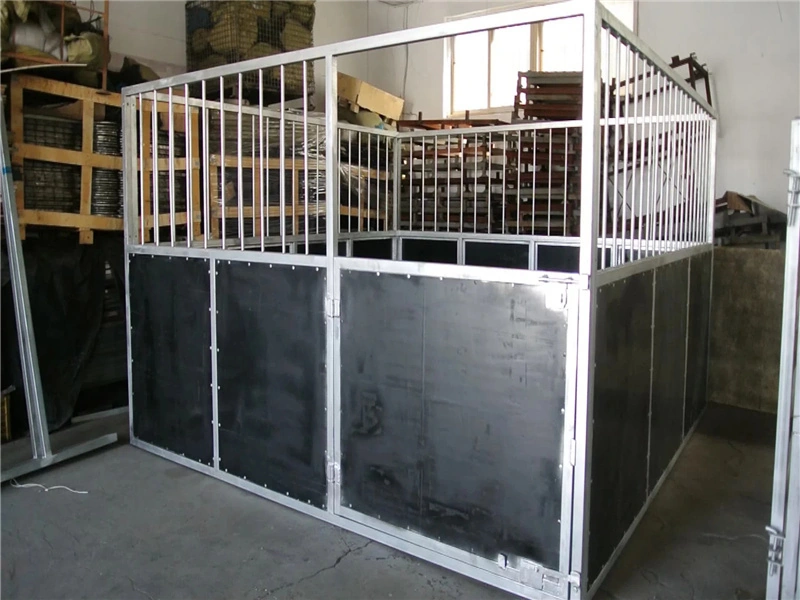
How DB Stable’s Factory Process Prevents Rust
Weld points fail first — DB Stable coats every one before shipping.
Every steel component in a DB Stable frame goes through a triple-cleaning line before it ever touches molten zinc. Degreasing removes mill oils. Acid pickling strips mill scale. Fluxing leaves a protective chloride layer that prevents oxidation before the dip. Only then does the part enter the 450°C zinc bath. This isn’t a spray-on coating — it’s a metallurgical alloy layer that bonds to the steel at the molecular level. DB Stable provides a galvanizing certificate with every export order showing measured thickness distribution across multiple points on the frame, not just a single reading from a flat section.
- DB Stable average thickness: 60 microns across the frame, with >90% of measured points falling between 55–70 microns. This exceeds the industry standard of 45 microns by 33%.
- Chinese competitor average: 40–50 microns, with frequent thin spots at welds and corners. Those gaps are where rust starts within 3–5 years in an ammonia environment.
- Weld zone vulnerability: Even on a well-galvanized frame, weld areas see roughly 40% less zinc than flat surfaces because the molten zinc drains differently at joints. That makes every weld a potential initiation point.
- Galvanizing certificate scope: DB Stable measures thickness at five locations per frame section: mid-span, both ends, and two weld-adjacent points. The certificate shows the minimum, maximum, and average readings.
- Post-weld coating system: Two-part epoxy zinc-rich primer applied by brush to each weld seam. Coverage is verified visually before the frame leaves the factory floor. This step is documented in the production log, not just claimed in marketing.
This is where DB Stable’s process diverges from most Chinese exporters. After the hot-dip galvanizing is complete and the frame is assembled, every weld point gets a manual inspection followed by a two-part zinc-rich paint application. The paint contains minimum 85% zinc dust by dry film weight — the same class of coating used on offshore wind turbine structures. Most factories skip this step entirely because it adds labor cost and slows production. In practice, it means a DB Stable frame arriving at a site in coastal Queensland or the South Island of New Zealand has an extra barrier at exactly the points where ammonia corrosion and mechanical damage concentrate.
Conclusion
Skip the annual inspection, and the ammonia in your stables will accelerate corrosion at 3x the normal rate. Weld points, already 40% thinner, rust through first. The quality tolerance on galvanizing thickness — 60 microns vs. the industry 45 — is the difference between a 10-year and 15-year lifespan. A frame that could have lasted 25 years becomes a replacement problem in 8.
The difference between a frame that lasts 8 years and one that lasts 25 is a 30-minute inspection and a can of zinc-rich paint. If you’re sourcing new stables, request a sample coupon to approve the galvanizing thickness and post-weld coating before you commit. Compare it against your current supplier’s spec — the weld-point protection alone tells you which factory cut corners.
Frequently Asked Questions
Can I paint over rusted galvanized steel?
Yes, but only after removing loose rust and applying a zinc-rich primer designed for galvanized surfaces. Without proper preparation, standard paint will peel quickly in the ammonia-rich stable environment. Use a two-part zinc-rich paint for lasting adhesion.
Does pressure washing cause rust?
Yes, if the pressure exceeds 2000 psi or if you use abrasive nozzles. The force can strip the protective zinc layer, exposing steel to moisture and ammonia. Use low pressure under 1500 psi and a gentle detergent.
How long before I need to repaint the frame?
Hot-dip galvanized frames typically need repainting only after 10–15 years, if at all. Weld points may require touch-up sooner, and annual inspection will tell you when. Annual inspection determines if touch-up is needed.
Can I use regular household rust paint on my stable?
No, regular household rust paint is not formulated for galvanized surfaces. It will not bond properly and will peel quickly under the ammonia and moisture found in stables. Use a galvanized-specific primer and paint.
How do I clean galvanized stables without damaging the coating?
Use a mild detergent with a soft cloth or low-pressure water under 1500 psi. Avoid abrasive pads, high-pressure washers, and acidic cleaners that strip the zinc layer. Rinse thoroughly and let dry to prevent water spots.