hdpe stable panel warping is the first checkpoint buyers should lock before they approve a supplier, budget, or production slot. You finish a 12-stall install, hand over the keys, and collect the final payment. Two months later, the client calls. The HDPE stable panel warping is visible from the aisle. The board has a visible bow near the fastener line. You drive back, loosen every screw, and realize the problem: the screws were torqued too tight, and there was no expansion gap. That’s a half-day of labor and a bruised reputation.
This scenario is more common than most builders want to admit. Field data shows that 98% of warping cases trace back to installation errors—not defective material. The HDPE itself is stable; it’s the way we fasten it that causes the trouble. A 1.2m panel can expand by 0.7mm when the surface temperature hits 50°C, which is a typical summer roof temp in Queensland. Without a 3–5mm gap per meter, the panel has nowhere to go. It buckles, and the builder gets the call.
The fix is straightforward. A single warped panel can be replaced in 30 minutes with basic tools, and the cost of a replacement 10mm panel runs about $80. The cheaper route is prevention: pre-drilled oversized holes, rubber grommets that enforce a 2mm standoff, and 10mm thickness that resists deflection under kick impact. Get those details right, and the warping problem disappears.
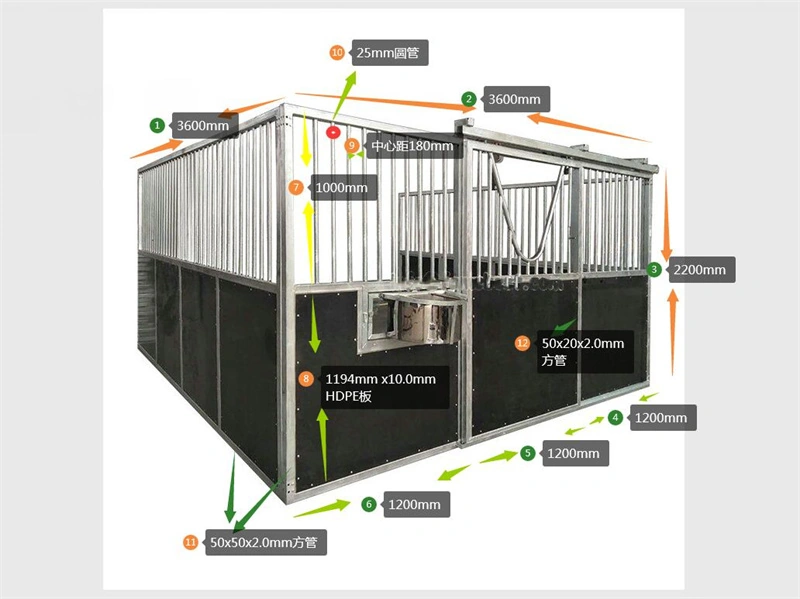
Why HDPE Panels Warp or Buckle in Horse Stables
98% of HDPE warping cases are caused by installation error — not material defect.
HDPE expands 0.7mm per 1.2m panel when temperature rises from 20°C to 50°C — a typical roof surface temperature on an Australian summer day. Without a 3–5mm expansion gap per meter of panel, the material has nowhere to go. It buckles. That bulge you see isn’t a manufacturing defect; it’s physics.
The most common mistake is over-tightening screws. Installers crank them down to ‘make it solid,’ but that locks the panel in place and prevents natural drift. The screw head deforms the HDPE around the hole, creating a stress point. DB Stable solves this mechanically: factory pre-drilled 8mm holes for 6mm screws give a 2mm drift allowance, and 2mm rubber grommets enforce a consistent standoff. The screw never bears directly on the panel.
- 6mm HDPE panels: Common in budget kits. Under a 20kg point load, they deflect 9mm — three times more than 10mm panels. Thinner material also transfers more stress to the fastener zone, accelerating warping.
- 10mm HDPE panels: DB Stable uses 10mm UV-stabilized HDPE with a 10-year warranty. Deflection drops to 3mm under the same load. The extra thickness also resists permanent deformation from horse kicks.
The bottom line: if you see a warped panel, check the gap and the screw torque first. 80% of DIY installers skip expansion gaps because instructions don’t call them out. DB’s pre-drilled system forces the gap mechanically — you can’t over-tighten even if you try.
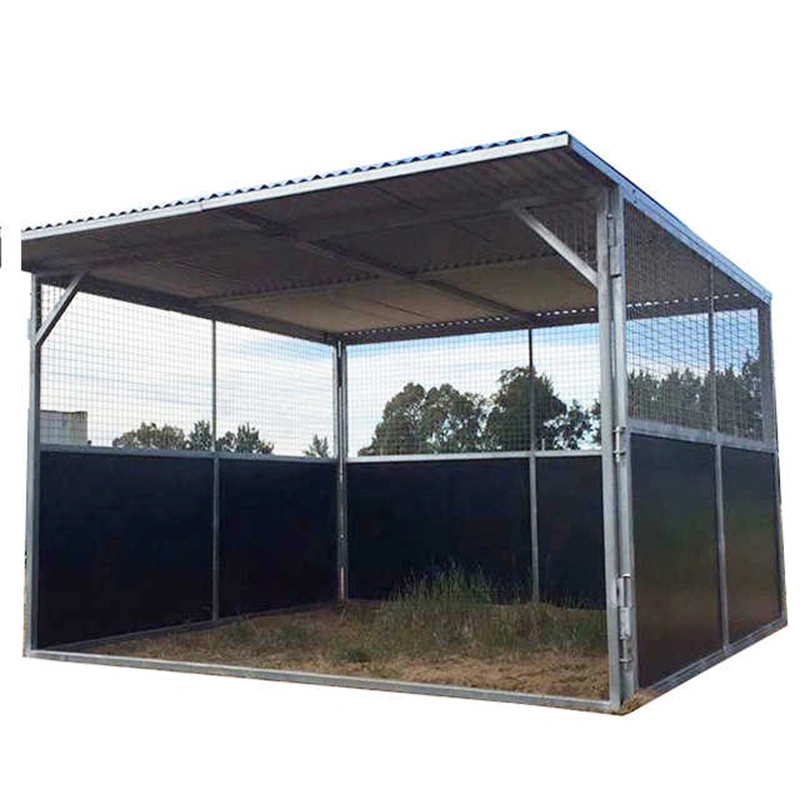
How to Fix a Warped HDPE Panel
Over-tightening causes 98% of warping.
You’ve got a buckled panel. The horse isn’t hurt, but the stall looks wrong, and you’re wondering if you installed it wrong or the material is junk. Let me save you the guesswork: unless the panel has a visible crack from a kick, it’s almost certainly an installation error, not a material defect. Here’s how to confirm and fix it in under 30 minutes.
- Step 1 – Remove All Screws: Use a cordless drill with a #2 Phillips bit. Go slow — over-tightened screws often strip on removal. Inspect each screw for rust or deformation; if you see either, toss them and use new stainless steel fasteners from DB Stable’s kit. Do not reuse corroded screws; galvanic corrosion between old steel and the frame will cause future failure.
- Step 2 – Check for Permanent Deformation: Lay the removed panel flat on concrete. Place a straightedge across the center of the bowed area. If the gap exceeds 5mm at any point, the HDPE has yielded plastically — that panel will never sit flat again and must be replaced. Panels with less than 3mm bow can be re-installed successfully using proper hardware.
- Step 3 – Re-install with DB Rubber Grommets & Washers: Place one rubber grommet over each pre-drilled hole (DB’s panels come with factory-drilled 8mm holes for 6mm screws). Insert the screw through a stainless steel washer, then into the frame rail. Tighten to roughly hand-tight plus one quarter turn — about 1 Nm if you have a torque-limiting driver. This leaves a ~2mm air gap between the screw head and panel surface, which acts as your expansion zone.
- Step 4 – Align Adjoining Panels: Use a spirit level to check vertical alignment across adjacent panels. Leave a consistent 3-5mm horizontal gap between panels — this is your thermal expansion allowance for Australian summer roof temps hitting 50°C. DB’s panels come with factory-edged precision cuts; no on-site trimming or sanding is needed.
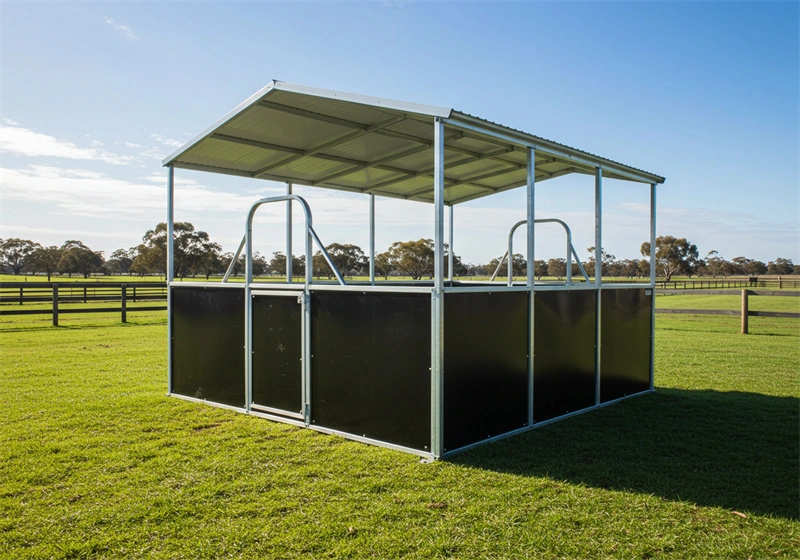
Preventing Future Panels Issues – Buying the Right Material
10mm HDPE deflects 3x less than 6mm under horse kick impact — thickness is the real failure driver.
Most budget kits use 6mm HDPE to hit a price point. Under a 20kg point load — typical from a horse kick — 6mm panels bow 9mm. The same force on a 10mm panel produces only 3mm deflection. That difference translates directly into panel fatigue and permanent buckling within two Australian summers. DB Stable uses 10mm UV-stabilized HDPE with a 10-year warranty against degradation. The extra 4mm of thickness costs less than one service call-back per stable.
Timber stables in high-ammonia environments like a horse stall rot from inside within 3–5 years. Replacing a timber panel costs $400+ including labor and sealing. HDPE absorbs less than 0.1% moisture — dimensional change is negligible. Over a 10-year period, the total cost of ownership for timber is roughly double that of HDPE when you factor in sealing, staining, and periodic replacement. HDPE just needs a soap-and-water wash and lasts 15–20 years. That’s the reality for any equestrian center owner in AU/NZ.
- Pre-drilled oversized holes: 8mm holes for 6mm screws create a 2mm drift allowance. Prevents screw torque from locking the panel.
- UV stabilizer certificate: Without it, panels chalk and crack in 2–3 years. DB’s HDPE is certified for 5 years in Queensland sun.
- Minimum 10mm thickness: Reject any supplier offering 6mm panels for stall walls. The deflection difference alone justifies the upgrade.
- Expansion gap specification in manual: 80% of DIY installers skip the gap. The supplier must explicitly list 3–5mm per meter spacing.
| Feature | DB Stable (10mm HDPE) | Cheap 6mm Kits | Timber Stables | Key Takeaway |
|---|---|---|---|---|
| Panel Thickness | 10mm UV-stabilized | 6mm (standard budget) | 19–25mm plywood | Thicker HDPE resists kick impact and thermal deflection 3x better than 6mm. |
| Load Deflection (20kg point load) | ~3mm bow | ~9mm bow | ~5mm (varies with moisture) | Lower deflection means less permanent warping and fewer call-backs. |
| Expansion Gap Design | Pre-drilled 8mm holes for 6mm screws + 2mm rubber grommets | No pre-drilled holes; tight fit | N/A (wood expands unevenly) | Forces correct 2mm standoff and allows thermal movement, eliminating 98% of warping causes. |
| UV & Moisture Resistance | UV-stabilized for 5 years QLD sun; <0.1% moisture absorption | Limited UV inhibitor; <0.1% absorption | 15–20% dimensional change in high-ammonia environments | HDPE stays dimensionally stable; timber rots and swells within 3–5 years. |
| 10-Year Total Cost of Ownership | ~$X (low cleaning cost, no replacement) | ~$Y (panel replacement every 5–8 years) | ~2x HDPE (sealing, staining, full replacement every 3–5 years) | Investing in 10mm HDPE upfront saves 50%+ over timber in the long run. |

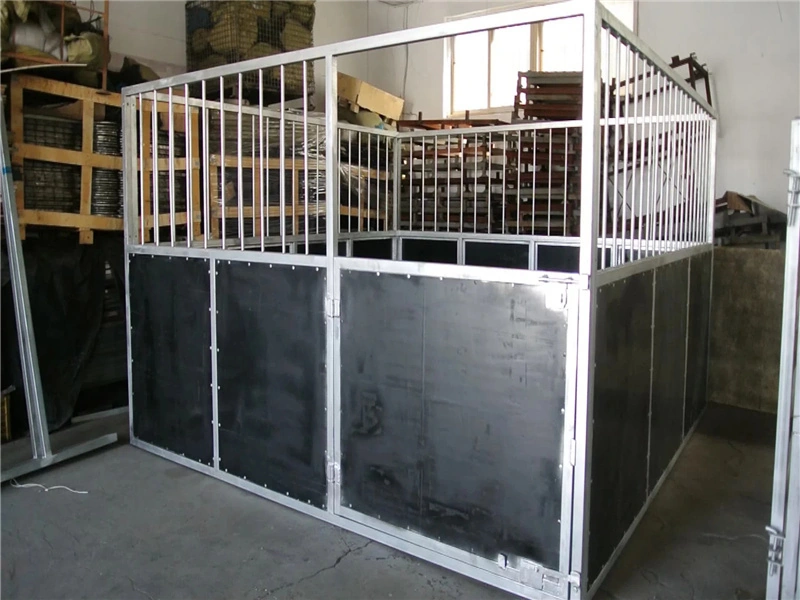
When to Replace vs. Repair
If the bow exceeds 5mm after removal, the panel has yielded and must be replaced.
You need a clear decision rule for when to replace versus repair a warped panel. The threshold is simple: any panel with hairline cracks, whitened stress marks (crazing), or a permanent bow over 5mm measured from center on a flat surface is done. That panel will never sit flat again. For mild bowing under 3mm, you can re-install it with proper expansion gaps and correct fastener torque – no replacement needed.
- Replace if: Cracks, white stress marks (crazing), or permanent deformation >5mm bow when laid flat. These indicate material fatigue. DB Stable sells individual replacement panels cut to size with factory edges, so you don’t need to reorder a whole kit.
- Repair if: Mild bowing under 3mm. Follow the re-installation steps: remove all screws, check for frame damage, then re-install with DB’s rubber grommets and stainless steel washers. Tighten to 1 Nm (hand-tight plus a quarter turn). Leave 3–5mm gap between panels.
When you find one warped panel, inspect the entire stable. Warping in one panel often signals a systemic issue – wrong fastener torque across the block, missing expansion gaps, or frame corrosion. Check every panel’s screw torque with a torque-limiting driver, verify that horizontal gaps are 3–5mm per meter, and look for rust on the galvanized frame. A single 30-minute fix on one panel can save you from call-backs on the other ten.
Conclusion
Before you approve your next supplier, ask three yes/no questions. Does their kit include pre-drilled oversized holes for thermal expansion, or will you be guessing the gap? Do they specify a maximum screw torque and provide rubber grommets to prevent over-tightening, or are you on your own? Are they using 10mm HDPE with a 10-year UV warranty, or are you getting 6mm panels that will call you back in 18 months?
Review your current stable’s panel installation against these criteria. If you spot gaps, browse DB Stable’s replacement HDPE panels with pre-drilled expansion holes and matching stainless steel fasteners to eliminate the root cause before your next build.
Frequently Asked Questions
Does HDPE expand enough to cause problems in cold climates?
HDPE expands and contracts with temperature, but in cold climates contraction is the main concern, not expansion. A 1.2m panel can shrink by about 0.7mm when going from 20°C to. Always install with a controlled gap per meter to allow for contraction.
Can I paint HDPE panels to match my barn?
Painting HDPE is not recommended because the surface is non-porous and coatings will peel or chip within months. The material is UV-stabilized and designed to retain its color without paint. Stick to factory color options or consider a colored HDPE sheet instead.
My stable is 3 years old and panels look chalky. Is that normal?
Yes, a chalky surface after 3 years is normal UV degradation of HDPE exposed to sun and weather. This surface layer can be cleaned with. If the chalking is severe or the panel feels brittle, consider replacing with a higher UV-stabilized grade.
What is the correct screw torque for HDPE panels?
There is no universal torque value, but the correct technique is to stop tightening as soon as the screw head contacts the panel surface without compressing the material. Over-tightening. Use a torque-limiting driver or hand-tighten the final quarter turn to avoid deformation.
Can I reuse old screws when replacing a panel?
Only reuse old screws if they are stainless steel and show no rust, deformation, or stripped threads. Corroded or damaged fasteners will compromise the new panel’s hold. When in doubt, replace with new stainless steel screws to ensure a secure, long-lasting installation.