HDPE panel maintenance is the silent factor determining whether a portable barn lasts a decade or ends up in a landfill after three Australian summers. Sure, the hot-dip galvanized steel frame provides the structural backbone. But the enclosure’s daily survival depends entirely on how you manage the 10mm HDPE boards. Many facility managers assume plastic is inert and indestructible. They neglect cleaning routines. Ammonia from horse waste slowly degrades surface integrity. Over time, the material softens.hot-dip galvanized steel frames
The difference between a failing panel and a permanent fixture often comes down to a single manufacturing detail: integrated versus surface UV stabilizers. Competitors frequently sell panels with surface coatings that peel under high UV indices. This exposes raw plastic to molecular brittleness. Premium panels embed carbon black stabilizers throughout the extrusion process. This ensures scratches or scuffs from active thoroughbreds do not compromise the material’s lifespan. Understanding this distinction is critical for protecting your investment against the harsh environmental conditions typical of the Oceania region.

Why Most HDPE Panels Fail: The Hidden UV Risks
Fading is cosmetic; brittleness is structural.
The primary failure mode for HDPE panels in Oceania is not surface fading, but molecular brittleness caused by UV degradation. When UV rays penetrate the polymer matrix, they break the long-chain bonds. This turns a flexible 10mm panel into a fragile sheet. One solid kick, and it shatters.
In Australia and New Zealand, the UV index is significantly higher than in European markets. Panels relying on surface-coated UV protection will see that coating wear off within 18 months. This exposes raw, unprotected plastic to the sun. Expect rapid chalking and micro-cracking within 2-3 years.

This structural degradation creates a severe safety hazard for thoroughbreds. A brittle panel lacks the impact resistance required to withstand a horse kick. The result is sharp, jagged edges. These pose a serious risk of lacerations to high-value animals.
- Integrated vs. Surface Coating: Premium panels embed carbon black stabilizers throughout the entire 10mm thickness during extrusion. This ensures that even if the surface is scratched, the underlying material remains UV-resistant.
- Don’t trust marketing fluff about “UV resistance.” Ask for extrusion data or an ASTM D458 test report. You need proof the stabilizers are bulk-integrated, not just sprayed on the surface.
- HDPE is non-porous, but horse waste builds up ammonia. That ammonia eats into the surface over time if you skip cleanings. Stick with mild detergent and water — it preserves the UV layer longer.

Real Cost of Neglecting UV Protection in 2026
Neglecting HDPE maintenance costs 30% more in premature replacement than proactive care.
By 2026, ignoring UV protection on HDPE panels costs more than faded looks. It becomes a structural problem. Surface chalking is the visible warning, but the real damage is molecular brittleness underneath — and that leads to catastrophic panel failure where horses kick and lean.
Cleaning proactively costs a fraction of replacing panels. A routine wash with mild detergent stops ammonia from degrading the surface. Skip that step, and you’re looking at labor, logistics, and material costs that dwarf the price of a bottle of soap.
Panel thickness controls thermal expansion. Standard 8mm panels warp badly under Australia and New Zealand’s extreme UV index. 10mm panels hold their shape — no gaps, no sharp edges. That matters when you’re housing thoroughbreds that spook at anything.
- Chalking & Dirt Trapping: Degraded surfaces trap organic matter, which speeds up corrosion on adjacent steel frames. Expect cleaning frequency to jump by up to 40%.
- Moisture trapped behind chalking or warped panels eats into hot-dip galvanized frames over time. That corrosion kills the 10-year lifespan guarantee — faster than most buyers realize.
- 8mm panels expand noticeably in heat. That expansion puts real stress on joints and alignment. 10mm panels hold firm, keeping the structure square and safe.
Total cost of ownership tells the real story. Wood needs annual sealing and rots eventually. Basic vinyl warps and can’t take a hit. HDPE with integrated UV stabilizers runs near-zero maintenance over a decade. For a working equestrian center, that’s the durable, cost-effective choice.Total cost of ownership
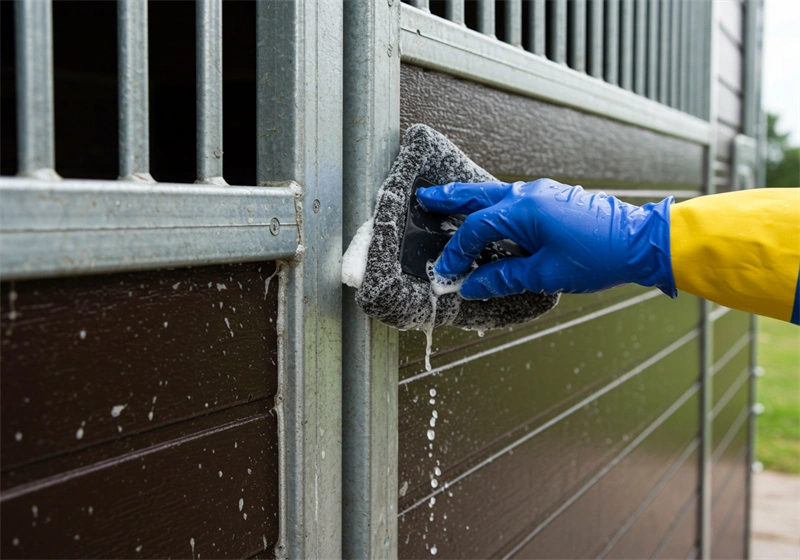
For real ROI, look for UV stabilizers built into the panel, not just sprayed on the surface. Integrated protection runs through the full 10mm thickness. A scratch won’t expose raw material to sun damage. No repainting, no fade — consistent performance in brutal climates.
| Category | Neglect Consequence | Financial Impact | Root Cause |
|---|---|---|---|
| Material Integrity | Surface chalking and molecular brittleness | 30% higher replacement costs over 10 years | Ammonia buildup degrades non-UV-stabilized surfaces |
| Structural Safety | Panel warping and sharp edge formation | High veterinary costs and operational disruption | Thermal expansion in 8mm panels vs. 10mm stability |
| Frame Corrosion | Accelerated rust on galvanized steel frames | Premature structural failure requiring full kit replacement | Trapped dirt and moisture from dirty HDPE surfaces |
| Maintenance Effort | Permanent staining and hygiene hazards | Loss of asset value and potential tax benefit eligibility | Failure to use mild detergent for regular cleaning |
| Lifespan ROI | Failure to achieve 10-year infrastructure goal | Double capital expenditure within 5-year period | Ignoring integrated UV stabilizer benefits vs. surface coatings |

HDPE vs. Alternatives: Which Panel is Better?
Surface coatings peel; integrated UV stabilizers protect the full 10mm thickness for decades.
In Australia and New Zealand’s high-UV conditions, material choice decides how long your infrastructure lasts. Wood rots. PVC warps. HDPE holds up — but only if the UV protection is done right. Many suppliers throw around the term “UV resistant” without distinguishing surface coating from bulk-integrated stabilizers. That difference matters.
Horse waste means constant moisture and fungal growth. Wood can’t escape that — even treated timber splinters eventually, creating lethal risks for expensive thoroughbreds. HDPE removes the problem entirely. Its non-porous surface won’t absorb ammonia or breed bacteria.
PVC panels just don’t have the rigidity for commercial horse facilities. Hit them with the thermal expansion from an Australian summer, and they bow and warp — that throws door alignment off, and suddenly latches don’t seat right. HDPE keeps its dimensional stability. Doors and hardware stay functional year after year.doors and latches
- Sanitation matters in a barn. HDPE is completely non-porous. Ammonia from urine can’t soak into the board, which means no internal degradation and no lingering odor that lingers season after season.
- At 10mm thickness, HDPE absorbs the kinetic energy from kicks and falls without shattering. Compare that to brittle wood or thin PVC, which cracks or splinters on impact. That’s a real durability difference in a working stable.
- Thermal stability is where PVC fails hard. Under direct solar radiation at 40°C, it softens and warps. HDPE doesn’t. It keeps straight lines and secure fittings, no matter how brutal the heat gets.
- Ask to see the extrusion line. If the stabilizer gets compounded directly into the melt, the protection runs through the whole cross-section — not just the surface.
- Request ASTM D458 test reports. That standard measures how well plastics hold up under fluorescent UV exposure.ASTM D458 test reports
- Carbon black content matters. For Oceania’s extreme UV index, it’s the only stabilizer that actually blocks the radiation at the molecular level.
Here’s the common industry trick: surface-coated UV protection. It sits on top of the panel, gets scrubbed off during cleaning, and then the raw material degrades fast. Quality panels use integrated UV stabilizers — carbon black mixed into the polymer during extrusion. That protection is built in, not sprayed on.
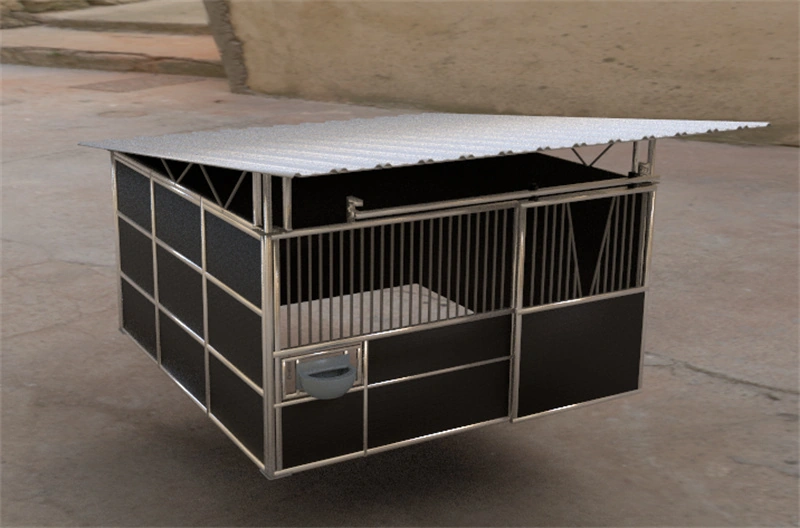
When UV stabilizers are integrated through the entire 10mm thickness, a scratch or scuff doesn’t expose raw material to the sun. The panel keeps its structural strength and color consistency, even after years of heavy use and aggressive cleaning. That’s what cost-effective durability looks like in the real world.

How to Source UV-Resistant HDPE Without Getting Scammed
Integrated UV stabilization during extrusion is the only way to prevent structural brittleness in high-wind zones.
Real UV resistance in HDPE isn’t about what the brochure says. Most generic guides stop at surface coatings — and those wear off. Abrasion from cleaning or contact strips the layer, leaving raw polymer exposed. The only reliable method is compounding carbon black stabilizers directly into the resin during extrusion.carbon black stabilizers
That integration protects the full 10mm panel thickness — not just the outer face. A horse kick or a scraper hit won’t expose unprotected material underneath. In Oceania, where UV index runs up to four times higher than European levels, surface-only protection fails fast. Integrated stabilization is the only way to prevent molecular brittleness from setting in.
Thermal expansion is just as critical for structural integrity. Premium HDPE boards are engineered to resist dimensional shifts under extreme heat. When you source, verify the material won’t expand enough to throw frame alignment off. At 10mm thickness, the industry standard holds rigidity in high-impact zones — no warping, no operational headaches, no safety risks.Thermal expansion
- Extrusion Verification: Demand proof that UV stabilizers are added during the extrusion phase, ensuring protection throughout the full 10mm thickness rather than just on the surface.
- Thermal Resistance: Confirm the HDPE panels are engineered to resist thermal expansion, preventing warping and structural misalignment in high-temperature environments.
- Supplier Expertise: Require a supplier with dedicated design expertise who can provide detailed material specifications and technical support, rather than a generic trading company.
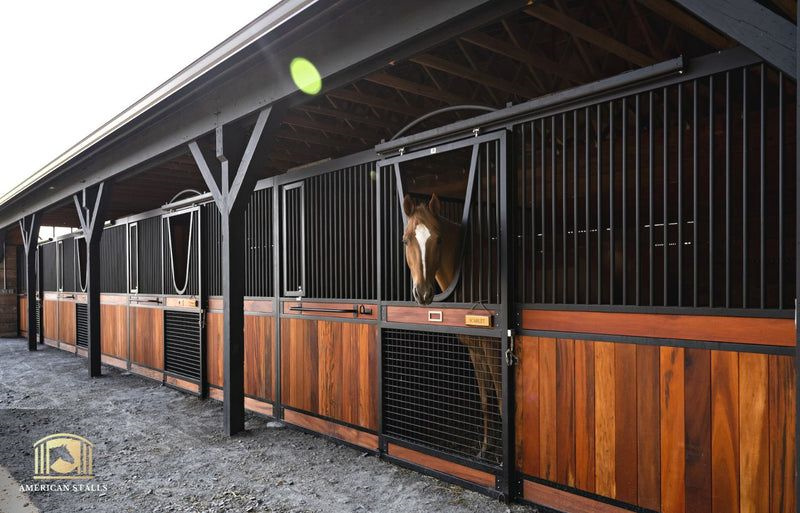

Essential HDPE Panel Maintenance Routine
Neglecting routine cleaning leads to ammonia buildup that degrades surface integrity, costing up to 30% more in premature panel replacement over 10.
HDPE panels require zero painting or sealing, but their 10-year lifespan in the harsh Australian and New Zealand sun depends entirely on how you manage ammonia and UV exposure. While the material is non-porous, accumulated horse waste creates a corrosive environment that accelerates surface degradation if not addressed immediately.
The engineering gap lies in the UV stabilizer application. Premium panels like those from DB Stable utilize integrated UV stabilizers added during the extrusion of the 10mm thickness. This ensures the entire panel is protected, whereas competitors using surface-coated UV protection will see that layer peel away, leaving the raw HDPE vulnerable to molecular brittleness and cracking.
- Daily Cleaning: Remove fresh manure and urine immediately using a soft cloth dampened with lukewarm water and a standard mild household detergent. This prevents the ammonia from bonding to the surface and causing permanent staining.
- Scrub the stall walls weekly. Wipe them dry with a soft cloth immediately. You need to clear out grime and prevent water spots from forming. Letting dirt trap moisture defeats the purpose of those integrated UV stabilizers.
- Polish out minor scratches from horse kicks. A mild plastic polish smooths the edges. The goal is simple: remove any sharp points that could injure the animal.
- Avoid WD-40 and strong solvents. Hydrocarbons in these chemicals break down the polymer bonds of HDPE. This compromises structural integrity and voids the warranty.
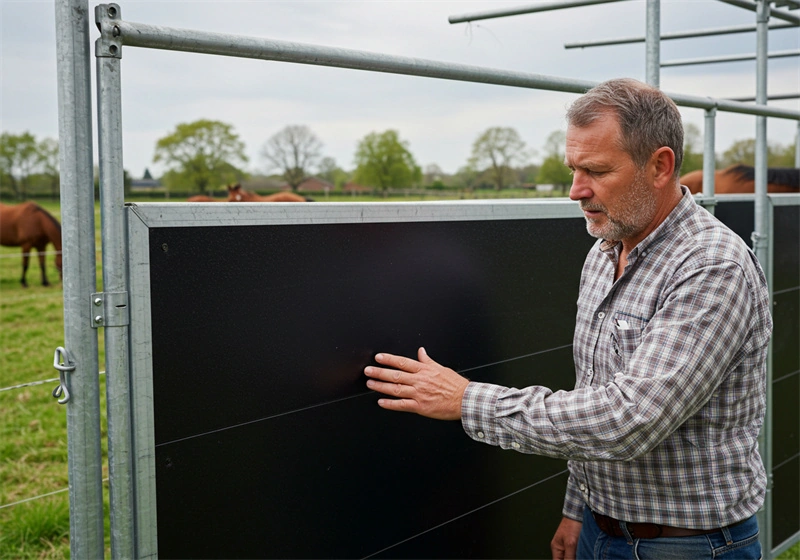
For warped panels or cracks from high-impact kicks, replacement is usually more cost-effective. Warping happens when thermal expansion exceeds the panel’s tolerance. Consult our guide on why HDPE stalls warp in the sun for diagnostics. For cracks, check our article on fixing HDPE panels for specialized repair techniques.
Conclusion
Proper HDPE panel maintenance separates a 10-year asset from a liability. Regular cleaning with mild detergent stops ammonia from degrading surface integrity. Understanding the difference between integrated and surface-coated UV stabilizers protects your investment from the extreme Oceania sun. This approach minimizes downtime and ensures horse safety by preventing brittle edges.
View the detailed specifications for our full HDPE portable horse stable panels. They offer 10mm thickness and integrated UV resistance to meet high standards. Request a quote to secure durable, non-porous panels that withstand thermal expansion and heavy impact.detailed specifications
Frequently Asked Questions
What can I clean HDPE with?
Use a soft cloth dampened with lukewarm water and a standard household detergent for daily maintenance. Avoid abrasive pads to prevent surface scratching that could trap dirt. Rinse thoroughly and dry to maintain panel integrity.
What is UV stabilised HDPE?
It is a rigid, high-tensile strength sheet with UV stabilizers integrated throughout the 10mm thickness during extrusion. This ensures resistance to temperature extremes and prevents surface chalking. Integrated stabilizers offer superior protection compared to surface coatings.
How long will HDPE last in the sun?
High-quality HDPE with integrated UV stabilizers can last 10+ years in direct sunlight without significant degradation. This lifespan assumes proper cleaning to remove ammonia and organic buildup. Regular cleaning ensures the full 10-year UV warranty holds.
Is WD-40 safe on HDPE?
No, WD-40 is not recommended for regular cleaning as it contains hydrocarbons that can break down polymer bonds over time. Stick to mild detergents to preserve the material’s structural integrity. Use only water-based cleaners for long-term safety.
What is the disadvantage of HDPE?
The primary disadvantage is the initial higher upfront cost compared to wood or basic vinyl. However, this is offset by near-zero maintenance and a significantly longer service life. Calculate total cost of ownership rather than just initial price.