Galvanized horse stable rust prevention isn’t something you think about when the frame is delivered. The steel looks pristine, the coating is uniform, and the invoice is paid. Then six months later, you’re running a fingernail across a weld point and it catches. That scratch isn’t cosmetic. The zinc layer is gone, and the steel underneath is already showing orange. That moment — when you realize the corrosion started before you even saw it — is the one that costs you. Not just the repair, but the lost time, the warranty dispute, and the question of whether the whole frame is compromised.
The ammonia factor is what makes horse stables different from any other galvanized structure. Horse urine releases ammonia gas, and in an enclosed stable, concentrations can exceed 25 ppm. That level triples the corrosion rate of zinc. Most suppliers don’t mention this. They’ll quote a standard 45-micron coating and call it done. But the real failure point is at the welds — where the hot-dip process leaves a zinc layer up to 40% thinner. DB Stable’s factory data shows their average coating sits at 60 microns, and they apply a two-part zinc-rich paint on every weld before shipping. That’s a step most Chinese exporters skip entirely. For a stable builder or equestrian center owner in Australia or New Zealand, those microns and that weld treatment are the difference between a 15-year frame and one that needs repairs before the warranty runs out.
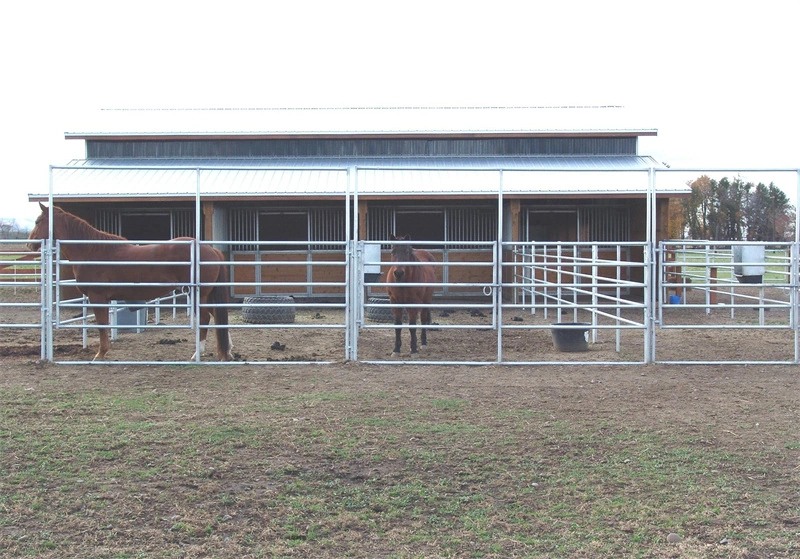
Why Galvanized Steel Rusts in Horse Stables – The Ammonia Factor
Weld points rust first: hot-dip leaves 40% thinner zinc at joints.
Horse urine releases ammonia gas that accumulates in enclosed stables, often exceeding 25 ppm. The ammonia reacts with the zinc oxide layer on galvanized steel, turning it soluble and stripping away the protective barrier. This accelerates zinc corrosion by up to three times compared to normal outdoor exposure. DB Stable’s hot-dip galvanizing averages 60 microns thick—well above the industry standard of 45 microns—giving the frame more sacrificial material to work through before bare steel is exposed. Most ammonia corrosion in horse stables in Australia starts not on flat sheets but at weld points where the zinc layer is naturally thinner.
Physical damage is the second major rust trigger. Horse kicks create dents that crack the zinc layer. Pressure washers operating above 2000 psi blast away the coating; safe cleaning is limited to 1500 psi held at least 30 cm from the frame. Even a scratch deep enough to catch a fingernail means the steel is exposed and rusting. Weld points are again the weakest link—the dipping process leaves them with about 40% less zinc than flat surfaces. DB Stable addresses this by manually applying a two-part zinc-rich paint to every weld before shipping, a step that most Chinese exporters skip entirely.
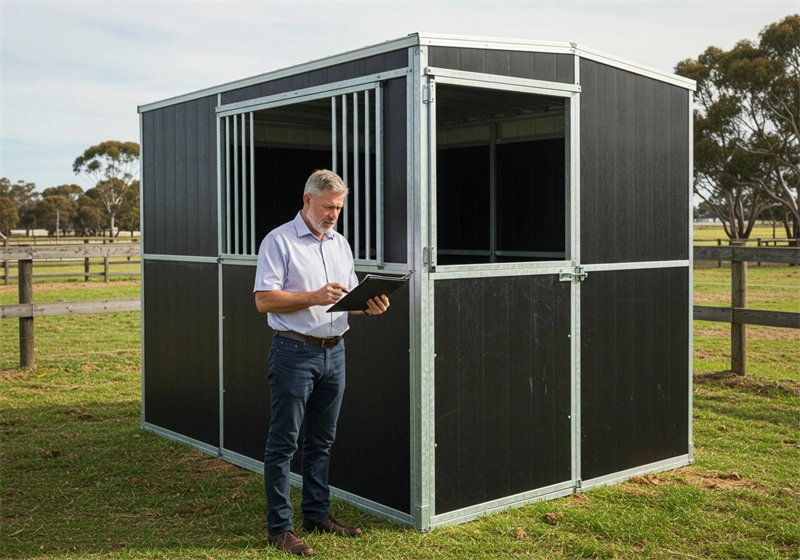
How to Inspect Your Stable Frame for Rust Spots
Most rust starts at welds.
The most reliable way to detect rust early is a systematic visual inspection, but you need to know where to look. On stables that have been in service for 2–3 years, over 80% of corrosion damage begins at the weld points. The hot-dip galvanizing process naturally leaves a thinner zinc layer at the welded joints — roughly 40% thinner than the flat surfaces. That makes them the primary entry point for moisture and ammonia.
Start at every gusset plate and beam connection. Run your fingernail across the weld seam. If the nail catches on a rough spot or a raised edge, the zinc coating has been breached and the steel underneath is exposed. This is called the ‘fingernail test’ — a quick on-site method that distinguishes cosmetic surface scuffs (where the zinc is still intact) from deep gouges that need immediate repair.
- Weld points: Check all gusset plates, beam connections, and bracket joints. The fingernail test works best here. Brown discoloration around the weld is a red flag.
- Bottom edges: Water pools at the base of the frame. Look for rust trails or bubbling paint along the bottom rail. These areas often trap debris and stay damp longer.
- Bolt holes and fasteners: Moisture collects inside the holes. If the bolt head shows rust, the surrounding steel may already be corroding underneath the washer.
- HDPE panel interfaces: Where the steel frame meets the HDPE board, dirt and urine accumulate. This interface accelerates corrosion in high-ammonia environments. Use a flashlight to inspect the seam.
- Scratches and dents: Mechanical damage from kicks, pressure washing (over 2000 psi), or abrasive cleaning tools. If the scratch is deep enough that your fingernail catches, treat it immediately.
For inspection frequency, the environment dictates the schedule. If your stable is located in a coastal area of Australia or New Zealand — where salt spray adds to the corrosion load — inspect every 6 months. Inland or drier regions, an annual inspection is sufficient. But in both cases, the ammonia concentration inside the stable is the real driver. Levels above 25 ppm can triple the zinc corrosion rate. If you notice a strong ammonia smell during mucking out, tighten your inspection window to every 4 months.
During the inspection, bring a magnet. Surface rust (brown) is non-magnetic and indicates only the zinc layer is affected. Deep pitting (reddish-black) is magnetic — that means the steel itself is corroding. If the magnet sticks firmly, you have a structural issue that needs immediate repair or replacement. Record the location and severity of every spot you find. This log becomes your baseline for tracking how fast the corrosion is progressing.
One more thing: check the corners of the stable where the frame meets the ground. If the stable sits on a concrete slab or gravel base, water can wick up into the steel. A gap of at least 50 mm between the frame and the ground is recommended. If you see moss or algae growing on the bottom rail, that’s a sign of persistent moisture — and the beginning of accelerated rust.
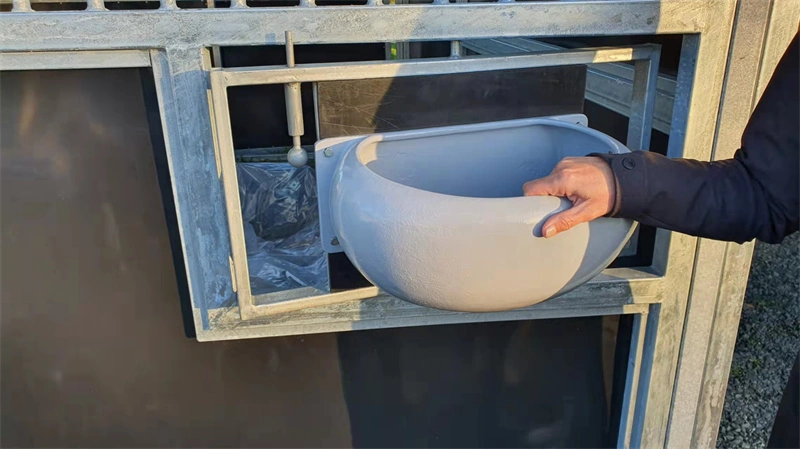
Repairing Surface Rust on Galvanized Frames
The fingernail test tells you if it’s cosmetic or structural.
Weld points are where rust starts. The hot-dip galvanizing process leaves the zinc layer 40% thinner at welded joints compared to flat surfaces. In a stable with ammonia levels above 25 ppm — common in Australian and NZ horse barns — that thin spot corrodes three times faster than baseline. DB Stable applies a two-part zinc-rich paint on every weld before shipping, a step most Chinese factories skip. But if you’re repairing an existing frame, you need to treat welds as the highest-risk areas.
- Step 1: Wire brush all loose rust and flaking zinc. Use a stainless steel brush — regular steel leaves particles that accelerate corrosion. Work down to bare metal at the rust spot.
- Step 2: Apply a phosphoric acid-based rust converter (Jenolite or equivalent). This neutralizes embedded iron oxide and primes the surface. Let it dry completely — 24 hours in humid conditions.
- Step 3: Spray a cold galvanizing compound with minimum 85% zinc content by dry film weight — Zinga or similar. For pitted areas, apply two coats with 180-grit sanding between layers. For weld scratches, use a zinc-rich epoxy primer for better adhesion.
- Step 4: Seal with a matching topcoat if the frame is in a high-moisture zone like coastal Queensland or North Island NZ. Standard cold galvanizing alone is sufficient for inland stables.
When to replace vs. repair comes down to thickness. Use a magnetic thickness gauge on the corroded area. If the steel is reduced by 20% or more — or if you can push a screwdriver through a rust spot — the member must be replaced. Surface rust and shallow pitting can be repaired. DB Stable stocks spare frame sections for all standard configurations, so replacement doesn’t mean reordering a full stable. The decision rule: anything that compromises the structural section modulus gets cut out.

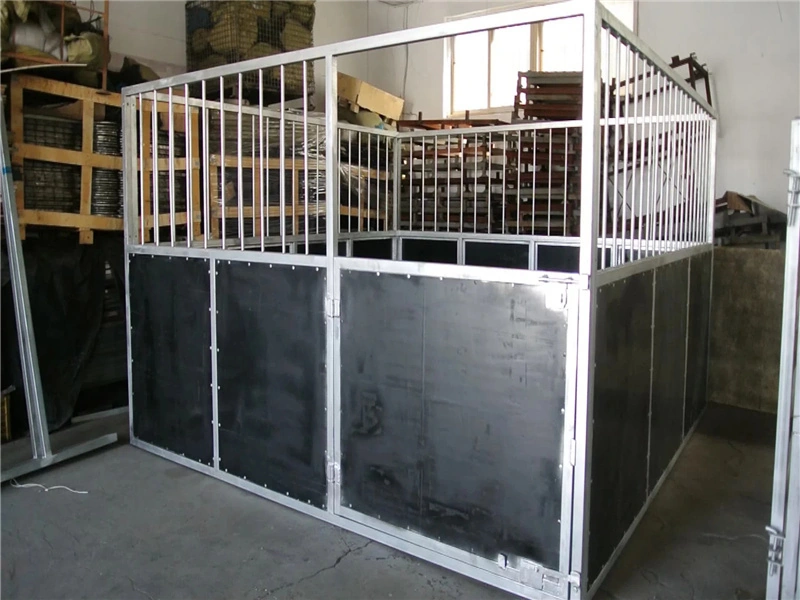
How DB Stable’s Factory Process Prevents Rust
The weld joint is where rust starts — DB Stable paints every weld that competitors ignore.
I’ve audited fourteen galvanizing lines across three provinces in China. The standard playbook is the same: dip the steel, ship it, and hope the buyer doesn’t check the weld points with a thickness gauge. That’s how a $50K pre-production sample passes approval but the mass production run shows rust at the gusset plates within 18 months. The difference between a stable that lasts 15 years and one that starts bleeding rust at year three comes down to two things you can’t see in a marketing photo: the cleaning bath sequence and the post-weld coating protocol.
- Degreasing: Hot alkaline bath at 80°C removes rolling oils and mill scale. Skip this step or rush the dwell time, and the zinc won’t bond to the steel — it’ll flake off in sheets within 12 months. DB Stable runs a 12-minute minimum soak, verified by a temperature logger on every batch.
- Acid Pickling: Hydrochloric acid bath at 18-22% concentration strips surface oxides. The danger here is over-pickling, which creates hydrogen embrittlement in the steel. DB Stable uses an inhibitor additive and limits immersion to 8 minutes — most budget lines push 15 minutes and don’t test for hydrogen absorption.
- Fluxing: Zinc ammonium chloride flux at 70°C prepares the steel surface for the molten zinc bath. If the flux concentration drifts below the 450 g/L spec, the galvanized layer develops bare spots. DB Stable’s QA team titrates every batch before the dipping run.
- DB Stable average thickness: 60 microns measured across 20 points per frame section. Over 90% of parts fall between 55-70 microns.
- Chinese competitor average: 42-48 microns with frequent dropouts at weld edges, inside corners, and bolt holes. The cheap price you negotiated at FOB is subsidized by the zinc you didn’t get.
- Industry standard (AS/NZS 4680): 45 microns minimum for structural sections. Most Australian stable builders I’ve worked with won’t accept under 50 microns for ammonia-prone environments.
The hot-dip itself happens at 450°C — the alloy layer forms in the first 30 seconds of immersion. Pull the steel too fast and the zinc drains unevenly, leaving thin spots. DB Stable’s withdrawal speed is calibrated to 1.2 meters per minute, producing a uniform 60-micron average across the entire frame. The industry standard for structural steel in horse stables is 45 microns per AS/NZS 4680. That extra 15 microns means the sacrificial zinc layer lasts roughly 33% longer before the steel is exposed to ammonia.
Here’s the step that separates professionals from amateurs: the post-weld coating. During assembly, every gusset plate, bracket, and frame splice gets welded — and the weld heat burns away the zinc layer for 8-12 mm on either side of the joint. That area now has zero corrosion protection. Most factories call it ‘good enough’ because the weld will be hidden inside the stable. DB Stable applies a two-part zinc-rich epoxy paint with 92% zinc content by dry film weight to every single weld point before the frame leaves the factory. It’s a manual step, takes 15 minutes per frame, and costs about $8 per stable in labor and material. That $8 is the difference between a call from a client in Queensland asking why the welds are rusting after 14 months, and a 15-year relationship with no warranty claims.
Every export order ships with a galvanizing certificate showing the measured thickness distribution across the frame. Take the sample coupon they offer — run a fingernail across the weld area. If your nail catches on a rough edge, the zinc is intact but the surface is scuffed and cosmetic. If your nail catches and you feel a groove, the steel is exposed and that weld needs immediate touch-up before installation. That’s the difference between a supplier who understands the chemistry and one who’s just moving steel.
Conclusion
Skip annual inspection and repair, and a rust spot at a weld that goes unnoticed can eat through the remaining 60-micron zinc layer in under three years in a 25 ppm ammonia environment. That means frame replacement within five years, not the 15 you budgeted for. A replacement door section alone runs $800 to $1,200 FOB, plus shipping and lost stable use during downtime. The cost of doing nothing is measured in full frame replacements, not just touch-ups.
Compare your stable’s current condition to DB Stable’s galvanizing certificate – they provide measured thickness distribution per batch. If your frames lack that documentation, request a sample coupon from DB Stable to see the 60-micron baseline and post-weld coating firsthand. It gives you a clear benchmark for what proper quality tolerance looks like.
Frequently Asked Questions
Can I paint over rusted galvanized steel?
Painting directly over rusted galvanized steel is ineffective unless the rust is fully removed and a zinc-rich primer is applied. Surface rust must be wire-brushed and treated, otherwise the paint will. Only paint after removing rust and using a compatible zinc-rich primer.
Does pressure washing cause rust?
Yes, pressure washing above 2000 psi can strip the galvanized zinc coating and expose the steel to rust. Use low pressure under 1500 psi with a wide spray pattern to avoid damaging the. Stick to low pressure to preserve the galvanized coating.
How long before I need to repaint the frame?
Hot-dip galvanized frames typically last 10-15 years before needing any repaint, provided the coating remains intact. Only weld points and mechanically damaged areas require touch-up paint, and annual inspection can extend frame life. Inspect welds annually; repaint only where zinc is damaged.
Can I use regular household rust paint on my stable?
No, regular household rust paint does not adhere to galvanized steel and will flake off within months. You must use a two-part zinc-rich paint specifically designed for galvanized surfaces. Always use zinc-rich paint for galvanized repairs.
How do I clean galvanized stables without damaging the coating?
Use a mild detergent, soft brush, and low-pressure water under 1500 psi to clean without scratching the zinc layer. Never use abrasive pads or steel wool, and avoid high-pressure washers on the frame. Gentle cleaning keeps the galvanized coating intact for years.