galvanized vs zinc horse stalls is the first checkpoint buyers should lock before they approve a supplier, budget, or production slot. Day 1: the order is placed for a 10-stall portable barn destined for a coastal property outside Sydney. Day 14: the pre-production sample arrives — frames look clean, coating appears uniform, the buyer signs off. Day 45: the container lands. Six months later, rust bleeds through the weld points on every corner post. The coating was zinc-plated, not hot-dip galvanized. The spec sheet said “galvanized steel.” Technically, it wasn’t wrong. That’s the gap that turns a $50,000 procurement decision into a maintenance problem that compounds every wet season. The debate between galvanized vs zinc horse stalls is not a branding argument — it’s a metallurgical one, and the Australian climate has no patience for the cheaper option.
The core difference comes down to coating thickness and how the zinc bonds to the steel. Zinc plating — technically electrogalvanizing — deposits a layer typically between 5 and 15 microns. Hot-dip galvanizing immerses the steel in molten zinc at around 450°C, producing a 42–85 micron alloy layer that fuses into the base metal rather than sitting on top of it. That metallurgical bond matters in a barn environment because ammonia from horse urine, coastal salt aerosols, and prolonged UV exposure attack the coating from multiple directions simultaneously. A 5-micron electrogalvanized layer does not survive that combination for long. In Australian coastal zones, zinc-plated frames often show surface rust within 2–3 years — well before any reasonable return on the capital outlay. FOB pricing on zinc-plated frames can look attractive at the quote stage, but the sample approval process rarely includes a coating thickness measurement, which is exactly where buyers get burned.
Skipping a proper quality tolerance check on galvanization spec is where the real cost hides. This guide breaks down how each coating process works, what the 10-year cost difference actually looks like in ANZ conditions, and what to verify before any stable frame ships — so the decision is based on material science, not marketing language.
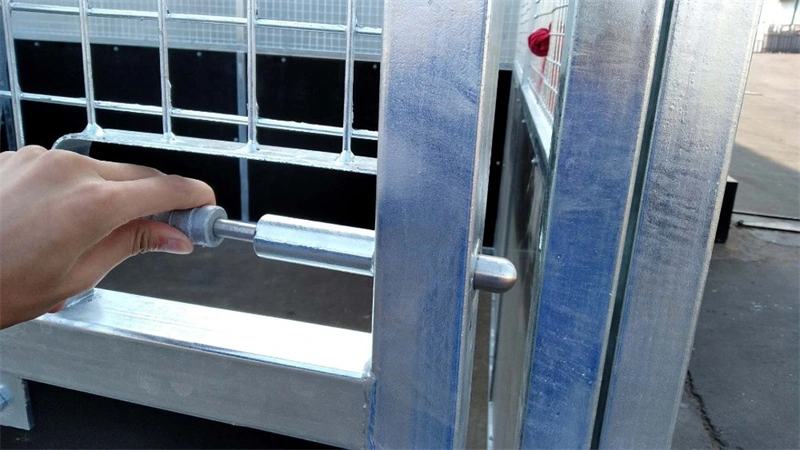
The Problem: Rust in Australian Horse Barns
Coastal salt air and ammonia from horse waste attack zinc coatings from two directions simultaneously.
Two portable horse stables sit side by side. Same dimensions, same panel layout. One costs 30% more. The difference is invisible until year two, when the cheaper frame starts showing orange streaks at the weld points. That 30% gap is the cost of a coating that actually bonds to the steel at a metallurgical level, versus one that sits on top and waits to fail.
Why Australian and New Zealand Conditions Accelerate Corrosion
Coastal properties within 5 km of the ocean in Queensland, New South Wales, and the South Island of New Zealand face salt-laden air that deposits chloride ions on exposed steel surfaces year-round. Chloride ions are electrochemically aggressive. They penetrate thin protective layers and trigger oxidation at the base metal. A zinc-plated frame with a 5–15 micron coating has limited reserve against this kind of sustained attack.
Humidity compounds the problem. Horse barns trap moisture from urine and respiration. Ammonia concentrations inside an enclosed stable can be high enough to accelerate the breakdown of thin zinc coatings, particularly at cut edges and drilled holes where the base steel is exposed. These are the spots that fail first — and they fail quietly, out of sight, until the structural member is already compromised.
Where Zinc-Coated Frames Break Down First
- Weld points: Heat from welding burns off the zinc layer locally. On electrogalvanized frames, no secondary protection exists at these spots. Rust initiates here within 12–24 months in humid barn conditions.
- Cut and drilled edges: Any post-fabrication cutting exposes raw steel. Thin zinc platings do not self-heal across these gaps, leaving a direct corrosion path into the structural section.
- Bolt holes and fastener contact points: Galvanic action between dissimilar metals at fastener interfaces accelerates coating degradation. Frames assembled with standard steel bolts against a zinc-plated surface show accelerated surface rust at each connection point.
- Bottom rails and ground contact zones: Moisture pools at the base of stall frames. On a thin-coated frame, this is where structural rust takes hold first, often hidden by bedding material until the section has lost meaningful wall thickness.
A buyer who received a $50,000 order of zinc-plated portable stables for a coastal Queensland equestrian center found surface rust at weld points within 18 months. The pre-production sample had passed a visual check. Mass production used the same electrogalvanized tube specification, but the sample approval process had not included a salt spray test or a coating thickness measurement. That gap between the sample and the operational reality is where the failure lived.
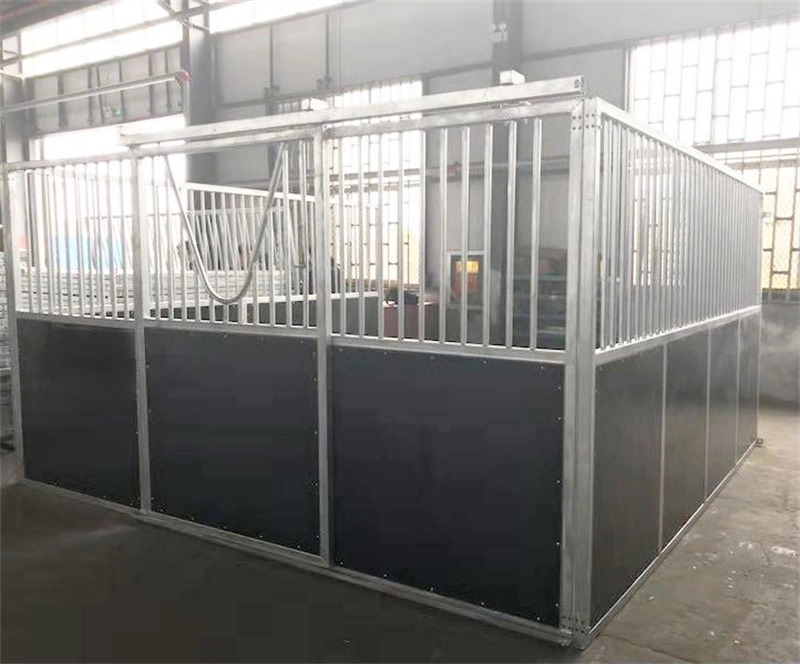
Hot-Dip Galvanizing: How It Works
Hot-dip galvanizing creates a metallurgical alloy bond — not a surface film — that outlasts zinc plating in every Australian barn and.
The Immersion Process and What 42–85 Microns Actually Means
Steel sections are fully submerged in a bath of molten zinc at around 450°C. At that temperature, the zinc doesn’t just coat the steel — it reacts with the iron in the steel surface to form a series of zinc-iron alloy layers, with pure zinc on the outside. The result is a coating that’s chemically bonded to the base metal, not sitting on top of it.
DB Stable’s frame specification calls for a minimum 42-micron coating thickness, with production runs regularly measuring between 42 and 85 microns depending on steel section geometry. Thicker sections naturally hold more zinc in the bath. That 42-micron floor matters because the Australian standard environment — coastal salt, ammonia off-gassing from horse urine, and high UV — eats through anything thinner within a few seasons.
Self-Healing at Cut Edges and Weld Points
This is where hot-dip galvanizing separates from every spray-on or electroplated alternative. When steel is cut or welded after zinc plating, the coating is destroyed at that point — bare steel is exposed and rust starts immediately. With hot-dip galvanizing, the zinc-iron alloy layers extend slightly beyond the cut edge, and the zinc itself acts as a sacrificial anode: it corrodes preferentially to protect the underlying steel. The base metal stays intact even when the surface is scratched.
Weld points are the highest-risk location on any fabricated stable frame. Heat from welding burns off the zinc locally. DB Stable addresses this directly by applying a polymer sealant over all weld points after galvanizing — a step that prevents galvanized flaking at stress zones and closes the one gap that standard hot-dip processing leaves open.
10-Year Lifespan Expectation Under Australian Conditions
A 42-micron hot-dip galvanized coating corrodes at a rate that varies by environment. In a typical rural Australian setting — moderate humidity, no direct coastal exposure — zinc loss runs slowly enough that a 42-micron coating provides well over a decade of structural protection. In coastal zones within a few kilometres of the ocean, the corrosion rate accelerates, but the 42-micron minimum still supports a 10-year service life when the weld points are sealed.
- Coating thickness: 42–85 microns (hot-dip galvanized) — metallurgically bonded zinc-iron alloy layers, not a deposited film.
- Self-healing mechanism: Zinc acts as a sacrificial anode at cut edges and scratches, corroding before the base steel is affected.
- Weld point treatment: DB Stable applies a polymer sealant over all weld points post-galvanizing to prevent coating flake and seal heat-affected zones.
- Expected service life: 10 years minimum under Australian rural and coastal barn conditions at the 42-micron specification floor.
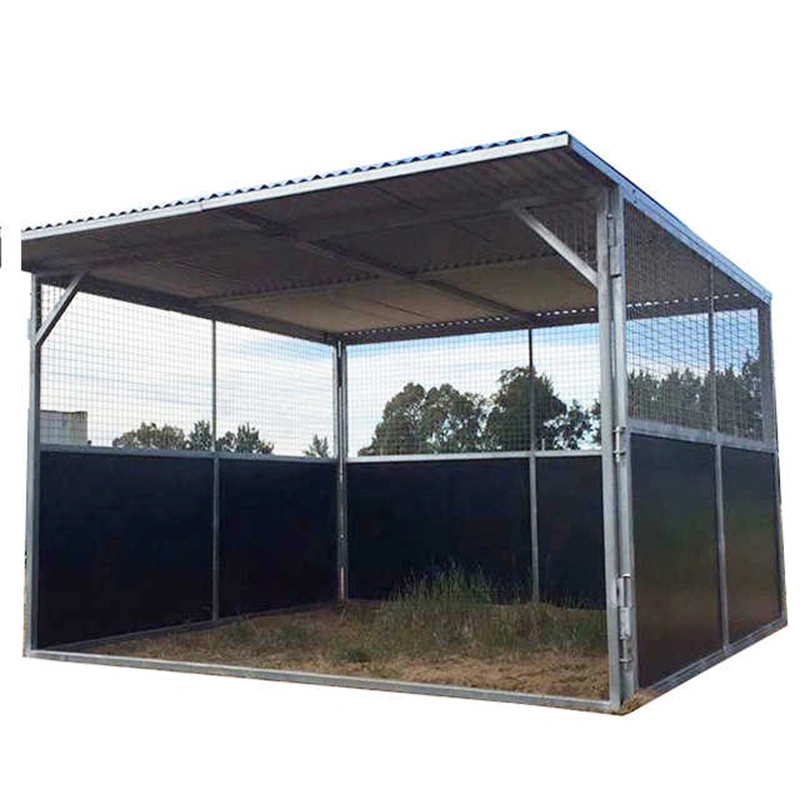
Zinc Plating (Electrogalvanizing): How It Works
A 5–15 micron zinc coating looks fine in a factory.
Electrogalvanizing runs steel through an electrochemical bath. An electrical current deposits zinc ions onto the surface, building up a coating between 5 and 15 microns thick. The process is fast, cheap, and produces a clean, uniform finish. That finish is what gets buyers into trouble.
The Coating Thickness Problem
At 5–15 microns, the zinc layer on an electrogalvanized frame is 3 to 8 times thinner than a hot-dip galvanized equivalent. That gap matters the moment the steel gets scratched, drilled, or welded on-site. There is no metallurgical bond between the zinc and the steel substrate in electrogalvanizing. The zinc sits on top. Once it is breached, bare steel is exposed with no fallback protection.
No Self-Healing. No Second Chance.
Hot-dip galvanizing forms zinc-iron alloy layers that can sacrifice zinc ions to protect adjacent bare steel. Electrogalvanized coatings carry no such mechanism. A scratch from a horse shoe, a bolt hole drilled during assembly, or a weld point left unsealed becomes a rust initiation site. In a dry inland climate, that rust might take years to spread. In a coastal or high-humidity environment, surface rust can appear within 12 to 18 months.
Where Zinc Plating Shows Up in the Market
Zinc-plated frames are standard in budget-tier portable stables sold on price. The lower coating cost lets manufacturers hit a lower FOB price point, which looks attractive at the quote stage. The problem surfaces 24 to 36 months after installation, when rust bleeds through paint at weld joints and bolt connections. For equestrian centers in coastal Australia or humid New Zealand regions, that timeline is not acceptable for infrastructure that is meant to last a decade.
- Coating Thickness: 5–15 microns deposited by electrical current. No alloy bonding layer between zinc and steel.
- Self-Healing Capability: None. Once the zinc layer is breached at a cut edge or weld point, bare steel corrodes without protection.
- Coastal ANZ Performance: Salt-laden air and ammonia from horse waste accelerate zinc depletion. Rust at weld joints is a known failure pattern within 2–3 years in coastal zones.
- Typical Application: Low-cost portable stable frames where upfront price is the primary selection criterion. Not specified for long-term equestrian infrastructure.
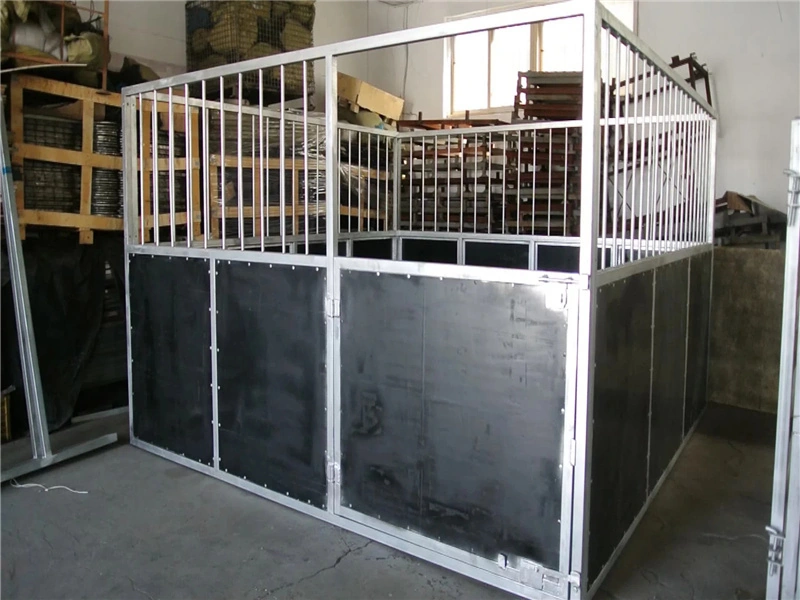
10-Year Cost Comparison
HDG frames cost more at FOB pricing — the 10-year ownership math tells a different story.
The upfront price gap between hot-dip galvanized and electrogalvanized portable stable frames is real. HDG frames carry a higher unit cost — typically reflecting the deeper zinc bath process and the 42-micron minimum coating thickness that DB Stable’s production standard requires. Electrogalvanized alternatives come in lower on the initial quote, which is where most procurement decisions stall.
Where the Maintenance Costs Diverge
Electrogalvanized frames in coastal Australian and New Zealand environments — where salt air, ammonia from horse waste, and high UV combine — show surface rust at weld points and cut edges within 2 to 3 years. At that stage, the remediation options are limited: sand, prime, and repaint annually, or accept accelerating structural degradation. Neither is cheap when you’re managing 10 or more stalls.
HDG frames behave differently at those same weld points. The metallurgical alloy layer formed during hot-dip immersion bonds zinc into the steel surface rather than sitting on top of it. Cut edges and welds — the two locations where electrogalvanizing fails first — retain meaningful zinc coverage. DB Stable adds a polymer sealant over all weld points specifically to close the one gap that standard HDG can leave exposed.
Replacement Cycle and Total Ownership Over 10 Years
- Upfront cost: HDG frames: higher per-unit FOB price | Electrogalvanized frames: lower initial quote.
- Maintenance frequency: HDG: minimal intervention within the 10-year design lifespan | Electrogalvanized: annual repainting or rust treatment likely from year 3 onward in coastal ANZ conditions.
- Replacement cycle: HDG at 42+ microns: rated for 10-year structural lifespan under DB Stable’s production standard | Electrogalvanized at 5–15 microns: frame integrity in high-ammonia, coastal environments typically compromised well before year 7.
- Choose HDG if: Your facility is within 50km of the coast, horses are stabled full-time, or you need the structure to hold its quality tolerance through a full decade without recoating.
- Choose electrogalvanized if: The structure is temporary (under 3 years), located inland with low humidity, and annual maintenance is already built into your operational budget.
The sample approval stage is where this decision gets obscured. Electrogalvanized frames can pass visual inspection and even short-term corrosion checks — the coating looks uniform and the finish is clean. The divergence shows up 18 to 36 months into service, not at the point of delivery. For an equestrian center treating stables as long-term infrastructure rather than a disposable asset, that lag between purchase and failure is the most expensive part of the electrogalvanized equation.
| Cost Category | Zinc-Plated (Electrogalvanized) | Hot-Dip Galvanized (HDG) | 10-Year Verdict |
|---|---|---|---|
| Frame Unit Cost (per stall) | Lower upfront — approx. 15–25% cheaper | Moderate premium — 42+ micron coating adds value | HDG delivers lower total cost of ownership |
| Expected Lifespan (ANZ Conditions) | 2–4 years in coastal or humid zones | 10+ years with minimal degradation | HDG lasts 2–5x longer in Australian environments |
| Repainting / Re-coating Cycles | Every 1–2 years recommended | None required within 10-year warranty period | HDG eliminates recurring maintenance labour costs |
| Rust Repair & Weld Point Treatment | Frequent — cut edges and welds corrode first | Minimal — polymer sealant on all weld points | HDG weld protection prevents the #1 failure point |
| Frame Replacement Cost (10-Year) | 1–2 full replacements likely required | Zero replacements under normal ANZ conditions | HDG avoids AUD $3,000–$8,000+ in replacement costs |
| Ammonia & Salt Exposure Damage | High risk — thin 5–15 micron coating fails rapidly | Low risk — metallurgical alloy layer resists chemical attack | HDG is purpose-built for barn and coastal environments |
| Downtime & Horse Disruption | High — repairs require stall removal and relocation | Near zero — no structural intervention needed | HDG protects horse welfare and operational continuity |
| Estimated 10-Year Total Cost (per stall) | AUD $4,500–$9,000 (unit + maintenance + replacement) | AUD $2,800–$4,500 (unit + near-zero maintenance) | HDG saves up to 40–50% over a full decade |
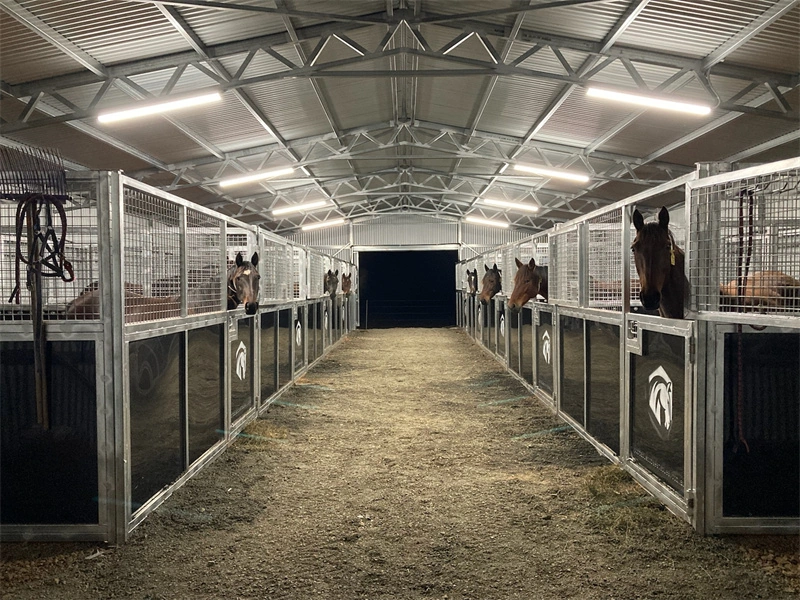
Real-World Performance in ANZ
ASTM B117 salt spray testing exposes the gap zinc plating cannot close in ANZ coastal conditions.
What ASTM B117 Salt Spray Testing Actually Tells You
The ASTM B117 standard runs a continuous salt fog exposure test — the same protocol used to evaluate steel coatings across marine and industrial environments. Under this test, a hot-dip galvanized frame carrying 42+ microns of coating typically sustains several hundred hours before showing red rust. A zinc-plated frame at 5–15 microns? It reaches the same failure threshold far sooner. The coating thickness difference isn’t cosmetic — it’s the entire margin between a 10-year frame and one that starts surface-rusting before the second wet season.
The test matters specifically for ANZ buyers because the ASTM B117 result maps directly onto real coastal exposure. Salt-laden air within 5 km of the Australian coastline behaves almost identically to the salt fog chamber — relentless, low-concentration, and continuous. A frame that fails at 200 hours in the chamber will degrade visibly within 18–24 months at a coastal property. That’s not a prediction; it’s the standard’s intended application.
Sydney Coastal Equestrian Center: The Failure Pattern That Repeats
Equestrian centers within the Sydney coastal belt face a compounding problem that inland properties don’t: salt air plus ammonia from horse urine. Ammonia accelerates zinc corrosion by attacking the oxide layer that thin zinc-plated coatings rely on for protection. A zinc-plated stable frame in this environment doesn’t just rust — it delaminates at the weld points first, because welds are where the plating is thinnest and the base steel is most exposed. That’s the failure mode buyers near the coast consistently report after year two.
Hot-dip galvanizing handles this differently. The immersion process coats the steel metallurgically, including inside hollow sections and across weld zones, creating an alloy layer that doesn’t rely on surface adhesion. When DB Stable adds a polymer sealant specifically over weld points on top of the HDG coating, it closes the one gap that standard galvanizing leaves open — the micro-porosity at heat-affected weld zones where flaking can initiate under repeated ammonia exposure.
New Zealand Humid Climate: A Different Stress, Same Outcome
New Zealand’s North Island combines high annual rainfall with warm temperatures — conditions that keep steel surfaces wet for extended periods and accelerate electrochemical corrosion. The risk here isn’t acute salt spray; it’s sustained moisture retention in the frame joints. Zinc-plated frames in these conditions develop crevice corrosion at bolted connections, which is invisible until the joint itself weakens. A 42-micron HDG frame carries enough sacrificial zinc to remain protective through years of this moisture cycling, which is why the 10-year lifespan specification is specifically relevant to prefabricated horse stable rust-proof performance in New Zealand’s climate.
- ASTM B117 Threshold: HDG at 42+ microns: substantially higher salt spray endurance than zinc-plated frames at 5–15 microns before red rust onset.
- Ammonia Corrosion Risk: Zinc-plated weld points delaminate under sustained ammonia exposure; HDG plus polymer weld sealant (DB Stable specification) eliminates this failure initiation point.
- NZ Moisture Cycling: Crevice corrosion at bolted joints is the primary failure mode in high-rainfall NZ regions; 42-micron sacrificial zinc layer provides the buffer thin plating cannot.
- Coastal ANZ Timeline: Zinc-plated frames in coastal zones: surface rust commonly observed within 2–3 years; HDG frames: corrosion protection maintained across a 10-year service window.

Which One Should Equestrian Centers Choose?
Hot-dip galvanizing wins for most ANZ operations.
The short answer: if your property sits within 50km of the Australian or New Zealand coastline, or if you run more than four horses at consistent density, zinc-plated frames are the wrong call. The coating fails too fast under salt air and ammonia exposure combined — and you end up replacing structural components before the horses have worn out the floor mats.
Decision Matrix by Location and Humidity
- Coastal ANZ (within 50km of ocean): Hot-dip galvanized only. Salt-laden air accelerates zinc-plated corrosion to visible rust within 2–3 years. A 42+ micron HDG coating holds the metallurgical alloy layer intact even at cut edges and weld points.
- Inland high-humidity (Queensland, Northland NZ): Hot-dip galvanized strongly preferred. Persistent moisture and ammonia off-gassing from stall waste attack thin electrogalvanized coatings at the same rate as salt air — just slightly slower.
- Dry inland regions (inland SA, Central Otago NZ): Zinc-plated frames are acceptable for temporary or seasonal use only. For permanent infrastructure, HDG still delivers a longer service life and avoids mid-contract maintenance costs.
- High-density use (6+ horses, daily turnover): Ammonia concentration in the stall environment rises significantly. Hot-dip galvanizing with a polymer sealant on weld points — as applied across DB Stable’s production frames — is the only coating that holds up reliably under sustained ammonia corrosion.
- Moderate use (3–5 horses, standard boarding): HDG is still the recommended specification. The cost difference per stall over a 10-year period is outweighed by avoided maintenance, especially in ANZ conditions where UV degradation compounds corrosion risk.
- Low-intensity use (1–2 horses, dry inland location): Zinc-plated frames are a viable short-term option. Conduct a visual inspection at the 18-month mark and plan for a 5–7 year replacement cycle rather than a 10-year one.
- Choose HDG if: Your facility is coastal, runs 4+ horses, operates year-round, or requires a 10-year warranty horizon. This covers the majority of professional equestrian centers in Australia and New Zealand.
- Choose zinc-plated if: You need a temporary structure in a dry inland location with fewer than three horses and a planned replacement cycle of under 6 years. Treat it as a short-term asset, not permanent infrastructure.
Budget Reality: Small vs. Large Operations
Smaller operations — four stalls or fewer — sometimes justify zinc-plated frames on upfront FOB pricing alone, especially when the facility is inland and horses are low-intensity users. The lower entry cost is real. But the math shifts the moment you scale up. At eight stalls or more, a mid-cycle frame replacement doesn’t just cost money — it disrupts horse welfare protocols, triggers re-installation labour, and often voids any structural warranty on the panels themselves.
For equestrian centers running thoroughbreds or competition horses, the welfare argument alone closes the debate. These animals are sensitive to environmental disruption. A stall pulled for rust remediation mid-season is not a neutral event. HDG frames with a 10-year lifespan remove that variable entirely.
Horse Density and Usage Intensity as the Deciding Factor
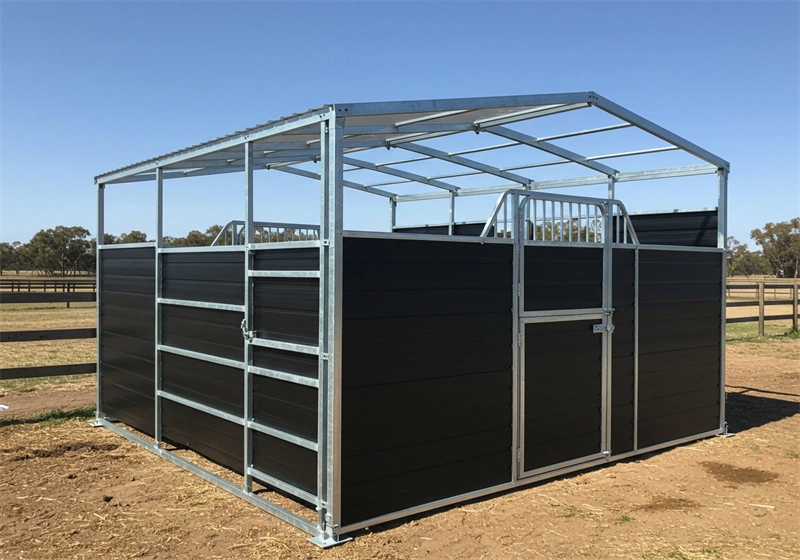
How DB Stable Ensures HDG Quality
A reading below 42 microns at any weld point is a rejection trigger, not a negotiation.
Ask any supplier where they measure coating thickness, and the answer tells you everything. Measuring only the flat tube faces is easy. Weld points, cut edges, and drilled holes are where the zinc layer thins out — and where rust starts. DB Stable’s production protocol requires thickness readings at weld joints and frame intersections, not just the flat steel faces, with a minimum pass threshold of 42 microns across all measurement points.
Why Weld Points Are the Weak Link in HDG Frames
During hot-dip galvanizing, the steel passes through a molten zinc bath at around 450°C. Flat surfaces coat evenly. But weld seams create micro-surface irregularities — flux residue, oxide scale, and porosity — that can cause the zinc to bond unevenly or pull thin. On a portable horse stable that ships flat-packed and gets bolted together on-site, those weld points are also the highest-stress locations. A thin zinc layer at a stress point in a coastal Australian environment is a rust failure waiting to happen.
Polymer Sealant on Weld Points: The Additional Layer
DB Stable applies a polymer sealant specifically over weld points and vulnerable joint areas after the galvanizing process. This is not a standard step in most prefabricated stable production. The sealant fills micro-pores in the zinc surface at joints, creating a secondary barrier against ammonia vapor — which is the primary chemical aggressor inside any working horse barn — and against the salt-laden air common in coastal ANZ regions. Without this step, even a 42-micron HDG coating can degrade faster at joints than on open tube sections.
What to Verify Before Sample Approval
- Measurement locations: Request thickness readings from weld points and cut edges specifically — not just flat tube faces. If the supplier only provides flat-face readings, the data is incomplete.
- Minimum threshold: DB Stable’s internal production standard requires a minimum of 42 microns at all measured points. Frames reading below this at any joint are rejected before shipment.
- Polymer sealant application: Confirm whether the supplier applies any secondary coating or sealant over weld zones. This step is what separates a 10-year HDG frame from one that starts showing joint rust in year 4.
- Export quality tolerance: For prefabricated horse stable exports to Australia, the flat-pack shipping process puts mechanical stress on frame joints during transit. Frames that pass static thickness checks but lack weld-point sealant can arrive with compromised coating at connection points.
The 10-year lifespan claim on an HDG portable stable is only valid if the coating holds at every point — including the ones that are hardest to inspect. Asking for photographic evidence of thickness readings at weld joints during the sample approval stage is a reasonable request. Any supplier that pushes back on that is telling you something important about their quality tolerance.
Conclusion
The coating thickness stamped on a spec sheet is the difference between a stable that holds up through a decade of coastal salt, ammonia, and UV exposure — and one that starts bleeding rust at the weld points by year three. Hot-dip galvanizing at 42 microns or above is not a premium upgrade for Australian and New Zealand conditions; it is the minimum viable specification. Zinc-plated frames carry a lower FOB pricing figure that evaporates quickly once you factor in recoating labour, downtime, and early replacement cycles.
- Hot-dip galvanized coatings start at 42 microns — zinc plating tops out at 5–15 microns with no self-healing capability.
- Zinc-plated frames in coastal Australian zones commonly show surface rust within 2–3 years, particularly at cut edges and welds.
- ASTM B117 salt spray test performance is the clearest objective benchmark to request before approving a supplier’s sample.
Before you commit budget to a frame specification, run three yes/no questions past your supplier: Can they provide a coating thickness measurement report showing 42 microns or above? Do they apply a secondary sealant at weld points as standard — not on request? And does their sample approval process include a pre-production thickness check, not just a visual sign-off? If any answer is no or uncertain, the quality tolerance risk sits entirely with you. Review the 10-stall back-to-back configuration at DB Stable to see how HDG framing and polymer weld sealing are built into the standard production spec.
Frequently Asked Questions
Does hot-dip galvanizing outlast zinc plating in coastal Australia?
Yes, hot-dip galvanizing outlasts zinc plating significantly in coastal Australian conditions. A 42–85 micron metallurgical alloy bond resists salt air and ammonia attack far longer. For any property within 50 km of the Australian coastline, HDG is the only specification worth quoting.
What coating thickness should I specify for a 10-year stable lifespan?
Specify a minimum of 42 microns for hot-dip galvanized steel to achieve a credible 10-year service life in Australian conditions. Zinc-plated coatings at 5–15 microns will not meet. Request a mill certificate or in-house thickness measurement report before accepting any pre-production sample.
Is zinc-plated steel ever acceptable for horse stalls?
Zinc-plated steel is acceptable only in low-humidity, inland locations where horses are not stabled permanently and the structure is treated. If the stable will be used year-round or resold to end users, do not accept zinc-plated frames as a substitute for HDG.
How does hot-dip galvanizing handle weld points on stable frames?
Weld points are the most corrosion-vulnerable spots on any fabricated steel frame, and hot-dip galvanizing covers them in the same immersion bath as the parent metal. DB Stable adds. Ask your supplier to confirm weld-point treatment specifically, not just overall coating thickness.
Which finish gives better 10-year ROI for an equestrian center buyer?
Hot-dip galvanizing delivers better 10-year ROI for any equestrian center operating at commercial horse density, because maintenance and early replacement costs on. Run a total cost of ownership comparison against your specific location and horse count before making a final sourcing decision.