A portable stable quote arrives as one price per bay, and that single number carries two commodities. The frame is steel; the boards filling it are high-density polyethylene (HDPE). Resin and billet are quoted off different markets and rarely move on the same curve, yet the hdpe resin price quote validity question is seldom asked, and the resin half is almost never written as its own line — because the plastic sits inside a product buyers still discuss as steel.
The metal half of that exposure is a separate story; this piece covers only the plastic half and the resin lines a price has to survive. Nothing in the published record here is priced — no board rate, no resin index, no validity period. What is documented is which components are plastic, how much plastic sits in one bay, and how long an order waits behind a works running roughly 20 sets a week.
Key Takeaways
- One bay carries two exposures: 10 mm HDPE boards priced off resin, and a Q235 galvanised frame priced off steel and zinc.
- The plastic is not a rounding error — boards are 2844×1194×10 mm or 3494×1194×10 mm at about 200 kg each, plus 1024×1054×10 mm door boards.
- No prices are published anywhere in the record, so a resin move reaches you as a re-quote rather than a visible index change.
- A validity window must cover the queue, not just the paperwork: capacity is roughly 20 sets a week against a 10-set minimum.
- Ask which lines re-price on resin — boards and door blanks — and which move with zinc, so one commodity cannot move the whole number quietly.
Why one line item carries two commodities
The boards are plastic by design, and a buyer cannot simply drop them when resin runs. This site’s panels use 10 mm HDPE because it is UV-stabilised, antibacterial, washable, will not rot, resists chewing and cushions a kick away from the hoof. Timber boards, by contrast, typically carry an upkeep-and-replacement load that these 10 mm plastic boards avoid.
Look at what that plastic weighs. Published board sizes are 2844×1194×10 mm or 3494×1194×10 mm, and a board runs about 200 kg. Doors take 1024×1054×10 mm blanks. Against that, the frame is Q235 steel — 50×50×2.0 mm square tube, 60×30 mm oval or 32 mm round, fully welded — and hot-dip galvanised to a factory commitment of 42 microns and above, with the process run to AS/NZS 4680.
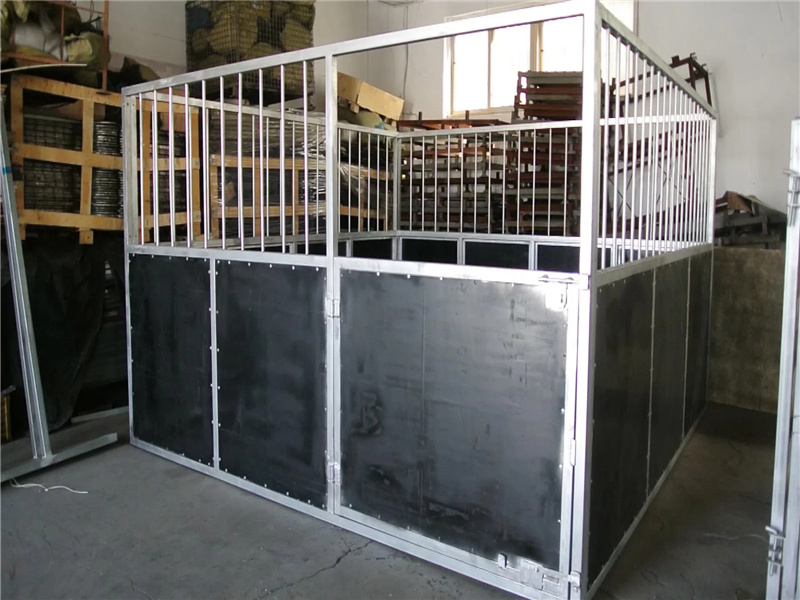
Now multiply it across a layout, which is where the exposure hides. The published configuration table gives 3 side panels and 1 door for a single bay, 5 panels and 2 doors for two adjacent bays, and 11 panels and 6 doors for six back-to-back bays. Every one of those panels carries an HDPE board and every door carries a smaller one. Because party and rear walls are shared, ask the works to price the boards-to-frame ratio at your bay count rather than assuming it scales the way a sketch suggests.
What a resin move actually touches on your order
Resin is a petrochemical derivative; billet and zinc are metals market lines. The practical consequence is that a quote can age on either half, and the two halves rarely move together. A distributor who reads only steel news will be surprised by a board price, and a buyer watching plastic will not understand why the frame line moved.
Where a resin move lands is specific: the boards and the door blanks. Not the tube, not the mesh — 4.0 mm wire in 50×50 mm openings is a wire-rod item — and not the coating bath. Ask for that split inside the quote itself and the exposure becomes visible per bay rather than buried in a bundle price.
Where it bites is timing. Production is committed after a deposit, capacity is roughly 20 sets a week, and the minimum order sits at 10 sets. A quote issued today against a slot that starts weeks later carries every market day in between. Since no price holds are published, the buyer has to create the hold in writing.
Container make-up changes the arithmetic again. An order that combines models, or splits a load between frames and panels, changes how much board weight ships against how many frames, and that composition — not the bay count alone — decides which half of the order is exposed.
The two exposures, side by side
Take the order apart by component and each line answers a different market question. The left column below is what the product record fixes; the right column is what to ask before you sign.
| Component | Documented specification | Ask this before the price holds |
|---|---|---|
| Fill boards | 10 mm HDPE, 2844×1194 or 3494×1194, about 200 kg each | Resin-linked portion, and whether board colour changes it |
| Door blanks | 1024×1054×10 mm HDPE per door | Same rate per square metre as side boards, or priced per door |
| Frame | Q235 steel, 50×50×2.0 mm square tube, 60×30 mm oval, 32 mm round, welded | Steel-linked portion, and whether gauge substitutions are quoted |
| Coating | Hot-dip galvanised, factory commitment 42 microns and above, process to AS/NZS 4680 | Whether zinc moves it separately, or it is bundled into the frame |
| Mesh and hardware | 4.0 mm wire in 50×50 mm openings; stainless door latches; aluminium alloy feeder | Which accessories are quoted per unit versus included per bay |
Read the right column as one question asked five ways: what exactly moves if this market moves. A quote that cannot answer it is a bundle price, and a bundle price is difficult to test when a re-quote arrives.

How to write a validity window into a quote
Five asks, in the order they should go into an email. They cost nothing and each one converts a floating number into something a works has to answer.
- Put an expiry on the paper. Ask how many days the price holds from issue, and what happens if your deposit lands the day after it. The record publishes response times — enquiries inside 6 hours, drawings or pricing inside 24 — but no price-hold period, so request one in writing.
- Get the component split. Boards and door blanks on one line, frames on another, coating and hardware stated. That is the only way to see which half moved on a re-quote. The steel side is covered separately in steel price cycles and your stable quote.
- Tie the window to your slot, not the invoice date. Capacity is roughly 20 sets a week against a 10-set minimum, and production is committed after a deposit. The steel-side piece explains why an expiry date exists; the ask here is narrower — the window has to survive both the resin lines and the date your units enter the queue.
- Ask what your mix does to exposure. Distributors combining models or loading panels with frames should ask whether a second container inherits the first price. Virgin versus recycled board content is a separate cost and quality question, worked through in recycled versus virgin HDPE stable panels.
- Re-issue rather than amend. If anything moves, ask for a fresh written quote carrying the same specification, and compare landed numbers line by line — the method is in FOB, CIF and DDP stable pricing. Third-party QC at the works is a documented service; schedule it against the confirmed slot rather than rushing it to catch an expiring price.
Frequently Asked Questions
How long does a stable quote usually hold?
There is no published validity period for these units, which is the point. Ask for the number of days in writing when the quote is issued, and confirm whether paying a deposit inside that window fixes the price through to production.
Which parts of a portable stable are plastic?
The fill boards and door blanks: 10 mm HDPE in 2844×1194 or 3494×1194 sizes, and 1024×1054 mm at the doors, supplied in black, white or green. Frames, mesh and hardware remain steel or, for the swivel feeder, aluminium alloy.
Should I re-quote a second container at the old price?
Ask, in writing, before the order is built. Nothing in the record commits a supplier to carrying a price forward, and a second container usually changes the mix of boards to frames, which changes what the new number is even pricing.
Does cheaper resin mean a worse panel?
Not necessarily, but the specification has to say what you are buying. Board thickness of 10 mm, colour, and the recycled or virgin content are the fields to confirm; recycled versus virgin feedstock is where a price gap usually hides.
Conclusion
A stable price is two commodity bets wrapped in one figure, and the plastic half is rarely written out as a separate line. The board sizes, the roughly 200 kg per panel and the published configuration table tell you exactly how much resin your block carries; the capacity and minimum order tell you how long that exposure stays open.
Get the split, the expiry and the slot in writing before you commit a deposit, then let the re-quote answer to a specification rather than to a total.