Agistment income stables look like a simple equation on paper: put horses on your property, charge a weekly fee, let the stalls pay for themselves. In practice, the equation only works when the buyer understands which numbers drive it — the fee your local market actually pays, the occupancy your property can hold through winter, and the landed cost of the stables themselves. Get one of those three wrong and the venture runs backwards.
This article lays out the income math for an agistment operator buying portable stables from a factory such as DB Stable, which has manufactured and exported flat-pack stables for the Australian and New Zealand market since 2013. It deliberately avoids quoting “typical” agistment rates, because rates vary by region, service level and season — so this guide gives you the formula and the inputs to gather.
Key Takeaways
- Stall payback is three variables: net weekly income per stall, occupancy rate, and landed cost per stall — no honest article can quote your local rate for you.
- Density is the cheapest lever you have: a six-stall back-to-back block needs only 11 side panels and 6 doors, because shared walls replace standalone panels.
- A single panel with frame weighs roughly 200kg, so assembly and relocation labour is a real operating cost to budget, not an afterthought.
- Once agistment income reaches the GST registration threshold of $75,000 in a 12-month period, one-eleventh of every GST-inclusive fee belongs to the ATO.
- Assets under the $20,000 instant asset write-off threshold (available to businesses with turnover under $10 million) can be expensed in the year of purchase — confirm treatment with a registered tax agent.
- The factory minimum order is 10 sets, so plan the first batch around your most defensible occupancy, not your best-case summer.
The Revenue Side: What One Stall Actually Earns
Agistment fees are set by your local market, not by any national schedule. Full-care agistment commands a premium over part-care or paddock-with-shelter arrangements, and rates differ again between horse-country districts and the peri-urban fringe. Before you buy a single stall, collect the advertised rates of every property in your catchment and note what each includes. That spreadsheet is the first half of your income math.
The second half is occupancy. A stable block that fills in summer and empties in winter is a different business from one that holds clients year-round, and the difference shows up directly in payback time. In our experience, retention matters more than headline rate — a client who stays three years beats three who each stay one, which is why operators who already run agistment businesses on portable stables guard their service levels.
Write the revenue line as: annual income = stalls × occupancy × net weekly fee × 52. The net matters. Deduct feed you supply, bedding, electricity, water and your own labour before you call any of it profit. If you cannot fill in the net weekly fee from your own local research, no supplier article can do it for you — and you should treat any that tries with suspicion.
The Capital Side: What a Stall Costs to Land
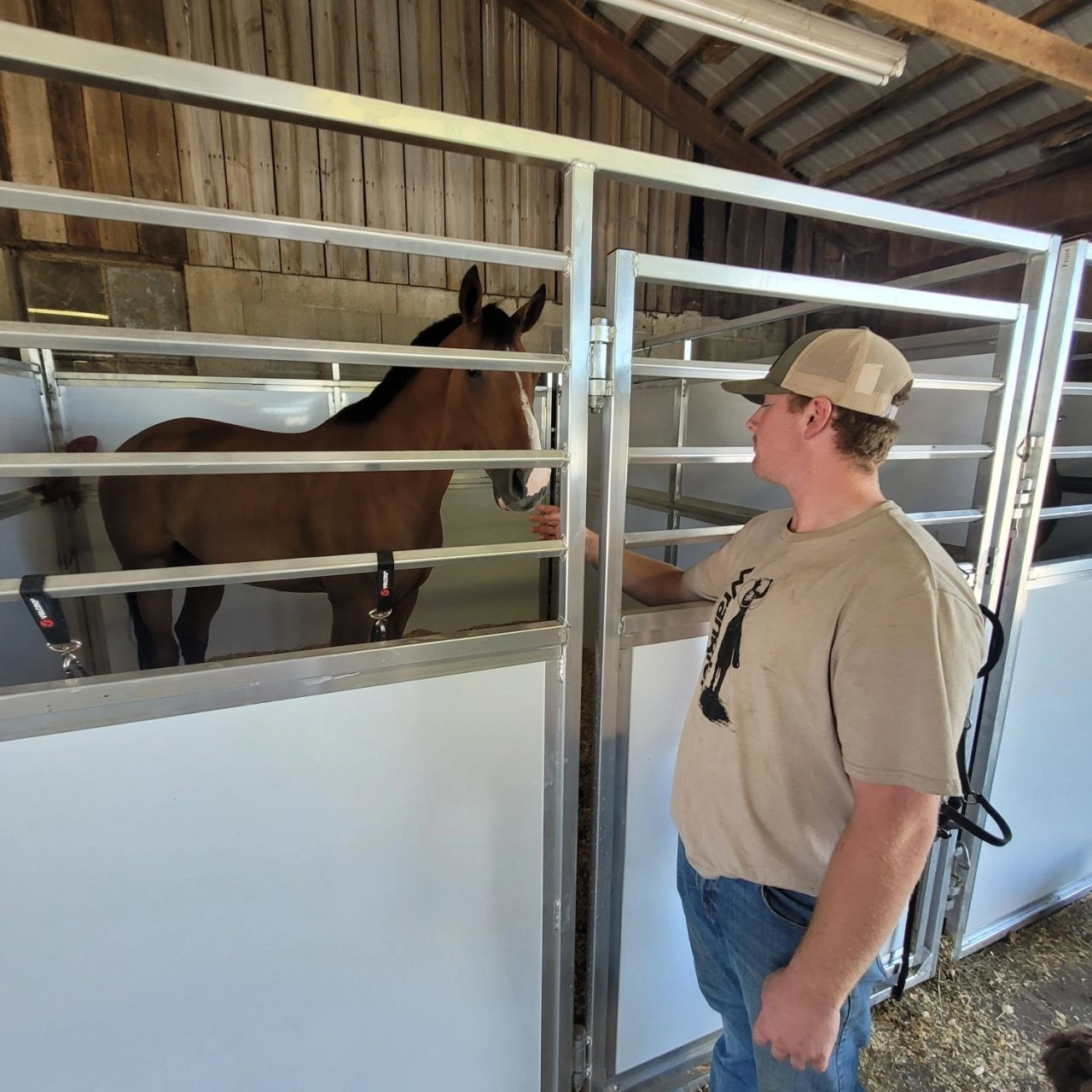
Portable stables are engineered for flat-pack shipping, which compresses the sea-freight volume per stall and lets neighbouring orders share container space. The structure itself is a hot-dip galvanised Q235 steel frame — 50×50×2.0mm square tube at the core — clad with 10mm HDPE panels that do not rot, do not need painting and wash clean between horses. The galvanising is applied to a process run to AS/NZS 4680 with a factory-specified coating of 42 microns or more. Those material choices are what keep the capital line from quietly becoming a maintenance line in year three.
Density is where factory configuration saves real money. The official configuration table shows how panel counts scale:
| Configuration | Side panels | Doors |
|---|---|---|
| 1 stall | 3 | 1 |
| 2 stalls (adjacent) | 5 | 2 |
| 4 stalls | 9 | 4 |
| 6 stalls (back-to-back) | 11 | 6 |
Read the table the way a buyer should: six stalls arranged back-to-back need 11 panels, while the same six stalls as isolated singles would need 18. Shared walls are the cheapest stalls you will ever build, and the back-to-back layout also gives you a single roofline option — a Colorbond roof or the raised steel roof at 2.65m — that shades the whole block at once.
The Operating Side: Labour, Maintenance and the HDPE Dividend
Two operating numbers come straight from the factory specification and belong in your model. First, assembly: the corner-pin design goes together without specialist tools, with two to three people assembling a stable in around 30 minutes. That is your commissioning labour — trivial for one stall, worth planning for a ten-stall block. Second, mass: a single panel with its frame lands at roughly 200kg, so every subsequent move or reconfiguration needs a plan, whether that is a tractor with forks or a crew and a trailer.
Maintenance is where HDPE quietly earns its keep. The 10mm panels are UV-stabilised, antibacterial, washable and resistant to chewing and kicking, in black, white or green. There is no timber to rot, no paint to refresh, and no welded mesh to wire-brush. Your annual maintenance line shrinks to fastener checks, drainage upkeep and the occasional wash-down, which is exactly what you want in a business where every dollar of labour has to be recovered from a weekly fee.
Break-Even Math Without Invented Numbers
Here is the formula, and the inputs are yours to gather:
Payback (weeks) = landed cost per stall ÷ (net weekly income per stall × occupancy)
Landed cost per stall means the delivered, assembled, connected figure: the kit, freight, any roof structure, your site preparation, and the labour of the crew that put it up. Net weekly income means the fee minus the variable costs of servicing that horse. Occupancy is the honest year-round figure, not the February figure. Run the calculation at your real rate, then run it again at 70% of that rate — if the venture still looks acceptable at the lower number, your downside is covered.
One line item operators forget until the tax office reminds them: GST. In Australia, once your GST turnover reaches the registration threshold of $75,000 in a rolling 12-month period, you must register, and from that point one-eleventh of every GST-inclusive agistment fee is not yours — it is collected and remitted. New Zealand runs its own GST registration threshold, so confirm the current figure with your agent, and how input credits on the stable purchase interact with your registration date. A registered tax agent can confirm how the rules apply to your structure.
How Many Agistment Income Stables First?
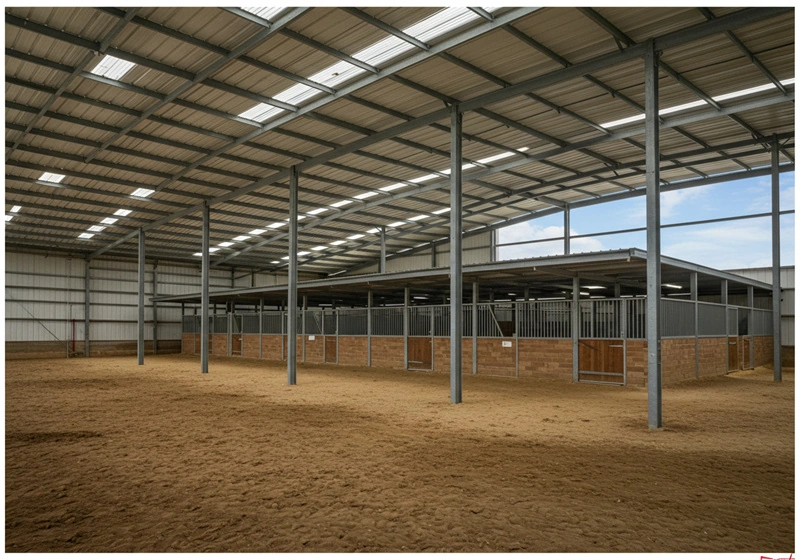
The factory minimum order is 10 sets, with production capacity of up to 20 sets per week behind it. For an operator pricing agistment income stables, that minimum is not a hurdle — it is a forcing function towards the layout that makes money. Ten sets arranged as a back-to-back block give you a roofline, a service aisle and shared walls on most stalls, at a panel count far below what isolated singles would demand.
Size the first order against your most defensible occupancy. If six horses’ owners have already said yes, a ten-set order leaves four stalls for growth without a second freight campaign. If you are building on speculation in an untested market, the same ten sets spread as day-shelter and overflow can still earn their keep while you establish the fee structure the next order will be sized against.
The Tax Lines That Change the Answer
Two tax facts can move the payback calculation materially. The instant asset write-off allows eligible businesses with turnover under $10 million to immediately expense assets costing less than $20,000 — and a portable stable kit ordered to the right configuration can sit under that line. Expensing the kit in the year of purchase pulls the tax benefit forward, which shortens the effective payback period in cash terms. We walked through the mechanics, and the caveats, in our article on the instant asset write-off and portable stables.
The second fact is structural: because these stables are portable and modular rather than fixed buildings, their treatment can differ from permanent construction in both Australia and New Zealand. That distinction affects depreciation schedules and, in some council areas, whether you need consent at all — worth thirty minutes of a registered tax agent’s time before you place a deposit, not after.
If the math clears your bar, the next step is mechanical: send your layout to the factory with your stall count and roof preference, and you will have a fully specified quote within 24 hours to drop into the formula above.
Frequently Asked Questions
How many portable stables do I need for agistment income to be worthwhile?
The factory minimum order is 10 sets, and a back-to-back block of that size benefits from shared walls — six stalls need only 11 side panels and 6 doors. Worthwhile depends on your local net fee and occupancy, so run the payback formula with your own researched numbers before committing.
What maintenance costs should I budget for portable agistment stables?
Budget for fastener checks, drainage upkeep and wash-downs rather than repainting or rot repair — the 10mm HDPE panels are UV-stabilised and washable, and the galvanised frame needs no paint.
Does agistment income affect my GST obligations?
Yes. Once your GST turnover reaches $75,000 in a rolling 12-month period, registration is compulsory and one-eleventh of every GST-inclusive fee is remitted to the ATO. A registered tax agent can confirm how the threshold applies to your operation.
Can I claim portable stables on tax in the year I buy them?
Possibly. Eligible businesses with turnover under $10 million can immediately expense assets costing less than $20,000 under the instant asset write-off, and a kit configured to sit under that line can qualify. Confirm your eligibility with a registered tax agent before relying on it.
How long does assembly take for a stable block?
The corner-pin design needs no specialist tools, and two to three people assemble one stable in around 30 minutes. A ten-set block is a planned weekend with a small crew — but each panel weighs roughly 200kg, so arrange unloading machinery.
Conclusion
The honest version of agistment income math has no shortcut: your local net fee, your year-round occupancy and your landed cost per stall decide whether the venture pays. What a well-specified portable stable does is improve the denominator — shared walls that cut the panel count per stall, a galvanised frame and washable HDPE walls that keep the maintenance line thin, and a modular layout that lets you add revenue stalls without repeating the freight campaign.
Run the payback formula with your researched numbers, stress it at a lower occupancy, and talk the tax lines through with your agent. When the math clears, request a quote against your layout and drop the real figure into the equation.