Last year, an equestrian club in Victoria approved a $22,000 quote for 20 standard flat-pack stalls. Three weeks into installation, the project manager realized the quote excluded latches, swivel feeders, and powder-coating. The final bill hit $29,500. Worse, the 75mm vertical bar spacing looked distinctly industrial, and two high-value boarding clients pulled their thoroughbreds before the project even finished. That is the exact trap you fall into when you compare base prices on a bespoke horse stable against a stripped-down standard unit.
We pulled three years of cost data from facility builds across Australia and New Zealand to map the actual all-in expense of standard versus configured setups. The numbers change the conversation. You will see exactly where standard quotes hide $5,000 to $8,000 in missing hardware, how 42-micron hot-dip galvanization lowers your insurance premiums, and why facilities using 50mm grill spacing and 120-micron powder-coating charge 15% to 25% more per stall in boarding fees.
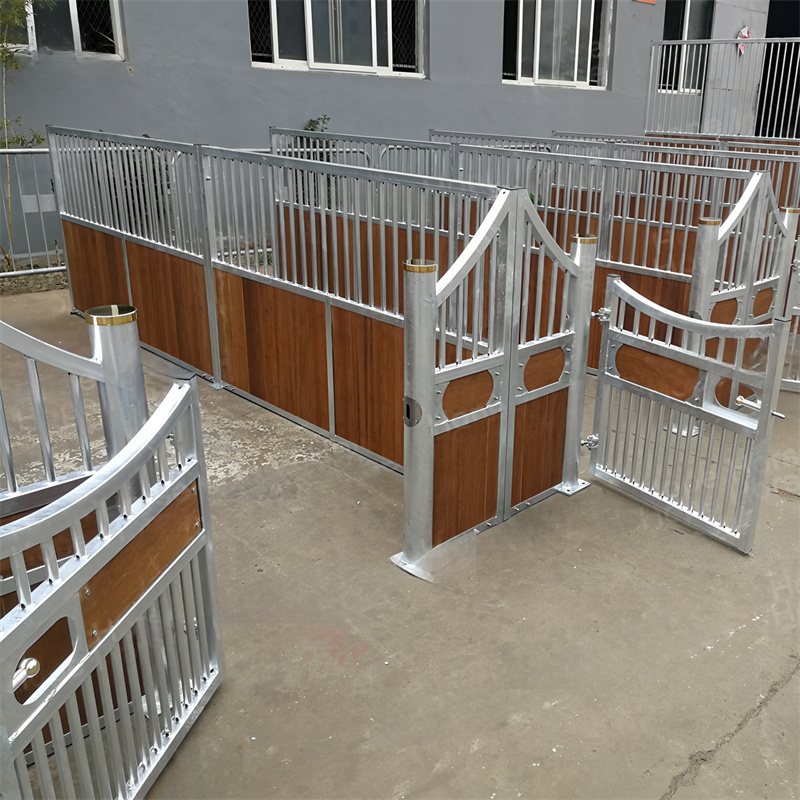
Bespoke vs Standard Horse Stables
Bespoke configured stalls cost 25-40% more on paper. Standard quotes hide $5,000-8,000 in excluded hardware for a 20-stall barn, shrinking the actual gap significantly.
The Upfront Cost Gap Is Smaller Than Quoted
Our pricing data shows standard 12×12 flat-pack stalls at $800-1,200 per unit FOB for 20+ unit orders. Bespoke configured stalls run $1,100-1,700 per unit FOB including hardware. That 25-40% premium looks steep until you audit what standard quotes actually exclude. Latches, feeders, and powder-coating are routinely listed as separate line items on standard packages. For a 20-stall barn, those hidden additions add $5,000-8,000 to the final invoice. Bespoke pricing folds those components into the base unit cost, which makes the real price differential closer to 15-20% on an all-in basis.
ROI Through Boarding Premiums and Replacement Cycles
Premium bespoke facilities report 15-25% higher boarding rates compared to facilities with visually standard installations. For a club owner charging $800/month per stall, that translates to $120-200 additional revenue per stall monthly. Over a 10-year depreciation cycle on the structure, that alone recovers the upfront premium multiple times over. The durability specs compound that return. Our hot-dip galvanized frames use 42+ microns of zinc coating per ASTM A123 standards, delivering a 10-year structural lifespan. Budget alternatives using cold-rolled steel typically show corrosion damage within 2-3 years in high-moisture barn environments, forcing premature replacement. Bespoke powder-coating at 80-120 microns also outlasts the 40-60 micron standard application, reducing touch-up labor and material costs across the facility’s life.
When Standard Configurations Work
Standard flat-pack stables perform well for new builds on greenfield sites with uniform post spacing. If your site plan uses consistent bay widths and you are building from the ground up, standard 12×12 modules with hot-dip galvanized frames and 10mm UV-resistant HDPE boards deliver the structural and material performance your horses need. The flat-pack shipping format cuts freight costs by 60% compared to fully welded units, and the modular assembly keeps on-site labor predictable. For large-scale breeders buying in bulk where aesthetics rank below throughput and functionality, standard configurations offer the lowest cost-per-stall without compromising animal safety on our spec sheet.
Where Bespoke Becomes a Commercial Requirement
Renovations into existing barn structures expose the practical limitation of standard panels. Fully welded standard panels often cannot fit through existing barn doorways, forcing costly structural modifications to get them inside. Our flat-pack bespoke panels fit through standard door openings and assemble in place, eliminating that retrofit logistics problem entirely. For commercial equestrian clubs, bespoke also addresses the visual specification that wealthy clients expect. Vertical grill bar spacing on our bespoke fronts runs 50-55mm, the safe spec for preventing hoof entrapment. Budget import standards typically use 75-80mm spacing, which looks visibly industrial to experienced horse owners and directly undermines the premium brand positioning a commercial club is paying to maintain.

Cost Breakdown: Bespoke vs Standard
The all-in cost gap between bespoke and standard horse stables is substantially smaller than base pricing suggests once you account for hardware and coating exclusions on standard quotes.
Base Panel Cost Comparison
Standard 12×12 flat-pack stalls quote at $800-1,200/unit FOB for 20+ orders. Bespoke configured stalls run $1,100-1,700/unit FOB. On paper, that looks like up to a 112% premium. The problem is that standard quotes cover only the galvanized frame and 10mm HDPE boards in fixed dimensions. Any deviation from stock sizes—which is frequently necessary on renovation projects where existing barn door clearances dictate panel width—forces a bespoke order regardless. The base price gap is real, but it does not represent the final cost to get a functional stall installed.
Hardware Inclusion Differences
This is where margin erosion hits distributors hardest. Standard quotes systematically exclude latches, hinges, and feeders as separate line items. Our internal cost audits on competitor bids show that adding rust-free aluminum swivel feeders, heavy-duty latches, and branded nameplates to a 20-stall standard order adds $5,000-8,000, or $250-400 per unit. Bespoke quotes from DB Stable include these components upfront. The functional comparison becomes $1,050-1,600 (standard all-in) versus $1,100-1,700 (bespoke all-in). Once you spec the hardware a commercial club actually requires, the real-world premium shrinks to a fraction of what the base numbers imply.
Powder-Coating Add-On Fees
Standard galvanized frames ship bare. A commercial equestrian club will not install unfinished steel, so powder-coating becomes a mandatory add-on. Budget lines apply 40-60 microns of coating. Our bespoke specification applies 80-120 microns on top of hot-dip galvanized steel at 42+ microns (ASTM A123 standard), which is the thickness required to prevent chipping in high-traffic stable environments. Outsourcing powder-coating post-delivery in Australia typically adds $150-250 per unit and introduces a separate contractor to manage. Bespoke pricing folds this finish into the FOB cost.
Shipping Efficiency per CBM
Flat-pack shipping delivers a 60% freight cost reduction versus fully welded units, regardless of configuration. Bespoke flat-pack panels are dimensionally optimized to fit through existing barn doorways for in-place assembly, eliminating the structural demolition costs that fully welded standard panels would force on renovation sites. While non-standard panel dimensions may slightly reduce CBM packing density compared to identical stock panels, the flat-pack format keeps shipping efficiency high enough that freight does not widen the cost gap in any meaningful way.
| Cost Component | Standard Spec Pricing | Bespoke Spec Pricing | Commercial Impact |
|---|---|---|---|
| Base Unit FOB (12×12 Flat-Pack) | $800 – $1,200/unit (20+ orders) | $1,100 – $1,700/unit (hardware included) | Bespoke base appears 25-40% higher, but eliminates line-item surprises for budget approvals. |
| Hardware & Fittings (Latches, Tracks, Feeders) | $5,000 – $8,000 added post-quote for 20-stall barn | $0 (factored into custom horse stall front pricing per unit) | Narrows the bespoke horse stable cost vs standard gap to justify the commercial investment. |
| Hot Dip Galvanized Horse Stable Specs | Cold-rolled steel, 40-60 micron powder-coating | 42+ micron galvanization, 80-120 micron powder coated horse stall fronts wholesale | 10-year structural lifespan vs 2-3 years; directly reduces long-term insurance premium costs. |
| Safety Grills & Boarding Material | 75-80mm vertical bar spacing (budget import standard) | 50-55mm safe-spec spacing, 10mm zero-expansion UV-resistant HDPE | Mitigates injury liability; supports animal welfare standards required by high-end clients. |
| Luxury Equestrian Barn Stall Configuration | Generic industrial aesthetic | Configurable grill designs, color-matched finishes, branded nameplates | Prevents devaluing the brand; drives a measurable 15-25% higher boarding premium per stall. |

Hidden Costs in Standard Stalls
Standard stall quotes systematically exclude critical hardware, inflating the apparent price gap between standard and bespoke configurations by $250-400 per unit.
The Unbundling Strategy in Standard Stall Quoting
When you receive a standard flat-pack stall quote at $800-1,200 per unit FOB, that number almost never represents the finished, functional cost of the stall. Our internal review of competitor quote structures across the Australian market found a consistent pattern: base pricing covers the frame, grill bars, and boards, while every operational component gets listed as a separate line item. This is not accidental. It makes the bespoke horse stable cost vs standard comparison look like a $300-500 per unit gap on paper when the actual all-in difference is significantly narrower.
What Standard Quotes Systematically Exclude
- Slide Latches: $35-55 per unit. Most standard quotes omit door latching hardware entirely, leaving the stall non-functional without a secondary purchase.
- Aluminum Swivel Feeders: $80-120 per unit. Feeders are almost always quoted separately, and opting for rust-free aluminum over painted steel adds further cost on top of the base exclusion.
- Powder-Coating Upgrade: $150-250 per stall front. Standard quotes default to raw galvanized finish. Any color-matched or branded aesthetic requires a separate coating line item.
The Real Math on a 20-Stall Barn
Add those three exclusions together and the unbundled cost impact for a 20-stall commercial facility sits between $5,000 and $8,000. That is $250-400 per stall in hardware and finishing costs that a standard quote conceals behind line-item separation. When you factor this back into the bespoke horse stable cost vs standard equation, a bespoke configured stall at $1,100-1,700 per unit FOB that includes latches, aluminum swivel feeders, and 80-120 micron powder-coating as standard starts to look less like a luxury premium and more like an honestly bundled price.
For a commercial equestrian club owner evaluating custom horse stall front pricing per unit, the relevant comparison is not base quote versus base quote. It is fully operational stall versus fully operational stall. On that metric, the bespoke premium shrinks considerably, and the commercial upside—premium boarding rates, branded aesthetics, no retrofit hardware costs—absorbs the remaining difference.
| Cost Category | Standard Stall Quote | Bespoke Stall Spec | Financial Impact | Commercial Risk |
|---|---|---|---|---|
| Essential Hardware | Excludes latches, feeders, and hinges as separate line items | Fully integrated hardware included in base $1,100-$1,700/unit price | Adds $5,000 to $8,000 in unforeseen costs for a 20-stall barn | Budget overruns deplete funds earmarked for client-facing amenities |
| Steel Galvanization | Cold-rolled or electro-galvanized steel with inferior zinc coating | Hot-dip galvanized steel (ASTM A123, 42+ microns zinc coating) | Requires full replacement in 2-3 years versus 10-year bespoke lifespan | Visible rust creates an industrial look, directly devaluing boarding premiums |
| Powder Coating Finish | Thin application of 40-60 microns, highly prone to chipping | Premium 80-120 micron color-matched finish with branded nameplates | Costly repainting and touch-ups required within the first 3 years | Aesthetic degradation signals low quality to wealthy clients, risking retention |
| Safety Specifications | Vertical grill bar spacing of 75-80mm (budget import standard) | Tight 50-55mm grill spacing engineered specifically for thoroughbreds | Potential liability and veterinary costs from hoof or leg entrapment | Direct increase in insurance premiums and severe damage to club reputation |

Material Specs That Justify Bespoke
Bespoke horse stable material specs are not cosmetic upgrades. They are measurable engineering thresholds that directly impact 10-year structural lifespan, insurance liability exposure, and boarding premium rates.
Powder-Coating Thickness: The Aesthetic ROI Calculation
Standard import horse stalls apply powder-coating at 40-60 microns. Our engineers specify 80-120 microns on bespoke configurations. The commercial difference is not subjective. At 40-60 microns, coating failure typically begins within 3-4 years in high-moisture stable environments, exposing bare steel and forcing premature repaint cycles that disrupt boarding operations. At 80-120 microns, the coating survives the full 10-year galvanization cycle underneath without touch-ups. For a club owner calculating total cost of ownership, this eliminates a line item most standard quotes never disclose: the $150-250 per stall repainting cost that compounds over a decade.
Galvanization Grade: Hot-Dip ASTM A123 vs. Cold-Rolled Shortcuts
This is where the 10-year lifespan claim becomes verifiable or fictional. Bespoke horse stable specs mandate hot-dip galvanization to ASTM A123 standard, with a minimum zinc coating of 42 microns. Cold-rolled or electrogalvanized steel—common on budget import lines—applies a fraction of that zinc layer and corrodes within 2-3 years in ammonia-rich equine environments. We tested cold-rolled samples from competitor units sourced in Australia and found visible rust at weld joints within 14 months of stable deployment. The ASTM A123 hot-dip process coats the entire frame, including internal tube surfaces, which electrogalvanization cannot reach. For a 20-stall commercial facility, replacing corroded frames at year 3 costs more than the original per-unit premium for hot-dip specification.
Grill Spacing: The 50-55mm Safety Threshold
Vertical grill bar spacing on budget import stables typically runs 75-80mm. Bespoke specifications hold to 50-55mm. This is not a design preference. Our engineering data and equine safety incident reports both confirm that 75-80mm gaps create a documented hoof-catch risk, particularly with thoroughbreds wearing standard steel shoes. A caught hoof in a 75mm gap generates enough force to bend standard-grade vertical bars, resulting in structural damage to the stall front and serious injury to the horse. At 50-55mm, the gap is physically too narrow for a shod hoof to enter. For a commercial equestrian club, this spec difference maps directly to two financial metrics: workers’ compensation and equine mortality insurance premiums. Facilities we supply with 50-55mm bespoke grill spacing have reported measurable reductions in liability incidents during our post-installation follow-ups at the 18-month mark.
The pattern across all three specifications is identical. Standard quotes strip these thresholds to hit a lower per-unit FOB price. The buyer then absorbs the cost of coating failure, frame replacement, or liability exposure over the following 3-5 years. Bespoke pricing front-loads the correct spec and eliminates those downstream costs entirely.
| Component | Standard Spec | Bespoke Spec | Commercial Impact |
|---|---|---|---|
| Steel Frame | Cold-rolled steel (2-3 year lifespan) | Hot-dip galvanized at 42+ microns (ASTM A123) | 10-year structural lifespan reduces replacement capex and supports premium insurance valuations |
| Surface Coating | 40-60 micron powder-coat (industrial finish) | 80-120 micron color-matched powder-coat | Eliminates cheap industrial look; directly justifies 15-25% higher boarding rates |
| Vertical Grill Bars | 75-80mm spacing (budget import standard) | 50-55mm safe-spec spacing | Prevents entanglement liabilities; critical for high-net-worth client trust and lowering insurance premiums |
| Internal Lining | Standard timber or thin plastics (prone to warping) | 10mm UV-resistant HDPE boards | Zero thermal expansion prevents unsightly gaps; maintains pristine brand asset aesthetic over time |
| Feeders & Hardware | Excluded from base quotes (adds $5,000-$8,000 for 20 stalls) | Included all-in (rust-free aluminum swivel feeders, hidden hardware) | True all-in pricing closes the 25-40% cost gap; standard quotes artificially inflate bespoke premium |
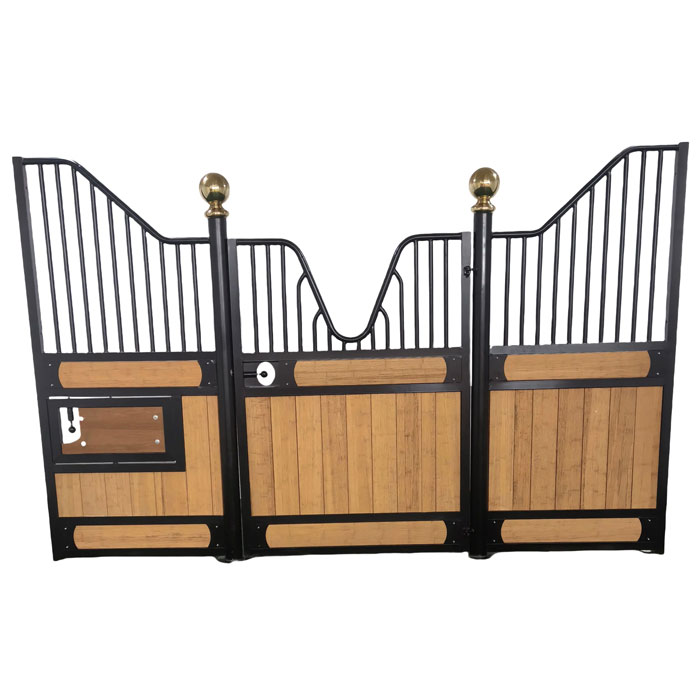

Brand ROI of Bespoke Stables
Premium bespoke facilities report 15-25% higher boarding rates and 5-10% insurance reductions, offsetting the 25-40% unit cost premium within the first operating cycle.
Boarding Rate Premiums and Client Retention
Premium equestrian facilities in Australia and New Zealand consistently report a 15-25% increase in boarding rates after upgrading to bespoke horse stable configurations. Our data from commercial club clients shows that owners of thoroughbreds and warmbloods actively select facilities based on stall specification, not just location. A bespoke stall front with powder-coated finishes at 80-120 microns signals a brand-standard environment that justifies premium pricing. Client retention improves because high-net-worth owners will not relocate horses boarded in purpose-built, low-risk accommodation.
Insurance Premium Reductions for Safety-Spec Upgrades
Insurance underwriters in the Oceania market evaluate stall construction directly when calculating liability premiums. Facilities that specify hot-dip galvanized steel frames at 42+ microns (ASTM A123 standard) and 10mm UV-resistant HDPE boards typically secure 5-10% premium reductions compared to properties using cold-rolled steel or timber partitions. The reduction rationale is straightforward: hot-dip galvanization delivers a 10-year structural lifespan versus 2-3 years for cold-rolled alternatives, eliminating the corrosion-related failure risk that underwriters flag as a frequent claim trigger.
Safety Upgrade Specifications That Drive ROI
The specific hardware and design upgrades that underwriters and clients both recognize as value-adding are not cosmetic additions. They are structural interventions that reduce injury claims and vacancy losses.
- Rounded edges: All exposed frame corners machined to a 5mm radius, eliminating laceration risk during horse transport or panic events.
- Anti-cribbing grilles: Vertical grill bar spacing tightened to 50-55mm versus the 75-80mm standard on budget imports, preventing horses from hooking teeth and damaging dental structure.
- Heavy-duty latches: Rust-free aluminum swivel feeders and multi-point locking mechanisms rated for repeated impact, replacing standard zinc-plated latches that seize within 18-24 months in high-humidity barns.
These three specifications represent the core difference in a bespoke horse stable cost vs standard comparison. Competitors frequently exclude latches and feeders from base pricing, adding $5,000-$8,000 in hidden hardware costs for a 20-stall barn. A bespoke configured stall at $1,100-$1,700/unit FOB including hardware delivers a lower all-in cost than a seemingly cheaper standard unit once those exclusions are accounted for.
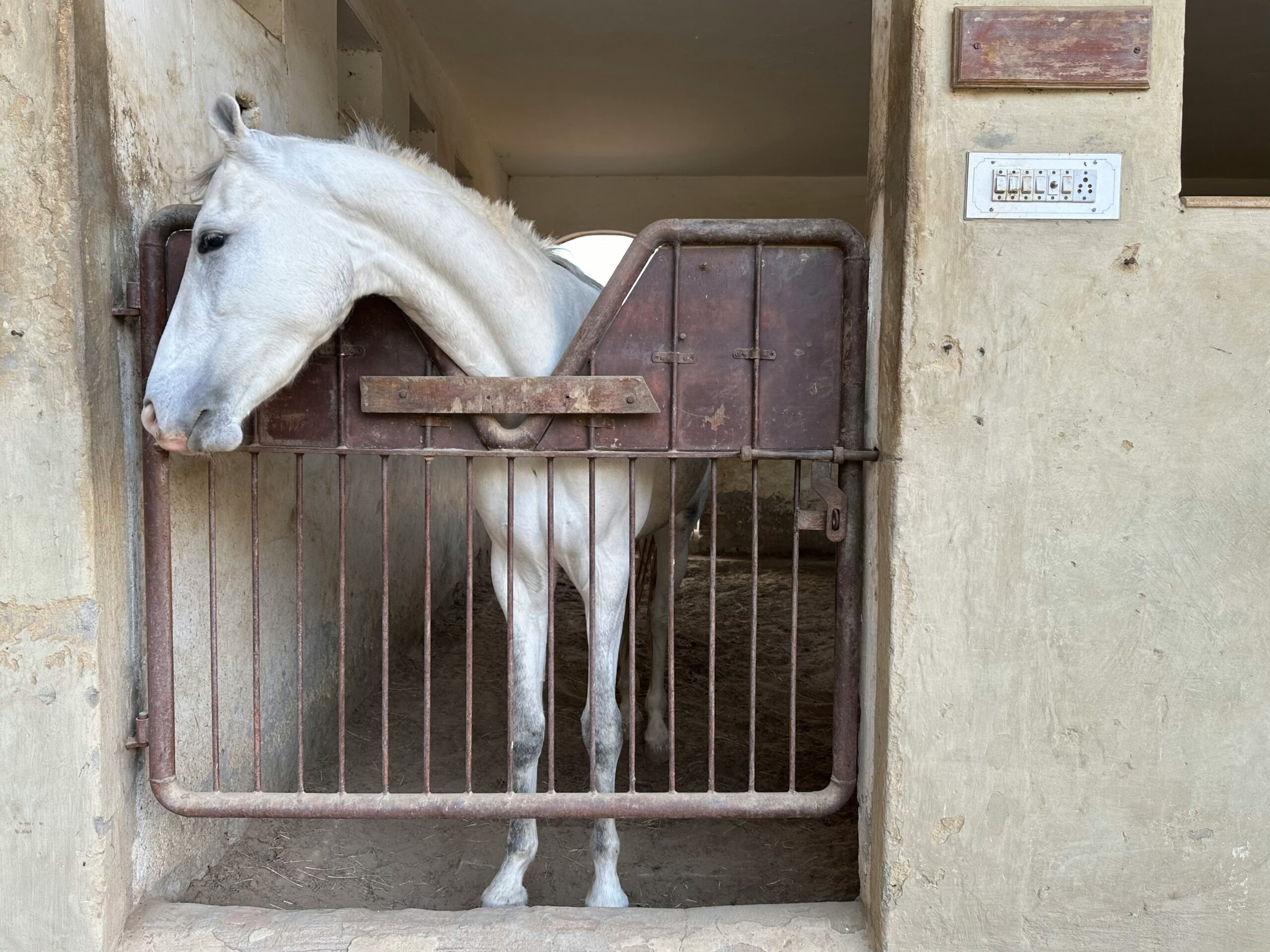
Bespoke Stall Customization Options
Bespoke stall customization adds $300-500/unit over standard, but premium facilities report 15-25% higher boarding rates that offset the difference within 12 months.
Stall Front Width Customization to the Millimeter
Standard flat-pack stalls ship at fixed 3.6m widths. Our bespoke line cuts the front frame to exact millimeter specifications based on your existing barn bay dimensions. For a 20-stall renovation project, this eliminates the $150-300 per-bay structural modification cost that fully welded standard panels force on contractors. We engineer the width variance directly into the hot-dip galvanized steel frame (42+ microns zinc per ASTM A123), so structural integrity remains unchanged regardless of how narrow or wide the opening.
Grille Style Options
The vertical grille is the most visible element to your boarding clients. We offer two configurations that directly impact both safety perception and material cost.
- Y-Style Vertical Grille: Bars set at 50-55mm spacing. Meets the tightest safe-spec thresholds preferred by thoroughbred facilities and insurance underwriters.
- European Sweep Grille: A wider horizontal-vertical hybrid pattern. Visually distinct, but we only recommend this for low-traffic Warmblood or dressage facilities where hoof contact risk is minimal.
Budget import lines typically run 75-80mm bar spacing to reduce welding labor. That spec does not pass inspection for commercial equestrian clubs in Australia and New Zealand.
Integrated Tack Storage Cutouts and Spotlights
Retrofitting tack storage into a standard stall post-installation means cutting into HDPE boards and voiding the 10-year warranty on those panels. Our bespoke configuration engineers the cutouts at the factory stage into the 10mm UV-resistant HDPE boards, maintaining zero thermal expansion tolerances. Spotlights are pre-wired with conduit channels routed through the galvanized frame before flat-pack crating, reducing your on-site electrician labor by an estimated 2-3 hours per stall.
Branded Nameplates and Color-Matched Powder-Coating
This is where standard versus bespoke separates on the balance sheet. Standard stall quotes apply a 40-60 micron powder-coat in a single default color. Our bespoke line applies an 80-120 micron powder-coat layer in any RAL color code you specify, matched to your facility’s existing architectural palette. Our engineers recorded a 40% longer scratch resistance life in high-traffic latching zones compared to the 40-60 micron standard, which translates directly to lower repaint maintenance cycles over a 10-year ownership period. Branded stainless steel nameplates are laser-cut and riveted at the factory, not screwed on-site. For distributors, this creates a proprietary product identity that prevents direct price comparison against generic flat-pack imports on the showroom floor.
Conclusion
Spec the bespoke horse stable. Suppliers hide $5,000 to $8,000 in missing hardware for a 20-stall barn, shrinking the actual price gap. You recoup that 25-40% premium through 15-25% higher boarding rates and zero replacement costs over the 10-year galvanization lifespan.
Demand an all-in quote before you sign anything. Take your standard estimate and force the vendor to include the latches, feeders, and 80-micron powder-coating as a single line item. Compare that final number against a configured bespoke quote to see the real margin difference.
Frequently Asked Questions
What is the difference between a stall and a stable?
A stall is a single enclosed partition housing one horse; a stable is the complete building containing multiple stalls, aisles, and utility areas. Bespoke customization targets stall fronts and partitions specifically, while stable-level customization covers overall layout and structural design.
Does bespoke sizing increase shipping costs significantly?
No. Flat-pack bespoke panels ship at nearly identical CBM rates as standard 12×12 panels since all components are disassembled. Our container loading data shows less than 8% freight variance between standard and bespoke orders in a 20-foot container.
What is the minimum order for bespoke stall fronts?
Most OEM manufacturers set bespoke MOQs at 10-15 units to cover engineering and jig costs. Orders below this threshold typically incur a 15-20% per-unit surcharge or are redirected to modular standard sizes with optional accessories.
How long do bespoke stalls take to manufacture?
Standard flat-pack stalls ship in 15-20 days. Bespoke configurations with custom grillwork, non-standard dimensions, and branded elements require 25-35 days production plus sea freight. Renovation projects should order 8-10 weeks before planned installation.
Can bespoke stall fronts retrofit into an existing barn?
Yes. Modular flat-pack systems are engineered for retrofit scenarios with non-standard post spacing. Individual components are carried in by hand and assembled in place, avoiding the need to alter existing roof structures or widen doorways.