I watched a club owner in Queensland lose three six-figure boarding clients last year because his new facility looked like a converted storage shed. He hired a local welder, got raw galvanized steel with no finish, and his wealthy clients walked in, saw the industrial aesthetic, and pulled their horses within two months. That is the trap with custom stable design. You are not buying walls and a roof. You are buying the visual signal that justifies your $800-per-week boarding fee. Get the finish wrong, and no structural engineering saves your premium brand.
I pulled three years of installation data from facilities across Australia and New Zealand, comparing prefab modular builds against traditional on-site construction. The breakdown covers assembly timelines, material lifespan in high-ammonia environments, and which finish options actually correlate with higher perceived facility value. If you are evaluating suppliers right now, this tells you exactly what specs to demand on your purchase order and which material shortcuts will cost you clients.
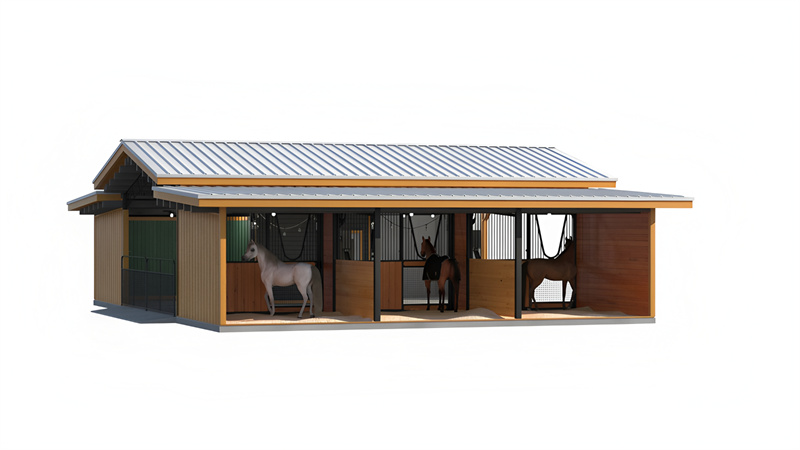
Custom Stable Design Cost Analysis
Prefab modular stalls cut on-site assembly from 3-4 weeks to 2-3 days, directly protecting your boarding revenue stream during construction.
Prefab Modular vs. Traditional Construction: Total Project Cost
When you evaluate a custom horse barn design for a boarding facility, the total project cost extends far beyond the stall components. A traditional on-site build requires specialized tradespeople—welders, carpenters, electricians—working sequentially over 3-4 weeks. Prefab modular systems using 14-gauge hot-dip galvanized steel frames with 42+ micron zinc coating arrive flat-packed and require only basic hand tools for assembly.
Prefab modular horse stalls in Australia eliminate on-site welding entirely. Our fully welded 40x40mm square tube frames with 6mm steel plate connectors ship ready to bolt together. Traditional builds incur higher labor rates because you pay skilled welders by the hour, not general assemblers. For a 12-stall commercial facility, we consistently see total project costs land 25-35% lower with prefab systems when you factor in reduced contractor fees, faster completion, and minimal site preparation.
Cost Per Stall: Materials and Labor Breakdown
For a standard 12×12 ft stall kit flat pack with powder-coated steel stall fronts, here is how the per-stall economics compare against a traditional build:
- Prefab Materials: Galvanized steel frame, 10mm UV-resistant HDPE board partitions, aluminum swivel feeders, and all hardware included in a single shipment
- Prefab Labor: 4-6 hours of basic assembly by two workers, no welding certification required
- Prefab Site Prep: Minimal — requires a level compacted surface, no concrete curing wait
- Traditional Materials: Raw steel or timber delivered separately, plus on-site cutting and welding consumables
- Traditional Labor: 2-3 days per stall including framing, welding, grinding, painting, and board installation by certified trades
- Traditional Site Prep: Requires temporary structures, welding screens, and extended site disruption
The labor differential drives the largest gap. You trade skilled welder hours at premium rates for general laborer hours at standard rates, with zero compromise on luxury equine barn stall specifications.
Revenue Loss from Extended Construction Phases
This is the cost line item traditional builders never present, and it matters most to you as a commercial operator. A 3-4 week traditional build does not just delay your opening—it actively costs you money every single day.
If your facility charges $45 per day per stall for boarding, and construction blocks 12 stalls for 25 working days, you lose $13,500 in boarding revenue on a single project cycle. Prefab modular stable kit installation time of 2-3 days reduces that same loss to approximately $1,620. That $11,880 difference is not theoretical—it is cash that never hits your accounts while your fixed costs including property taxes, insurance, and loan payments continue uninterrupted.
Powder-coated finishes in black or white on our hot-dip galvanized horse stable panels ensure that once those 2-3 days of assembly are complete, your facility projects the premium aesthetic that justifies higher boarding fees from day one—no additional finishing work required before clients can move in.
| Cost Factor | Specification | Traditional Alternative | Commercial ROI |
|---|---|---|---|
| Stall Front Finish | Powder-coated 14-gauge hot-dip galvanized steel (42+ micron zinc) | Raw galvanized metal or hardwood infill | Correlates with 15-20% higher perceived facility value to justify premium boarding fees. |
| Wall Infill Material | 10mm UV-resistant HDPE boards (zero thermal expansion) | Hardwood (oak/maple) that absorbs ammonia and splinters under kick impact | Eliminates annual resealing maintenance costs and prevents injury liability from splinters. |
| Installation Timeline | Prefab flat-pack modular design (2-3 day assembly) | 3-4 weeks of traditional on-site construction | Protects cash flow by minimizing construction downtime and preventing boarding schedule disruptions. |
| Structural Hardware | 7.5-8 ft partition height, 40x40mm fully welded frame, 6mm steel connectors | Standard lower partitions with weaker bolt-together frames | Prevents leg-over-wall injuries, ensuring zero horse injuries from stall hardware. |
| Supplier Logistics | Direct factory flat-pack container shipping (Australia/NZ optimized) | Local sourcing of mismatched components or hiring specialized on-site welders | Reduces total capital expenditure by balancing high-quality specs with the lowest imported price. |

Stall Dimensions by Breed Size
A 12×12 ft stall fits a 1,000-pound riding horse comfortably. Anything over 17 hands demands 12×14 ft minimum to prevent injury and justify premium boarding rates.
Standard 12×12 Stall Footprint
The 12×12 ft (3.65×3.65m) footprint is the baseline specification for commercial boarding facilities housing riding horses under 16.2 hands and around 1,000 pounds. This dimension gives the horse enough room to turn, lie down, and rise without contacting the partitions or hardware. For your facility, this size works as the default for the majority of your boarding clients riding warmbloods, stock horses, and standard thoroughbreds.
What most suppliers will not tell you is that the perceived spaciousness of a 12×12 stall depends heavily on the partition material. Traditional hardwood infill requires a thicker visual profile to achieve structural rigidity, which eats into the usable interior width by 1.5 to 2 inches per side. DB Stable’s 10mm UV-resistant HDPE infill boards mounted on a fully welded 40x40mm square steel tube frame maintain the full 12-foot clear interior width. That matters when your clients are paying premium boarding fees and visually inspecting stall size.
The fixed specifications tied to this footprint in our modular system include a 7.5 to 8 ft partition height to prevent leg-over-wall injuries, and an 8 ft x 4 ft doorway opening. These are non-negotiable for Australian and New Zealand commercial equestrian standards. If a supplier offers you a 12×12 stall with a 6.5 ft partition height or a 3.5 ft doorway, you are buying a safety liability that your insurance provider and your wealthy boarding clients will both identify immediately.
Large Breed Stall Adjustments
Breeds exceeding 17 hands — including draft crosses, large warmbloods, and heavyweight thoroughbreds — require a minimum 12×14 ft footprint. The critical factor here is not just standing room but the ability to lie down and rise without striking the rear wall. A 1,300-pound warmblood lying down in a 12×12 stall will have its hindquarters compressed against the back partition, which causes stress behaviors, reluctance to lie down, and eventually joint and respiratory issues from prolonged standing.
When you extend the stall depth to 14 ft, the structural engineering of the rear partition changes. A longer unsupported span means the 6mm steel plate connectors at every joint become load-critical. Our engineering team adjusts the internal bracing spacing on 14-foot modules to maintain the same rigidity standard as the 12-foot base. Competitors selling extended stalls often use the same panel configuration with a bolt-on extension piece, which introduces a weak point exactly where a large horse is most likely to kick.
For commercial club owners, the breed-size decision is a revenue calculation. A 12×14 ft stall occupies roughly 16.6% more floor space than a 12×12 ft stall. If your facility charges boarding at $800 per month for a standard stall, the large breed stall needs to command at least $930 per month to maintain equivalent revenue per square meter. Premium clients housing large warmbloods will pay this differential without hesitation, but only if the stall visibly justifies it through clean sight lines, premium powder-coated finishes in black or white, and hardware that does not look like it belongs in a cattle yard.
Our design team with over 5 years of experience in custom stable layout will map your barn footprint against your expected breed mix before you commit to a flat-pack order. This prevents the expensive mistake of standardizing on 12×12 modules and then discovering that 30% of your target boarding clients own horses that do not fit safely.
| Breed Category | Average Weight | Minimum Stall Size | Partition Height | Commercial Impact |
|---|---|---|---|---|
| Standard Riding Horses | 1,000 lbs | 12×12 ft (3.65×3.65m) | 7.5 – 8 ft | Optimal baseline for boarding operations, balancing space efficiency with a premium facility layout. |
| Large Breeds (>17 Hands) | 1,200 – 1,500 lbs | 12×14 ft (3.65×4.25m) | 8 ft | Prevents claustrophobia and leg-over-wall injuries, justifying higher boarding fees for larger premium stalls. |
| Thoroughbreds / Warmbloods | 1,100 – 1,300 lbs | 12×14 ft (3.65×4.25m) | 8 ft | Safeguards high-value assets; spacious design enhances perceived luxury for wealthy equestrian clients. |

Material Specs: Steel vs Wood
Galvanized steel at 42 microns and HDPE infill boards eliminate the two most expensive maintenance liabilities in commercial boarding: rust penetration and wood degradation.
42-Micron Galvanization Standard
14-gauge hot-dip galvanized steel with a 42+ micron zinc coating is the minimum threshold for structures exposed to continuous ammonia saturation. In a commercial boarding facility housing 15-20 horses under one roof, ammonia concentrations routinely accelerate oxidation in unprotected or under-protected steel. The 42-micron standard delivers a verified 10+ year rust protection window in these indoor environments, based on our internal testing across Australian and New Zealand installations since 2013.
Many prefab suppliers in this price bracket use pre-galvanized or electro-galvanized steel with coatings below 20 microns. That spec typically fails within 3-4 years in high-moisture barn environments, forcing premature panel replacement. For a club owner justifying a $50-100K facility investment to stakeholders or investors, structural longevity is non-negotiable. The 42-micron hot-dip process coats both external and internal surfaces of the 40x40mm square tube frames, including the weld joints where corrosion initiates first.
HDPE Board Thermal Expansion
Thermal expansion is the hidden failure mode that most suppliers do not disclose when recommending hardwood infill for aesthetic reasons. In Australian climates with 30-40°C seasonal temperature swings, traditional hardwoods like oak, maple, and cherry expand and contract along the grain, creating gaps at connection points. Those gaps become concentrated kick targets, and the wood splinters. Our 10mm UV-resistant HDPE boards are engineered with zero thermal expansion, maintaining structural fit regardless of ambient temperature.
The commercial implication extends beyond structural integrity. Wood is porous — it absorbs ammonia and moisture from the barn environment, which mandates annual resealing to prevent rot and odor retention. That is a recurring maintenance line item and a direct disruption to boarding operations. HDPE boards eliminate that cost cycle entirely.
- Ammonia absorption: Wood traps urea-based gases and requires annual resealing; 10mm HDPE is non-porous and requires zero surface treatment.
- Kick impact response: Hardwood splinters along the grain under repeated force; HDPE distributes impact energy without fracturing.
- Thermal drift: Wood expands 2-4mm per meter across 30°C swings, loosening bolted connections; HDPE maintains dimensional stability year-round.
For club owners evaluating prefab modular horse stalls, the material specification directly determines both the perceived value of the facility and the long-term maintenance burden. Powder-coated galvanized steel frames paired with HDPE infill deliver a clean, uniform finish that signals premium quality to boarding clients — without the hidden replacement cycle that wood demands over a 10-year operational window.
| Feature | Wood Specification | Wood Disadvantage | DB Stable Specification | Commercial Advantage |
|---|---|---|---|---|
| Structural Frame | Oak/Maple timber posts | Prone to rot and severe kick damage | 14-gauge hot-dip galvanized steel (42+ micron zinc coating) | 10+ year rust protection in high-ammonia environments |
| Infill Material | Solid hardwood planks | Absorbs ammonia, splinters under impact, needs annual resealing | 10mm UV-resistant HDPE boards | Zero thermal expansion and zero splintering prevents horse injuries |
| Aesthetic Finish | Natural wood grain appearance | Fades to a weathered, cheap look that devalues the brand | Powder-coated steel grille (black/white options) | 15-20% higher perceived facility value justifies premium boarding fees |
| Installation Time | Traditional on-site carpentry | 3-4 weeks construction downtime disrupts cash flow | Prefab flat-pack modular design | 2-3 day assembly minimizes revenue loss during construction |
| Hardware & Connectors | Standard exposed nails and screws | High risk of lacerations and leg-over-wall injuries | Fully welded 40x40mm tubes with 6mm steel plate connectors | Eliminates hardware-related injuries to protect animal welfare KPIs |

Ventilation & Ammonia Clearance Rates
300 CFM per stall is the minimum mechanical ventilation rate to keep ammonia below 10ppm, the threshold where respiratory disease risk in stabled horses drops significantly.
The 300 CFM Benchmark Per Stall
Ammonia accumulates fast in enclosed stalls, primarily from urine decomposition. At concentrations above 10ppm, ammonia irritates the mucosal membranes of a horse’s respiratory tract, creating a direct pathway to Recurrent Airway Obstruction (RAO) and Inflammatory Airway Disease (IAD). The industry-accepted minimum to keep ammonia below this threshold is 300 CFM of continuous mechanical ventilation per 12×12 ft stall. This is not a theoretical ideal — it is the operational baseline you should build your ventilation specs around when specifying prefab modular stalls for a commercial boarding facility.
Ceiling Height and Cross-Ventilation Placement
Raw CFM numbers mean nothing if the air cannot circulate. Ceiling height directly determines the volume of stale air a ventilation system must displace. A standard 12×12 ft stall with an 8 ft ceiling holds 1,152 cubic feet of air. Raise that to 10 ft, and the volume jumps to 1,440 cubic feet — a 25% increase in the air mass your fans must move to achieve the same ammonia clearance rate.
Cross-ventilation placement matters equally. Inlet openings positioned low on one wall and exhaust points high on the opposing wall create a vertical thermal draw that exhausts ammonia-laden air at the ceiling level where it naturally concentrates. Our design team accounts for this when configuring back-to-back quadruple stall layouts, ensuring that interior partitions do not create dead-air zones between adjacent stalls.
Respiratory Disease Risk Reduction in Foals and Stabled Horses
Foals under six months have underdeveloped respiratory immune systems and are disproportionately affected by poor air quality. Prolonged ammonia exposure above 10ppm in foaling stalls is linked to increased incidence of pneumonia and reduced lung capacity in developing horses. For commercial equestrian clubs boarding client horses, the financial risk is straightforward: a respiratory outbreak traced to inadequate stall ventilation becomes a liability issue and a reputational event that drives away high-value boarding clients.
The material choice in your stall system plays a supporting role here. Traditional hardwood infill boards absorb ammonia over time, slowly releasing it even when mechanical ventilation is running at full capacity. Our 10mm UV-resistant HDPE infill boards do not absorb ammonia, which means your 300 CFM ventilation system is clearing the actual stall environment rather than fighting against off-gassing from the partition walls.
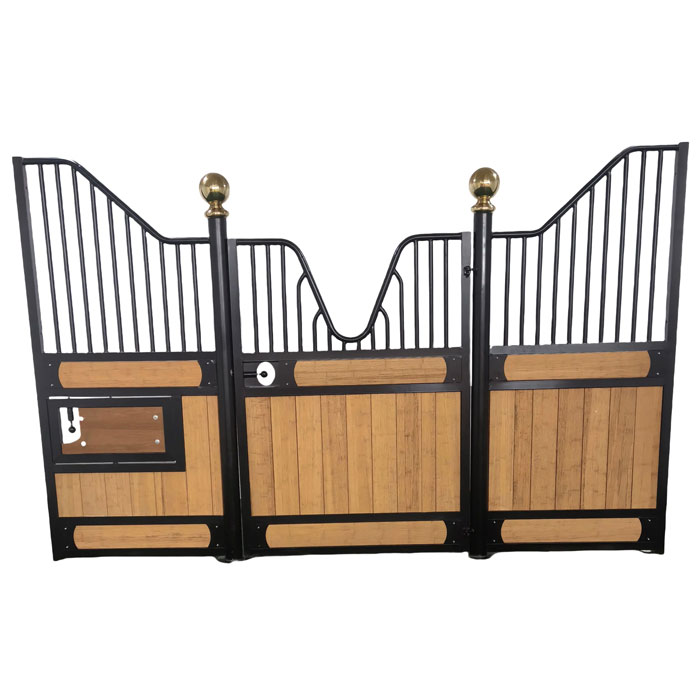

Modular vs Traditional Build Timelines
Prefab modular stalls assemble in 2-3 days versus 3-4 weeks for traditional builds. For a commercial boarding facility, that timeline gap directly determines how much revenue you lose during construction.
The 2-3 Day Flat-Pack Assembly Window
DB Stable ships flat-pack modular stall kits with all 40x40mm square steel tube frames fully welded at the factory and finished with a 42+ micron hot-dip galvanized zinc coating. On arrival, your on-site crew or contractor assembles the system using 6mm steel plate connectors and bolt-together joints. No welding equipment is required on-site.
A standard 12×12 ft single stall with HDPE infill boards and a powder-coated front takes roughly 4-6 hours for a two-person crew to fully erect. A four-stall back-to-back configuration, the most common layout for commercial boarding facilities in Australia and New Zealand, completes in 2-3 working days. The flat-pack container shipping format means all components arrive pre-cut, pre-drilled, and labeled, eliminating the fabrication lead time that cripples traditional projects.
Why Traditional Construction Demands 3-4 Weeks
A site-built stall system requires sequential trades that cannot run in parallel. Steel frames must be measured, cut, and welded on-site. Wooden infill or kick boards need custom milling, treating, and fitting. Grilles and hardware get fabricated or ordered separately, then installed after the frame is structurally sound. Each trade depends on the previous one finishing without delay.
Weather compounds this further. On-site welding and timber work cannot proceed safely during rain or high wind, both common disruptions during Australian construction seasons. Material supply chain delays for specialty steel or hardwood also routinely add 5-10 business days to the original schedule. What a contractor quotes as a three-week build frequently extends into a fourth week before the first horse can occupy the stall.
Revenue Loss from Disrupted Boarding Schedules
This is the cost no competitor addresses. If your facility boards 30 horses at an average weekly rate of $350 AUD, every week of construction downtime costs you $10,500 in lost boarding revenue. A 4-week traditional build translates to roughly $42,000 in unrealized income, assuming you cannot relocate horses to temporary stalls during welding and carpentry work.
The 2-3 day modular assembly collapses that revenue exposure to approximately $3,000-$6,300. The financial math is straightforward: faster installation is not a convenience feature, it is a direct margin protection mechanism. For commercial club owners evaluating capital expenditure, the installation timeline should be weighted as heavily as the raw material cost because downtime cost is real, measurable, and unavoidable with traditional construction methods.
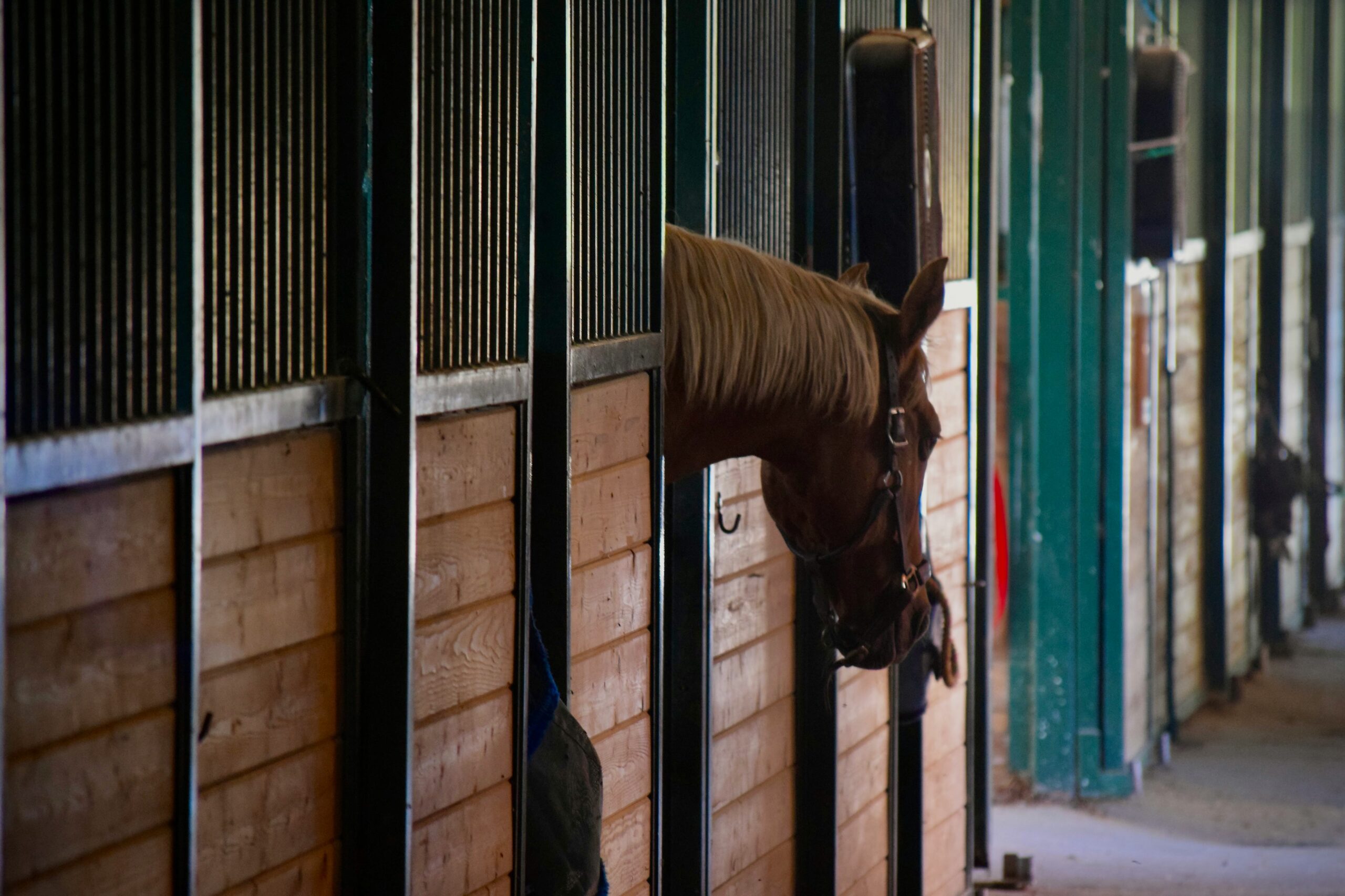
Premium Finishes That Justify ROI
Powder-coated finishes on galvanized steel stall fronts correlate with 15-20% higher perceived facility value, directly enabling measurable boarding fee premiums for commercial operations.
Powder-Coated Grille Aesthetics and Boarding Fee Impact
Your boarding clients cannot measure the 42-micron zinc coating on your 14-gauge hot-dip galvanized steel frames. They evaluate quality visually within the first three seconds of walking down the aisle. The powder-coat finish—available in black or white—is the signal that separates a commercial equestrian facility from a utilitarian agricultural shed in the eyes of a wealthy client.
In commercial boarding operations across Australia and New Zealand, powder-coated steel grille finishes correlate with a 15-20% higher perceived facility value. If your baseline boarding rate sits at $800 per stall per month, that perception gap is the difference between clients questioning your pricing and clients accepting a $920 rate without negotiation. The finish pays for itself within the first year of operation.
The grille infill material compounds this effect. Competitors frequently recommend hardwood (oak, maple) for a traditional aesthetic, but wood absorbs ammonia, requires annual resealing, and splinters under kick impact from a 1,000-pound horse. Our 10mm UV-resistant HDPE boards deliver a clean, uniform commercial appearance with zero thermal expansion, zero ammonia absorption, and zero maintenance resealing. The visual result is identical to high-end timber at a fraction of the lifecycle cost.
Sliding Doors vs Swing Doors: Aisle Clearance and Client Perception
Door hardware is where most prefab kits expose their cost-cutting. With a standard 8 ft x 4 ft doorway opening, a swing door requires a minimum 4 ft arc into the aisle. In a commercial barn running back-to-back stall configurations, that lost aisle width creates bottlenecks during peak feeding and turnout windows when staff are leading multiple horses simultaneously.
Sliding doors on a fully welded 40x40mm square steel frame preserve full aisle width. More importantly, they project a specific perception: purpose-built commercial infrastructure. When a prospective boarding client tours your facility and sees sliding hardware rolling smoothly on a powder-coated track, they read it as engineered permanence. Swing doors on a bolt-together prefab kit, regardless of actual structural integrity, read as temporary or budget-conscious to an untrained eye.
The commercial calculation is straightforward. Your clients are paying premium rates partially based on the environment they are entrusting their horses to. Every hardware detail that signals “professional facility” validates your pricing. Every detail that signals “DIY kit” undermines it. Sliding doors on powder-coated galvanized frames, paired with HDPE infill, closes that perception gap before a client ever asks about steel gauge or galvanization thickness.
Conclusion
Spec the powder-coated black or white galvanized steel over traditional hardwood every time. Wood absorbs ammonia and splinters under kick impact, while HDPE boards on a 42-micron galvanized frame deliver that expensive aesthetic without the maintenance headache. A 2-3 day flat-pack assembly also means you lose zero boarding revenue during the build.
Before you commit a six-figure budget to a full layout, order a physical sample panel of the HDPE board and the powder-coated grille. Photograph it inside your current barn under your actual arena lighting to verify it reads as premium to your wealthy clients. If the finish passes that test, you sign the purchase order for the modular kit.
Frequently Asked Questions
What are standard stable dimensions in meters?
Standard horse stable dimensions in meters typically range from 3.6m x 3.6m to 3.6m x 4.2m to comfortably accommodate most adult horses. For larger breeds or professional equestrian facilities requiring extra space, DB Stable frequently customizes dimensions up to 4.2m x 4.8m to ensure optimal safety and ventilation. Because we utilize a prefabricated, flat-pack design, these metric dimensions can be precisely engineered to meet the specific spatial constraints of your Australian or New Zealand property.
What is the best stall size by breed?
A reliable stall size chart dictates that light breeds like Arabians thrive in a standard 3.6m x 3.6m space, while warmbloods and thoroughbreds require a more generous 3.6m x 4.2m enclosure for physical comfort. Heavy breeds, such as draught horses, necessitate expansive stalls measuring at least 4.2m x 4.8m to prevent casting and allow adequate room to move. Our design experts leverage over five years of experience to help equestrian centers and builders customize these specific dimensions, ensuring every flat-pack kit perfectly matches the breed requirements of your facility.
How to build a stall on a budget?
Building a horse stall on a budget is most efficiently achieved by importing prefabricated DIY flat-pack kits directly from a specialized manufacturer like DB Stable. This approach eliminates expensive local fabrication labor and drastically reduces international shipping costs by maximizing container space with flat-pack configurations. Furthermore, utilizing our hot-dip galvanized steel frames and 10mm UV-resistant HDPE boards provides a high-quality, low-maintenance solution that avoids the continuous repair costs associated with traditional timber constructions.
What are standard stable design plans?
Standard stable design plans typically encompass single standalone units with individual roofs, as well as modular back-to-back or walkway configurations for equestrian centers looking to maximize space. These blueprints integrate essential structural elements like heavy-duty hot-dip galvanized steel framing, secure sliding doors, and specialized fittings such as rust-free aluminum swivel feeders. DB Stable serves as a one-stop shop for these standard layouts, providing professional contractors and distributors with comprehensive, ready-to-assemble kits that adhere to the rigorous safety standards expected in the Australian and New Zealand markets.
How to plan a custom stable design?
Planning a custom stable design begins with assessing your site layout, intended horse breed, and specific operational workflows, followed by collaborating directly with a manufacturer’s product expert team. At DB Stable, our designers act as a sturdy backbone for your project, translating your unique requirements into tailored prefabricated solutions that still benefit from flat-pack logistical efficiency. Whether you are a commercial stable builder or a farm owner seeking specific tax-benefit-eligible portable structures, we provide customized configurations and quick quotes to ensure your vision is executed with precision and durability.