The first 72 hours after a container of stable kits lands — the written-notice window many carriers’ conditions set — decide whether a damaged freight claim gets paid or argued. Not the value of the load, not how obvious the bend is — the record. Damage noted on the receipt while the driver is still at the gate outweighs any photograph taken a week later, and a clean signature is how a distributor usually loses the argument before it starts.
The published documents give you the product and service side: panels at about 200 kg each, a minimum order of 10 sets, third-party QC inspection at the works before shipment, and a flat-pack build designed to travel. They contain no trade term, payment term or freight insurance arrangement — those sit in your own contract, and they decide who has standing to claim. This is the arrival half: what to photograph, what to write down, which clock you are running against, and how to tell a stow fault from a handling job.
Key Takeaways
- Note apparent damage on the delivery receipt before the vehicle leaves; a clean signature is usually read as clear receipt in apparent good order.
- Carrier conditions commonly ask for written notice of damage or shortage within about 72 hours of delivery. The operative number is the one in your contract.
- Under the Australian Rules, non-apparent ocean damage is typically notified within three days and resolved or sued within twelve months — check your bill of lading.
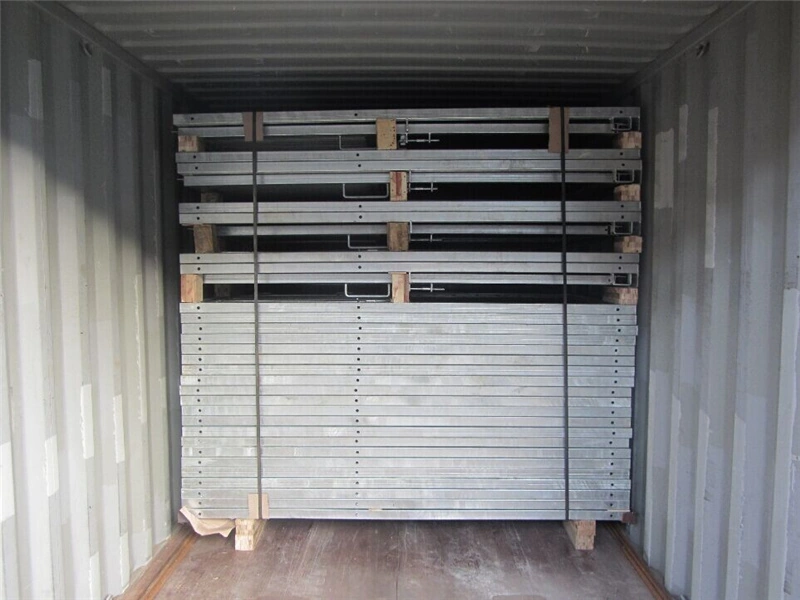
- Photograph the stow before you disturb it: strapping tension, dunnage position and which tier the boards came from are what attribute cause.
- Coating scuffs, strap cuts, water staining and crushed corner posts point at different parties.
The clock starts at the gate
Apparent damage is dealt with at handover, not at the desk. If a door is dented, a seal cut, or a crate leaning in the truck, write the description on the receipt, photograph it, and let the driver see it. Use physical, countable language: “left rear corner post crushed inward, approx 80 mm, paint transfer present”. Not “damaged”.
The receipt is where claims usually die. Signing it clean is, in most conditions of carriage, read as acceptance of goods in apparent good order. That is what the 72-hour window is for: many carriers still expect written notice inside it.
Concealed damage is the harder half and it is normal in a mixed flat-pack load. A bowed tube can sit inside a strapped bundle for the whole voyage and only appear on the bench. The defence is sequencing: open in the order the packing list was built, keep each bundle’s strapping intact until that layer is photographed, and stop unpacking at the first anomaly so the stow above it can be inspected as found.
The 72-hour evidence file
A claims handler reads a file in a fixed order, so build it in that order. One: load identity — door number, seal as found, bill of lading or booking reference in the frame where possible. Two: the exterior faces including the roof line, where water entry shows as rust streaks. Three: the interior as found, before a single strap is cut.
Four: the stow in layers, each tier photographed with strapping still under tension, then cut straps laid beside the bundle rather than binned — a cut edge biting into an HDPE board is evidence, and once it is in the skip it is not. Five: each damaged item with a scale in frame — a tape or the packing list behind it. Six: the undamaged neighbour from the same bundle, which separates a local fault from a batch defect.
Add the two documents rarely photographed: the weighbridge or dock receipt showing where the load changed hands, and the depot’s condition report from that day.

Three causes, three owners
Damage to a container of galvanised frames and HDPE boards arrives by three routes, each with a signature. Reading it is how you avoid filing on the wrong party — a common reason claims close unpaid.
Stow faults repeat: strap bite at the same height across bundles, boards flexed against a shifted dunnage block, corner frames pressed into the corrugated wall. Handling faults are violent and local: a forklift tine puncture, a crushed edge where a clamp bit, sheared coating with grit. Sea-passage damage is gravitational and wet: staining along the roof line and top tier, tide marks on the floor, corrosion blooms at bare steel abraded in transit.
| Evidence pattern | Likely origin | Who you file on |
|---|---|---|
| Repeating strap bite, shifted dunnage, wall contact | Load securing before sailing | Carrier; ask for the shipper’s stow photos |
| Tine puncture, clamp crush, sheared coating with grit | Mechanical handling at a terminal | Carrier or terminal, named on the receipt |
| Roof-line staining, floor tide marks, corrosion blooms | Water ingress or condensation in transit | Carrier plus marine cargo policy if held |
| Bowed tube, no packaging mark at all | Pre-shipment, if the QC file shows it | Supplier route, not a freight claim |
That last row is the one dealers miss. Third-party QC at the works is a service offered before shipment, and its report is the baseline showing whether a section left straight. The build the load was shipped to is set out in sea freight packaging standards for flat pack kits, and the paperwork supporting either route is in the import documents checklist.
Notice, time bars and standing
Three clocks run at once, and mixing them is expensive. The first is contractual: the notice period in the carrier’s conditions or on the bill of lading, commonly a short written-notice window after delivery for damage a clean receipt did not record. The second is statutory and regime-dependent: ocean cargo to Australia is generally dealt with under the Carriage of Goods by Sea Act 1991 and the Australian Rules it gives effect to — non-apparent damage is typically notified within three days of the consignee taking possession, with settlement or suit generally required within twelve months. The third is domestic: the road leg from port to yard sits under a different contract with its own terms.
Notice is not the same as a claim. Late notice weakens your evidence position; a missed time bar can end the claim, and time bars are typically enforced without much discretion. A forwarder’s house bill can carry an earlier bar than the master carrier’s, so read the document you hold and treat any figure here as a prompt to check rather than as advice — your broker, forwarder or a maritime lawyer can confirm the regime applying in your state, or under New Zealand carriage law.
Standing is the fourth variable, and it comes from your purchase terms: who held the risk when the damage happened decides who may claim, which is why FOB, CIF and DDP quotes are not comparable as single numbers — the trade term comparison works that through. The site already carries a shipping damage claims process guide on the wider liability framework and a US domestic claim file; this piece does not restate it and stays on the arrival window for an AU/NZ container.
Frequently Asked Questions
How long do I have to report damaged freight?
Three clocks usually apply: note apparent damage at handover, give written notice inside the window in the carrier’s conditions — often around 72 hours — and respect the statutory notice and time bar for the leg. Check the bill of lading you hold before relying on any number.
What if I signed a clean delivery receipt?
You can still report concealed damage, but you carry the burden of proving it happened before delivery. Photograph the stow undisturbed, keep the cut strapping, and notify in writing inside the conditions window while the load is inspectable.
Do I claim on the carrier or on the factory?
Let the damage pattern decide. Strap bite, shifted dunnage and wall contact point at the load or the voyage; tine punctures and clamp crush point at a terminal; damage with no packaging mark belongs on the supplier route, backed by the pre-shipment QC record.
Does a bent panel count if the coating is scuffed too?
Record both separately. Frames leave the works hot-dip galvanised against a factory coating commitment of 42 microns and above, process run to AS/NZS 4680, so abraded bare steel is a corrosion question as well as a straightness one. Ask the works in writing what recoating restores.
Conclusion
Write it down at the gate, photograph it before you disturb it, and file against the party the damage pattern implicates. Freight claims are rarely lost on the merits; they are lost on a clean signature, a discarded strap or a notice sent after the conditions window closed.
Build the file once, reuse the template on every container, and photograph before you sign. Where a lane keeps producing handling marks, ask the works whether the packing record covers lashing and stow photos.