Skip to content
 I’ve watched three NZ distributors in the past two years lose farm accounts after stocking standard stables that rusted out within 18 months on coastal properties. The first container looked fine. The second one arrived with weld defects you could see from ten feet away and galvanizing thin enough to scratch off with your thumbnail. Those distributors ate the replacement costs and spent months rebuilding trust that should never have been broken. The custom horse stable benefits manufacturers talk about usually get framed around horse comfort and welfare. That matters to your end buyer. But for you, the actual value is commercial — it’s the difference between a product your customers can’t replicate by searching Alibaba for thirty seconds.
We pulled landed cost data from our last 40 NZ-bound shipments and compared standard configurations against custom specs across three variables: freight efficiency per container, achievable retail markup, and warranty claim frequency over 24 months. The gap is real. Distributors who switched to custom configurations expanded their gross margin by 8-15 points despite higher input costs, because retail customers pay premium for specified features they can verify on a spec sheet. This article breaks down those unit economics — flat-pack density per 20ft container, the actual cost difference between hot-dip galvanizing to AS/NZS 4680 and the electroplated alternatives your competitors are shipping, and why HDPE panels let you command a 25-40% retail premium over timber. You’ll also see the batch consistency clause we recommend inserting into supplier contracts, because the margin math only works if the second container matches the first one.

Custom vs Standard Horse Stables
Custom-configured stables expand distributor gross margin by 8-15 percentage points, driven by a 25-40% retail premium on just 10-15% higher input cost.
Stall Configurability, Material Options, and Lifespan
The commercial value of configurability is not about offering choices — it is about giving your retail customers a reason to pay more than the Alibaba price they can pull up on their phone. Custom stables allow you to specify layout configurations from single stalls to quadruple conjoined systems, material upgrades, and panel types within the same order. This matters because a NZ builder comparing your catalog against a direct-import listing cannot find an apples-to-apples match, which neutralizes the price undercutting threat.
On material selection, the lifespan differential between options directly impacts your warranty claim frequency. Hot-dip galvanized steel frames meeting AS/NZS 4680:2006 deliver an 85+ micron zinc coating thickness, compared to 10-20 microns for electroplated alternatives that corrode rapidly in coastal ANZ environments. For infill panels, UV-stabilized HDPE maintains structural integrity for 15+ years under direct sun exposure, while timber in high-rainfall zones enters a 5-7 year rot cycle. Your after-sales cost on timber replacements over a decade will erode any upfront savings.
Wholesale Price Bands Comparison
Understanding where custom configurations sit in the wholesale price structure allows you to model landed cost per unit against your target retail price. Based on our order data for NZ-bound shipments, the following price bands apply to flat-pack single stable kits:
- Standard steel frame with mesh infill: Entry-level wholesale band, suitable for price-sensitive segments where custom features cannot be justified at retail.
- Standard frame with HDPE panel upgrade: Mid-band pricing, typically 8-12% above mesh-only, but enables a 20-25% retail premium based on the durability and welfare positioning.
- Custom-configured layouts: Non-standard widths, conjoined multi-stall, or mixed panel types sit at the premium wholesale band — 10-15% above equivalent standard configurations, but supporting a 25-40% retail markup uplift.
The critical variable is not the wholesale price itself but the freight cost per unit. Flat-pack portable stable kits allow 8-12 units per 20ft container compared to 2-3 pre-assembled units, reducing freight cost per stable by approximately 60-70%. On NZ-bound shipments, this translates to $80-120 per unit in freight savings — a figure that often determines whether the resale margin is viable at all.
Differentiation from Online-Only Competitors
Your real competitive threat is not another NZ distributor. It is the retail customer who finds a cheaper listing on an online marketplace and asks why your price is higher. The defensible answer requires verifiable specifications that online-only importers cannot or will not provide. AS/NZS 4680 galvanized steel equine panels with documented 85+ micron coating thickness is one such specification. A competitor listing “galvanized steel” without a standard reference almost certainly means electroplated material — and you can prove it by requesting their zinc thickness test reports, which they will not supply.
The second differentiation axis is batch consistency. This is the number one reason distributors switch suppliers, yet it is invisible in competitor marketing. The first container arrives with clean welds and even coating; the second shows visible weld defects and thinner galvanizing. Based on industry warranty claim data, distributors should enforce a batch consistency defect rate below 2% in supplier contracts and negotiate a 2% spare parts inclusion ratio per container in commercial terms. This clause alone separates a professional supply agreement from a transactional purchase.
Margin Protection Against Commoditization
Standard horse stables are a commodity. Custom configurations are not — provided the customization is anchored to specifications that matter to the end buyer, not cosmetic variations. The margin math is straightforward: custom-configured stables command 25-40% higher retail prices than standard equivalents with only 10-15% higher input cost, expanding distributor gross margin by 8-15 percentage points. This gap is your protection against the race to the bottom that commoditized product categories always produce.
For a NZ equine equipment distributor, the catalog strategy should be to carry standard configurations for volume price competition and custom options for margin extraction. The custom horse stall ROI for equipment dealers is not in selling more units — it is in making more per unit on the customers who have specific requirements that standard catalog listings cannot satisfy. Every custom order you ship with AS/NZS 4680 certification, HDPE panel specifications, and documented flat pack horse stable container capacity data is an order that no online-only importer can replicate with credibility.
Health and Welfare Selling Points
Welfare features function as margin expansion tools for distributors. Custom configurations with verifiable health benefits command 25-40% higher retail prices than standard units.
Ventilation and Respiratory Health
Ridge vents and eave openings are not aesthetic add-ons. They are the primary engineering solution for ammonia buildup, which is the root cause of equine respiratory conditions like heaves and inflammatory airway disease. In enclosed commercial facilities where horses are stabled for 12+ hours daily, inadequate ventilation forces distributors into warranty disputes when owners blame the stall for health issues.
Configuring stables with specified ridge vent widths and eave opening dimensions gives your retail customers a documented, defensible feature. This is particularly relevant for NZ distributors selling into regions with high humidity where ammonia concentration accelerates. The resale implication is direct: a stable marketed with engineered ventilation specifications commands a higher price point than one sold as a basic enclosure, and the feature costs virtually nothing in manufacturing terms to include.
Injury Prevention Through Design
Kick damage and lacerations are the two most frequent physical injury claims in commercial stabling. HDPE equine panels absorb impact without splintering, unlike timber which fractures and creates sharp edges on contact. Our HDPE panels maintain structural integrity for 15+ years under UV exposure, whereas timber in high-rainfall ANZ zones enters a 5-7 year rot cycle that progressively weakens kick resistance.
Recessed latches and rounded corner profiles on steel frames eliminate the protrusion points that cause the majority of facial and leg lacerations. For distributors, this design specificity serves a dual purpose. It reduces your warranty claim frequency, which is a KPI you should be tracking per supplier. More importantly, it gives your sales team a concrete safety narrative that differentiates your catalog from generic Alibaba listings where these details are never specified.
Reducing Liability for Commercial Facility Owners
Commercial equine facility owners in Australia and New Zealand operate under increasing scrutiny regarding duty of care. When a horse is injured due to a stall design defect, the liability chain extends from the facility owner back through the equipment supplier. Distributors who stock uncertified or poorly specified stables absorb real legal and reputational risk.
Supplying stables built with hot-dip galvanized steel meeting AS/NZS 4680, with its 85+ micron zinc coating thickness, provides a compliance anchor. It demonstrates that the product meets a recognized regional standard rather than an unspecified factory tolerance. Commercial buyers will pay a premium for this traceability because it transfers risk away from their operation. For you as the distributor, this means a product that commercial facility builders actively request by specification rather than price-shopping against.
Marketing Welfare Claims
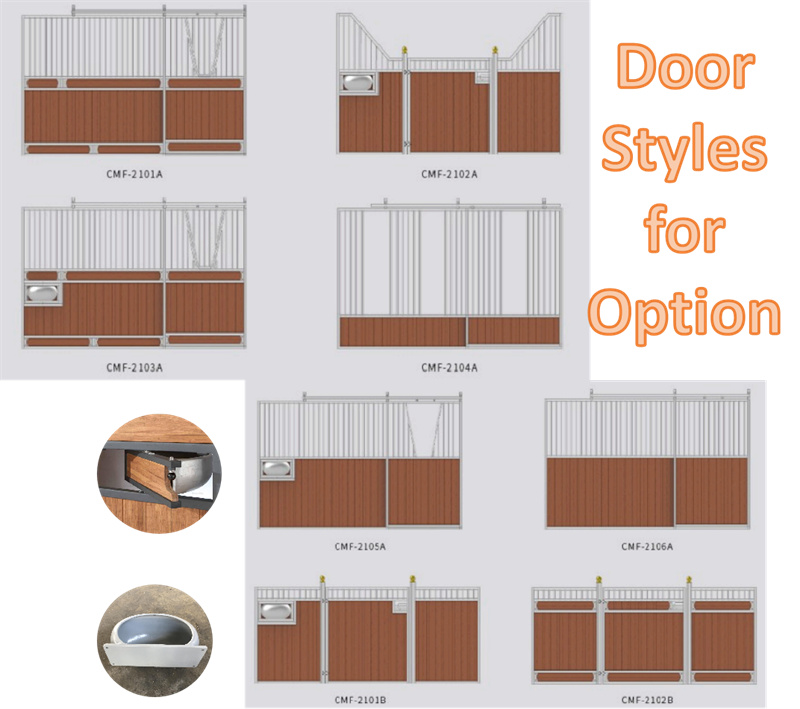
Adjustable grill spacing and Dutch door options are the two welfare features that resonate most strongly with direct-buying horse farm owners, and they are the features most frequently absent from standard import stock. Adjustable grill spacing allows foals and smaller breeds to be housed safely without gap-related entrapment risks, while Dutch doors provide controlled partial opening that reduces stress during feeding and monitoring.
These features expand your addressable market. A standard single-configuration stable competes purely on price. A configurable stable with adjustable grills and Dutch door options serves breeding facilities, rehabilitation centers, and standard boarding operations from the same base SKU. This catalog breadth reduces the number of competing suppliers you need to manage while increasing the average order value per customer. The key for your marketing is to position these not as upgrades, but as standard configuration options that your supply chain supports without extended lead times.
Material Durability for ANZ Climates
Material selection determines whether your stable inventory becomes a repeat-order category or a warranty liability in ANZ coastal markets.
Galvanized Steel vs Painted Alternatives
The corrosion challenge in ANZ coastal zones is not theoretical. Salt spray accelerates steel degradation, and the coating standard you specify on your PO directly controls your warranty claim frequency. Hot-dip galvanized steel meeting AS/NZS 4680:2006 delivers a minimum 85-micron zinc coating thickness. Electroplated alternatives typically achieve only 10 to 20 microns, and painted steel offers no sacrificial corrosion protection at all once the surface layer is scratched.
For a NZ distributor, the commercial implication is straightforward. A stable frame that rusts through in three years on a Canterbury or Auckland coastal property becomes your warranty problem, not the manufacturer’s — unless your contract explicitly references AS/NZS 4680 and mandates 85+ micron thickness with batch test certificates. Without that clause, you have no enforceable standard when the second container arrives with visibly thinner galvanizing than the first.
HDPE Panels vs Timber Walls
Timber has been the default internal wall material for decades, but its failure mode in ANZ conditions is predictable and fast. In high-rainfall zones across both islands, timber follows a 5 to 7 year rot cycle even with regular oiling. Splintering begins earlier — typically within 2 to 3 years in high-traffic kick zones — which creates a direct horse safety liability that your retail customers will blame on the product, not on maintenance neglect.
UV-stabilized HDPE equine panels eliminate both failure modes. There is no fiber structure to rot, no grain to splinter, and the UV stabilizer package is engineered for a 15-year service life under direct sun exposure. The material is non-porous, so it does not absorb urine or moisture — a practical advantage your retail customers will understand immediately when you demonstrate the difference during a site visit.
Lifespan Comparison in Coastal ANZ Environments
When you combine the frame and wall material choices, the lifespan gap between specification tiers becomes a commercial argument, not just a technical one. A hot-dip galvanized frame with HDPE panels delivers 15+ years of structural service in coastal ANZ environments with no material replacement required. A painted steel frame with timber walls typically requires wall replacement at the 2 to 3 year mark and frame remediation or full replacement by year 5 to 7.
For your retail customers, this translates to a total cost of ownership gap that you can quantify on a per-stall basis over a 15-year period. For you as the distributor, it means the difference between a customer who reorders from your catalog because the first installation held up, and a customer who switches suppliers after their first batch deteriorates and blames your brand.
HDPE as a Recurring Revenue Upgrade Opportunity
Here is where the margin math becomes compelling. Custom-configured stables with HDPE panels command 25 to 40% higher retail prices than standard timber-equivalent units, while your input cost increases by only 10 to 15%. That gap expands your gross margin per stable unit by 8 to 15 percentage points. On a container of flat-pack kits, that margin lift is significant enough to offset the higher freight cost of the heavier HDPE panels.
The upgrade path also solves your differentiation problem. If a retail customer can buy a visually similar timber stable direct from an online importer, you have no pricing power. If you are the only local distributor offering AS/NZS 4680-certified galvanizing with UV-stabilized HDPE as a documented specification — not a vague “premium option” — you have a defensible selling proposition that online-only sellers cannot match with uncertified stock photos.
| Component | Material Option | Durability Spec | ANZ Lifespan | Margin Impact |
|---|---|---|---|---|
| Structural Frames | Hot-Dip Galvanized Steel | AS/NZS 4680:2006 compliant, 85+ micron zinc coating | 15-20+ years in coastal/inland environments | Eliminates rust-related warranty claims; justifies premium retail pricing over cheaper imports. |
| Structural Frames | Electroplated Steel | 10-20 micron zinc coating | 2-4 years before rapid rust failure | Destroys distributor reputation with retail buyers; high return rates erode net margins. |
| Wall & Partition Panels | UV-Stabilized HDPE | 15-year UV exposure resistance rating | 15+ years with no rot, warp, or cracking | Enables 25-40% higher retail price; zero post-sale maintenance complaints from farm owners. |
| Wall & Partition Panels | Standard Timber | Vulnerable to high-rainfall moisture and pests | 5-7 year rot cycle | Forces commodity pricing; frequent replacement requests wipe out initial gross margin. |
Explore Our Portable Horse Stable Range.


B2B Resale Margin Advantages
Custom-configured stables expand your gross margin by 8-15 percentage points because retail customers pay 25-40% premiums for only 10-15% higher input cost.
The Margin Math: Custom vs Standard Configurations
Your retail buyers in New Zealand are not comparing your stable to a competitor’s stable. They are comparing your custom-configured unit to a generic Alibaba listing. That comparison is where your margin lives. A stable configured with specified HDPE panel sections and AS/NZS 4680 certified hot-dip galvanization commands a 25-40% higher retail price than a visually similar standard unit.
The number that matters is your input cost increase: only 10-15% above the standard equivalent. The gap between what your customer pays extra and what you pay extra is your expanded margin—8 to 15 gross percentage points per unit. On a $3,500 retail stable, that translates to $280-$525 additional gross profit per unit compared to stocking standard configurations.
A competitor’s own content admits “standard ones might save you a buck upfront” but never quantifies the actual margin differential. You now have that number. Stocking standard configurations leaves margin on the table that custom specifications capture directly from the end-user’s willingness to pay for documented material certifications.
Volume Pricing and MOQ Structures
Container-scale ordering is where landed cost per unit drops meaningfully. For NZ distributors, the pricing structure operates on full-container load (FCL) tiers rather than per-unit negotiation. FOB terms place freight risk and cost management in your hands, giving you control over choosing your own freight forwarder and consolidating shipments. CIF terms shift that control to the supplier, which reduces your operational overhead but removes your ability to negotiate freight rates independently.
The practical MOQ for a viable first order is one 20ft container. At 8-12 flat-pack kits per 20ft container, you are looking at a manageable initial inventory commitment that still hits the volume pricing threshold. Stepping up to a 40ft high-cube container pushes capacity to 18-24 units and typically triggers a further per-unit price reduction of 5-8%, compounding your margin advantage at the resale level.
Flat-Pack Freight Density and Landed Cost
Freight cost per unit is the single largest variable in determining whether your resale margins are viable on NZ-bound shipments. This is where flat-pack design makes or breaks the unit economics. A 20ft container holding 8-12 flat-pack kits versus 2-3 pre-assembled units reduces your freight cost per stable by approximately 60-70%. In dollar terms, that is $80-$120 per unit saved on trans-Tasman shipping.
That $80-$120 per unit either drops straight to your bottom line or allows you to price more aggressively against local assemblers. No amount of material quality or certification matters if the landed cost makes your retail price uncompetitive. Flat-pack density is the mechanism that makes the entire custom stable category commercially viable for NZ distribution.
Cross-Selling: Expanding Revenue Per Customer
Every stable installation creates demand for adjacent products. A distributor who supplies only the stable structure leaves revenue on the table with every order. The cross-sell opportunities are direct and predictable because they are functionally required to complete the installation.
- Yard panels: Every stable door opens into a yard. Galvanized yard panels in matching specifications are a natural bundle addition with minimal additional sales effort.
- Stable fronts: Replacement and upgrade fronts for existing timber structures represent a retrofit market with no installation complexity.
- Roofing bundles: Colorbond or polycarbonate roofing kits specified to match stable dimensions convert a partial installation into a turnkey solution.
Sourcing these from a single manufacturer rather than coordinating across three vendors reduces your procurement overhead and eliminates the risk of specification mismatches between the stable frame and the yard panels. For a NZ distributor evaluating catalog breadth versus competitor SKU count, this bundled supply capability is a structural advantage that compounds with every order.
Conclusion
Stock the flat-pack HDPE and galvanized units. Standard timber stalls rot out in five years, and your retail buyers will blame you when they fail. Custom configurations cost 15% more to import but let you charge 40% more at retail, adding 8 to 15 points straight to your gross margin.
Run a freight quote on a 20-foot container of flat-pack kits and compare that per-unit landed cost against your current pre-assembled inventory. Then demand the supplier’s AS/NZS 4680 galvanizing certificates and a 2% spare parts clause in the contract before you load a single unit.
Frequently Asked Questions
What is the 20% rule for horses?
The 20% rule states a horse should carry no more than 20% of its body weight including rider and tack. Stable design supports this indirectly — rubber flooring over proper drainage reduces joint strain during stabling recovery, and non-slip surfaces prevent injury that could compound weight-bearing stress. For distributors, this is a verifiable welfare claim to include in product marketing materials.
How long do galvanized stables last?
Hot-dip galvanized steel meeting AS/NZS 4680 with 85+ micron zinc coating lasts 15-20 years in inland NZ and 12-15 years in coastal zones. Electroplated or powder-coated-only alternatives typically show cut-edge corrosion within 2-3 years. Request zinc thickness certificates from your supplier — genuine hot-dip will show 65-100+ microns on test reports.
What is the MOQ?
Typical MOQ is one 20ft container. Flat-pack design allows 8-12 single stable kits per 20ft container depending on upper section spec (mesh vs solid HDPE). For NZ distributors starting with a trial order, some manufacturers accept mixed-container configurations combining stable fronts and yard panels to fill a container while testing market demand.
Are HDPE panels safer than timber?
Yes. HDPE does not splinter on impact, has no exposed fasteners, and absorbs kick force without fracturing. Timber shards from kicked walls are a documented cause of lacerations requiring veterinary treatment. HDPE also eliminates the ongoing timber replacement cycle, giving distributors a product with lower after-sales complaint rates.
Which color do horses see best?
Horses perceive blue and green clearly but cannot see red. For stable interiors, blue or green HDPE panels create a visually calmer environment with less contrast stimulation. This is a useful specification detail for distributors advising facility owners — it costs nothing to specify but adds perceived expertise to your product recommendation.