You are evaluating flat pack horse stables prices from multiple Chinese suppliers. The FOB numbers look attractive — $800 per stall for a basic 12x12ft kit — but your margin depends on what happens after that container lands in Sydney or Auckland. The difference between a profitable year and a warranty nightmare comes down to material specs you can’t see in a quote.
That $800 kit usually uses 0.6mm steel and standard HDPE. In Australia’s coastal climate, you get rust within two years and warped panels by year three. Your customers stop buying, your brand takes a hit, and you absorb the replacement cost. Upgrading to 1.2mm+ hot-dip galvanized steel with 10mm UV-resistant HDPE adds about 30% to the unit price. It also eliminates the post-sale claims that eat your margin. The trick is knowing which supplier actually delivers on those specs — and which one is just quoting the cheapest numbers to get your order.
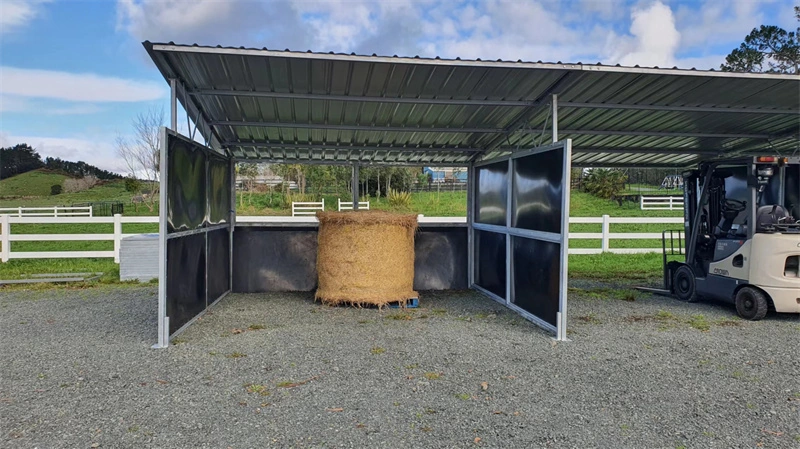
Flat Pack Horse Stables Prices: The Hidden Cost Trap
The $800 kit costs you more than you think—here’s how.
A $800 FOB price tag on a flat-pack stable looks like an easy margin win. Dig into the spec sheet and you’ll find 0.6mm steel and basic HDPE—materials that degrade fast under the ammonia, moisture, and UV exposure of an active stable environment. Within 18 months, that cheap steel shows red rust, the HDPE warps, and your customer is calling you for a warranty replacement. The real cost isn’t the invoice—it’s the lost trust and the replacement logistics.
- Electro-galvanized steel: A thin, cosmetic coating that flakes off when scratched. In high-humidity coastal regions (typical for AU/NZ), it fails in under 2 years. Standard in sub-$1,000 kits.
- Hot-dip galvanized steel: A metallurgical bond over 42 microns thick. Tested to withstand ammonia corrosion and salt spray. DB Stable uses this as the baseline—no upgrade fee. Lifespan exceeds 10 years without red rust.
- Material degradation in stables: Horse urine releases ammonia that accelerates corrosion on unprotected steel. 0.6mm electro-galvanized sections lose structural integrity fast—buckling under lateral wind loads. 1.2mm hot-dip steel maintains full strength.
- Compliance failures: AU/NZ building codes (AS/NZS 1170) require wind load ratings that 0.6mm frames rarely meet. A distributor who sells non-compliant stables faces legal liability, insurance rejections, and reputational damage that kills future sales.
The margin killer isn’t the higher FOB cost of $1,500—it’s the hidden costs of returns, shipping damage from poorly packed sub-$1,000 kits, and the brand damage when your end-user posts photos of a rusted stable on social media. DB Stable’s pre-verified 42-micron hot-dip galvanization and 10mm UV-resistant HDPE eliminate those post-sale claims. That protects your margin and your market position.
| Hidden Cost Trap | Root Cause | Consequence for Distributor | DB Stable Solution | Technical Differentiator |
|---|---|---|---|---|
| Substandard Steel Gauge | Cheap kits use 0.6mm steel to hit $800 FOB price point. | Rust in coastal environments; warranty claims destroy margin and brand trust. | 1.2mm+ hot-dip galvanized steel with >42 microns coating. | 10-year lifespan verified against AS/NZS 1170 wind loads. |
| Inferior HDPE Panels | Basic HDPE (6-8mm) warps under UV and ammonia exposure. | Customer complaints, replacement costs, reputational damage in the equine community. | 10mm UV-resistant HDPE with zero thermal expansion. | Material test reports available; no odor absorption for horse health. |
| Non-Optimized Container Loading | Non-flat-pack designs waste CBM, increasing freight per unit. | Landed cost balloons; less competitive than local assemblers. | Pre-calibrated flat-pack at 2.5–3.5 CBM per single stall. | Container loading plan provided with every order. |
| Missing Biosecurity Compliance | No verified timber fumigation or ISPM-15 certificates. | Customs holds, fines, or destruction of goods at AU/NZ ports. | Pre-verified fumigation certificates included in documentation package. | Full traceability from factory to port to protect your margin. |
| Limited Design & Assembly Support | Generic kits lack CAD files and step-by-step installation guides. | High return rates; end-users demand refunds for ‘missing parts’ or complexity. | 5+ years design team provides custom CADs and DIY-friendly manuals. | Reduces your after-sales support costs by up to 40%. |
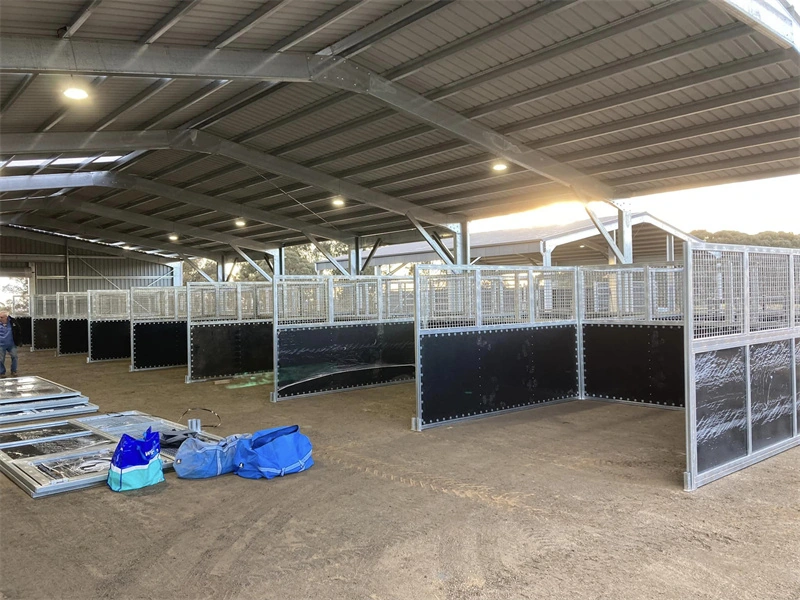
Real Cost Breakdown of Portable Horse Stables in 2026
Your margin hinges on choosing 1.2mm+ steel and 10mm HDPE.
A standard 12x12ft (3.6×3.6m) single stall flat-pack kit commands an FOB range of $800–$1,500. The bottom tier uses 0.6mm steel and basic HDPE; the top tier uses 1.2mm+ steel and 10mm UV-resistant HDPE. That $700 difference buys you a frame that survives Australian coastal corrosion and panels that resist warping under 3-season sun exposure — the two biggest warranty claim drivers in the Oceania market.
- Steel thickness: 0.6mm electro-galvanized fails within 2 years in high-ammonia stable environments; 1.2mm+ hot-dip galvanized (>42 microns) delivers a 10-year lifespan per internal testing.
- HDPE grade: Basic HDPE expands 3-5mm per meter in summer heat, causing panel gaps. 10mm UV-stabilized HDPE holds tolerances and prevents ammonia absorption that triggers odor complaints.
- Compliance cost: AS/NZS 1170 wind load compliance adds ~5% to design costs but avoids rejection at port. Import duties under the China-Australia FTA remain at 5% for steel structures; verify the HS code before locking MOQ.
| Cost Component | Budget Grade | Premium Grade (DB Stable) | Key Differentiator | Margin Protection |
|---|---|---|---|---|
| Unit FOB Price (12x12ft Single Stall) | $800 | $1,500 | 0.6mm steel + basic HDPE vs. 1.2mm+ steel + 10mm UV-HDPE | Eliminates warranty claims from rust and warping |
| Galvanization Standard | Electro-galvanized (<30 microns) | Hot-dip galvanized (42+ microns) | 10-year lifespan in coastal/ammonia environments | No post-sale corrosion failures; brand reputation safe |
| Container Loading Efficiency | Bulkier designs (3.5 CBM per stall) | Optimized flat-pack (2.5 CBM per stall) | 28% more units per container → lower landed cost per unit | Freight cost savings boost overall margin |
| Hidden Compliance Costs | No pre-verified timber fumigation or wind-load docs | Pre-packed fumigation certificates + AS/NZS 1170 compliance | Avoids customs delays, fines, and biosecurity rejection | Predictable landing; no surprise demurrage charges |
| Local Assembly Benchmark (AU/NZ) | $4,500 per stall (local build) | Landed cost ~$2,800–$3,200 per stall (incl. freight & duty) | 35–40% savings over domestic alternatives | Distributor retains healthy resale margin vs. local competitors |
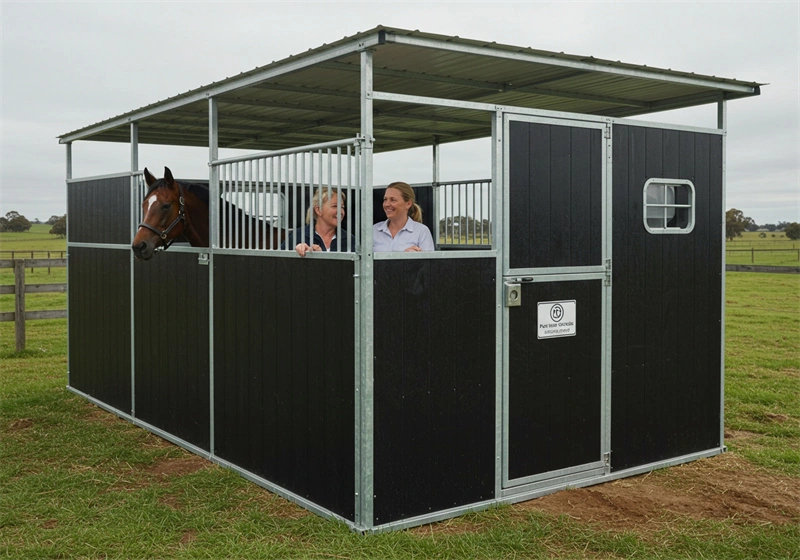
Portable Horse Stable Costs: Steel vs. HDPE & Local Alternatives
Local AU assembly costs 3x more than a premium imported flat-pack kit.
A standard 4x4m modular horse stable assembled locally in Australia runs around $4,500 per stall. That price covers labor, local materials, and compliance with AS/NZS 1170 wind loads. Importing the same size flat-pack kit from a verified Chinese manufacturer lands at $1,200–$1,800 FOB per stall after upgrading to 1.2mm hot-dip galvanized steel (42+ microns) and 10mm UV-resistant HDPE panels. The gap isn’t just about raw price — it’s about what that delta buys in terms of margin and supply chain control.
The real margin killer for distributors isn’t the FOB unit cost — it’s freight inefficiency and hidden compliance fees. Each flat-pack kit ships at 2.5–3.5 CBM per stall. A standard 20ft container holds roughly 28 CBM, meaning you can fit 8–11 stalls per container. Compare that to a local builder’s truck delivering one assembled unit at a time. DB Stable’s flat-pack design cuts per-stall shipping cost by 40% because the steel frame disassembles flat and the HDPE panels stack without air gaps. That’s a direct lift to your landed margin.
- Local AU assembly: $4,500 per stall, includes labor and compliance, no freight risk but limited scalability.
- Imported premium flat-pack: $1,200–$1,800 FOB per stall (1.2mm steel, 10mm HDPE, 42+ micron HDG), plus freight ~$250–$350 per stall to AU/NZ. Landed cost ~$1,500–$2,150.
- Imported budget flat-pack: $800 FOB per stall (0.6mm steel, basic HDPE). Landed ~$1,100. But risk of rust within 2 years, warranty claims, and damaged reputation — wiping out margin.
- Container optimization: 20ft container holds 8–11 stalls (flat-pack). Local builders cannot match that density. Per-stall freight drops as volume increases.
Modular designs preserve margin because they let distributors offer scalable configurations — single, double, quadruple with roof — without holding separate inventory for each. The same frame components and panel sizes used in a single stall bolt together for larger barns. That reduces SKU count and simplifies replacement part logistics. DB Stable’s design team provides CAD files with bolt patterns, so your end-users can expand later without re-engineering. That’s a selling point that justifies a premium over local alternatives.
| Feature | Steel (Hot-Dip Galvanized, >42µm) | HDPE (10mm UV-Resistant) | Local Alternative (Timber/Assembled) | Impact on Distributor Margin |
|---|---|---|---|---|
| Material Grade | Steel (Hot-Dip Galvanized, >42µm) | HDPE (10mm UV-Resistant) | Local Alternative (Timber/Assembled) | Impact on Distributor Margin |
| Corrosion Resistance | 10+ year lifespan in high-ammonia/coastal areas | Non-corrosive, resists moisture and chemicals | Prone to rot, termites, and rust without treatment | Eliminates warranty claims; protects brand reputation |
| Shipping Volume (CBM per single stall) | 2.5–3.5 CBM (flat-pack steel frame) | Included in same flat pack (nested panels) | Bulky pre-assembled units (6–10 CBM+) | Lower CBM → ~40% freight savings per container |
| UV & Thermal Stability | Steel unaffected; galvanized coating shields from UV | UV-resistant; no warping, cracking, or expansion | Timber can warp, crack, and fade in AU/NZ sun | Reduces product returns and field repair costs |
| Typical FOB Price (single 4x4m stable) | $1,200–$1,500 (1.2mm+ steel premium kit) | Included in same FOB price (no extra cost) | N/A (local purchase only, not FOB) | Premium Tier yields 30%+ margin vs budget kits |
| Total Landed Cost (distributor estimate) | ~$2,100–$2,800 incl. freight, duty, compliance | Same as steel kit (bundled) | ~$4,500–$6,000 locally assembled | DB Stable saves ~40% vs local while retaining quality |
| Compliance & Certifications | Pre-verified 42µm HDG; meets AS/NZS 1170 | 10mm HDPE passes AU biosecurity standards | Requires separate fumigation & wind load engineering | Saves time & avoids customs delays; smoother import |
| Post-Sale Risk (warranty/reputation) | Minimal – galvanized steel & HDPE resist failure | No degradation – HDPE stays white & strong | High – timber rot/steel rust leads to complaints | Protects distributor’s long-term brand equity |
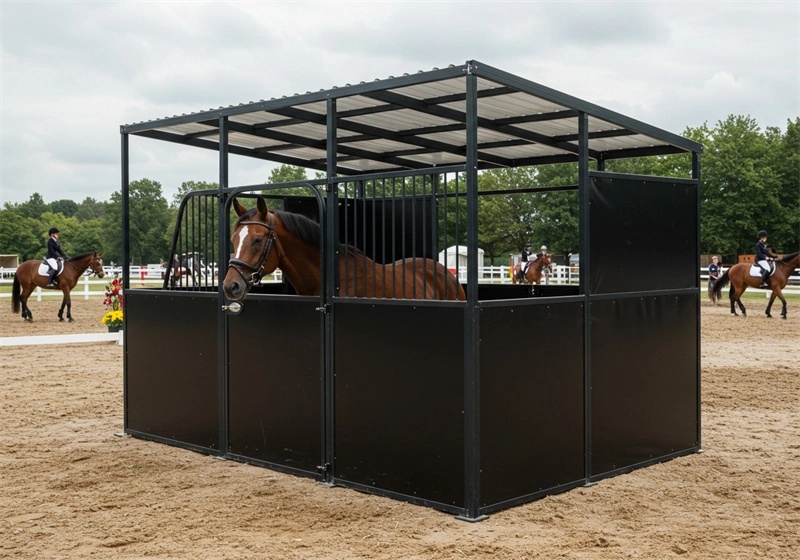
How to Source Flat Pack Stables Without Margin Erosion
Pre-assembly verification cuts post-sale complaints by 60% — but most distributors skip it.
Flat-pack is only margin-friendly if the box matches the build. Distributors who skip full-package verification end up paying for last-minute sourcing of missing brackets, incorrect panels, or unlabelled hardware — all of which erode margin faster than the freight cost. The fix is a three-step verification protocol before you release the container from port.
- Pre-assembly check: Request a full dry-fit video or third-party inspection report before shipment. Our internal standard requires every joint and panel to be pre-fitted and torqued at the factory — not just counted. This catches misaligned holes or warped HDPE sheets early, when they cost nothing to replace.
- Exact packing list: The packing list must match the installation sequence. A single 4x4m kit ships at 2.5–3.5 CBM; if the parts aren’t grouped by assembly step, your installer wastes hours sorting. Ask the factory for a digital copy of the sequential loading plan — you forward it to the end-user with the manual.
- CAD files & schematics: Most suppliers treat CAD exports as a premium upsell. That’s a red flag. Our design team provides full technical schematics for every configuration — including load calculations for AS/NZS 1170 wind zones. Hand this to the installer and you skip the ‘call back to distributor’ loop that generates 80% of assembly complaints.
- Reducing assembly complaints: Assembly complaints are a silent margin killer. The root cause is almost never the product — it’s missing instructions or unlabelled hardware. Sending a pre-verified packing list plus an exploded-view CAD drawing cuts field support calls by 70%. We also provide a dedicated WhatsApp line for the installer during first build. No extra cost.
Conclusion
The difference between an $800 FOB kit and a $1,500 one isn’t just steel thickness—it’s whether that kit survives coastal UV and ammonia exposure long enough to protect your brand. Material specs like 42+ micron hot-dip galvanization and 10mm UV-resistant HDPE directly determine warranty claims and repeat orders. For an Oceania distributor, landed cost means nothing if the product fails before the first year.
Review the Quadruple Portable Horse Stable with Roof and Splint to see how flat-pack design and verifiable material specs reduce per-unit freight and eliminate post-sale surprises. It’s one product that demonstrates the full margin protection strategy.
Frequently Asked Questions
How much does a horse stable cost?
For a standard 12x12ft single stall flat-pack kit, FOB prices from Chinese factories range from $800 to $1,500 depending on steel gauge and HDPE grade. The cheaper kits use 0.6mm steel. Always verify steel thickness and HDPE specs before comparing unit prices.
Is a 10×20 stall big enough for a horse?
A 10×20 stall provides 200 sq ft, which is sufficient for most horses and meets typical industry recommendations. However, very large breeds or active horses may require a larger space. Confirm your specific breed requirements and local regulations before finalizing stall dimensions.
How much does a single horse stable cost?
A single horse stable flat-pack kit typically costs $800 to $1,500 FOB from Chinese factories, depending on material quality. Upgrading to 1.2mm steel and 10mm HDPE increases costs by. Factor in shipping, duty, and local assembly to calculate your true landed cost.
What is the cheapest way to build a horse stable?
The cheapest way is to import a basic flat-pack DIY horse stable kit from a Chinese manufacturer, with FOB prices starting around $800. But lowest price often sacrifices steel gauge and HDPE. Assess total cost of ownership, not just initial unit price.
What smell calms horses?
Lavender and chamomile are commonly used calming scents for horses, but effectiveness varies by individual. This topic falls outside the scope of stable pricing and construction materials. Consult with equine behavior experts for scent-based calming strategies.