Freight cost per stall is the number that decides whether an import order is competitive, and it is fixed long before a container is booked — at the moment you choose the stable configuration. A buyer who orders four single-bay units ships more panels, more weight and more volume than a buyer who orders the same four stalls as one connected quadruple row. The product is identical. The shipping bill is not.
This guide works the arithmetic from DB Stable’s official configuration table. The company has manufactured portable stables since 2013 and concentrates its export programme on Australia and New Zealand; its flat-pack design is built around exactly this problem: shared walls between joined stalls cut the piece count per stall, and fewer pieces mean a smaller freight bill per stall. Every number below comes from the factory specification.
Key Takeaways
- Four single stalls need 12 side panels and 4 doors — 16 pieces. One quadruple row needs 9 side panels and 4 doors — 13 pieces. Same stall count, three fewer panels to ship.
- Each stable panel weighs about 200kg, so the three panels a quadruple saves are roughly 600kg of panel weight compared with four separate single-bay setups.
- Pieces per stall fall as configurations grow: a single stall is 4 pieces, a quadruple works out to 3.25 per stall, and a six-stall back-to-back row drops to about 2.83.
- Flat-pack design is the other half of the saving: the same panel count nests into a smaller shipping volume than assembled modules.
- MOQ is 10 sets and drawing-based quotes come back within 24 hours, so the configuration decision can be priced before you commit.
The Piece Count Behind the Freight Bill
Sea freight for flat-pack stables is charged on a combination of volume and weight, and both start with the piece list. DB Stable’s configuration table sets that list. A single stall is 3 side panels plus 1 door. Two adjacent stalls are 5 side panels plus 2 doors. The pattern is simple: every stall you bolt to the row reuses the wall that would otherwise have been built twice.
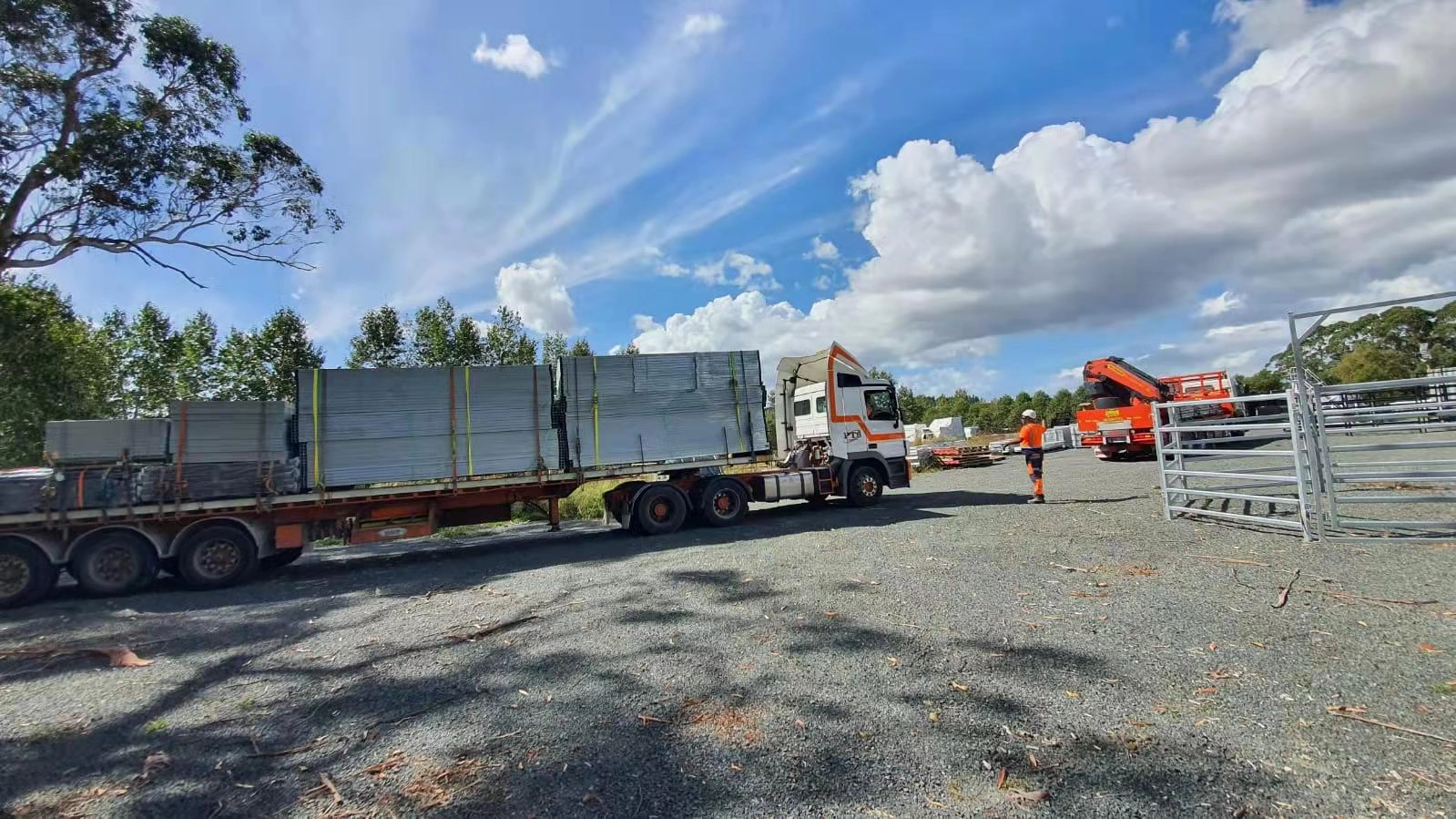
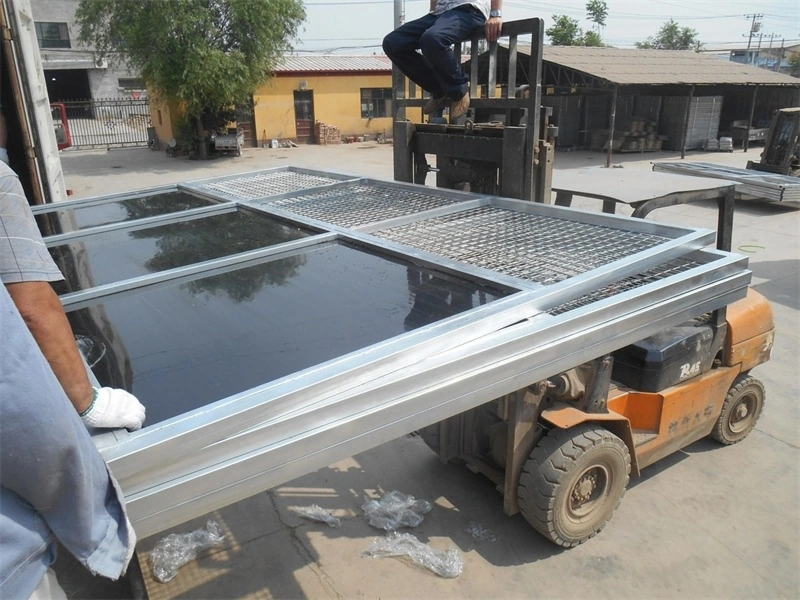
The panels themselves are substantial. The stable panel is a 10mm HDPE board — 2844×1194mm or 3494×1194mm — in a 50×50×2.0mm square tube frame, and each one weighs about 200kg. That figure matters twice in this article: once when you count what a configuration saves in pieces, and once when you plan handling at both ends of the shipment.
Why Shared Walls Change the Arithmetic
Compare two orders that house exactly four horses. Order A is four single-bay stables: 4 × 3 side panels = 12 side panels, plus 4 doors, so 16 major pieces. Order B is the quadruple configuration: 9 side panels plus 4 doors, 13 pieces in total. The three panels saved are the internal dividing walls that order A builds twice and order B builds once.
Three panels sounds modest until you price it in shipping terms. At about 200kg each, the quadruple configuration removes roughly 600kg of panel weight from the order compared with four singles, and it removes the matching volume as well. Flat-pack packing nests the frames and boards tightly, so the saving is real in both of the dimensions a freight forwarder quotes on. None of this changes the stall the horse stands in — the module is still 2200mm high, in 3.0m and 3.6m lengths, with the same front walls and door options.
Our position is blunt: if the site layout allows joined rows, ordering singles is paying twice for one wall. The quadruple with roof is the configuration where this saving is largest for a four-stall order, and the same logic extends to the five- and six-stall rows in the table.
Savings Across the Configuration Table
The table below is the official configuration list with one derived column — total major pieces, meaning side panels plus doors — and one derived figure per row, pieces per stall. Read down the last column and the freight story of each configuration is visible at a glance.
| Configuration | Side panels | Doors | Total pieces | Pieces per stall |
|---|---|---|---|---|
| 1 stall | 3 | 1 | 4 | 4.00 |
| 2 stalls (adjacent) | 5 | 2 | 7 | 3.50 |
| 3 stalls | 7 | 3 | 10 | 3.33 |
| 4 stalls (quadruple) | 9 | 4 | 13 | 3.25 |
| 5 stalls | 11 | 5 | 16 | 3.20 |
| 6 stalls (back-to-back) | 11 | 6 | 17 | 2.83 |
Two rows deserve a closer look. The six-stall back-to-back configuration is the freight champion: it shares panels on two axes, so 17 pieces house six horses — seven fewer than six standalone singles would need, a saving of about 29% in piece count. The back-to-back layout also suits the standard 4m module body, which can be built with or without a roof and joined in double-module runs.
Weight and Volume: The Other Half of the Bill
Piece count drives weight, and weight rides alongside volume in every freight quote. Working from the specification sheet: at about 200kg per panel, a quadruple row’s 9 side panels weigh in the order of 1.8 tonnes before doors and front walls are counted, while four single-bay orders would carry 12 of the same panels — about 2.4 tonnes. The 600kg difference is the same three shared walls from the previous section, priced in kilograms.
Volume is where the flat-pack design earns its keep. Frames, HDPE boards and front walls ship nested rather than assembled, which is how the portable design keeps its shipping footprint down on ocean freight; where a deadline demands it, air freight is possible at additional cost. The practical implication for buyers: the configuration choice and the packing method work together, so neither should be decided in isolation from the other.
One caution belongs here. The panels you save in freight still have to be handled on arrival, and a 200kg panel does not care that it was cheap to ship. Plan unloading equipment for the delivered weight of the whole order, not just the per-stall average. The GST treatment of imported stables is a separate line item worth settling with your accountant before the order — we cover it here.
How to Brief the Factory So the Quote Shows It
The saving only lands on paper if the configuration you priced is the configuration you order. DB Stable’s own intake process is built for that check: enquiries get a response within 6 hours, drawings and references turn into a priced plan within 24 hours, and production runs at up to 20 sets per week with a minimum order of 10 sets. Third-party QC inspection is available before dispatch.
Put three things in the brief. First, the row layout — how many stalls, joined or back-to-back — because that is what sets the panel count. Second, the lengths you want per module: 3.0m and 3.6m are standard, with 4.0m and 4.2m also available. Third, the roof decision, since the raised steel roof stands 2.65m high and runs 4.6m long with a 70cm front eave overhang, which changes both the packed profile and the on-site footprint. A supplier that quotes from a drawing can show you the piece list behind the price — ask for it, and compare it against the configuration table above. Buyers comparing suppliers on the same basis may also find the manufacturer overview page useful background.
Frequently Asked Questions
Does the quadruple configuration cost less to ship than four single stables?
Yes, on the piece count and weight that freight pricing starts from. A quadruple row is 9 side panels and 4 doors; four singles are 12 side panels and 4 doors. At about 200kg per panel, that is roughly 600kg less panel weight for the same four stalls.
Which configuration has the lowest freight cost per stall?
Of the standard configurations, the six-stall back-to-back row: 11 side panels and 6 doors work out to about 2.83 major pieces per stall, against 4.00 for a single-bay stable, because panels are shared on two axes.
What is the minimum order, and how fast are quotes turned around?
The minimum order is 10 sets, production capacity runs up to 20 sets per week, and drawing-based quotes are returned within 24 hours of receiving your requirements.
Do shared walls make each stall smaller or weaker?
No. The stall module keeps its 2200mm height and 3.0m or 3.6m lengths, and shared walls use the same 50×50×2.0mm square tube frames and 10mm HDPE boards as any other panel in the row — the saving is in not building the same wall twice.
Conclusion
The freight cost per stall is decided by geometry: joined rows share walls, shared walls cut pieces, and fewer pieces cut both weight and volume in the quote. The quadruple row saves three panels — about 600kg — against four singles, and the six-stall back-to-back row takes the principle further at about 2.83 pieces per stall.
Before you place the order, sketch the row layout you actually need and ask for the piece list behind the quote. If your site allows joined or back-to-back rows, that one decision will do more for your landed cost per stall than any amount of freight shopping afterwards.