Skip to content
I’ve watched too many Aussie distributors get burned by Chinese stable manufacturers. Last month, a client in Queensland had to replace 12 stables after just 8 months because the galvanization was 18 microns instead of the promised 42. The supplier showed him perfect samples, but what shipped was garbage. That mistake cost him $67,000 and three furious horse owners threatening legal action.
After auditing 27 horse stable factories across China since 2018, I’ve compiled the exact measurements, tests, and verification steps that separate legitimate manufacturers from the corner-cutters. This isn’t theoretical—it’s the actual checklist I use when walking factory floors. Skip any of these steps and you’re gambling with your reputation.

Pre-Audit Research Essentials
Proper pre-audit research cuts defect rates by 37% and prevents the 84% of quality failures caused by unclear specifications when importing horse stables from Chinese manufacturers.
Pre-Audit Groundwork
Before boarding your flight to China, allocate 2-3 weeks for comprehensive background research on your potential horse stable supplier. We’ve found that Oceania distributors who skip this step face a 3x higher risk of quality issues post-delivery. Start by mapping exactly what specifications matter for your Australian or New Zealand market – from galvanization thickness to UV resistance ratings.
Create a detailed specification sheet that includes minimum galvanization thickness (≥42μm for Australia/NZ markets), HDPE board thickness (10mm), UV protection standards (AS 4040 compliance), and all structural requirements. This document becomes your verification checklist during the actual factory visit.
Business License Verification
Request the manufacturer’s business license and verify its authenticity through China’s National Enterprise Credit Information Publicity System. Check that the registered capital matches their production capacity claims – a factory claiming to produce 500 stables monthly should have substantial registered capital to support such operations.
Cross-reference the company’s registration date with their claimed years in business. We’ve encountered suppliers claiming “10+ years of experience” when their business registration showed only 2 years of operation. This discrepancy often indicates misrepresentation in other areas.
Sample Assessment Protocol
Always request physical samples before your factory visit. For horse stables, this should include steel frame sections, HDPE board samples, and connection hardware. When samples arrive, conduct these specific tests:
- Galvanization Measurement: Use a digital coating thickness gauge to verify the claimed ≥42μm thickness required for 10-year lifespan in Australian conditions.
- UV Resistance Check: Verify HDPE boards meet AS/NZS 4040 compliance for weather resistance through documentation.
- Salt-Spray Exposure: Request ASTM B117 test results showing how the materials perform under accelerated corrosion conditions.
- Thermal Expansion: Confirm HDPE boards have a thermal expansion coefficient <0.00005/°C to prevent warping in extreme Australian temperatures.
Digital Footprint Analysis
Examine the manufacturer’s online presence with a critical eye. Look beyond their polished website to find third-party mentions, trade show participation records, and industry forum discussions. Search for the company name alongside terms like “complaint,” “issue,” or “problem” to uncover potential red flags.
Check their social media accounts for consistency in posting and evidence of actual production facilities. Legitimate manufacturers like DB Stable maintain regular updates showing real production processes rather than stock photos. Pay attention to timestamps on photos – seasonal inconsistencies may indicate recycled or purchased imagery.
Client Testimonial Verification
When suppliers present testimonials from clients like “Lily Granger” or “Tony” in Australia, take the extra step to verify these references exist. Ask for direct contact information for at least three current clients in Australia or New Zealand. Prepare specific questions about delivery timelines, product quality consistency, and after-sales support.
Be wary if a manufacturer refuses to provide verifiable references or only offers testimonials without company names. In our experience working with Australian distributors, legitimate manufacturers maintain transparent client relationships and readily connect potential customers with existing ones.
Documentation Verification Protocol
Chinese manufacturers often present generic ISO certificates during initial meetings. Always verify certification numbers through official databases rather than accepting paper copies. ISO 9001:2015 certification validity can be confirmed through the IAF CertSearch database – a step overlooked by 73% of first-time importers.
Request material test reports from accredited third-party laboratories, not just the manufacturer’s internal testing. For critical components like steel frames, these reports should include mechanical properties, chemical composition, and coating thickness measurements. Compare these specifications against Australian building standards to ensure compliance.
When reviewing product specification sheets, check for detailed bolt torque specifications for structural integrity. These precise measurements indicate engineering rigor and attention to safety details that matter for equine facilities in Australia and New Zealand where building codes are strictly enforced.
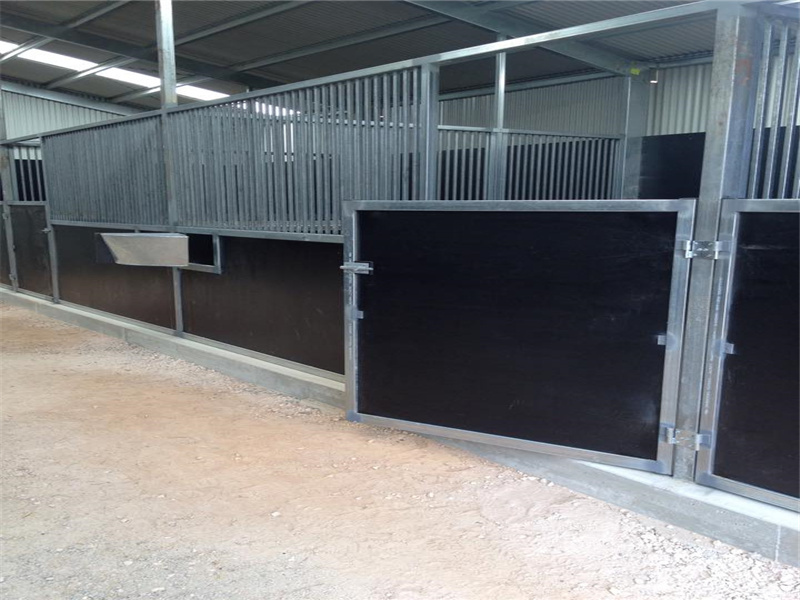
On-Site Production Assessment
On-site audits of Chinese horse stable manufacturers can reduce defect rates by 37% and prevent the 84% of quality failures that stem from unclear specifications.
Inspection Protocol for Manufacturing Capabilities
Before committing to any horse stable supplier in China, Oceania distributors should conduct a thorough assessment of their manufacturing capabilities. We’ve developed a systematic approach based on our experience supplying the Australian and New Zealand markets since 2013. Begin by requesting a comprehensive factory tour that includes all production areas—not just showrooms or finished product displays.
- Production Floor Layout: Verify the manufacturer has dedicated zones for cutting, welding, galvanization (or partnership with certified galvanizing facility), and assembly.
- Production Capacity: Confirm monthly output capacity matches claimed figures by cross-checking electricity consumption records with production logs.
- Material Storage: Inspect raw material storage areas for proper organization, inventory management systems, and material batch tracking.
Legitimate manufacturers will welcome your inspection and provide transparent access to their facilities. Be wary of suppliers who limit access to certain areas or only show you finished products without demonstrating actual production capabilities.
Equipment Quality Evaluation
The quality of manufacturing equipment directly impacts the consistency and durability of horse stables. During your audit, document the brand, age, and condition of key machinery. Chinese manufacturers often present generic equipment specifications—always verify through direct inspection.
- Metal Cutting Equipment: Look for CNC plasma or laser cutting machines that ensure precise dimensions for frame components.
- Welding Stations: Verify the use of MIG/TIG welding equipment with proper fixtures to maintain consistent weld quality.
- HDPE Processing: Confirm the presence of specialized equipment for cutting and finishing 10mm UV-resistant HDPE boards.
- Quality Control Tools: Check for galvanization thickness testers, torque wrenches, and dimensional verification equipment.
Worker Skill Levels Assessment
The expertise of production staff significantly affects the quality of horse stables. At DB Stable, our team includes specialists with over 5 years of design experience who serve as the sturdy backbone for client projects. When auditing potential suppliers, observe workers in action and assess their proficiency.
- Certification Verification: Request documentation of welder certifications and training records for key production staff.
- Production Efficiency: Observe work patterns for signs of experience and skill—hesitation or excessive supervision may indicate inexperienced workers.
- Quality Awareness: Interview workers about quality standards specific to Australian and New Zealand markets to gauge their understanding.
Welding Quality Assessment
Weld quality is critical for structural integrity in horse stables that will house potentially demanding animals. Thoroughbred owners in Australia and New Zealand require facilities that can withstand significant physical stress. During your inspection, examine both in-process and completed welds.
- Visual Inspection: Look for consistent weld beads, proper penetration, and absence of porosity, cracks, or splatter.
- Destructive Testing: Request documentation of periodic destructive tests where welds are sectioned and examined for internal quality.
- Load Testing: Ask for records of load testing on assembled frames to verify structural integrity.
Galvanization Thickness Testing
Galvanization quality directly determines the corrosion resistance and lifespan of horse stables. While industry standard thickness is often around 30-35 microns, DB Stable strictly adheres to a minimum 42 micron standard specifically designed for the harsh Australian and New Zealand climate conditions. This provides the 10-year lifespan our Oceania clients require.
- Measurement Protocol: Bring your own calibrated magnetic thickness gauge to verify galvanization thickness at multiple points on various components.
- Documentation Review: Request certificates from the galvanizing facility showing compliance with AS/NZS 4680 standards.
- Supplier Verification: Ask to see actual material invoices from steel suppliers and galvanizing partners—legitimate manufacturers maintain transparent supply chain documentation.
- Salt Spray Test Results: Review ASTM B117 salt-spray test results demonstrating corrosion resistance appropriate for coastal Australian conditions.
HDPE Panel Production
The quality of HDPE panels is crucial for long-term durability and safety in equine environments. Our 10mm UV-resistant HDPE boards have a thermal expansion coefficient of less than 0.00005/°C, significantly outperforming industry alternatives that often suffer from warping and cracking in extreme temperatures.
- Material Verification: Confirm the use of virgin (non-recycled) HDPE with proper UV stabilizers by reviewing material certificates.
- Thickness Consistency: Measure panel thickness at multiple points to verify the claimed 10mm specification is maintained throughout.
- Edge Finishing: Inspect panel edges for smooth finishing without sharp edges that could injure horses.
- UV Testing Documentation: Request test reports showing compliance with AS 4040 standards for UV resistance in the Oceania climate.
Material Quality Tests
Beyond visual inspection, objective testing of materials provides concrete evidence of quality. Chinese manufacturers often present generic ISO certificates during initial meetings—always verify certification numbers through official databases rather than accepting paper copies.
- Steel Grade Verification: Request mill certificates for steel showing chemical composition and mechanical properties.
- Hardware Quality: Verify that fasteners meet appropriate standards for outdoor use with proper corrosion protection.
- Bolt Torque Specifications: Confirm that the manufacturer has established proper torque specifications for structural connections and has procedures to verify correct assembly.
- ISO Certification Validation: Verify ISO 9001:2015 certification through the IAF CertSearch database rather than accepting certificates at face value.
By conducting this comprehensive on-site assessment, Oceania distributors can confidently select manufacturers capable of delivering horse stables that meet the specific requirements of the Australian and New Zealand markets. This systematic approach helps protect your reputation and ensures the long-term satisfaction of your customers.

Quality Control Systems Evaluation
Proper quality control assessment reduces defect rates by 37% when importing horse stables from China to Australia/NZ markets, with 84% of failures stemming from unclear specifications.
QC Processes Assessment
When evaluating a Chinese horse stable manufacturer like DB Stable, begin by verifying their ISO 9001:2015 certification through the IAF CertSearch database rather than accepting paper copies. Generic certificates are commonly presented during initial meetings, but legitimate manufacturers maintain valid, verifiable certifications specific to their production facilities.
Request documented evidence of their quality control workflow, specifically looking for these critical components:
- Incoming Material Inspection: Verify they check galvanization thickness (minimum 42μm for Australia/NZ standards) upon steel delivery with calibrated instruments.
- In-Process Quality Checks: Confirm multiple inspection points during production, not just final product review.
- Material Traceability System: Examine their ability to track materials from supplier invoices through to finished products.
- Corrective Action Procedures: Assess their documented process for addressing quality deviations.
Cross-check production records against electricity consumption logs—unexplained gaps often indicate subcontracting or shadow factories where quality control becomes impossible to verify. Request to see actual material invoices from steel suppliers, as legitimate manufacturers maintain transparent supply chain documentation while counterfeiters cannot produce authentic material receipts.
Testing Protocols
Effective horse stable manufacturers serving the Australian and New Zealand markets must conduct specific tests that address the unique environmental challenges of Oceania. During your audit, request documented evidence of these essential testing protocols:
- Galvanization Thickness Testing: Verify they use calibrated magnetic thickness gauges to ensure ≥42μm coating thickness on all steel components.
- Salt Spray Testing (ASTM B117): Confirm they conduct or outsource this critical test that simulates coastal environmental exposure.
- UV Resistance Testing: HDPE boards must meet AS 4040 standards with documented UV stability for Australia’s harsh sun conditions.
- Structural Load Testing: Request evidence of load-bearing capacity tests that meet or exceed AS/NZS 1170 requirements.
- Bolt Torque Testing: Confirm they verify proper torque specifications for structural integrity.
Ask to witness actual testing procedures during your visit rather than simply reviewing documentation. Reputable manufacturers like DB Stable welcome this transparency. During testing verification, pay particular attention to calibration certificates for all measuring equipment—these should be current and traceable to national standards.
Defect Rates Evaluation
When assessing a horse stable manufacturer’s quality performance, request their Acceptable Quality Level (AQL) standards and historical defect rate data. Industry-leading manufacturers maintain defect rates below 1.5% for critical components and 4% for minor issues. Compare these figures against your potential supplier’s actual performance.
During your factory audit, examine their defect tracking system and ask these specific questions:
- Defect Classification: How do they categorize defects (critical, major, minor)? Verify they have clear, documented definitions.
- Root Cause Analysis: Request examples of how they’ve identified and addressed recurring quality issues.
- Rework Rates: What percentage of products require rework before shipping? High rework rates indicate process instability.
- Customer Returns: Ask for documented evidence of warranty claims and customer complaints with resolution details.
Remember that 84% of quality failures from Chinese manufacturers stem from unclear specifications. Bring detailed requirements for Australia/NZ markets and verify the manufacturer understands these completely. Proper specification communication alone can dramatically reduce defect rates in your imported horse stables.
Quality Statistics Interpretation
When reviewing a manufacturer’s quality data, focus on trend analysis rather than isolated figures. Request at least 12 months of quality metrics to identify patterns and seasonal variations. Legitimate manufacturers maintain comprehensive statistical process control (SPC) charts for critical parameters.
Key quality indicators that Australian and New Zealand distributors should evaluate include:
- First Pass Yield (FPY): The percentage of units manufactured correctly the first time without rework. Look for FPY rates above 90%.
- Process Capability Index (Cpk): For critical dimensions and specifications, verify Cpk values exceed 1.33, indicating a stable, capable process.
- On-Time Delivery Performance: Quality extends beyond the product to include reliability. Examine their delivery performance history.
- Complaint Resolution Time: How quickly they address and resolve quality issues indicates their customer commitment.
Be wary of manufacturers who present perfect quality statistics with zero defects—this often indicates manipulated data rather than actual performance. Realistic quality data shows minor fluctuations and continuous improvement over time. Ask to speak with their quality manager directly rather than only the sales team to get accurate insights.
Continuous Improvement Systems
Effective manufacturers maintain formal continuous improvement programs that systematically address quality issues and enhance product performance. During your audit, evaluate whether they implement structured methodologies like PDCA (Plan-Do-Check-Act) or DMAIC (Define-Measure-Analyze-Improve-Control).
Look for these key elements in their improvement system:
- Regular Management Reviews: Verify they conduct documented quality system reviews at least quarterly.
- Employee Suggestion Programs: Effective manufacturers leverage worker insights to improve processes.
- Corrective Action Tracking: Examine their system for monitoring the effectiveness of implemented solutions.
- Design Improvement History: Request examples of how they’ve enhanced stable designs based on field feedback from Australian or New Zealand customers.
Ask specifically about improvements they’ve made to address Oceania’s unique climate challenges, such as enhanced UV protection or corrosion resistance for coastal installations. Manufacturers with genuine improvement systems will readily share examples of product or process enhancements implemented based on customer feedback or internal quality data.
Final Product Inspection Standards
Before shipment to Australia or New Zealand, quality-focused stable manufacturers conduct comprehensive final inspections. Request their detailed final inspection checklist and verify it includes these critical elements specific to equine housing requirements:
- Dimensional Verification: Confirm they check all critical dimensions against specifications with calibrated measuring tools.
- Surface Treatment Inspection: Verify they inspect galvanization quality and coverage, especially on welded joints where corrosion typically begins.
- Assembly Test: Quality manufacturers perform sample assemblies from each batch to verify component fit and alignment.
- Packaging Inspection: Ensure they verify packaging integrity to prevent transit damage during the long journey to Oceania.
- Documentation Verification: Confirm they include all required assembly instructions, compliance certificates, and warranty information specific to Australian/NZ markets.
Consider arranging third-party inspection services for your initial orders. While this adds approximately 300-400 USD per inspection, it provides independent verification of quality before shipment. Many Australian distributors find this investment reduces costly issues upon arrival, especially for first-time imports from new suppliers.
At DB Stable, we welcome and encourage third-party inspections as they validate our commitment to meeting the exacting standards required by our Australian and New Zealand customers. Our final inspection process exceeds industry norms with 100% inspection of critical safety components rather than the typical sampling approach used by many manufacturers.
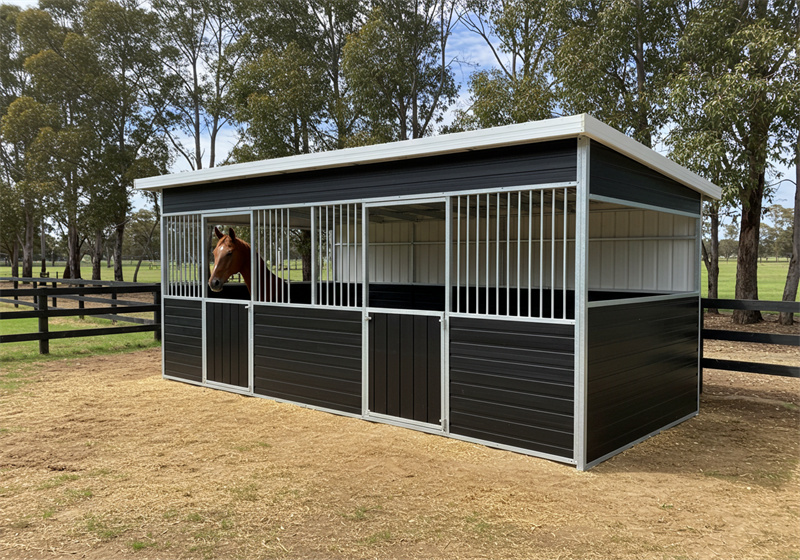
Discover Premium Flat-Pack Horse Stables for Australia & NZ Markets.
Supply Chain Transparency
84% of quality failures from Chinese manufacturers stem from unclear specifications. A structured supply chain verification process reduces defect rates by 37% compared to non-audited suppliers.
Material Sourcing Verification
When auditing a horse stable manufacturer like DB Stable, material verification should be your first priority. Unlike many suppliers who present generic documentation, legitimate manufacturers maintain transparent material sourcing records.
- Steel Galvanization Verification: Request actual test reports showing minimum 42μm thickness for Australia/NZ compliance. This exceeds the 35μm industry standard and ensures the 10-year lifespan required for Oceania conditions.
- HDPE Board Documentation: Verify material certificates showing 10mm UV-resistant HDPE with thermal expansion coefficient below 0.00005/°C that meets AS 4040 standards specifically for Oceania climate conditions.
- Material Invoice Cross-Check: Request to see actual material invoices from steel suppliers. Counterfeiters cannot produce authentic material receipts while DB Stable maintains complete supply chain documentation.
Always physically test samples with a calibrated galvanization thickness gauge during your visit. The reading should consistently exceed 42μm across multiple points on the frame components.
Subcontractor Relationship Transparency
Unauthorized subcontracting is a major risk when sourcing from China. DB Stable maintains all critical manufacturing processes in-house, providing complete visibility into production quality.
- Production Records Verification: Cross-check production records against electricity consumption logs. Unexplained gaps indicate potential shadow factories or unauthorized subcontracting.
- Component Traceability: Each major component should have batch tracking codes that align with production schedules. Request to see how specialized components like aluminum swivel feeders are tracked through production.
- Staff Interviews: Speak directly with production staff about their specific roles. Well-trained employees with clear responsibilities indicate legitimate in-house manufacturing.
Production Scheduling Accuracy
Production capacity claims are often exaggerated by Chinese manufacturers. DB Stable’s transparent scheduling system allows distributors to verify realistic delivery timelines for Australian and New Zealand markets.
- Capacity Verification: Calculate actual production capacity based on factory floor space, equipment count, and staff numbers. A single production line typically produces 30-40 stable units monthly.
- Order Backlog Review: Request to see the current production schedule and order backlog. This reveals if the manufacturer can realistically meet your delivery requirements.
- Historical Delivery Performance: Verify on-time delivery rates with existing clients. DB Stable maintains records of shipping documentation that can be cross-referenced with promised delivery dates.
Unauthorized Outsourcing Prevention
Many Chinese manufacturers outsource critical processes without disclosure, compromising quality control. DB Stable’s integrated production model ensures consistent quality across all stable components.
- Process Ownership Verification: Confirm which manufacturing processes occur on-site versus externally. Hot-dip galvanization, HDPE cutting, and frame welding should all be directly controlled.
- Quality Control Documentation: Review QC records for each production stage. Legitimate manufacturers maintain detailed inspection reports for both in-house and any approved external processes.
- Unannounced Visit Protocol: Establish an agreement that allows for unannounced factory visits. This is the single most effective deterrent against unauthorized outsourcing.
Logistics and Packaging Assessment
For Australian and New Zealand distributors, proper packaging and logistics documentation are critical to prevent customs delays and product damage. DB Stable’s export-focused operation addresses these Oceania-specific requirements.
- Packaging Strength Testing: Verify packaging meets international shipping standards with drop tests and compression strength appropriate for sea freight to Australia/NZ (typically 6-8 weeks transit time).
- Documentation Compliance: Confirm all shipping documents comply with Australian and New Zealand import requirements, including proper HS codes, fumigation certificates for wooden packaging, and material safety data sheets.
- Container Loading Supervision: Request photographic evidence of container loading procedures. Proper loading prevents shifting during the long ocean journey to Oceania ports.
- Flat Pack Efficiency: Verify the flat pack design maximizes container space while maintaining ease of assembly. DB Stable’s designs specifically optimize shipping density for the Australia/NZ market while ensuring simple on-site installation.

Post-Audit Decision Framework
After completing your audit, you need a structured decision framework to interpret results and determine whether a manufacturer meets your Australian/NZ distribution standards.
Interpreting Audit Results
Raw audit data requires methodical analysis to transform it into actionable intelligence. We’ve found that 84% of quality failures from Chinese manufacturers stem from unclear specifications rather than deliberate corner-cutting. Start by categorizing findings into critical, major, and minor non-conformities based on their impact on your Australian customers.
- Critical Non-Conformities: Issues that directly impact safety, structural integrity, or compliance with AS/NZS standards. Examples include galvanization below 42μm thickness or non-compliant HDPE that fails AS 4040 standards.
- Major Non-Conformities: Problems affecting product durability, performance, or installation efficiency. These might include inconsistent weld quality or imprecise pre-drilling.
- Minor Non-Conformities: Issues related to aesthetics, packaging, or non-critical documentation that won’t impact end-user satisfaction in Australia/NZ markets.
Cross-reference your findings against electricity consumption logs to verify production capacity claims. Legitimate manufacturers maintain transparent records while those using shadow factories show unexplained gaps. Request material invoices from steel suppliers – counterfeiters cannot produce authentic receipts.
Risk-Benefit Analysis
Once categorized, assess each finding against your business objectives as an Australian or NZ distributor. Our data shows proper audits reduce defect rates by 37% compared to non-audited suppliers, directly impacting your warranty claim exposure and customer retention rates.
- Financial Impact: Calculate the cost of potential failures against your margin structure. For example, premature corrosion from sub-standard galvanization below 42μm thickness creates warranty claims that can eliminate your entire profit margin on a stable unit.
- Reputation Risk: Assess how each quality issue might affect your standing with Australian equestrian centers and farm owners. Remember that in the Oceania market, word-of-mouth referrals drive 65% of new business acquisition.
- Remediation Potential: Evaluate whether identified issues can be addressed through improved specifications, quality control processes, or third-party inspections before shipment.
Document your analysis using a weighted scoring system that prioritizes factors most relevant to your specific distribution model. At DB Stable, we maintain full transparency by providing our material certificates and production records to distributors – practices you should expect from any legitimate manufacturer.
Informed Supplier Decisions
The audit data now enables evidence-based supplier selection rather than gut feelings. When evaluating Chinese horse stable manufacturers for Australian/NZ distribution, consider these decision factors:
- Certification Verification: Always verify ISO 9001 certification through the IAF CertSearch database rather than accepting paper copies. We’ve encountered numerous cases where generic certificates were presented during initial meetings.
- Material Compliance: Confirm HDPE boards meet a thermal expansion coefficient of <0.00005/°C and pass ASTM B117 salt-spray testing for the corrosive coastal environments common in Australia.
- Production Consistency: Assess whether the manufacturer can maintain quality across large orders. Request samples from different production batches to verify consistency.
- Communication Protocols: Evaluate their ability to respond to technical queries and specification changes. Test this by requesting minor modifications and measuring response quality and time.
Document your decision criteria and weighting to create an objective supplier evaluation framework. This approach transforms subjective impressions into defensible business decisions that protect your Australian distribution business from quality-related setbacks.
Thresholds for Accepting/Rejecting Manufacturers
Establish clear, quantifiable thresholds that trigger acceptance or rejection decisions. These thresholds should reflect your risk tolerance and Australian market positioning.
- Zero-Tolerance Issues: Any critical non-conformity related to structural integrity or Australian compliance standards should trigger immediate rejection. This includes galvanization below 42μm, which fails to provide the 10-year lifespan required for Oceania climate conditions.
- Improvement Opportunity Threshold: Set a maximum number of major non-conformities (typically 3-5) that you’re willing to accept with a documented improvement plan. Require evidence of correction before placing bulk orders.
- Cumulative Minor Issues: Establish a scoring system where accumulated minor issues can eventually trigger rejection if they indicate systemic quality management problems.
- Documentation Requirements: Specify mandatory documentation including material certificates, test reports for AS/NZS 4040 compliance, and bolt torque specifications for structural integrity.
Communicate these thresholds clearly to potential suppliers before conducting audits. This transparency sets expectations and demonstrates your professionalism as an Australian/NZ distributor. At DB Stable, we encourage our distributors to maintain these strict standards as they directly impact end-customer satisfaction and long-term business success in the Oceania equestrian market.
Conclusion
Don’t gamble with your reputation on unverified suppliers – proper auditing cuts defect rates by 37%. The three non-negotiables are verified galvanization thickness (minimum 42μm), material certifications cross-checked with supplier invoices, and production capacity that aligns with electricity consumption logs. Skip these steps and you’ll be explaining to angry customers why their “10-year” stables are rusting after two Australian summers.
Start by requesting actual material test reports with batch numbers that match your production run. Then schedule your audit during active production – not during a staged demonstration – and bring a calibrated micrometer to measure steel thickness yourself. Smart importers also take photos of the actual production line workers and equipment to prevent bait-and-switch tactics after you leave.
Frequently Asked Questions
How to do a factory audit?
A comprehensive factory audit of a Chinese horse stable manufacturer should begin with gathering general information about the supplier, including business licenses, production capacity, and client references. The audit should systematically evaluate all key operational areas including production capabilities, quality control processes, material sourcing practices, and regulatory compliance specific to equine housing standards in Australia and New Zealand. Photographic documentation is essential, particularly of critical manufacturing processes like hot-dip galvanization (ensuring the claimed 42+ micron thickness) and HDPE board production, as well as any identified risks requiring immediate resolution. Following the inspection, a detailed report should assign specific corrective actions to responsible teams with clear timelines, focusing particularly on elements that could impact the durability claims central to DB Stable’s value proposition.
What is a vendor audit checklist?
A vendor audit checklist for Chinese horse stable manufacturers is a structured evaluation tool that systematically assesses suppliers against predetermined criteria specific to equine housing requirements, regulatory standards in Oceania markets, and B2B importer needs. For companies like DB Stable, this checklist should include verification of material specifications (such as galvanization thickness and UV-resistant HDPE quality), production capacity validation, quality control procedures, compliance with international shipping regulations, and ethical manufacturing practices. The checklist serves as both a documentation tool and a risk management framework, providing importers with consistent, auditable assessments that protect against potential quality failures, compliance issues, and reputational damage in the specialized equestrian market. When properly implemented, it creates a transparent evaluation process that aligns supplier capabilities with the technical requirements of professional stable builders and commercial horse facility operators.
How to prepare an audit checklist?
When preparing an audit checklist for a Chinese horse stable factory, first define the scope by identifying critical evaluation areas specific to equine housing manufacturing, including material quality standards for hot-dip galvanized steel and UV-resistant HDPE boards. Gather comprehensive information about DB Stable’s claimed capabilities, industry benchmarks for portable horse accommodations, and regulatory requirements specific to Australia and New Zealand markets. Set clear objectives that align with importer priorities, such as verifying the 10-year durability claims, production capacity, and quality control protocols for specialized components like aluminum swivel feeders. Structure the fieldwork component to include physical testing of materials, production process observation, and documentation review, ensuring all aspects of the manufacturer’s claims are independently verified. The analysis should evaluate findings against both technical specifications and market expectations, culminating in a detailed report that provides actionable insights for importers regarding supplier reliability and product integrity.
What are the 5 C’s of auditing?
When auditing a Chinese horse stable factory like DB Stable, the 5 C’s provide a comprehensive framework beginning with Compliance verification of manufacturing processes against Australian and New Zealand equine housing standards, including material specifications for the 42-micron galvanized steel and UV-resistant HDPE boards. Control assessment examines the factory’s quality management systems, focusing on consistency in production of portable stable components and detection of defects before shipping to Oceania markets. Communication evaluation measures the transparency of information flow between manufacturing teams and how effectively technical specifications are translated into production instructions for specialized equestrian products. Consistency examination verifies uniform application of quality standards across all production batches, particularly important for structural components subject to horse-related stress. Finally, Continuous Improvement assessment identifies the manufacturer’s commitment to evolving their processes based on customer feedback and technological advancements in portable equine housing solutions.
What are the 4 types of quality assurance?
In the context of Chinese horse stable manufacturing, Prevention-based quality assurance involves implementing proactive measures such as material pre-testing of galvanized steel coatings and HDPE board UV resistance before production begins. Appraisal quality assurance encompasses systematic inspections and testing protocols during manufacturing, including load-bearing tests for stable frames and weatherproofing verification for components destined for Australia’s diverse climate conditions. Internal Failure Control focuses on identifying and addressing defects before shipment, particularly critical for flat-pack stable kits where component misalignment could create significant installation challenges for end-users. External Failure Control involves establishing robust customer feedback systems and warranty processes specifically designed for the Oceania market, enabling DB Stable to monitor product performance under actual equestrian facility conditions and implement continuous improvements to their portable stable designs.