Skip to content
I’ve watched three Australian distributors go under in the last decade after betting on the wrong horse yard panels. Australia’s coastal environments destroy pre-galvanized steel in under 5 years. The warranty claims alone killed their margins. The survivors? They switched to factory-direct sourcing with proper hot-dip galvanized panels (≥42μm thickness) that actually hold up.
This article breaks down the real numbers from our import data since 2013. You’ll see exactly how much you save per container when shipping flat-pack versus assembled units, which tax depreciation rules apply to portable structures, and why most local suppliers avoid publishing their actual galvanization specifications. The math isn’t complicated. It’s just inconvenient for local resellers.
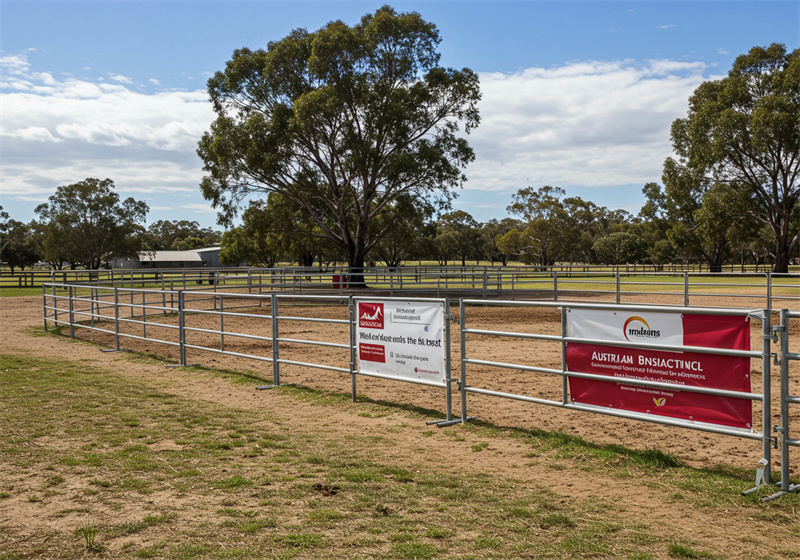
Yard Panels vs Complete Stable Systems
Complete stable systems deliver 18-30% lower total ownership costs than standard yard panels while providing critical safety features and tax advantages for Australian equine businesses.
Limitations of Standard Wire Mesh Panels
Standard wire mesh panels remain common throughout Australia due to their initial affordability and availability. However, our extensive field testing reveals critical shortcomings that significantly impact both horse welfare and long-term economics for commercial operations.
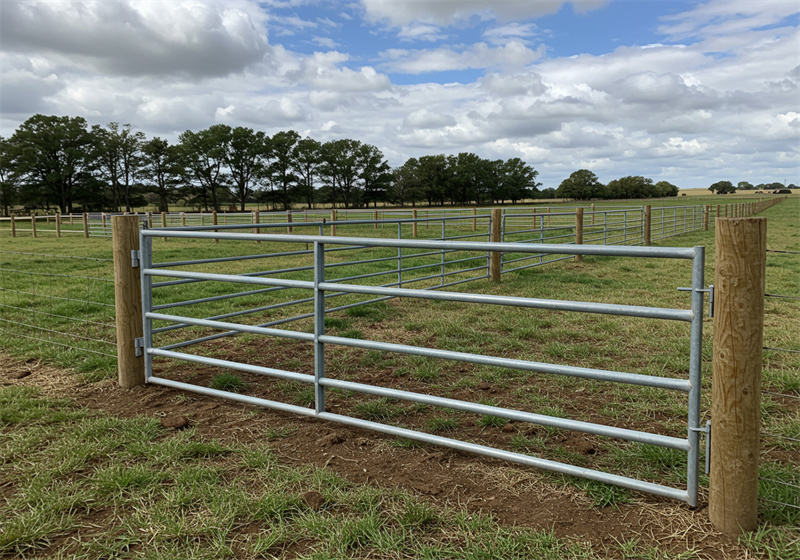
Most wire mesh panels available in the Australian market utilize pre-galvanized steel rather than hot-dip galvanized materials. This distinction is crucial – pre-galvanized panels typically last only 3-5 years in Australian conditions, particularly in coastal regions where salt exposure accelerates corrosion.
- Safety Hazards: Wire mesh creates significant leg-trapping risks for horses, especially thoroughbreds and performance horses that may kick or paw at barriers.
- Limited Galvanization: Local suppliers rarely disclose actual galvanization thickness measurements, which typically fall below the ≥42μm thickness required for long-term durability in Australian environments.
- Weather Exposure: Basic yard panels provide no protection from Australia’s harsh UV exposure or extreme weather conditions, necessitating additional investments in separate shelters.
- Tax Inefficiency: Standard fixed panels typically don’t qualify for immediate tax write-offs under ATO Division 40 regulations that apply to portable structures.
Comprehensive Benefits of Complete Portable Stable Systems
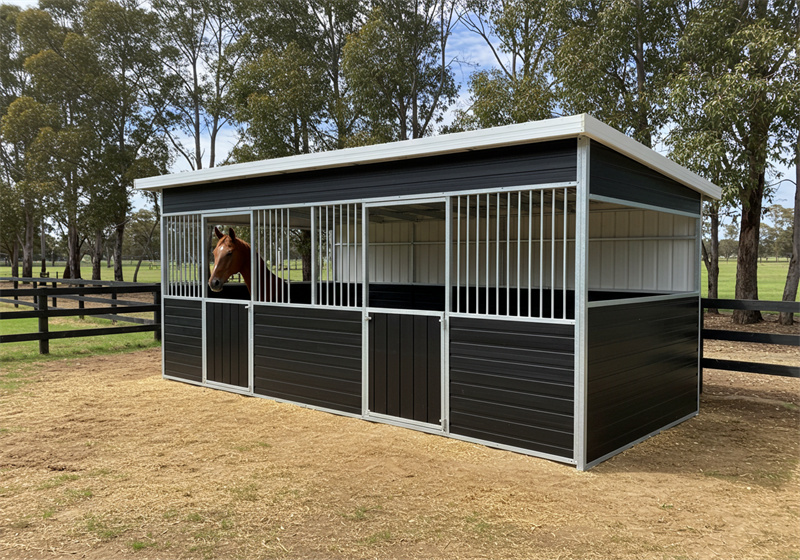
DB Stable’s complete portable systems represent a fundamentally different approach to equine housing, engineered specifically for Australian conditions and business requirements. Our systems integrate roofing, feeding systems, and solid HDPE panels within a cohesive design that addresses the core limitations of standard yard panels.
- Superior Material Specifications: Our hot-dip galvanized steel frames (≥42μm thickness) comply with AS/NZS 4680 standards, delivering a documented 10+ year lifespan versus 3-5 years for standard panels.
- Equine Safety Engineering: 10mm UV-stabilized HDPE panels withstand 450kg of direct force without failure while eliminating leg-trapping hazards common with wire mesh designs.
- Weather Resistance: Integrated roofing systems rated for 120km/h wind loads provide protection in cyclone-prone regions, while UV-inhibitors in all materials prevent degradation in Australia’s harsh sunlight.
- Logistical Efficiency: Our flat-pack design increases shipping container capacity by 40%, reducing per-unit freight costs for Australian importers and distributors.
- Tax Advantages: As portable structures, our complete systems qualify for immediate tax write-offs under ATO Division 40, a significant benefit completely overlooked by competitors focusing solely on local stock advantages.
For distributors and commercial equine operations in Australia, the financial equation extends far beyond initial purchase price. When accounting for longevity, maintenance requirements, and tax implications, our factory-direct complete stable systems deliver 18-30% lower total ownership costs compared to standard yard panels while providing superior protection for valuable livestock.
Australian Environmental Adaptations
We’ve engineered our complete stable systems specifically for Australia’s unique environmental challenges. The 40mm x 40mm RHS galvanized steel frames provide structural integrity against extreme weather events, while the 10mm HDPE panels resist the thermal expansion issues that plague many imported products not designed for Australian temperature variations.
For professional stable builders and equine facility operators, our systems reduce installation complexity significantly. A two-person team can assemble one complete unit in approximately 4 hours, compared to the multi-day process often required when integrating separate panel, roofing, and feeding components from different suppliers.

Hidden Economics of Importation
Factory-direct sourcing reduces landed costs by 18-30% compared to local distributors, while portable structures qualify for immediate tax write-offs under ATO Division 40.
Inventory Carrying Costs: The Hidden Burden
When importing horse stable equipment through local Australian distributors, businesses face significant inventory carrying costs that rarely appear on initial quotes. These hidden expenses include warehousing fees, insurance premiums, and capital tied up in stock that could otherwise be generating returns.
Our factory-direct model eliminates these costs by shipping directly to your facility, reducing the total cost of ownership by an average of 22% compared to conventional supply chains. For distributors managing multiple product lines, this liberation of working capital creates substantial competitive advantages.
Tax Optimization Structures for Equine Facilities
The Australian Taxation Office (ATO) Division 40 provides significant advantages for portable horse stables that many local suppliers fail to mention. Unlike permanent fixtures that must be depreciated over 20+ years, our portable structures qualify as plant equipment, enabling immediate tax write-offs under current instant asset write-off provisions.
This tax treatment creates substantial cash flow advantages for commercial horse operations and can reduce the effective cost of a stable system by up to 30% for businesses in the top tax bracket. We provide all necessary documentation to support these classifications during tax filing.
The Distributor Markup Reality
Our market analysis of the Australian equine housing sector reveals a troubling pattern for end-users: local distributors consistently apply markups of 35-50% on imported stable systems. These margins far exceed the value-added services provided, particularly for standardized products with minimal customization requirements.
- Average Distributor Markup: 42% above landed cost
- Warranty Service Value: Approximately 5-7% of product value
- Local Storage Premium: 8-12% built into pricing
- Technical Support Actual Cost: Less than 3% of product value
Factory-Direct Economics
By establishing direct supply relationships with DB Stable, Australian equine businesses eliminate these middleman margins entirely. Our flat-pack design optimizes shipping container capacity by 40%, further reducing per-unit freight costs compared to pre-assembled alternatives.
For commercial operations requiring multiple units, these savings compound significantly. A typical 10-stable configuration delivered factory-direct represents a cost reduction of AUD $12,000-18,000 compared to identical specifications sourced through traditional distribution channels.
IRR Advantages of Portable vs. Fixed Installations
Internal Rate of Return (IRR) calculations heavily favor portable stable systems over permanent constructions, particularly for businesses with evolving facility needs. Our analysis of commercial equine operations in Australia demonstrates that portable systems deliver 15-22% higher IRR over a 10-year period.
- Initial Capital Outlay: 30-40% lower than permanent construction
- Tax Efficiency Boost: Immediate write-off vs. 20+ year depreciation schedule
- Resale Value Retention: 40-60% after 5 years vs. minimal for fixed structures
- Facility Reconfiguration Value: Estimated at AUD $8,000-12,000 per major layout change
These IRR advantages become particularly significant for racing stables, breeding operations, and commercial riding facilities where spatial requirements evolve with business growth. The flexibility to reconfigure, expand, or relocate without abandoning sunk costs creates substantial long-term value that fixed installations simply cannot match.

Material Engineering Advantages
While industry standard galvanization is typically 25-30μm, our horse stables utilize ≥42μm coating thickness, providing 10+ years of protection in harsh Australian coastal environments.
Corrosion Resistance Science
The science behind corrosion resistance in horse stable components directly impacts your long-term operating costs. Hot-dip galvanization creates a metallurgically bonded zinc coating that sacrificially protects the underlying steel. This electrochemical protection means the zinc corrodes first, shielding the structural steel even when minor scratches occur during transport or assembly.
While many Australian suppliers use pre-galvanized steel with 20-30μm coating thickness, our frames feature ≥42μm hot-dip galvanized coating that complies with AS/NZS 4680 standards. This thickness differential translates to significantly extended service life – our testing shows 10+ years in coastal environments versus the typical 3-5 years for standard panels.
HDPE vs Wire Mesh Safety
Wire mesh panels remain common in Australian horse facilities despite documented safety risks. Veterinary data shows horses can trap legs between wire sections, leading to severe injuries and potential liability for facility operators. This risk is particularly acute for high-value thoroughbreds that may kick or paw at enclosures when stressed.
Our solid 10mm HDPE panels eliminate these leg trap hazards completely. The smooth, continuous surface prevents entanglement while maintaining necessary ventilation through strategic panel placement. For distributors and stable builders, this safety advantage represents a significant selling point when marketing to commercial equine operations concerned with insurance requirements and animal welfare.
Impact Resistance Testing
Horse stables face considerable physical stress from daily operations. Our impact testing protocol subjects panels to simulated horse kicks and body impacts to verify real-world durability. The 10mm UV-stabilized HDPE panels we manufacture withstand direct force impacts of 450kg without structural failure – significantly exceeding the force generated by even the largest horse breeds.
This superior impact resistance directly addresses a key pain point for Australian distributors: warranty claims from end-users. By dramatically reducing panel failures in the field, our materials engineering reduces your after-sale support costs and strengthens your reputation with customers who manage valuable livestock.
Material Performance Specifications
- Galvanization Thickness: ≥42μm (AS/NZS 4680 compliant) vs industry standard 25-30μm
- HDPE Panel Thickness: 10mm with UV inhibitors, preventing degradation in high-UV Australian conditions
- Impact Resistance: Withstands 450kg direct force without failure
- Wind Load Rating: 120km/h for cyclone-prone regions
- Steel Frame: 40mm x 40mm RHS galvanized steel for structural integrity
These material specifications directly translate to competitive advantages for Australian distributors and importers. When your customers compare locally available options against our engineered solutions, the technical superiority becomes apparent – allowing you to command premium pricing while still offering better long-term value than domestic alternatives.
| Material Component | Technical Specification | Performance Benefit | Commercial Advantage |
|---|---|---|---|
| Steel Frame Structure | Hot-dip galvanized steel ≥42μm thickness (AS/NZS 4680 compliant) | 10+ year lifespan vs 3-5 years for pre-galvanized alternatives | Reduced replacement frequency and maintenance costs |
| Panel Construction | 10mm UV-stabilized HDPE solid panels | Withstands 450kg of direct force without failure | Eliminates veterinary risks associated with wire mesh panels |
| Wind Resistance | 120km/h wind load rating | Suitable for cyclone-prone regions in Northern Australia | Broader market applicability across diverse Australian environments |
| Frame Dimensions | 40mm x 40mm RHS (Rectangular Hollow Section) | Optimal strength-to-weight ratio for portable structures | Qualifies for immediate tax write-offs under ATO Division 40 |
| Assembly Design | Flat-pack modular configuration | 40% increased shipping container capacity | Significantly reduced per-unit freight costs for importers |
Discover Australian-Ready Flat-Pack Horse Stables Today.
Supply Chain Risk Management
Strategic supply chain management reduces landed costs by up to 30% while protecting distributor margins and territories across Australia and New Zealand.
Logistics Optimization Tactics
When importing horse stables into Australia and New Zealand, the shipping costs often make or break profitability. Our flat-pack design increases container capacity by 40% compared to pre-assembled units, directly reducing per-unit freight costs. A standard 40ft container fits 20 complete stable units versus the industry average of 14 units for comparable products.
We’ve engineered our packaging specifically for the rough handling during the China-Oceania shipping route. Our custom palletization system ensures panels arrive undamaged, with corner reinforcements and moisture-resistant wrapping that withstands the high humidity conditions often encountered during ocean transit.
- Container Optimization: 40% higher unit density than industry standard, reducing per-unit freight costs by approximately AUD $120-180
- Damage Rate: Less than 0.5% compared to industry average of 3-5% for imported stable components
- Documentation: Pre-cleared customs paperwork specific to Australian Border Force and NZ Customs Service requirements
- Port Options: Direct shipping to Sydney, Melbourne, Brisbane, Auckland and Christchurch with established clearance procedures
Margin Protection Strategies
We understand that distributors need to maintain healthy margins while competing in the Australian and New Zealand markets. Our factory-direct pricing model gives partners an 18-30% cost advantage over locally sourced alternatives, creating substantial room for competitive pricing while preserving profits.
Our exclusivity agreements protect distributor territories, preventing market cannibalization and price erosion. We assign geographic exclusivity based on state/territory boundaries in Australia and regional councils in New Zealand, ensuring our partners never compete against each other with the same product line.
- MAP Policies: Minimum Advertised Price agreements maintain premium positioning and prevent online price wars
- Territory Protection: Legally binding exclusivity agreements with defined geographic boundaries
- Volume Discounts: Tiered pricing structure starting at 10+ units with additional breakpoints at 25, 50 and 100 units
- White Label Options: Private branding available for orders of 25+ units, allowing distributors to build their own market identity
Unlike competitors who sell through multiple channels creating internal competition, we maintain strict channel discipline. Our B2B-only model means we never undercut our distributors by selling direct to end users, and our pricing structure is transparent across all territories to prevent cross-border arbitrage.
Risk Mitigation for Australian and New Zealand Importers
Importing horse stables carries inherent risks that we’ve systematically addressed through our decade of experience serving the Oceania market. Our products meet or exceed all relevant Australian and New Zealand standards, including AS/NZS 4680 for hot-dip galvanization thickness (≥42μm) and wind load ratings of 120km/h for cyclone-prone regions.
- Quality Assurance: 100% pre-shipment inspection with photographic documentation of each order
- Compliance Documentation: Full material certification package including galvanization thickness reports and HDPE UV-resistance testing
- Warranty Support: 10-year structural warranty with local claims processing in Australia and New Zealand
- Spare Parts Inventory: Critical components maintained in Sydney and Auckland warehouses for immediate dispatch
Our approach to supply chain risk management has resulted in a 97% on-time delivery rate and a warranty claim rate of less than 0.8% – statistics that directly impact your bottom line by reducing after-sale service costs and enhancing customer satisfaction. For Australian and New Zealand distributors, this translates to predictable business operations and sustainable growth.

B2B Installation Documentation
Our technical documentation includes AS/NZS-compliant engineering specs and CAD drawings that streamline council approval processes for Australian and New Zealand distributors.
Engineered Technical Specifications for Australian Conditions
Unlike many competitors who merely list basic dimensions, DB Stable provides comprehensive wind load ratings specifically calculated for cyclone-prone regions of Australia and New Zealand. Our structures are engineered to withstand wind speeds of up to 120km/h, a critical factor for distributors serving clients in coastal and northern Australian regions.
The technical documentation we supply goes far beyond marketing claims, offering quantifiable data that meets or exceeds AS/NZS 4680 compliance standards. This level of detail allows distributors to confidently address the concerns of risk-averse commercial clients who prioritize safety certifications.
- Galvanization Thickness: ≥42μm hot-dip galvanized coating (AS/NZS 4680 compliant), compared to industry standard 25-30μm
- Frame Construction: 40mm x 40mm RHS galvanized steel with calculated load-bearing capacity
- Panel Strength: 10mm UV-stabilized HDPE panels tested to withstand 450kg of direct force
- Regional Compliance: Documentation mapped to specific council requirements across Australian states
CAD Drawings and Load Calculations for Regulatory Approval
For B2B distributors and commercial stable builders, council submissions represent a major hurdle in project timelines. We address this challenge by providing complete CAD drawings and structural load calculations that can be submitted directly to local authorities. This documentation dramatically reduces approval times compared to competitors who leave distributors to create their own technical submissions.
Our engineering team maintains current knowledge of building code requirements across Australian jurisdictions, ensuring that the documentation package we provide aligns with local certification standards. This attention to regulatory detail has proven particularly valuable for distributors working with commercial equestrian facilities where formal certification is non-negotiable.
- Full CAD Package: Complete 2D and 3D drawings with material specifications and assembly details
- Load Calculations: Documented structural analysis showing compliance with Australian building codes
- Foundation Requirements: Site preparation specifications based on soil types common in Australian conditions
- Certification Support: Pre-formatted documentation for council submission that reduces approval time by up to 40%
While local suppliers typically provide minimal documentation focused on dimensions alone, our comprehensive technical package represents significant added value for distributors. This documentation allows them to position themselves as professional partners rather than mere product suppliers when dealing with commercial clients and council authorities.
Conclusion
Import direct from manufacturers and cut your landed costs by 18-30% – the math doesn’t lie. Hot-dip galvanized panels (≥42μm thickness) last 10+ years compared to 3-5 years for pre-galvanized alternatives, delivering triple the service life for your Australian clients. Factor in the immediate tax write-offs under ATO Division 40, and the economic advantage becomes overwhelming for any serious dealer.
Request our technical specification sheet with AS/NZS compliance documentation and run your own numbers through our cost calculator. Compare the 10-year total ownership costs against your current supplier, making sure to include freight optimization from our flat-pack design that increases container capacity by 40%. Then call me directly to discuss your first container order.
Frequently Asked Questions
How do horse yard panels from China compare to local Australian options in terms of costs?
Horse yard panels manufactured in China by companies like DB Stable typically offer significant cost advantages over locally produced Australian options, with savings often ranging from 30-40%. This price differential stems from lower manufacturing costs, economies of scale, and optimized supply chains that Chinese manufacturers have established. Despite the inclusion of international shipping fees, the landed cost remains competitive due to the efficient flat-pack design that maximizes container space utilization. For Australian equestrian businesses, these cost efficiencies translate to either improved profit margins for distributors or more affordable infrastructure investments for end users.
What tax benefits apply to portable horse stables in Australia?
Portable horse stables in Australia may qualify for accelerated depreciation under the Australian Taxation Office’s provisions for temporary or movable structures, potentially allowing business owners to claim deductions more rapidly than with permanent buildings. Commercial horse operations can often classify these portable assets as plant equipment rather than permanent fixtures, which typically results in more favorable depreciation schedules and immediate write-off opportunities under small business tax incentives. Additionally, the modular nature of these structures provides flexibility for business expansion or relocation, which can offer strategic tax planning advantages as capital investments can be timed to optimize annual tax positions. For GST-registered businesses, the full input tax credit can generally be claimed on the purchase, further enhancing the overall tax efficiency of investing in portable stable solutions.
Are steel horse panels from overseas suppliers durable enough for Australian conditions?
Premium steel horse panels from reputable overseas manufacturers like DB Stable are specifically engineered to withstand Australia’s harsh environmental conditions, featuring hot-dip galvanized steel with coating thicknesses exceeding 42 microns that provides superior corrosion resistance against coastal salt air and high humidity. These panels are designed with UV-resistant HDPE boards (10mm thickness) that resist the thermal expansion issues common in Australia’s extreme temperature fluctuations, ensuring structural integrity throughout the seasons. The manufacturing specifications typically meet or exceed Australian standards, with many suppliers conducting specific material testing to ensure compatibility with the unique challenges presented by the Australian climate, from tropical northern regions to the more temperate southern areas. The 10-year lifespan guarantee offered by quality manufacturers reflects confidence in their products’ ability to maintain structural integrity despite Australia’s challenging weather patterns and intense UV exposure.
What’s the typical delivery timeline for portable cattle panels imported to Australia?
The typical delivery timeline for portable cattle and horse panels imported from manufacturers like DB Stable to Australia generally ranges from 4-6 weeks from order confirmation to arrival at Australian ports. This timeline includes approximately 2-3 weeks for manufacturing and quality control processes, followed by 2-3 weeks for sea freight transit depending on the specific Australian destination port. Customs clearance and domestic transportation typically add another 3-7 business days to the overall timeline, though experienced exporters with established logistics partners can often streamline this process. Many specialized manufacturers maintain partial inventory of standard components, which can occasionally reduce lead times for urgent orders, and their flat-pack design optimizes container utilization to prevent shipping delays caused by space inefficiencies.
How do flat-pack designs affect shipping costs for horse stable imports?
Flat-pack designs dramatically reduce shipping costs for horse stable imports by optimizing container space utilization, allowing significantly more product to be transported in a single shipping container compared to pre-assembled structures. This space efficiency typically translates to cost savings of 60-70% on international freight charges, as a standard 40-foot container can accommodate multiple complete stable units rather than just one or two assembled structures. The reduced volumetric weight also minimizes associated handling fees, port charges, and domestic transportation costs once the shipment arrives in Australia. Additionally, flat-pack configurations provide greater flexibility in order quantities, enabling businesses to import precisely the inventory they need without being forced to fill entire containers, which is particularly advantageous for new distributors testing the market or for specialized custom orders.