custom stable landed cost is the first checkpoint buyers should lock before they approve a supplier, budget, or production slot. You see a $1,200 FOB quote for a flat‑pack 12×12 stable and your margin calculator lights up. Then the shipment lands in Sydney, and the final invoice reads $1,850 per unit. That 30% gap is where most veteran distributors lose their projected profit on custom stable landed cost. The difference isn’t supplier dishonesty; it’s the cost chain you didn’t model.
Volumetric freight is the biggest hidden lever. A cheap $800 stable with poorly optimised flat‑pack geometry can eat $400 more in ocean freight than a $1,200 kit engineered to fit tightly into 2.5 CBM. Add 5–10% duty under HS 7308.90.9090, another 10% GST, port handling, and the need for a fumigation certificate if any wooden component is present — and your margin evaporates before a single panel reaches the farm. Understanding custom stable landed cost isn’t an accounting exercise; it’s the difference between a deal that works and one that quietly kills your quarterly P&L.
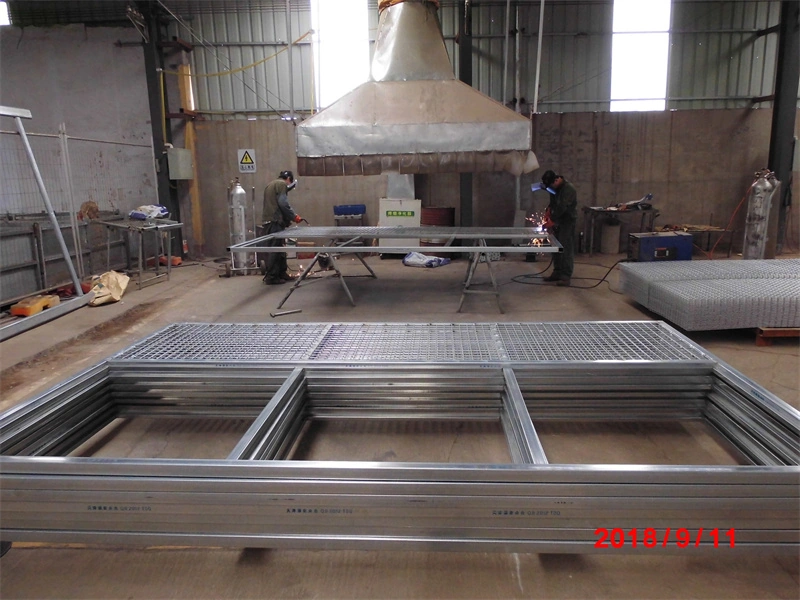
Why Flat Pack Horse Stables Fail Import Margins
Most distributors lose 20–30% margin by ignoring volumetric freight and compliance costs.
A 12x12ft flat-pack kit with an FOB price of $800 can land in Australia or New Zealand at $1,850 after freight, duty (5–10% under HS 7308.90.9090), 10% GST, and port fees. That $1,050 gap eats into your margin before the first sale. The real killer is assuming a low FOB equals a good deal – it doesn’t if the stable is poorly engineered for shipping.
Volumetric freight is the invisible profit killer. A cheap $800 stable with loose, oversized flat-pack design can take up 3.5 CBM, costing $400 more to ship than a $1,200 stable optimized by engineers who design for container density. DB Stable’s team, with over 5 years of experience, reduces your CBM per unit by up to 20% through smarter nesting and component packaging.
- Ingoring Invisible Costs: FOB price excludes freight, duty, GST, port handling, and local delivery. Not accounting for these inflates COGS by 30–50%, destroying gross margin per unit.
- FOB Price Fallacy: Buyers who chase the lowest FOB often end up with 0.6mm painted steel frames that rust in 3–5 years. In high-ammonia stable environments, that means expensive local galvanization repairs – negating the initial $200 savings per unit.
- Missed Components & Returns: Ill-fitting panels or missing brackets in bulk orders force distributors to manage costly returns and replacements. One skipped fumigation certificate for wooden trim can hold a container at Auckland or Sydney port for 3 weeks, costing $500+ in demurrage – a hidden cost that wipes out profit on an entire container.
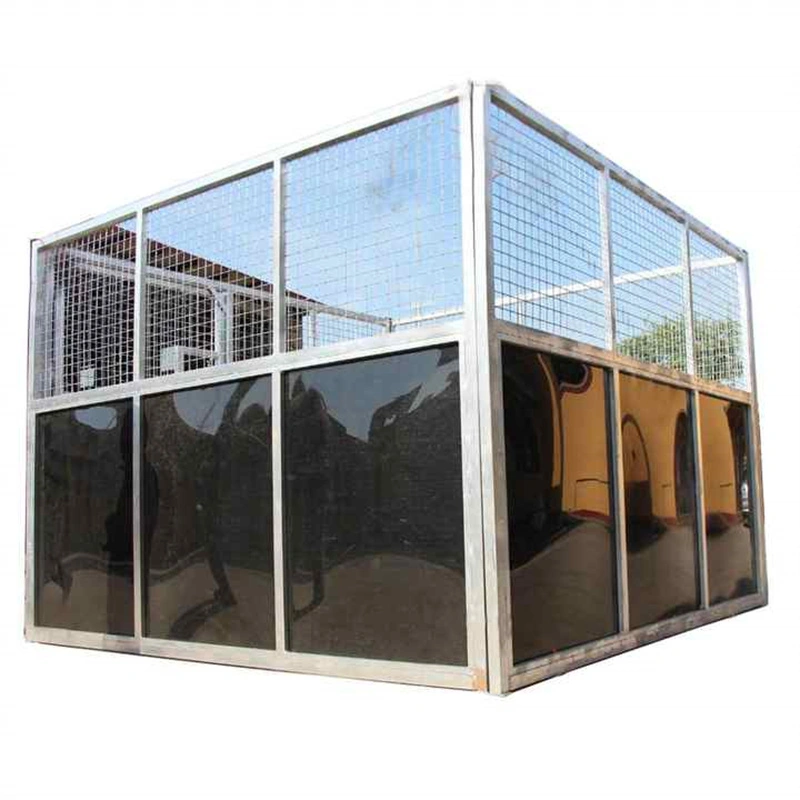
Real Cost Breakdown: FOB vs. Total Landed Cost in 2026
Ignoring volumetric freight costs can wipe 30% off your margin before a stable reaches port.
Your profit margin isn’t the number next to the FOB price. It’s what’s left after ocean freight, import duty, GST, port handling, insurance, and local delivery. For a 12×12 ft flat-pack kit, the FOB price ranges from $800 (0.6 mm painted steel) to $1,500 (1.2 mm hot-dip galvanized). The landed cost in Sydney or Auckland lands closer to $1,850 for that same $1,200 unit. That’s a $650 gap — real money when you’re running a distributor P&L.
- Ocean Freight + Port Fees: A typical 12×12 ft kit ships at 2.5–3.5 CBM. LCL rates from China to AU/NZ average $200–$350 per CBM in 2026, plus terminal handling charges of $150–$250 per container. Multiply by your order volume.
- Import Duty (HS 7308.90.9090): In Australia and NZ, steel structures fall under HS 7308.90.9090. Duty rates vary between 5% and 10%, depending on current trade agreements and whether the steel originates from a preferential partner. Never assume a generic rate — confirm FOB value when quoting.
- GST/VAT at 10%: Both countries apply a 10% goods and services tax on the landed value (duty + freight + insurance). That’s another $150–$200 per unit. This tax is not optional and it’s not included in your FOB comparison.
- Fumigation Certification: Any stable with wooden components — doors, trim, pallets — requires a fumigation certificate (ISPM-15) for AU/NZ biosecurity. Missing this single document can add $500+ per container in storage and demurrage. Proactive documentation is a hidden margin protector.
Most distributors understate COGS by 20–30% because they ignore volumetric freight costs. A cheap $800 stable with poor flat-pack design may occupy 3.5 CBM — costing $400 more in freight than a $1,200 stable engineered for compact packaging. The lowest FOB price rarely yields the lowest total landed cost. Before you lock in a supplier, run the full formula: FOB + freight + insurance + duty (5–10%) + GST (10%) + port fees + local delivery. That’s your true COGS.
| Cost Element | FOB Price (USD) | Additional Landed Cost (USD) | Total Landed Cost (USD) | Impact on Profit Margin |
|---|---|---|---|---|
| Base FOB Price (12x12ft Premium Kit) | 1200 | 0 | 1200 | Ignoring landed costs inflates COGS by up to 30% |
| International Ocean Freight & Insurance (LCL per unit) | 0 | 300 | 1500 | Volumetric inefficiency (high CBM) adds $100+ per unit vs optimized flat-pack |
| Import Duty (HS 7308.90.9090 – 7% avg.) + Customs Clearance | 0 | 134 | 1634 | Unverified HS codes or missing fumigation certs can double clearance fees |
| GST/VAT (10% AU/NZ) + Port Handling & Local Delivery | 0 | 216 | 1850 | Hidden fees from demurrage or under-declared volumetric weight erode margins |
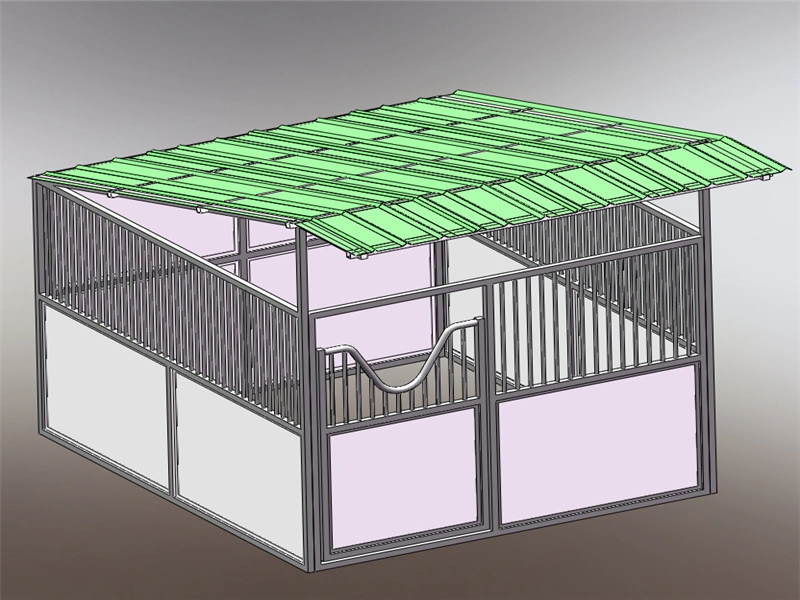
Hot Dip Galvanized vs. Painted Steel: Hidden Long-Term Costs
The $200 FOB gap between painted and galvanized hides a 3x shorter lifespan.
Most distributors default to painted steel because the FOB price sits $150–$200 lower per 12x12ft stable. That impulse saves a few dollars at the factory gate but introduces a liability that erodes margin for years after the container clears customs.
- Coating thickness: Painted frames typically carry 20–40 microns of paint. Our production standard is hot-dip galvanized at 42+ microns, measured by magnetic thickness gauge before shipment. The difference is permanent metallurgical bonding vs. a surface layer that chips.
- Corrosion resistance: In Australian coastal and NZ high-ammonia stable environments, painted steel shows visible rust within 18–24 months. Hot-dip galvanized (1.2mm base steel + alloy layer) resists red rust for 10+ years. Pull the caliper on rejection photos from your own warranty logs.
- Warranty risk: One rust complaint from an end-user triggers a replacement panel or a site visit. At a single call-back cost of $250–$400, a container of 20 painted stables can generate $5,000–$8,000 in post-sale costs — enough to wipe out your gross margin on that entire shipment.
Total Cost of Ownership (TCO) is what your end-client remembers. If they replace painted panels every 4 years while your competitor’s galvanized frames sit rust-free, your brand gets the reputation for cheap gear — and they don’t reorder. That recurring revenue loss is the true hidden cost. For a deeper dive into corrosion test data and metallurgical comparisons, see our dedicated article on hot-dip galvanized vs. painted steel frame longevity.
| Comparison Point | Hot-Dip Galvanized (DB Stable) | Painted Steel | Hidden Long-Term Cost |
|---|---|---|---|
| Base Material & Coating | |||
| Typical Lifespan | |||
| 12x12ft FOB Price Range | |||
| Warranty Risk & Claims | |||
| Volumetric Freight Impact |
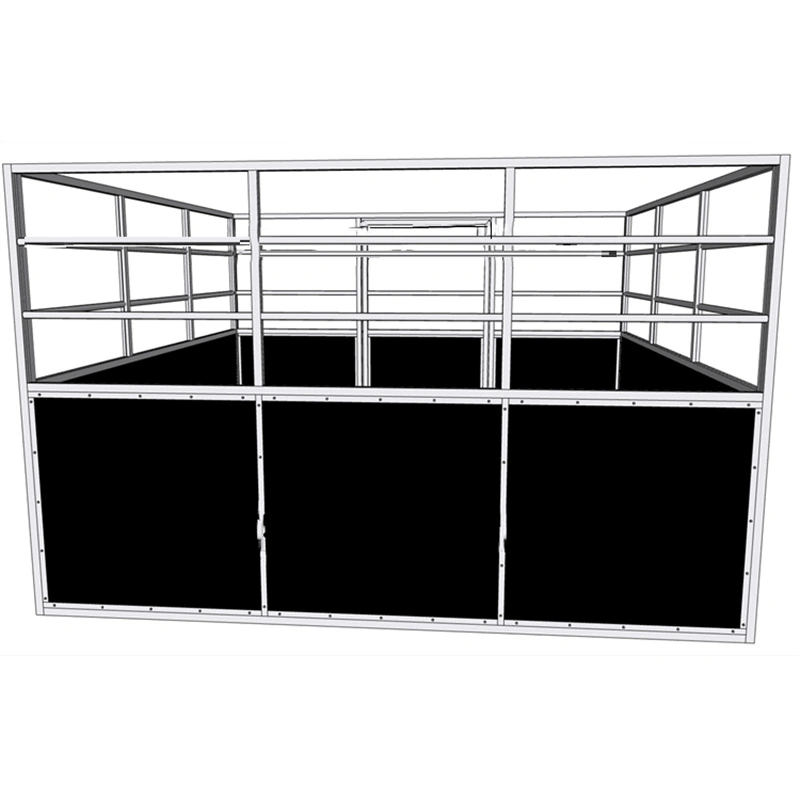
How to Source Stables Without Losing Profit Margins
Sourcing stables without margin erosion means controlling five hidden cost levers.
True landed cost = FOB + ocean freight + insurance + import duty (HS 7308.90.9090 at 5–10%) + GST (10%) + port handling + local delivery. Most distributors understate COGS by 20–30% because they ignore volumetric freight. A 12x12ft stable at $800 FOB (0.6mm steel) can land at $1,850 in Australia or New Zealand. The flat-pack design directly determines CBM, and poor packing adds $400+ per unit in shipping charges.
- CIF or DDP Quotes: Request CIF (Cost, Insurance, Freight) or DDP (Delivered Duty Paid) to shift ocean risk and customs liability to the supplier. This locks your total cost upfront and eliminates surprise demurrage or port fees.
- Container Loading (CBM): Each 12x12ft flat-pack stable occupies 2.5–3.5 CBM. Optimized nesting reduces CBM by up to 20%, directly cutting per-unit ocean freight. Bulk orders (multiple units per container) drive per-unit freight down another 15–25%.
- DB Stable’s Design Team: With over 5 years of engineering experience, DB Stable’s team reworks panel geometry and stacking sequences to minimize void space. This reduces volumetric weight and keeps shipping costs predictable — a direct margin protector.
- Payment Terms (LC / Deferred): Use Letters of Credit or 30–60 day deferred payments to preserve working capital while stock is in transit. This protects cash flow against freight delays and lets you hold inventory without tying up cash months before sale.
Every container must include verified timber fumigation certificates for any wooden components. Missing this single document can cost $500+ per container in storage fees at Australian or New Zealand ports. DB Stable includes all compliance paperwork proactively to prevent customs holds and the associated margin hit.
For detailed technical validation, see the internal Flat Pack Custom Stables Landed Cost Calculator guide and the CAD-Ready Specs for NZ Builders resource. Both break down per-unit costs and include real container loading diagrams.
Conclusion
The gap between FOB price and total landed cost can kill a distributor’s margin. A $1,200 flat-pack kit lands at $1,850+ in Australia or New Zealand once you account for freight, duty, GST, and port fees. The cheap $800 option on 0.6mm steel? It ships bulkier, adds $400 in volumetric costs, and rots in NZ ammonia within three years.
Stop pricing against the sticker. Run the full landed cost formula with your supplier before you commit. Review current flat-pack configurations that shrink CBM and use hot-dip galvanized steel with 10mm HDPE — the specs that keep your margin intact and your brand out of warranty claims.
Frequently Asked Questions
What is the difference between FOB price and landed price?
FOB price covers the stable’s cost at the Chinese factory gate, while landed price includes freight, insurance, duties, port fees, and local delivery. Ignoring that difference can wipe 30% off your margin. Always calculate landed cost before quoting your resale price.
What does total landed cost include?
Total landed cost includes FOB price plus international ocean freight, insurance, import duty (HS 7308), port handling, customs clearance, and local trucking to your yard in Australia or New Zealand. Get a full landed cost quote from your freight forwarder before ordering.
How do I calculate my FOB price?
FOB price is the factory’s ex-works price plus inland transport to the Chinese port and loading fees. For a standard 12x12ft flat-pack stable, the factory provides an FOB quote that typically ranges. Ask the supplier for a clear FOB breakdown by component.
What is the difference between landed cost and price?
Landed cost is your total procurement cost per stable after all logistics and compliance fees, while price is what you charge your end customer. If your landed cost is $1,850 and you sell at. Profitability depends on landed cost, not price alone.
What’s the cheapest way to ship with USPS?
USPS is not designed for shipping bulk flat-pack stables from China to Australia/NZ; their weight and size limits make it impractical. For this product, the cheapest viable method is. Use an experienced freight forwarder for any stable import of 2+ cubic meters.