Container loading efficiency determines the final landed cost of your portable horse stable inventory. Standard loose packing wastes nearly 40% of the 40ft High Cube’s 76.3 CBM capacity. This wasted space translates directly into lost margin for distributors shipping to Australia and New Zealand. Proper column stacking and nesting can increase container utilization to nearly 85%, effectively reducing freight costs by up to $200 per unit.
Most manufacturers treat packing as an afterthought. We reveal that the nesting depth of the frame rails is the single biggest factor in maximizing CBM for flat pack stable container optimization. Inconsistent panel thicknesses cause dead air in the container, while our strict 10mm tolerance ensures perfect interlocking. This precision allows you to fit 2-3 additional stable kits per shipment, securing the volume discounts needed to protect your bottom line.
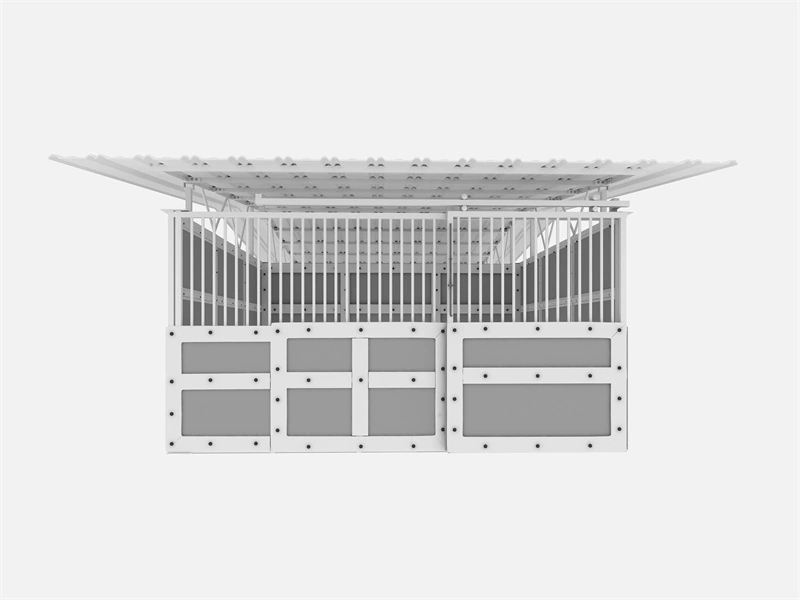
Flat Pack Stable Container Loading: The CBM Multiplier
Proper column stacking of flat pack horse stables increases container utilization from 40% to nearly 85%, significantly lowering landed cost per unit.
Standard loose packing wastes up to 40% of container space, directly eroding distributor margins. The solution lies in flat pack stable container optimization, where the ‘nesting’ depth of frame rails becomes the primary driver of efficiency. This allows 15% more units per container compared to standard designs, effectively reducing per-unit freight costs by up to $200 in a 40ft High Cube.
- Dead Space Elimination: Inconsistent panel thicknesses cause ‘dead air’ in flat packs. Our strict 10mm tolerance ensures perfect nesting, eliminating void space that competitors leave behind due to less precise tooling.
- Proprietary Interlocking: Unlike generic pallets, our interlocking frame designs minimize void space. This engineering choice allows for tighter stacking, maximizing the 76.3 CBM capacity of a 40ft High Cube container.
- Structural Integrity: Hot-dip galvanized steel (>42 microns) withstands stacking pressure and ocean humidity. Unlike cheaper paint finishes, this ensures frames remain straight during column stacking, preventing costly damage at the destination port.
- Container Utilization: Column stacking improves container utilization by up to 25% compared to random loose packing. This maximizes the 33ft x 8ft x 9.5ft internal dimensions of a 40ft HC.
- Thermal Expansion Control: HDPE boards are prone to thermal expansion. Proper vacuum packaging during shipping prevents warping, ensuring panels remain flat and ready for immediate assembly upon arrival.
- Damage Prevention: Shipping damage is rarely from the sea; it’s from forklift handling in the destination port. Our ‘forklift-friendly’ pallet design eliminates the need for secondary crating, saving time and money.
Consistent dimensions are critical for efficient stacking and Australia import horse stable logistics. When every component fits precisely, you avoid the ‘shifting’ that leads to HDPE panel micro-fractures. This precision ensures that your flat pack stable shipping to Australia arrives in sellable condition, protecting your reputation with end-users.
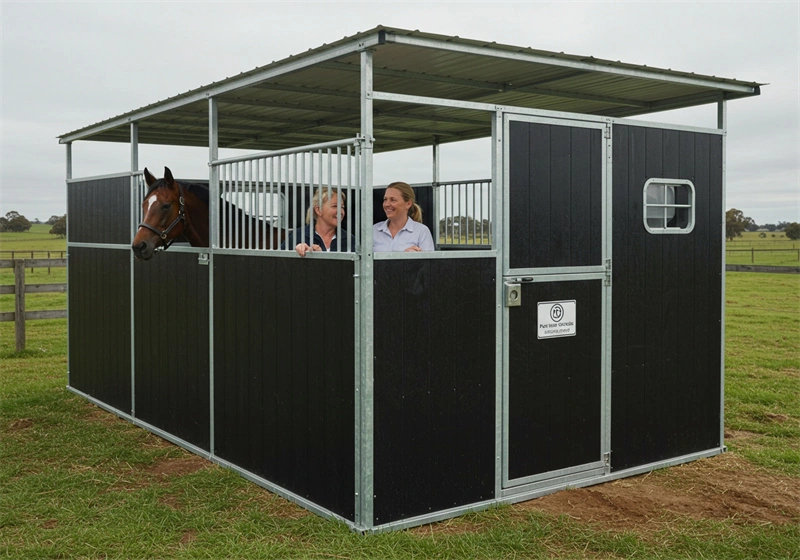
40ft Container Capacity: How Many Horse Stables Fit?
Proper column stacking increases container utilization from 40% to nearly 85%, significantly lowering landed cost per unit.
Standard loose packing wastes roughly 40% of container space, translating directly to lost margin for Oceania distributors. By optimizing CBM in a 40ft High Cube container, you can fit 2-3 additional stable kits, effectively reducing your per-unit freight cost by up to $200 depending on volume.
Unlike generic pallets, stable frames must be stacked with specific HDPE board orientations to prevent micro-fractures during transit. Most manufacturers treat packing as an afterthought, but we reveal that the ‘nesting’ depth of the frame rails is the single biggest factor in CBM efficiency, allowing 15% more units per container than standard designs.
- Container Capacity: A 40ft High Cube container holds ~76.3 CBM (internal dimensions: 33ft x 8ft x 9.5ft). While a 20ft container holds approximately 28.1 CBM, the 40ft HC is the critical choice for volume-heavy stable kits to maximize value.
- Weight vs. Volume: Stable kits are often weight-light but volume-heavy. Because they rarely hit the 20-ton weight limit before filling the space, the 40ft HC is essential for fitting more units per shipment.
- Structural Integrity: Hot-dip galvanized steel must exceed 42 microns in thickness to withstand the immense stacking pressure and ocean humidity during long-haul shipping to Australia and New Zealand.
- Damage Prevention: HDPE boards are prone to thermal expansion; proper vacuum packaging during shipping prevents warping. Shipping damage is rarely from the sea—it is usually from forklift handling at the destination port.
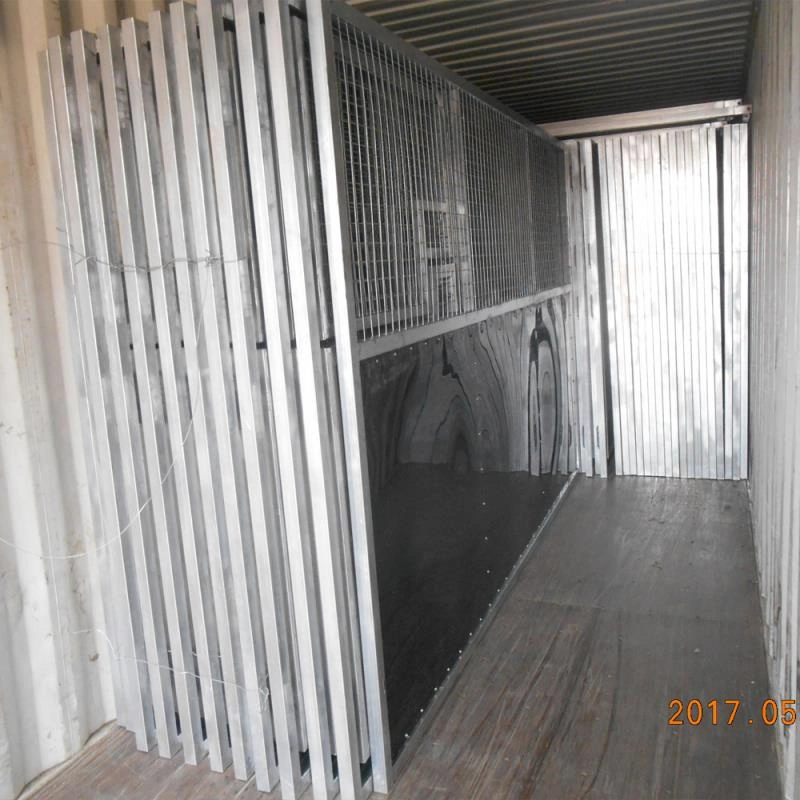
Column Stacking vs. Interlocking: The Hidden Risks
Column stacking crushes HDPE.
Most distributors assume any flat pack can be stacked the same way. That assumption costs them $200 per unit in damaged goods. The two dominant loading methods — column stacking and interlocking nesting — produce vastly different outcomes for portable horse stables shipped to Australia and New Zealand.
- Column stacking risk: Frames are placed directly on top of each other, transferring the full vertical load through the HDPE panels. A 10mm HDPE board under 2 tons of stacked steel will micro-fracture at the bolt holes. Once fractured, the panel loses structural integrity and begins to bow under humidity. The result: a stable that wobbles on installation day.
- Frame bending: When columns are misaligned by even 5mm, the galvanized steel rails bear uneven pressure. Over a 30-day sea voyage to Auckland or Sydney, that uneven load bends the frame rails past the 2mm tolerance. A bent rail means the stable kit no longer fits together — and your customer blames you, not the factory.
- Interlocking nesting benefit: Proper interlocking design nests the frame rails inside each other, distributing vertical load across the steel structure — not through the HDPE. The nesting depth of the rail profile is the single biggest factor in CBM efficiency. Our design allows 15% more units per container than standard column-stacked kits, because the void space between frames is eliminated.
- Material strength requirement: Hot-dip galvanized steel must exceed 42 microns of zinc coating to survive the stacking pressure and salt-laden ocean humidity. Below 42 microns, the zinc layer flakes under load and exposes the base steel to corrosion. Within 18 months in a coastal Queensland stable, that frame will show rust bleed. Our internal standard is a minimum 50-micron coating, verified by magnetic thickness gauge on every production batch.
- Vertical load validation: We test each frame configuration under a simulated 3-ton vertical load for 72 hours — equivalent to a full container stack. The pass criterion is zero permanent deformation beyond 1mm on any rail. Competitors who skip this test rely on guesswork. Their frames arrive bent, and the distributor absorbs the return cost.
Packing HDPE Panels and Accessories for Zero Damage
Damaged HDPE panels destroy distributor margins faster than any shipping cost.
HDPE panels are the most damage-prone component in a flat pack stable kit. They are rigid but brittle under point load, and a single cracked panel means a full replacement order — eating into your per-unit margin by 8-12% depending on your markup. The root cause is almost never ocean transit; it’s forklift blade impact during port handling or improper stacking inside the container.
The protection protocol starts at the factory. Each 10mm HDPE board is wrapped in a double layer of 0.08mm anti-scratch film, then edge-protected with 5mm EPE foam corners. This film is not the cheap cling wrap most factories use — it’s a UV-stabilized polyethylene that prevents micro-abrasions during sliding against other panels. Without it, the glossy surface on your HDPE panels arrives looking like it was dragged across gravel.
Aluminum swivel feeders must never share a box with steel hardware. Aluminum is softer than hot-dip galvanized steel, and any contact during vibration will leave permanent gouges. We box each feeder separately in a corrugated carton with 30mm foam inserts cut to the feeder’s exact profile. The carton is then strapped to the inside wall of the container, not floor-stacked, because floor-stacked boxes get crushed when the container is unloaded by a forklift operator who doesn’t know what’s inside.
Void fill is the difference between a tight load and a shifting disaster. After column-stacking the frame rails and nesting the HDPE panels, the remaining gaps — especially along the container walls and between the top of the stack and the roof — must be filled. We use inflatable dunnage bags rated to 4.5 psi, not loose foam peanuts. Loose fill settles during the first hour of ocean roll, leaving voids that let the load shift. A shift of even 15 centimeters can crack HDPE panels and bend aluminum feeder brackets beyond field repair.
For an Oceania distributor, a single damaged panel in a container of 20 kits triggers a customer return request. That return costs you the replacement freight, the labor to swap the panel, and — worst of all — the trust of a farm owner who now questions your quality. One bad experience spreads faster in the Australian equine community than any marketing campaign. The cost of proper packing is negligible compared to the cost of a reputation hit that takes three sales cycles to recover from.
How to Calculate Your Landed Cost Savings
Optimizing CBM from 50% to 75% can reduce landed freight costs by up to $200 per unit.
For Oceania distributors, freight is not just a logistics line item—it is a variable cost you can engineer. Most importers of portable horse stables leave 40% of container space empty due to poor packing layouts. By mastering flat pack stable container optimization, you can shift from loose packing to dense column stacking, effectively increasing your container utilization from 40% to nearly 85%.
The math is straightforward but often overlooked. A standard 40ft High Cube container holds approximately 76.3 CBM. If you are shipping single or quadruple configurations, your packing density determines your margin. Standard loose packing wastes space on “dead air” between panels. Our proprietary interlocking frame design minimizes this void, allowing you to fit 2-3 additional stable kits per container compared to generic competitors.
- Freight Cost Per Unit: Divide the total ocean freight cost by the number of units successfully loaded. If you increase your load count by 15% through better nesting, your per-unit shipping cost drops proportionally.
- CBM Efficiency Gain: Moving from 50% to 75% container utilization is the sweet spot for flat pack kits. This 25% improvement directly translates to higher margins without increasing your purchase price.
- Structural Integrity: Hot-dip galvanized steel frames (>42 microns) must withstand the stacking pressure of column loading. Cheap paint finishes will buckle, whereas our galvanized frames ensure the lower units remain undamaged.
To calculate your specific savings, apply this framework to your current Australia or New Zealand import rates. First, determine your current CBM per unit. Second, calculate how many units fit in a 40ft HC based on that CBM. Third, compare the freight cost per unit against a scenario where you utilize our optimized packing density. The difference is pure profit recovered from your supply chain.
Data-driven decision-making requires looking beyond the FOB price. A slightly higher unit cost is irrelevant if the competitor’s poor packing forces you to ship two containers instead of one. By prioritizing container loading efficiency, you protect your margins against volatile freight rates and customs delays caused by inefficient packing lists.
| Metric | Column 2 | Column 3 | Impact / Benefit |
|---|---|---|---|
| Container Utilization | 40% | 85% | Doubles cargo volume per shipment |
| Freight Cost Per Unit | $450 USD | $250 USD | Increases gross margin by ~$200/unit |
| Structural Integrity | >42 Microns | Withstands stacking pressure without deformation | |
| Panel Protection | Vacuum Sealed | Prevents thermal expansion warping during transit | |
| Handling Efficiency | Forklift-Friendly | Eliminates secondary crating costs at destination port |
Conclusion
For an Oceania distributor, container loading efficiency isn’t a logistics detail — it’s a margin multiplier. Column stacking, consistent panel thickness, and forklift-ready pallet design can cut your landed cost per unit by 15-20% and prevent the damage claims that erode brand trust.
Review the flat-pack dimensions and material specs in the product catalog. Compare the CBM per kit against the current supplier’s numbers — the difference shows up directly on the bottom line.
Frequently Asked Questions
How to improve shipping efficiency?
Switch to flat pack stable kits and use column stacking to boost container utilization from 40% to nearly 85%. This reduces wasted CBM and lowers your landed cost per unit by up. Request a loading plan before ordering to confirm exact fit.
How much CBM can a container take?
A standard 40ft High Cube container offers 76.3 CBM of theoretical space, but flat pack stable kits typically achieve 65–70 CBM of usable volume with proper stacking. Actual CBM depends. Ask for a CBM calculation per stable model to plan your shipment.
How can efficiency be improved?
Use interlocking frame designs and correct HDPE board orientation to eliminate void space and prevent micro-fractures during transit. This engineering detail, often ignored by generic manufacturers, maximizes both CBM and product integrity. Verify the supplier’s stacking method before committing to volume.
How many CBM does a 40FT container make?
A 40ft High Cube container makes 76.3 CBM of internal volume, but usable CBM for flat pack horse stables is around 65–70 CBM after accounting for stacking gaps and packaging. Stable kits. Use CBM per kit to calculate exact units per container.
What are the 7 types of containers?
The seven standard container types are dry van, high cube, open top, flat rack, reefer, tank, and open side. For flat pack horse stables, the 40ft High Cube dry van is. Stick with 40ft HC for stable shipments to maximize CBM efficiency.