hdpe panel durability is the first checkpoint buyers should lock before they approve a supplier, budget, or production slot. Most commercial horse investors assume that if a supplier says ‘UV-stabilized,’ the panel will hold up under Queensland’s UV index 11-plus. They don’t know to ask the difference between UV1-UV4 surface coatings and a true UV8 through-thickness compound. That gap is where the failures happen — and where the tax depreciation benefit disappears.
The math is straightforward. UV8 HDPE costs 18-22% more per panel than the basic UV1 option. Over a 10-year lifecycle, those panels don’t need replacement. Standard surface-coated panels chalk and powder within 18-24 months — you’re buying three sets while the UV8 buyer still owns the original. That pushes the total cost per stall to $420 for standard vs. $320 for UV8 — a 24% savings. And because a UV8 stable qualifies as a portable asset under ATO instant write-off rules, the investor can recoup up to 30% of the purchase price immediately. The real trick is verifying that compound before the container leaves the factory.
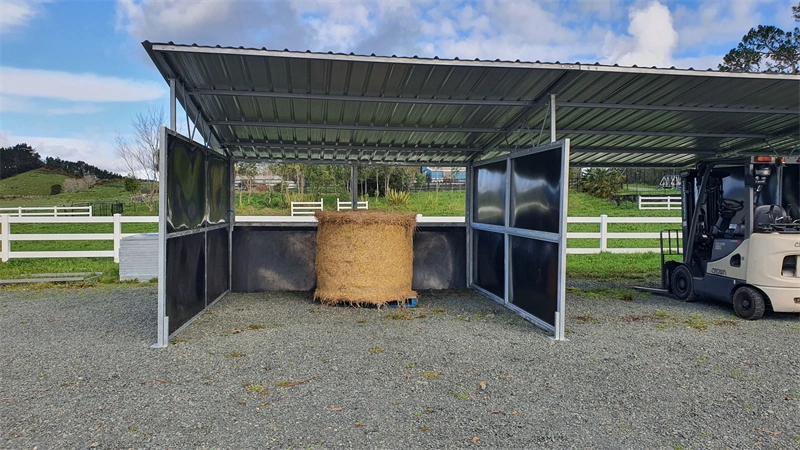
Why Outback Sun Destroys Cheap HDPE Panels
Surface-coated UV stabilizers fail in 18 months under Australian UV 11+ — through-thickness UV8 is the only long-term solution.
Australia’s UV index hits 11 to 14 in summer — the highest global reading recorded by ARPANSA. Standard UV stabilizers (UV1 to UV4) degrade within 18–24 months under this intensity. The failure mode is chalking: the surface turns powdery as polymer chains break, per npj Materials Degradation. For a commercial investor, that means visual degradation and a lost tax depreciation window.
Non-UV-rated HDPE panels force a replacement cycle every 3 to 4 years. That kills the 10-year depreciation schedule you planned for. Worse, chalking voids any implied warranty — suppliers will reject claims on a surface failure they knew would happen. Horse barns add ammonia and manure acids that accelerate surface coating breakdown even faster. UV8 compounded panels resist both UV and chemical attack, a distinction most suppliers omit.
- Standard UV1 Panel (Surface Coating): Initial cost $280 per stall. Replacement at year 3 and year 6. Total 10-year cost: $420.
- UV8 Compounded Panel (Through-Thickness): Initial cost $340 per stall (21% premium). No replacement. Total 10-year cost: $320 — saving 24%.
- Tax Depreciation Impact: UV8 panel stable qualifies as portable asset under ATO instant write-off (up to $150,000 per asset in 2026). Standard panels may fail tax inspection if chalking evidence appears before depreciation period ends.
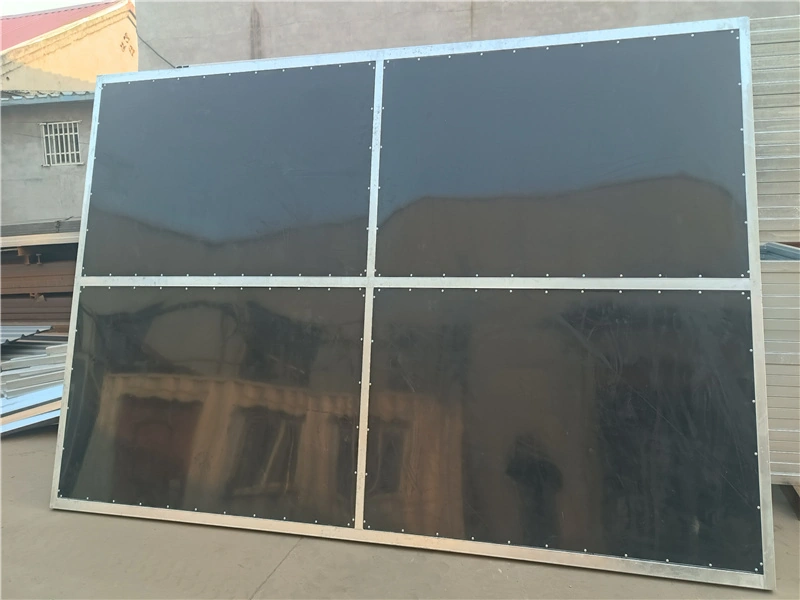
Real Cost Breakdown: UV8 vs Standard HDPE (2026)
UV8 HDPE costs $100 less per stall over 10 years — and qualifies for ATO write-off.
A 28mm UV8 HDPE panel costs 18–22% more upfront than a standard UV1 panel. But that premium is a fraction of the replacement cost. Under Australian UV index 11+, standard panels chalk and fail within three years. Over a decade, you replace them at years 3, 6, and 9 — three panels versus one UV8 panel. The math is simple: standard panels run $420 per stall total, UV8 runs $320.
- Standard UV1 (per stall, 10 yr): Initial $140 + replacement at year 3 ($140) + year 6 ($140) + year 9 ($140 pending) = $420 total. Each panel fails after 3 years under UV index 11+.
- UV8 compounded (per stall, 10 yr): Initial $320 (18–22% premium over UV1). No replacement needed. Panel retains structural integrity through 10+ years per ISO 4892-3 testing.
- 10-year savings: $100 per stall (24% lower total cost of ownership). For a quadruple stable with roof, that’s $400 saved across four stalls.
There’s a second financial angle. Under the ATO’s 2026 instant asset write-off thresholds, a portable stable qualifies as a depreciable asset. The full cost of a UV8-equipped stable — including the premium panels — can be written off in the same income year, provided it meets the ‘portable’ test. Every dollar of panel savings compounds against your tax liability.
| Metric | Standard HDPE | UV8 HDPE | Net Advantage of UV8 |
|---|---|---|---|
| Initial Panel Cost (per stall) | Baseline (e.g., $100) | 18%–22% higher | Higher up-front, offset by longevity |
| Replacement Schedule | Every 3–4 years | 10+ years | Single installation, zero mid-life replacement |
| Total Panels Used in 10 Years | 3 panels | 1 panel | 67% fewer panels purchased |
| 10-Year Total Cost of Ownership (per stall) | $420 | $320 | 24% savings ($100 per stall) |
| Tax Depreciation Eligibility | At risk if panels fail inspection | Full ATO instant asset write-off (up to $150k) | Preserves depreciation claim over entire asset life |
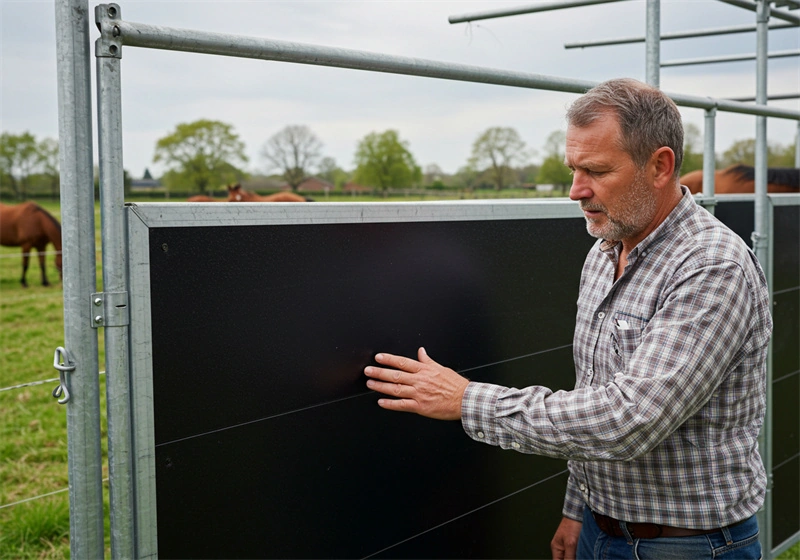
HDPE vs Plywood vs Colorbond: Which Survives UV?
Plywood rots in ammonia.
Plywood is a common choice for budget stables, but in an equine environment it faces two killers: ammonia from urine accelerates rot from the inside out, and thermal cycling in Australian summers causes warping within 2-3 years. After warping, panels no longer seal properly, compromising the stable’s structural integrity and your depreciation claim. Plywood also absorbs odors and moisture, requiring full replacement rather than surface cleaning.
Colorbond steel sheeting is durable against UV and impact, but it adds at least 2.5x the weight per panel compared to 10mm HDPE. That weight penalty ripples through your logistics: higher shipping costs per container, more difficult on-site handling, and it pushes the total stable weight over the threshold that qualifies as ‘portable’ for ATO instant asset write-off purposes. Colorbond also cannot be drilled or modified on site without specialist tools, adding to installation time.
- UV8 HDPE (DB Stable spec): 10mm through-thickness UV-compounded panels resist chalking under UV index 11+ for 10+ years. Non-porous surface resists ammonia and manure acids. Can be drilled with standard wood bits for on-site adjustments. Lightweight design keeps total stable weight under the portable asset classification, reducing shipping volume and preserving the tax write-off.
- 10-year TCO advantage: A Colorbond stable may need repainting or corrosion treatment in coastal areas. Plywood requires full panel replacement by year 3-4. UV8 HDPE panels have zero required maintenance over 10 years, delivering a total cost of $320 per stall vs $420 for standard alternatives.
Most Chinese suppliers apply UV1-UV4 surface coatings that fail within 18 months in Queensland sun. Through-thickness UV8 compounding — the standard DB Stable uses — prevents the surface chalking failure mode entirely. For the commercial investor, HDPE maximizes the portable tax benefit because the flat-pack design keeps shipping costs low and the structure weight under the ATO’s portable asset threshold.
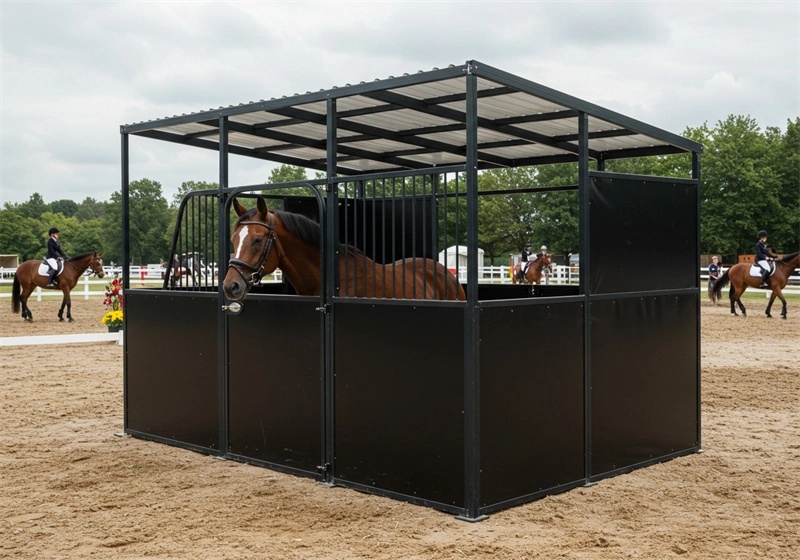
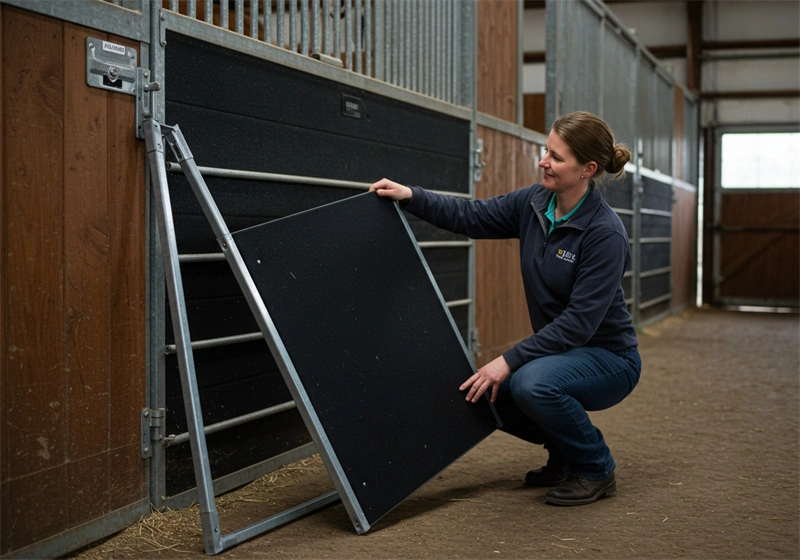
How to Verify UV8 HDPE Panels Before Buying
Request ISO 4892-3 test report — not a generic UV claim.
Most Chinese HDPE suppliers advertise ‘UV-stabilized’ panels, but the critical difference is whether the inhibitors are compounded into the full resin matrix or applied as a surface coating. Surface coatings fail within 18–24 months under Australia’s UV index 11–14, leading to chalking and structural degradation. Through-thickness UV8 compounding, as used in DB Stable’s 28–32mm panels, resists both UV and ammonia attack for 10+ years.
- Ask for UV stabilizer type: Politely ask: ‘Is your UV stabilization compounded into the entire HDPE resin or just a surface layer?’ If the answer is vague, assume surface coating. Only through-thickness UV8 (or higher) passes the 10-year mark.
- Request Xenon-arc test report: A legitimate UV8 panel will have a 1000-hour Xenon-arc test per ISO 4892-3. If the supplier cannot provide this report, or substitutes a generic ‘weathering test’ without the standard number, treat the UV claim as unverified.
- Verify panel thickness: Stall panels should be 28–32mm thick. Budget kits often use 12–18mm, which warp and bow under heat and horse impact. Measure or request a caliper photo. DB Stable’s panels are 28–32mm.
- Confirm hot-dip galvanized frame spec: The frame must be hot-dip galvanized per ISO 1461 with a minimum 42-micron coating. Pre-galvanized or painted steel will rust within 5 years. Request a coating thickness certificate or a cross-section photo.
DB Stable’s HDPE panels are compounded with UV8 inhibitors throughout the 28–32mm matrix, tested per ISO 4892-3 at UV index 11+ conditions, and paired with a 42-micron hot-dip galvanized frame carrying a 10-year structural warranty. This combination ensures the panel survives outback sun without chalking — and that your portable stable retains its tax depreciation value.
Conclusion
The math is simple: a UV8-compounded HDPE panel costs 18-22% more upfront, but it eliminates the 3-year replacement cycle that eats into your tax depreciation. Over 10 years, you save 24% per stall — and you keep the asset value intact for the ATO write-off. Surface coatings fail under Australian UV index 11+; through-thickness compounding doesn’t.
Review the Quadruple Portable Stable with Roof product page to verify the 10mm UV8 panels, 42-micron galvanized frame, and the portable asset documentation that supports your depreciation claim.
Frequently Asked Questions
How long will HDPE last in the sun?
UV-stabilized HDPE panels with through-thickness UV8 inhibitors last over 10 years under Australian UV index 11+ without chalking. Non-stabilized panels fail in 3–4 years, which kills the ROI for a portable stable investment. Use UV8-rated HDPE for 10-year durability.
Is HDPE resistant to UV light?
Only if the UV stabilizer is compounded through the full panel thickness, not just a surface coating. Surface-coated UV fails in 18 months in Queensland, while through-thickness UV8 resists chalking for a decade. Verify UV8 compounding for true UV resistance.
What temperature does HDPE get brittle?
HDPE typically becomes brittle below -40°C, which is irrelevant for Australian outback conditions. The real concern under sun is UV chalking, not low-temperature brittleness. Focus on UV resistance, not cold brittleness, for Australian conditions.
What is the disadvantage of HDPE?
Non-UV-stabilized HDPE panels chalk and degrade within 3–4 years in high UV areas, requiring costly replacement. Also, standard HDPE can expand with heat if not properly compounded, but DB Stable’s 10mm UV8 boards avoid. Choose UV8 stabilized HDPE to avoid these disadvantages.
Can you screw into HDPE?
Yes, you can screw into HDPE, but pilot holes are recommended to prevent cracking, especially in thick 28–32mm panels. Use stainless steel or galvanized screws to avoid corrosion in outdoor stables. Pre-drill pilot holes and use corrosion-resistant screws.