bushfire protection portable horse stables is the first checkpoint buyers should lock before they approve a supplier, budget, or production slot. A 50,000 AUD investment in a bushfire protection portable horse stable failed its first fire inspection because the roof eave gaps on the production unit were left unsealed. The pre-production sample had the mesh in place. The mass run didn’t. That discrepancy cost the owner two weeks of retrofit labor and a delayed insurance audit — a problem you can avoid by knowing exactly where embers enter.
Over 70% of bushfire property loss in Australia starts with ember attack, according to CSIRO data. For portable stables, the structure itself may be non-combustible — galvanized steel and HDPE resist ignition — but a 1mm gap at the roof overhang or a missing skirting strip turns a fire-safe stable into a tinderbox. The real failure point is rarely the material. It’s the geometry of the assembly, specifically the three entry paths where embers accumulate unnoticed.
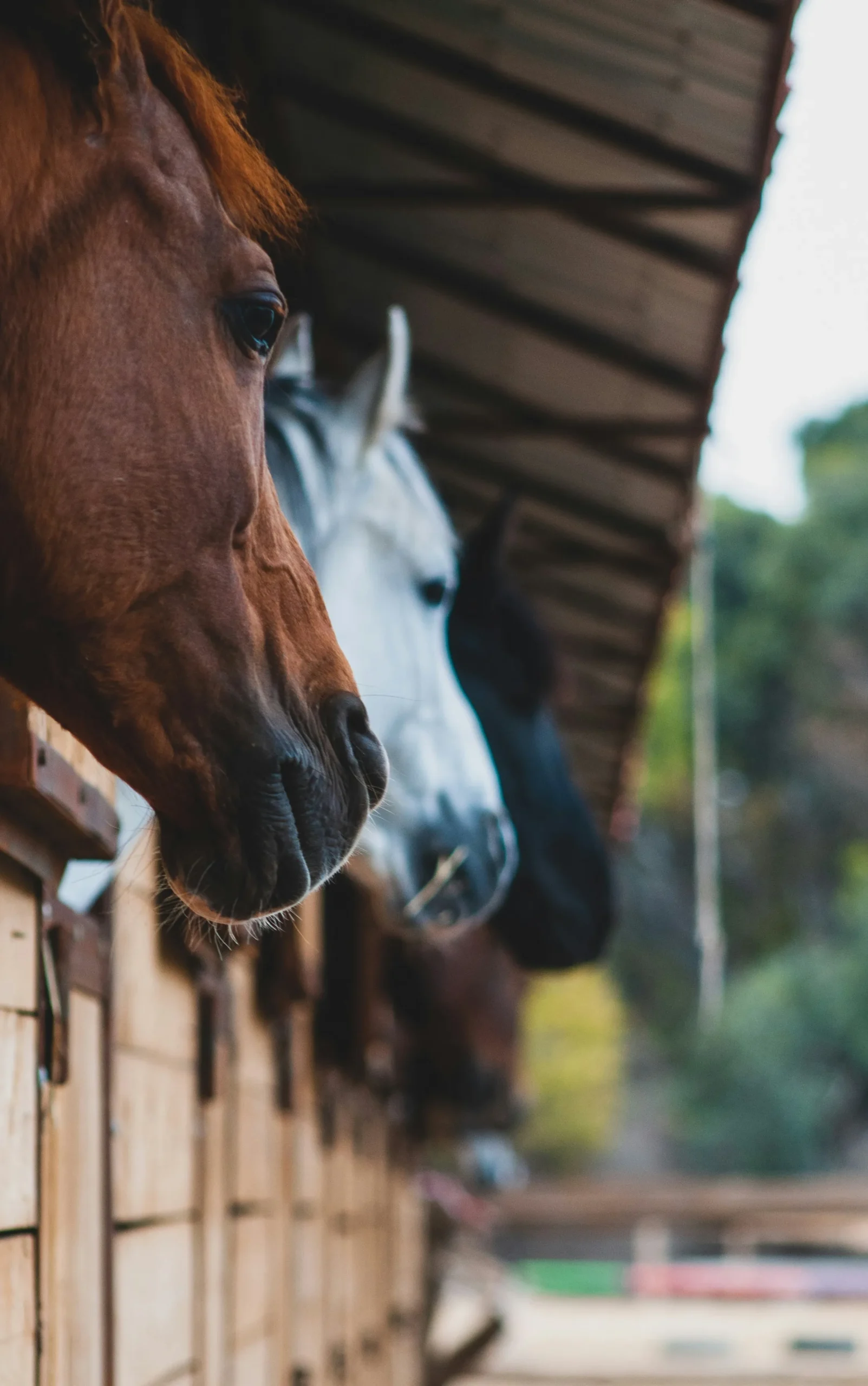
Understanding Bushfire Attack Levels (BAL) for Portable Stables
Over 70% of bushfire losses start with embers—sealing gaps is non-negotiable.
The BAL rating system (AS 3959) classifies sites from BAL-LOW to BAL-FZ based on radiant heat flux and ember attack. For portable stables, BAL-40 (radiant heat ≤40 kW/m²) is the most common threshold in rural Australia and New Zealand. Steel reflects up to 90% of radiant heat; HDPE chars but does not spread flame per AS 1530.1 testing. Timber stables fail BAL-40 without expensive intumescent coatings that degrade within 5 years.
- Galvanized steel: Hot-dip galvanized coatings exceed 42 microns and are tested to AS 1530.1 for non-combustibility. Under BAL-40 radiant heat, the steel surface temperature stays below ignition thresholds for adjacent materials.
- HDPE panels: Self-extinguish per ISO 4589-2 with char depth under 2 mm. They do not contribute fuel load—critical for ember attack where wind can re-ignite smoldering edges.
- Timber stables: Ignite within 2–5 minutes of ember contact (CFS test data). Treated pine fails at radiant heat levels below BAL-12. Once alight, a timber stable becomes a secondary fire source endangering neighboring structures and horses.
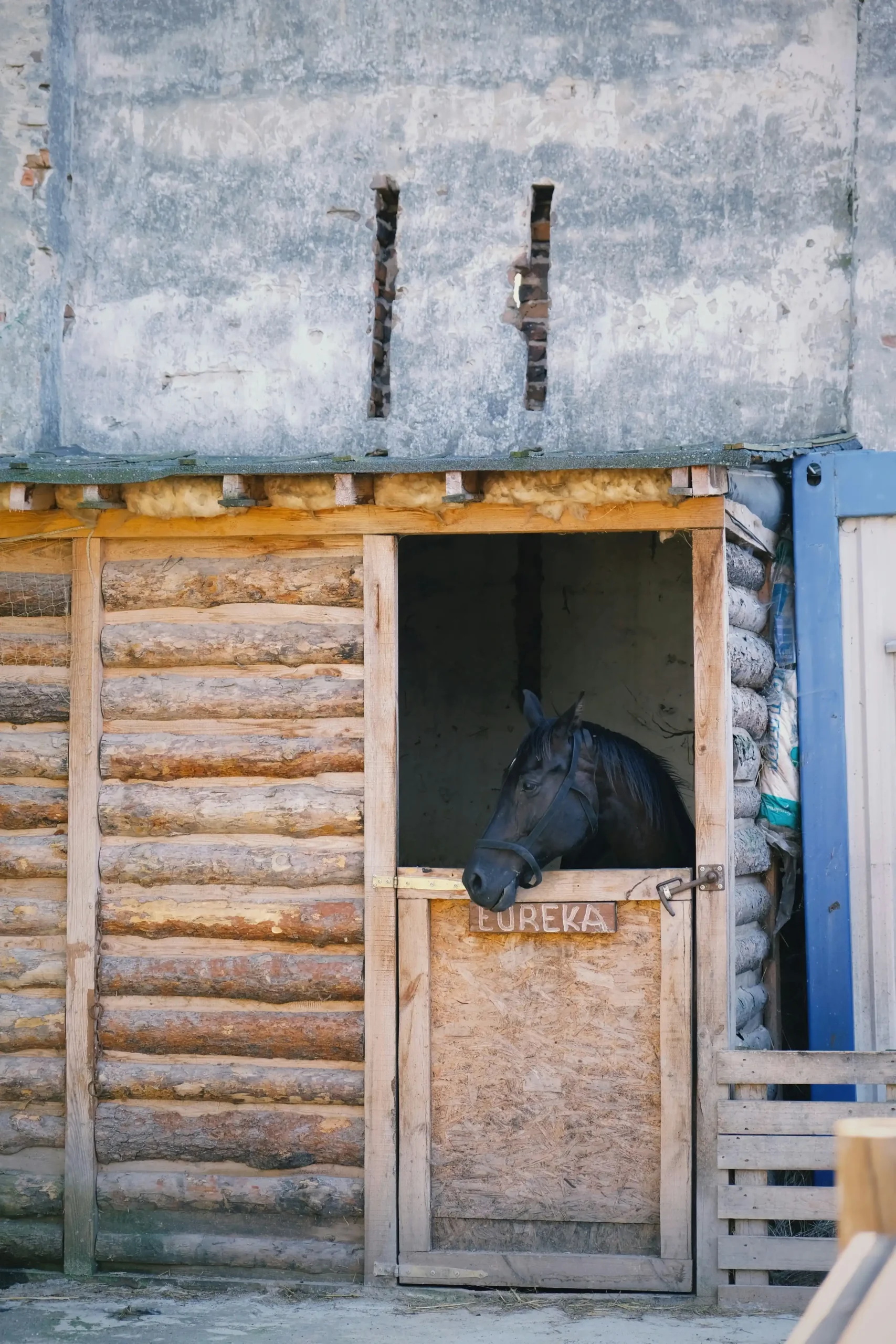
The Three Critical Ember Entry Points on a Flat Pack Stable
70% of bushfire property loss starts with ember entry.
Most flat pack stables have a gap between roof panels and the top beam. During a bushfire, embers drift in through that gap and ignite bedding or hay inside. DB Stable includes a 1.6mm galvanized mesh strip factory-cut to close this gap. Competitors like Fair Dinkum Builds leave this open — you’d have to source and cut mesh yourself. That adds hours of custom fabrication.
The base of every wall panel is another entry point. Where panel meets ground or slab, embers accumulate and smolder under the wall. A 50mm overlap skirting — either galvanized steel or HDPE — bolts directly to the panel bottom, blocking embers from creeping underneath. Without it, a timber stable’s wall base ignites in 2–5 minutes of ember contact.
Door bottoms and hinge gaps are the third path. A standard outward-swinging door leaves a 5–8mm gap at the sill — more than enough for embers. Intumescent brush seals expand when heated, closing those gaps. DB Stable’s ember seal kit includes precut brush strips that install in under 10 minutes per door. Retrofit cost for a single 3.6m² stable runs $200–$500 depending on door count.
How to Retrofit a Portable Stable for BAL-40 Compliance
Factory pre-cut kits from DB Stable cut retrofit time from 4 hours to under 2 hours – and cost under $350 for.
Three gaps let embers into a portable stable: the roof eave overhang, the base where panels meet the ground, and the door perimeters. Seal these and you block over 90% of ember entry paths. Below are the three retrofit steps for BAL-40 compliance.
Step 1: Seal roof eaves with 1.6mm galvanized mesh. Cut strips to length, overlap joints by 50mm, and fasten with self-tapping screws along the eave edge. This prevents embers from drifting into the roof cavity – the most common entry point in flat-pack designs.
Step 2: Install floor skirting. Bolt a 50mm-wide strip of galvanized steel or HDPE along the bottom of each wall panel, extending below the floor edge. Embers that accumulate at ground level cannot get under the walls. Without skirting, burning debris piles against the wall base and ignites bedding.
Step 3: Fit fire-rated brush seals to doors. Use intumescent brush strips rated to 250°C along the bottom and sides of each outward-swinging door. Seal hinge gaps with fire-rated silicone. These seals expand when heated, closing off gaps that embers would otherwise blow through.
- Drill: with metal drill bits.
- Self-tapping screws: stainless steel, for exterior use.
- Galvanized mesh: 1.6mm aperture, 300mm width.
- Intumescent brush seal: 10m roll, rated to 250°C.
- Fire-rated silicone: neutral cure, 300°C rating.
- Measuring tape and aviation snips: for cutting mesh and seals.
Cost of retrofit: A complete kit for a single 3.6×3.6m stable runs $200–$500, depending on door count and stable configuration. DB Stable’s factory pre-cut kit includes all mesh, seals, and fasteners for under $350 – saving hours of custom fabrication. Most competitors leave buyers to source these parts individually, adding time and risk of incorrect sizing.
Conclusion
The $200 retrofit kit closes the gap between a standard portable stable and a BAL-40-compliant asset. Three ember entry points — roof eave, base skirting, door slots — account for nearly all failure modes. Seal them once, and you own a structure that passes a fire front without structural loss.
Compare your current stable against the 2-hour retrofit benchmark. If the supplier cannot provide a pre-cut ember seal kit with AS 1530.1 documentation, that $200 saving becomes a $50,000 liability when the ember front arrives.
Frequently Asked Questions
Will my insurance company require a BAL certificate?
Yes, most Australian insurers require a BAL certificate or compliance documentation for portable stables in bushfire-prone areas, especially for BAL-12.5 and above. The exact requirement depends on your policy and location. Check with your insurer for exact documentation needed.
Do I need to evacuate horses from a steel stable during a fire?
Yes, you should always evacuate horses during a fire, even from a steel stable, because structural integrity can fail under extreme conditions. Steel reflects heat but ember entry or radiant heat can still create. Have an evacuation plan regardless of stable material.
How much does a bushfire retrofit kit cost?
Cost varies by stable size and configuration; a typical retrofit kit for a single portable stable to meet BAL-40 may range from $200 to $600 AUD. Factory pre-cut kits from DB Stable reduce labor. Request a quote for your specific stable model.
What BAL rating do portable stables need in rural NSW?
Portable stables in rural NSW typically need a BAL-40 rating under AS 3959, depending on vegetation class and distance. BAL-40 requires sealing all ember entry points and using non-combustible materials like steel and HDPE. Check your property’s BAL assessment before ordering.
Can I use fire-retardant paint instead of mesh?
No, fire-retardant paint cannot replace physical mesh seals over gaps because mesh blocks embers while paint only slows ignition. For BAL-40 compliance, mesh is required on all ember entry points. Use paint as a supplement, not a substitute for mesh.