Sourcing flat pack horse stables from China requires verifying the structural certifications before you commit to a container load. Distributors in Australia and New Zealand face specific risks when importing from manufacturers who prioritize low unit prices over compliance. A missing EN 1090 certification for your steel frames can trigger customs holds, while inferior galvanization leads to rust damage and retailer chargebacks within months. The most successful importers bypass the lowest quotes by demanding proof of material science, not just a product catalog.
True durability in the harsh Australasian environment relies on hot-dip galvanization exceeding 42 microns and 10mm UV-stabilized HDPE boards. These specifications protect your margins by reducing warranty claims and maximizing container loading density. When you evaluate a wholesale portable horse stables manufacturer, you are evaluating their ability to manage the entire supply chain, from zinc bonding to final packaging. The following guide breaks down the five essential certifications and technical benchmarks you must request to ensure your investment is safe.

Flat Pack Horse Stables: Why Design Matters
Flat-pack engineering reduces per-unit freight by up to $150 while virtually eliminating transit damage.
For Oceania distributors, the ‘flat-pack’ designation is not just a logistical preference—it is a direct margin protector. When comparing a fully assembled stable against a disassembled kit, the difference lies in how the container volume (CBM) is utilized. Standard assembled units leave massive voids in the container, forcing you to pay for air. Our flat-pack design reconfigures the structural frames and 10mm HDPE panels to maximize volumetric efficiency.
By disassembling the components, we increase container volume utilization by approximately 35% compared to semi-assembled or fully assembled competitors. This density optimization directly translates to a reduction in landed cost per unit, often saving up to $150 in ocean freight per stable. For bulk orders destined for Australia or New Zealand, this freight saving alone can cover the cost of the product.
Beyond pure volume, the flat-pack architecture serves as a critical damage mitigation strategy. Assembled units with pre-installed hinges and latches are highly susceptible to shipping damage; loose hardware and protruding metal parts often get crushed during transit. By shipping disassembled hot-dip galvanized horse stable panels and frames, the risk of structural deformation and cosmetic damage is virtually eliminated.
The trade-off is a slight increase in on-site assembly time. However, for professional builders and distributors, the math is clear: the 10% increase in local labor time is overwhelmingly offset by the 30-40% reduction in international shipping costs and the near-zero risk of warranty claims due to transit damage. This balance ensures that your inventory arrives in pristine condition, ready for immediate installation.
- Container Loading: Flat-pack increases volume utilization by ~35% vs. semi-assembled, directly lowering ocean freight costs.
- Landed Cost: Optimized shipping density can reduce per-unit freight expenses by up to $150, significantly boosting distributor margins.
- Damage Mitigation: Disassembled hot-dip galvanized frames and UV resistant horse stable siding panels survive container transit better than assembled units with loose hardware.
- Assembly Efficiency: While assembly takes marginally longer, the savings in shipping and the reduction in damage-related chargebacks provide a superior total cost of ownership.
Hot Dip Galvanized Steel: The Corrosion Standard
Standard paint fails in 2 years; 42-micron HDG survives decades of coastal salt air.
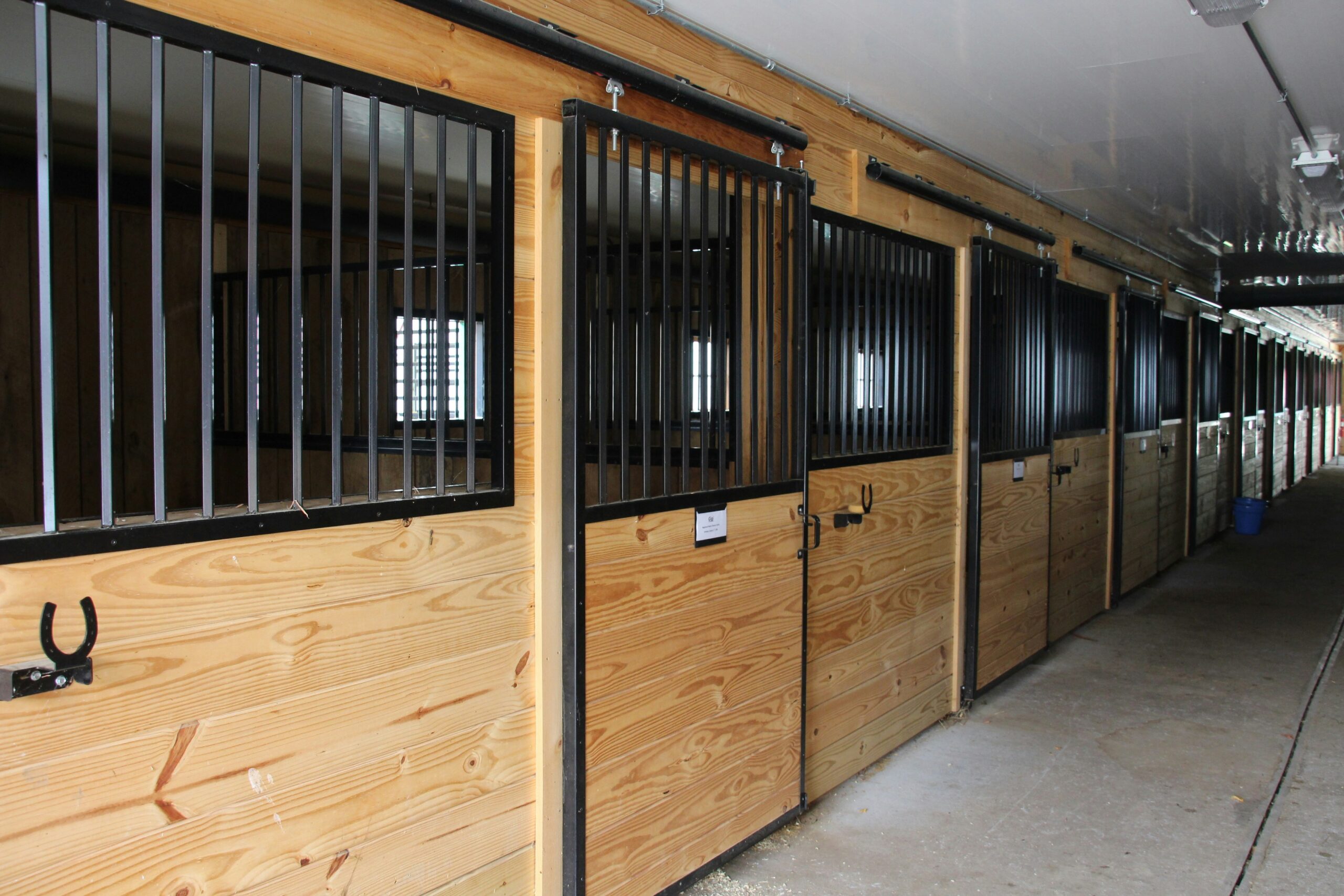
Most distributors accept thin chrome-plated steel because the upfront cost is lower, but this is a silent margin killer in the Oceania market. Standard painted or chromated coatings lack a metallurgical bond. They sit on top of the steel like a layer of varnish. Once a horse kicks the frame or the packaging is scratched during transit, moisture hits the bare steel immediately. In the high-UV, high-salt coastal environments of Australia and New Zealand, this leads to rapid oxidation and unsightly rust streaks. These streaks ruin the aesthetic of the finished product and trigger immediate chargebacks from end-users.
The industry benchmark for true corrosion resistance is Hot-Dip Galvanization (HDG) exceeding 42 microns, strictly adhering to ASTM A123 standards. Unlike electro-galvanizing, the HDG process chemically fuses the zinc to the steel substrate. This creates a barrier that protects the structural frame even if the surface is deeply scratched. For a B2B buyer, this means a warranty claim rate of less than 1% and a protected brand reputation among local retailers.
- Metallurgical Bond: HDG creates an alloy layer between the zinc and steel, ensuring the coating cannot peel or flake off under impact.
- 42+ Micron Threshold: Minimum thickness required to resist the aggressive salinity of coastal shipping routes and permanent outdoor installation.
- EN 1090 Compliance: Ensures the structural steel execution meets rigorous European safety standards, preventing customs holds in regulated markets.
- Reputation Protection: Eliminates the ‘rust streaks’ that commonly plague cheaper imported stables, protecting the distributor’s local reviews.
10mm HDPE Boards: Thermal Expansion & Impact
Zero thermal expansion in 10mm HDPE eliminates panel buckling in extreme Australasian heat.
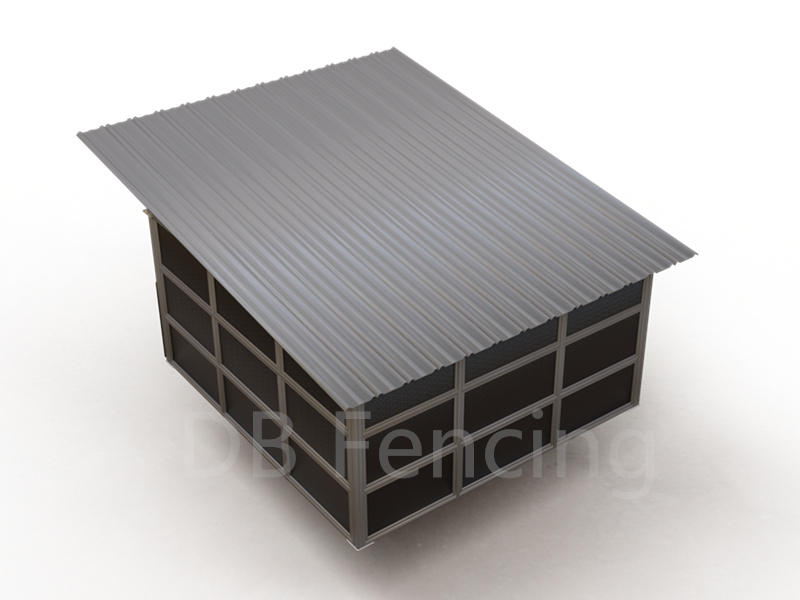
For Oceania distributors, the choice of siding material dictates the long-term viability of the stable. While standard vinyl or wood suffers from significant thermal expansion and contraction, 10mm HDPE (High-Density Polyethylene) offers a structural advantage that minimizes warranty claims. This material is engineered with UV-stabilized additives to resist the harsh Australian sun, preventing the brittleness and fading that plague lower-grade alternatives.
Unlike traditional metal or wood siding, HDPE maintains its dimensional stability across wide temperature fluctuations. This ‘zero thermal expansion’ characteristic ensures that panel gaps remain consistent, preventing the panels from buckling, warping, or cracking under the stress of thermal shifts. For the end-user, this translates to a robust, low-maintenance barrier that withstands daily equine impact without requiring frequent adjustments or repairs.
- Material Stability: HDPE resists thermal expansion, unlike vinyl or wood which warp in high heat, ensuring consistent panel fit and structural integrity.
- UV Resistance: 10mm boards feature UV-stabilized additives that prevent fading and brittleness, a critical factor for long-term exposure in high-sunlight regions.
- Impact Durability: High-density polyethylene absorbs kinetic energy from equine impacts better than rigid metals, reducing the risk of panel fracture or deformation.
- Maintenance Reduction: Eliminating warping and cracking significantly lowers the frequency of warranty claims and reduces the total cost of ownership for farm owners.
Custom Configurations: Quadruple & Modular Systems
Modular quadruple systems cut freight costs by 35% while eliminating thermal expansion risks in high-UV environments.
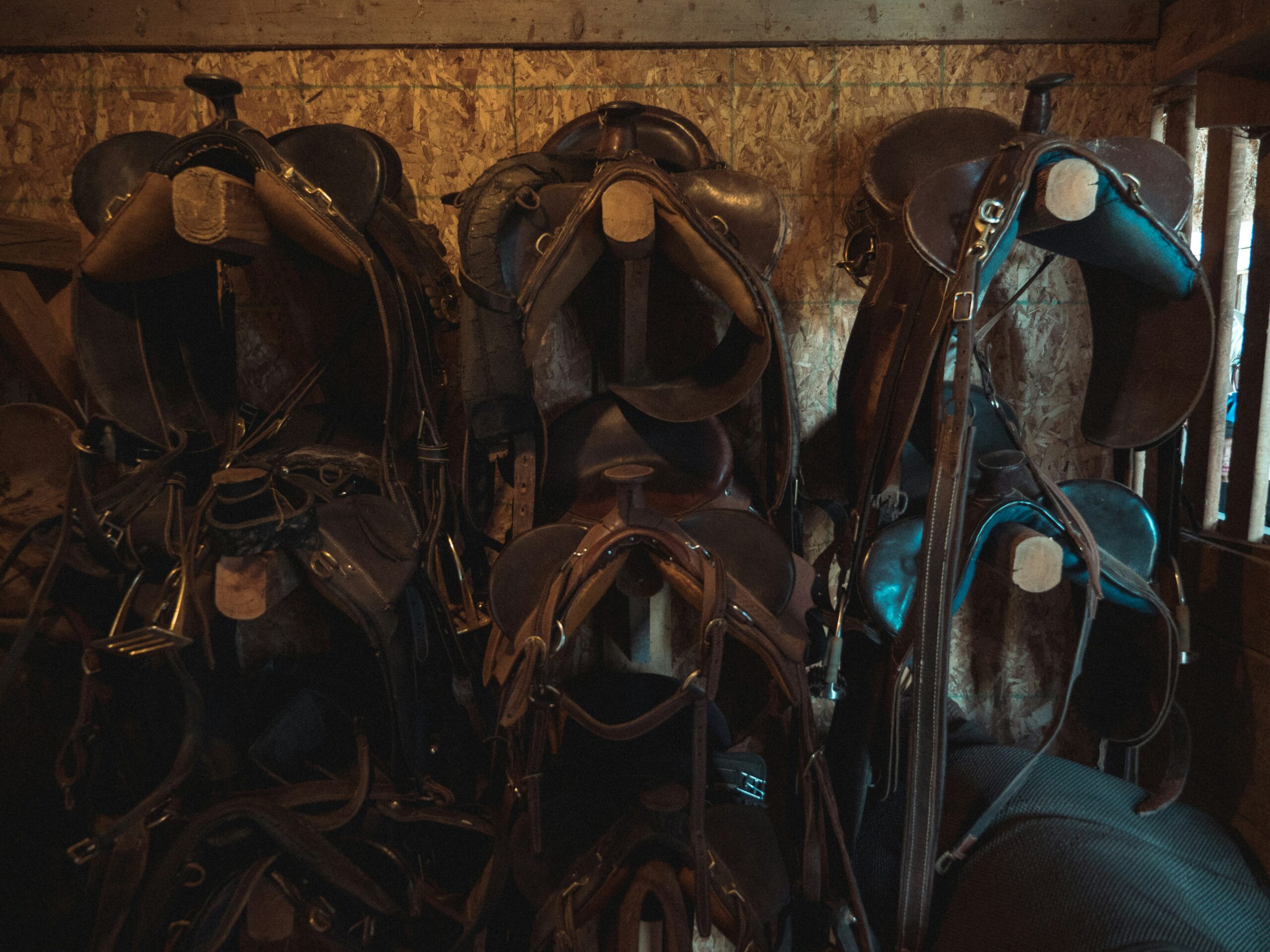
A custom quadruple horse stable config is not merely four units bolted together; it is a structural system requiring shared engineering to maintain integrity under dynamic equine loads. For Oceania distributors, the ‘back-to-back’ design with a shared roof is the critical efficiency multiplier. It reduces the total surface area exposed to the harsh Australasian UV and coastal salt air, directly lowering the long-term warranty claim rate for the end-user.
The engineering of shared walls is where most flat pack horse stables fail. Standard aluminum connectors strip under the torque of heavy impacts. Our approach utilizes reinforced steel locking pins and pre-drilled hot dip galvanized horse stable panels that distribute the load evenly. This shared-wall architecture allows a single 40HQ container to hold significantly more usable stall space compared to semi-assembled units, optimizing your flat pack horse barn shipping density.
Specialized fittings must match the structural durability of the main frame. We integrate rust-free aluminum swivel feeders that are completely independent of the steel structure. This prevents galvanic corrosion and ensures that the feeding mechanism remains fully operational even if the main frame undergoes minor thermal shifts. It is a small component that eliminates a major maintenance headache for commercial horse owners.
- Shared Roof Engineering: Reduces total material usage by ~15% compared to individual units. Lowers the overall profile, which is critical for wind-load compliance in open paddock environments.
- Thermal Expansion Mitigation: By utilizing 10mm UV-resistant horse stable siding panels with zero-expansion properties, shared walls do not buckle or warp during extreme temperature swings.
- One-Stop-Shop SKU Management: Sourcing the quadruple system, specialized fittings, and EN 1090 certified stable steel supplier components from a single factory simplifies your import logistics and reduces inventory turnover speed issues.
Sourcing Risks: What Competitors Hide
Personnel certifications do not guarantee product compliance; material science and factory audits are the only reliable indicators of structural integrity.
The equine infrastructure market is saturated with suppliers who conflate human safety training with product manufacturing standards. A common industry tactic is to heavily market the ISO certifications of their sales or installation teams while providing zero transparency regarding the metallurgical composition of their structural steel or the polymer stability of their HDPE panels. This creates a dangerous information asymmetry for B2B buyers, particularly those in high-UV environments like Australia and New Zealand, where material failure is a direct threat to inventory margin and retailer reputation.
The most pervasive hidden risk in the sourcing of flat pack horse stables is the discrepancy between quoted steel thickness and actual delivered gauge. While industry marketing often cites a standard 2.0mm frame, many low-cost manufacturers utilize sub-2.0mm tubing to shave weight and reduce raw material costs. When these thin-walled frames are subjected to the torque of heavy equine impacts or the stress of repeated flat-pack assembly and disassembly, the locking pins strip, and the structural rigidity fails. This results in loose, rattling stalls that require costly on-site welding or total replacement, triggering high warranty claim rates that destroy distributor profitability.
- Galvanization Authenticity: Standard electroplating or cheap zinc sprays often measure under 20 microns, leading to rust streaks within 12 months of coastal exposure. Authentic hot-dip galvanization must exceed 42 microns (ASTM A123 standard) to provide a metallurgical bond that survives the Australasian climate. Always demand a third-party salt-spray test report to verify the coating thickness before authorizing production.
- HDPE UV Stability: Not all High-Density Polyethylene is created equal. Unstabilized HDPE will become brittle and crack under intense UV radiation. Reputable manufacturers use 10mm UV-stabilized HDPE boards that resist thermal expansion, preventing the panel buckling and warping that plague vinyl or wood alternatives. Verify that the supplier provides a material safety data sheet confirming UV inhibitors are integrated into the polymer matrix.
- The Low MOQ Trap: Suppliers offering exceptionally low Minimum Order Quantities (MOQs) often lack the production prioritization for smaller batches. This leads to orders being pushed to the back of the production queue, resulting in inconsistent material batches, delayed shipping windows, and poor quality control oversight. For reliable supply chain execution, secure a supplier with the capacity to treat bulk orders as priority manufacturing runs.
To mitigate these sourcing risks, B2B buyers must shift their vetting process from evaluating sales credentials to auditing material science. The most effective defense is a strict requirement for independent, third-party laboratory results for both the hot-dip galvanized horse stable panels and the HDPE horse stall board manufacturers. By anchoring your procurement to verifiable data—such as EN 1090 certified stable steel supplier documentation and specific micron measurements—you protect your landed cost from the hidden expenses of rust damage, structural failure, and inventory write-offs.
Conclusion
Sourcing flat pack horse stables for the Oceania market requires strict adherence to material science and structural certification. The combination of hot-dip galvanized steel exceeding 42 microns and 10mm UV-resistant HDPE panels ensures your inventory survives coastal salt air and intense Australasian UV without triggering warranty claims. This specific engineering approach eliminates the rust degradation and thermal expansion issues that plague lower-spec competitors, protecting your landed cost margins and retailer reputation.
Review the full technical specifications and current stock availability for EN 1090 certified stable steel supplier options to align your next procurement cycle with these durability benchmarks.
Frequently Asked Questions
What are the standards for a horse stable?
Essential standards include 8–12 ft ceiling height, 4 ft x 8 ft stall doors, and 10 ft wide aisles. Our flat-pack designs are engineered to meet these dimensions while optimizing container loading density for. Verify dimensions against local zoning and AS/NZS requirements.
What are the 3 F’s for horses?
In facility management, the 3 F’s often refer to Fire safety, Foundation stability, and Framing integrity. Unlike CHA’s focus on feed, we prioritize structural framing integrity using 42-micron hot-dip galvanized steel to ensure long-term stability. Prioritize structural framing integrity for long-term durability.
What is the 20% rule for horses?
This rule typically refers to feed and bedding volume (20% of body weight). Our stall designs are calculated to maximize usable interior space, ensuring adequate room for feeders and bedding without compromising structural safety. Design stalls to accommodate feed volume requirements.
How do horses say sorry?
Horses show submission or appeasement by lowering their head or licking/chewing. This behavior highlights the need for smooth, snag-free HDPE panels and rounded corners to prevent injury during social interactions. Use smooth, rounded panels to prevent injury.
What are the 7 levels of classification for a horse?
Kingdom to Species (Equus ferus). While biological classification is standard, your supplier must provide technical classification for materials, such as EN 1090 certified steel and UV-stable HDPE, to ensure compliance. Verify material certifications for compliance.