Remote station horse stables are a different purchase from the same kit bought in a suburban equestrian centre. On a station three hours past the regional depot, there is no hire yard down the road, no welder on call, and no second chance at a forgotten component for weeks. Everything the site needs has to arrive on the trucks you planned, be lifted with the machinery you already own, and stay serviceable through years without a tradesman’s visit.
That is exactly the operating envelope flat-pack portable stables were built for. DB Stable has manufactured and exported them since 2013, shipping kit-form stables to Australian and New Zealand buyers who assemble them on site with two to three people and no specialist tools. This guide walks through what changes when your destination is beyond the grid — freight, unloading, assembly, specification and the spare-parts planning that keeps a remote block running.
Key Takeaways
- Flat-pack design compresses sea-freight volume per stall, which matters more on long inland legs where every cubic metre is paid for twice.
- A single panel with frame weighs roughly 200kg — plan unloading machinery at your end before the container is dispatched.
- Assembly needs two to three people and around 30 minutes per stable, using tool-free corner pins; no welder and no specialist tools required.
- Specify hot-dip galvanised frames (process run to AS/NZS 4680, factory coating 42 microns or more) and 10mm HDPE panels for years of maintenance-light service.
- Choose the plastic-coated front-wall option over hardwood facings to keep the consignment timber-free and simpler to clear than timber-lined alternatives.
- The minimum order is 10 sets with production capacity up to 20 sets per week — enough to stable a station cluster in one freight campaign.
Why Remote Station Horse Stables Are a Different Purchase
A town-based buyer can afford to discover problems one at a time — a missing bolt means a drive to the hardware store, a wobbly panel means a local handyman. On a remote station, each of those small discoveries costs a trip measured in hours or a delivery measured in weeks. The purchase decision therefore shifts from “who is cheapest per stall” to “what arrives complete, assembles with the crew I have, and does not need a tradesman afterwards”.
The second shift is environmental. Remote properties in Australia and New Zealand sit closer to the weather than sheltered suburban yards: exposed ridgelines, cyclone-influenced north, or high-country snow and wind. The structure you choose has to hold its ground with the anchoring you can install yourself, and the materials have to tolerate years of UV, dust and temperature swings without repainting. Both requirements point towards the same specification, and away from timber-framed alternatives that rot and need ongoing care.
Freight to the Nearest Depot — and the Last Leg
Portable stables ship flat-packed precisely to survive this journey. Knocked down to panels, frames and doors, a multi-stall order fills a container far more densely than pre-assembled stables ever could, which is what makes a station-scale order economical in the first place. The kit travels as a sea freight consignment to your nearest port and then inland to the regional depot or transport depot that serves your district — coordinate that final leg with your carrier the same way you would for any oversized rural delivery.
The number to plan around is mass. A single panel with its frame weighs roughly 200kg, so a six-stall back-to-back block — 11 side panels and 6 doors — is a multi-tonne arrival, not a pallet drop. Before dispatch, confirm how the consignment is packed and decide which machinery meets it: a tractor with forks, a telehandler, or a tilt-bed trailer for the run from depot to site. Stations that miss this step end up unloading by hand what should have been unloaded by machine. Where timing is critical, the factory can arrange expedited air freight at additional cost, though for a full block the sea-freight economics usually win.
Assembly With the People You Already Have
The assembly system is where remote buyers feel the design decisions most. These stables go together on corner pins — no welding, no specialist tools — with two to three people assembling one stable in around 30 minutes. A station crew that can muster three hands and a free afternoon can commission a block over a weekend, working at whatever pace the weather window allows. There is no concrete pour to schedule and no site power needed for assembly.
Preparation still matters. A tool and equipment list prepared before the truck arrives saves the classic remote-site failure: standing in a paddock at 4pm needing something that is 200km away. And because the configuration table is published — 3 side panels and 1 door for a single stall, 5 and 2 for a pair, 11 and 6 for a six-stall back-to-back block — the crew can count components off the truck against the packing list before the driver leaves.
Specifying for Maintenance-Light Ownership
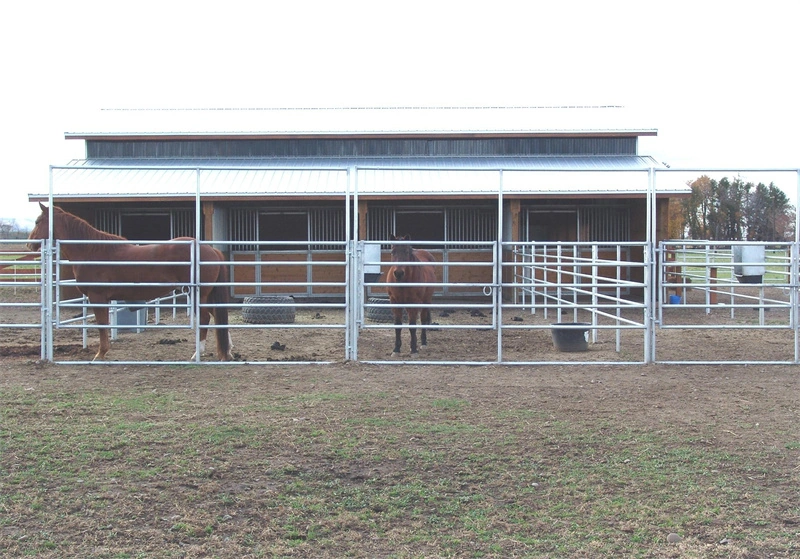
The specification that suits a remote station is the one that removes maintenance from the calendar. Start with the frame: Q235 steel tube — 50×50×2.0mm square at the core — hot-dip galvanised to a process run to AS/NZS 4680 with a factory-specified coating of 42 microns or more. Galvanising is what lets a steel frame sit in dust, rain and stock pressure for years without a paintbrush, and the coating figure is the number to demand on the quote.
Then the infill: 10mm high-density polyethylene panels, UV-stabilised, antibacterial and washable, that neither rot nor hold water nor splinter under chewing. Where a timber-lined stable demands repainting and eventual board replacement, an HDPE wall needs a hose. Specify the sliding-door option with its 2950mm twin-wheel track where stock pressure is high, and choose the plastic-coated front-wall facing rather than the hardwood option — hardwood adds weight, weathering and a timber line on the customs file that a remote consignment does not need. Accessories matter too on properties without reticulated everything: the aluminium swivel feeder resists rust, and water bowls and hay racks can be specced into the order so they arrive with the panels rather than months later.
Site Prep, Anchoring and Spare-Parts Planning
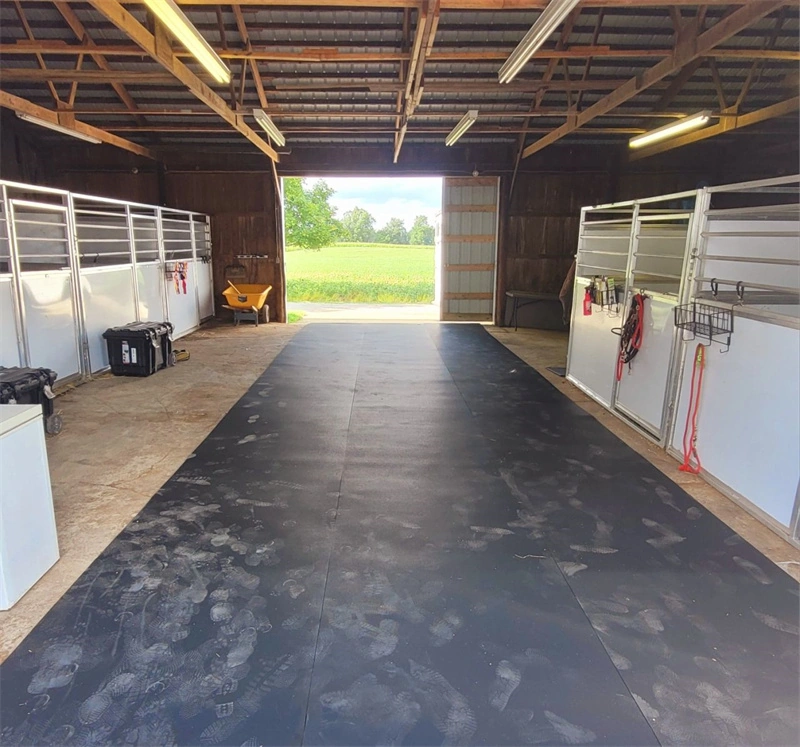
Portable does not mean casual about wind. Pick your site for drainage and level, and read our guide to anchoring stables on slopes and exposed ground before committing to a pad on the ridgeline. The modular, panel-based structure gives you a spare-parts strategy no site-built stable can match: damage one panel and you replace one panel, ordered from the factory and shipped flat, rather than rebuilding a wall. Stations that plan for this keep a handful of spare corner pins and latches in the workshop from day one — small, cheap parts that would otherwise stop an assembly job dead.
Expansion follows the same logic. Because the configuration table extends from a single stall to back-to-back blocks under a continuous roof, a station that starts with the essential block can add stalls in later freight campaigns, reusing the site preparation and the anchoring already installed. The raised steel roof option — 2.65m high, 4.6m long, with a 70cm front-eave overhang — shades the whole arrangement and reduces the heat load on horses in exposed country.
Sizing the First Order for a Station Cluster
The factory minimum order is 10 sets, with capacity of up to 20 sets per week behind it. On a station, ten sets is enough to do the job properly: a back-to-back cluster for the horses in work, plus shelters for paddock groups or visiting stock, all in one freight and assembly campaign. Split the order across the layouts you actually run rather than building one long row you will regret — the panel arithmetic rewards shared walls, and a clustered layout keeps feeding and water infrastructure short. Size it the way you would size any remote station horse stables decision: against the crew, machinery and weather windows you actually have, not the ones a brochure assumes.
The sourcing process is built for distance. Inquiries are answered within 6 hours, drawings are quoted within 24, and third-party QC inspection at the factory can be arranged before dispatch — the one stage of the project where a remote buyer gets the same oversight as a city buyer, so use it. When the specification, configuration and anchoring plan are agreed, the factory packs the consignment for the journey, and your crew takes it from the depot.
Frequently Asked Questions
Can a remote station crew assemble these stables without trades?
Yes. The corner-pin system needs no welding, specialist tools or site power, and two to three people assemble one stable in around 30 minutes. Unloading is the part that needs machinery, because each panel with frame weighs roughly 200kg.
What is the minimum order for a station-scale purchase?
The minimum order is 10 sets, and production capacity runs up to 20 sets per week. Ten sets is typically enough for a working cluster plus paddock shelters in a single freight campaign.
How do the stables handle remote-site weather exposure?
Specify the hot-dip galvanised frame — process run to AS/NZS 4680 with a factory coating of 42 microns or more — and 10mm UV-stabilised HDPE panels, then anchor to suit the exposure. The combination removes repainting and rot repair from the maintenance schedule.
What if a panel is damaged years later on a remote property?
The modular design means one damaged panel is replaced by one panel, shipped flat from the factory. Keep a small stock of corner pins and latches on site so minor repairs never wait on freight.
Can stables be air freighted to urgent remote schedules?
Expedited air freight is available at additional cost where timing is critical. For a full multi-stall block, the flat-pack sea-freight economics usually remain the better choice.
Conclusion
Beyond the grid, the stables that keep working are the ones that arrived complete, went up with the crew on hand, and never asked for a tradesman afterwards. Flat-pack logistics, a 200kg-per-panel unloading plan, tool-free assembly in 30-minute units, galvanised steel and washable HDPE — each of those specification choices removes one of the failure modes that remote properties cannot afford.
Map your cluster, count your crew, and confirm the anchoring plan for your exposure. Then send the layout for a quote — with a 24-hour turnaround on drawings, the specification is the only part of the job that never leaves home.