NZ custom stable case study outcomes are usually quoted as a single number — this distributor charged 15 to 20 percent more per stall and won. That number is real, but it is the least useful part of the story. The margin did not come from charging more; it came from three deliberate decisions about materials, compliance and freight that made the premium feel cheap to the customer. This case wrap revisits the documented New Zealand project and pulls out the margin mechanics an importer can actually copy.
The source is a distributor project recorded on this site in July 2026: a Kiwi distributor moved from reselling standard flat-pack kits to offering custom stable configurations built with DB Stable, starting with an 8-stall barn with an integrated wash bay and tack room. Every figure below comes from that recorded project.
Key Takeaways
- The distributor charged a 15–20% premium per stall by selling design consultation around custom layouts, not by marking up hardware.
- An all-steel and HDPE specification removed timber fumigation and phytosanitary inspection from the import — the container cleared NZ customs in under 48 hours.
- Panel sizes engineered for standard 20ft containers cut shipping costs by roughly 12% compared with standard kits.
- Within 18 months the distributor had built a repeat customer base; behind it sat a 40% year-on-year rise in average order value and a repeat rate above 60% inside 12 months.
- Custom designs added 2–3 weeks to production time — the lesson was to sell the lead time honestly and book design slots in advance.
- A contrasting distributor lost a $50,000 order by trusting a prototype without a production-run guarantee; the gap between sample and container is where margins die first.
The Project: An 8-Stall Barn With Wash Bay and Tack Room
The distributor’s question at the start was blunt: what can we offer that the factory-direct sellers flooding NZ with standard flat-pack kits cannot? Their answer was to stop competing on the kit and start selling the layout. The first test case was a client who wanted an 8-stall barn with an integrated wash bay and tack room — the kind of brief a standard catalogue cannot answer, because it depends on the building, the horse count and how the client actually works the yard.
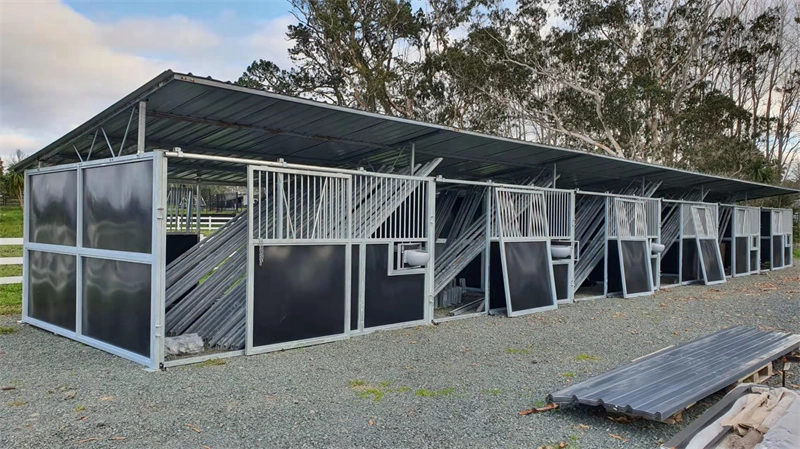
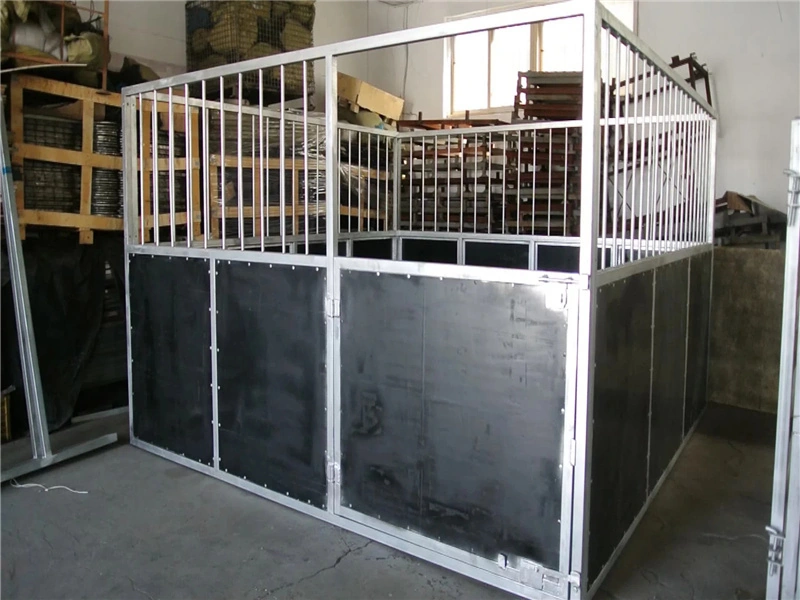
Working with the factory’s design team, the distributor produced a custom configuration that fitted the client’s space while keeping the flat-pack shipping footprint tight. The specification was the same construction this site documents elsewhere: hot-dip galvanised steel frames with 42-plus micron coatings and 10mm UV-resistant HDPE infill — no timber anywhere in the structure. That last detail, easy to overlook in the sales conversation, turned out to be one of the three margin levers.
Where the Margin Actually Came From
Strip the story down and three separate value streams fed the 15–20% premium. None of them involved discounting, and only one of them was visible on the invoice.
- Design consultation as the product: the distributor positioned themselves as a stable design specialist and charged for bespoke layouts. The customer paid for a barn that fitted their site and workflow, not for panels by the metre.
- Compliance friction removed: because the entire structure was steel and HDPE, there was no timber to fumigate and no phytosanitary inspection to schedule. The container cleared NZ customs in under 48 hours — a timeline a wooden stable import simply cannot offer. Our timber versus all-steel HDPE comparison covers why this gap exists.
- Freight engineered, not tolerated: panel sizes were engineered to fill standard 20ft containers with essentially no wasted airspace, cutting shipping costs by roughly 12% against standard kits. Money saved on freight is margin that never has to be argued about.
Notice the shape of this: what the customer experienced was a custom barn delivered faster than a local build could quote. What the distributor ran underneath was a premium stacked on top of a freight saving and a customs clearance that removed weeks of delay. Margin management here is not pricing courage — it is engineering the cost base so the premium is easy to justify.

The Numbers That Followed
The recorded outcomes compound. Average order value rose 40% compared with the previous year, because a custom 8-stall barn with a wash bay and tack room is a bigger conversation than a kit sale. The repeat customer rate passed 60% within 12 months, and the repeat business was not necessarily whole barns: clients came back for additional stalls, feed rooms and replacement HDPE panels. A custom first sale creates an installed base that generates parts-and-expansion revenue for years.
That sequencing matters for anyone doing the maths on a similar move. The premium improves the first transaction; the engineering decisions — biosecurity-friendly materials, container-optimised panel sizes — improve every transaction after it, because they are properties of the product, not of the sales effort. This mirrors what the NSW 12-stall case wrap found on the cost side: the durable wins come from configuration and logistics, not from squeezing the unit price.
The Counter-Case: A $50,000 Order Lost Before It Shipped
The same record includes the failure mode, and it is worth as much as the success. Another distributor lost a $50,000 order this way: the pre-production sample looked flawless, but the container run arrived with different weld spacing and a lighter gauge frame. The customer walked — and with the order went the whole investment in the relationship.
The lesson is not “samples are useless”. It is that a sample proves nothing about the run unless the specification travels with the order. The NZ distributor avoided the trap by treating design specs like a contract, not a suggestion, so the production run was held to the same dimensions and construction the client approved. Any importer can copy this: lock the specification before the deposit, and make verification part of the deal rather than a dispute afterwards.
The Lead Time Lesson
Custom configurations added 2–3 weeks to the production timeline compared with standard models. That is the honest cost of the premium, and the distributor’s biggest operational lesson was to sell it honestly: set expectations with end customers up front, and book design and production slots in advance rather than promising standard-kit timing on a bespoke order. The clients who paid 15–20% more did not mind waiting when the wait was part of the deal from day one — the damage only comes from a lead time that appears as a surprise.
For a distributor planning their first custom programme, that suggests a simple structure: publish the real timeline (design, production, freight, customs), quote it with margin for weather and shipping variability, and treat early delivery as delight rather than promising it. The NZ project’s customs experience — under 48 hours on an all-steel container — is the one segment of the chain where the specification itself buys speed. And for anyone doing the maths on a similar move, the sequence matters: the premium improves the first transaction, while the engineering decisions improve every transaction after it.
Frequently Asked Questions
How much more did NZ clients pay for custom stables in this case?
The recorded premium was 15–20% per stall, charged for design consultation and bespoke layouts. Clients accepted it because the custom barn still beat local fabrication on delivery time.
Why did the NZ container clear customs so quickly?
The structure was entirely steel and HDPE — no timber meant no fumigation certificates and no phytosanitary inspection, and the container cleared in under 48 hours.
How much longer do custom stables take to produce?
In this project, custom designs added 2–3 weeks to production compared with standard models. The distributor’s fix was honest lead-time quoting and booking design slots in advance.
What went wrong in the $50,000 counter-case?
A distributor approved a flawless prototype, but the production run arrived with different weld spacing and a lighter gauge frame, and the client cancelled. The fix is locking the specification in writing and verifying the run, not just the sample.
Conclusion
The NZ custom stable project teaches that margin management is mostly upstream of the price list. Sell the design, not the kit. Specify materials that clear customs without friction. Engineer the container load so freight works for you. Quote the extra 2–3 weeks honestly. And treat the specification as a contract so the run matches the sample — the counter-case shows what that failure costs. The 15–20% premium, the 40% lift in average order value and the 60%-plus repeat rate all fall out of those decisions.
If you import or resell stables and recognise the standard-kit price war this distributor escaped, the practical first step is a design feasibility conversation. Raise your custom configuration with the factory before you commit to another catalogue cycle.