Coastal corrosion is the one environmental factor that should change what you specify in a horse stable order, not just how you maintain it. A stable on the foredunes and a stable kilometres inland in the same district can face very different corrosion environments, yet buyers routinely quote the same stable specification to both. The steel does not care about the view — it cares about salt deposits, damp cycles and how much zinc stands between it and the air. The coastal corrosion horse stables face beside the sea is decided at the specification stage, not the maintenance stage.
This guide explains what salt air does to stable steel, why hot-dip galvanised frames are the default answer for AU and NZ coastal sites, and which lines belong in your purchase order. The specifications come from DB Stable’s factory standards for portable stables exported to Australia and New Zealand since 2013.
Key Takeaways
- Salt air attacks steel through chlorides that keep surface moisture conductive — coastal damage is driven by how long steel stays damp, not by spray alone.
- Hot-dip galvanising protects two ways: a zinc barrier, plus sacrificial corrosion that protects steel at scratches and cut edges.
- DB Stable frames carry a factory specification of at least 42 microns of hot-dip galvanising, with the process run to AS/NZS 4680 — write coating thickness and process standard into the order, not just “galvanised”.
- AS/NZS 4680 itself sets minimum coating requirements for structural steel by thickness — for steel in this range, 45 microns local and 55 microns average — so quote both the factory spec and the process standard on the order and leave nothing implicit.
- Pre-galvanised tube with powder coating is the budget alternative on this product line — at welded joints and cut ends it lacks the continuous zinc layer hot-dipping creates.
- 10mm HDPE infill boards cannot rust, so on a coastal site the corrosion question is concentrated entirely on frames, hardware and fasteners.
What Salt Air Actually Does to Stable Steel
Rust needs three things: iron, oxygen and an electrolyte. Water alone is a weak electrolyte; add dissolved salt and it becomes an efficient one, carrying ions that speed the electrochemical corrosion reaction substantially. That is why steel near the coast corrodes faster than steel in a dry inland paddock — not because the ocean physically sprays it, but because salt deposits left on surfaces absorb moisture and hold it there as a conductive film.
Two features of coastal AU and NZ properties make it worse. The damp cycle: sea breezes, fog and humidity mean steel surfaces repeatedly wet and dry, and each cycle gives the reaction another run. And the stable itself: manure and urine produce ammonia and acids, so the micro-climate at a panel base is already more aggressive than the ambient air — a coastal yard stacks salt on top of that. The consequence is simple: the coating you buy has to be thick enough to be consumed slowly, and continuous enough to leave no bare steel.
One honest caveat: how far inland coastal conditions extend varies with wind, topography and rainfall. Standards bodies classify atmospheric corrosivity into categories precisely because “coastal” is not a single number of kilometres. If your property is within sight or smell of the sea, treat it as coastal.
Why Hot-Dip Galvanising Wins Coastal Sites
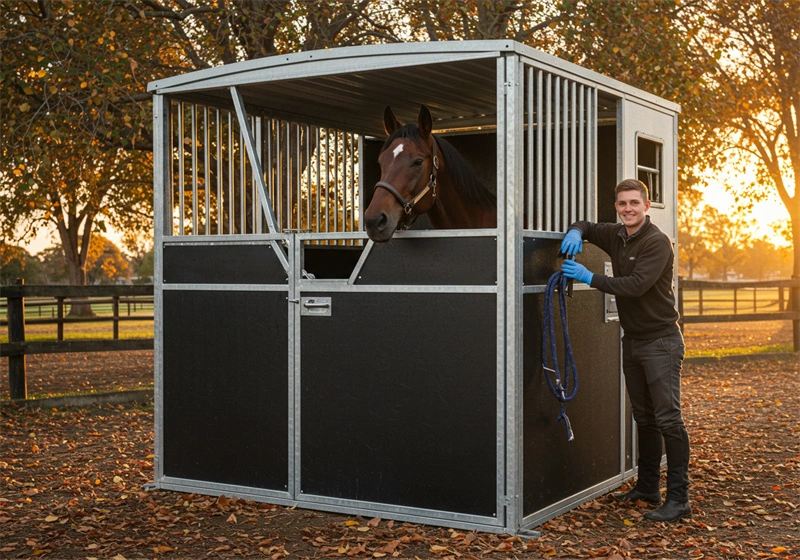
Hot-dip galvanising works by immersing the fabricated steel part in molten zinc, which metallurgically bonds and coats every surface it touches — inside the tube, outside, around welds. The protection is twofold. The zinc layer is a physical barrier that corrodes far more slowly than bare steel in the same environment. And where the barrier is damaged, zinc is electrochemically more active than iron, so it corrodes preferentially and protects the exposed steel at the scratch. On a coastal site, that second mechanism is the difference between a scratch that heals slowly and a rust hole.
DB Stable’s portable stable frames are Q235 steel — the industry-standard structural tube grade for this product class, as covered in our Q235 steel explainer — hot-dip galvanised to a factory specification of at least 42 microns of zinc, with the galvanising process run to AS/NZS 4680, the joint Australian and New Zealand standard for hot-dip galvanised structural steel. Be precise about how those figures relate: 42 microns is the factory’s coating commitment on this product line, while the standard’s own minimums for this steel thickness — 45 microns local, 55 microns average — are the process floor set by the standard. Quote both on the order and confirm how your frames are controlled against each.
| Specification | What it means on a coastal site |
|---|---|
| Hot-dip galvanised, ≥42μm factory spec | Heavy zinc barrier with sacrificial protection at scratches and cut edges |
| Process run to AS/NZS 4680 | The AU/NZ hot-dip standard; its own minimums for this steel thickness are 45μm local / 55μm average — the process floor, distinct from the factory spec |
| Pre-galvanised tube + powder coat | Budget option on this line; zinc layer is thinner and welds or cuts made after pre-galvanising are not re-coated by the process |
| 10mm HDPE infill | Polymer board — immune to rust and salt; no coating to consume |
The pre-galvanised alternative deserves a fair hearing. Pre-galvanised tube is zinc-coated at the mill before fabrication, then powder-coated after; it costs less and serves inland sites well. Its coastal weakness is continuity: once a fabricator cuts or welds the tube, the exposed edge relies on the powder coat and whatever touch-up is applied. Hot-dipping after fabrication avoids that seam of doubt — which is why it is the finish to specify when the air is salty.
Specifying a Coastal Order: The Lines That Matter
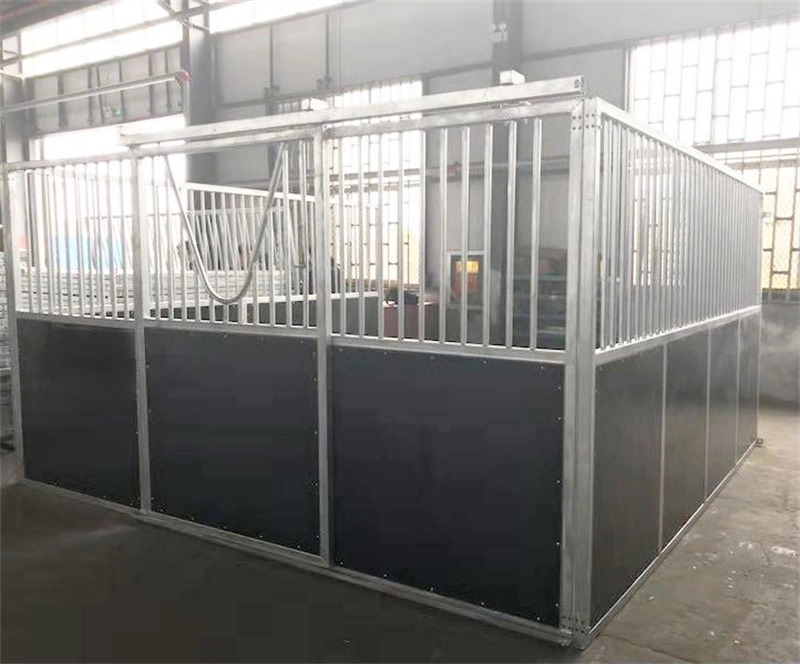
“Galvanised” on a quote can mean several things, so the coastal buyer’s job is to remove the ambiguity. Four lines do most of the work:
- Coating method: hot-dip galvanised after fabrication — not “galvanised finish” or pre-galvanised tube.
- Coating thickness: a stated minimum in microns (this product line is specified at 42μm or more).
- Process standard: galvanising run to AS/NZS 4680, so the process itself is held to the AU/NZ standard.
- Verification: third-party inspection before dispatch — the factory supports QC inspection, and on a large coastal order it is cheap insurance.
Add the hardware line while you are at it. A coastal order is the wrong place for economy hinges and latches: the product line offers stainless steel latches and aluminium swivel feeders because those materials do not rust, and mixing a hot-dip frame with plated-steel accessories is how yards end up with a perfect frame and a seized gate long before the frame shows any wear.
The HDPE Advantage Beside the Ocean
The infill boards on these stables are 10mm high-density polyethylene — UV-stabilised, antibacterial, washable and indifferent to salt. Polymer does not rust, so on a coastal property the entire panel face area simply exits the corrosion conversation. Contrast that with a sheeted steel stable, where every square metre of painted cladding is a surface that salt can eventually work through, especially at fastener holes and cut edges.
A coastal maintenance schedule therefore shrinks to the frame, the fasteners and the hardware — a modest list of steel items that all live behind thick zinc. Wash the HDPE down at horse turnover and it is done; it never needs painting, timber treatment or rust inspection. For agistment and commercial yards near the coast, that division of labour is the quiet argument for the hot-dip-plus-HDPE configuration over timber and sheeted-steel alternatives.
Living With Salt Air: Inspection and Rinse Practice
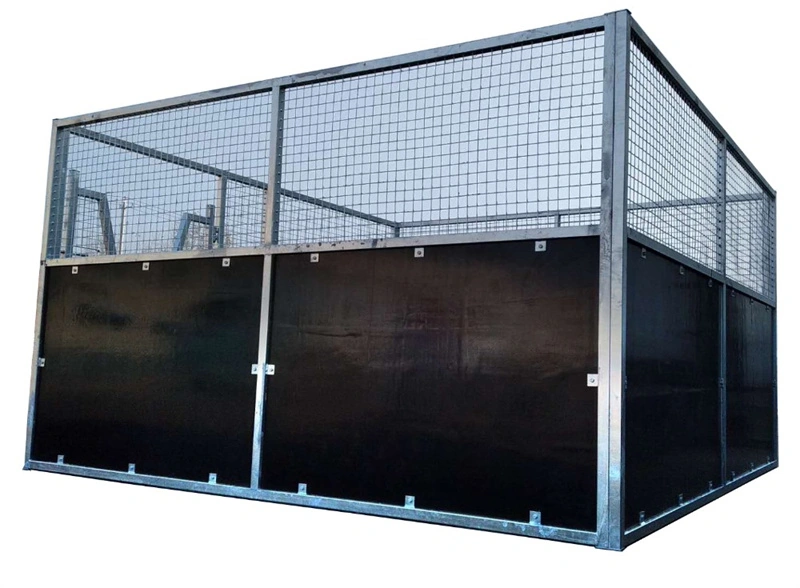
Even a well-specified coating is consumed slowly, so coastal ownership is about not accelerating it. Rain washes salt off surfaces for free — the areas that corrode first are the sheltered ones rain does not reach. When you hose down stables, include the frame, especially under rails and at panel bases. Removing manure and urine promptly matters more at the coast: ammonia-laced moisture plus salt is the most aggressive film you can leave on zinc.
Inspect twice a year — after summer and after winter — looking for dull grey zinc turning to white oxidation products and then red rust at any point. White zinc salts are the coating doing its job; red rust means the zinc is gone locally and the steel is exposed. Those points get zinc-rich touch-up paint, the repair that restores sacrificial protection rather than just covering the stain. A coastal yard that keeps a touch-up tin in the shed and uses it within the week has understood the whole system.
Frequently Asked Questions
How far from the coast counts as a coastal site for stables?
There is no single distance, because wind, topography and rainfall change how far salt deposits carry. Properties that see or smell the sea should be treated as coastal; borderline sites further out can ask how quickly outdoor steel in their area shows rust staining.
Is 42 microns of galvanising enough for salt air?
It is the factory specification on this line, with the process run to AS/NZS 4680 — whose own minimums for steel in this thickness range are 45 microns local and 55 microns average, above the factory figure. For exposed beachfront sites, discuss the exposure with the supplier and keep the inspection and touch-up routine strict.
Do HDPE panels degrade near the coast?
No — salt does not corrode polymer. The 10mm HDPE boards are UV-stabilised and washable, and they need no coating to protect. Coastal care for them is the same as anywhere: hose-down at turnover.
Can I order a mix of hot-dip frames and pre-galvanised panels to save cost?
You can, but on a coastal site it is a false economy — the pre-galvanised items put their weakest points, welds and cut ends, into the harshest air on the property. Inland, the mix is defensible; beside the sea, specify hot-dip throughout.
Conclusion
Coastal corrosion is a specification problem before it is a maintenance problem. Buy hot-dip galvanised after fabrication, state the coating thickness — 42 microns or more on this product line — run to AS/NZS 4680, pair it with HDPE infill and stainless hardware, and the sea air becomes a slow opponent. Then rinse the frame occasionally, inspect twice a year, and touch up scratches with zinc-rich paint the week you find them.
If your property is close enough to the coast that this article read like your maintenance diary, put those specification lines into your next order. Talk to the factory about a coastal specification before the deposit, not after the rust.